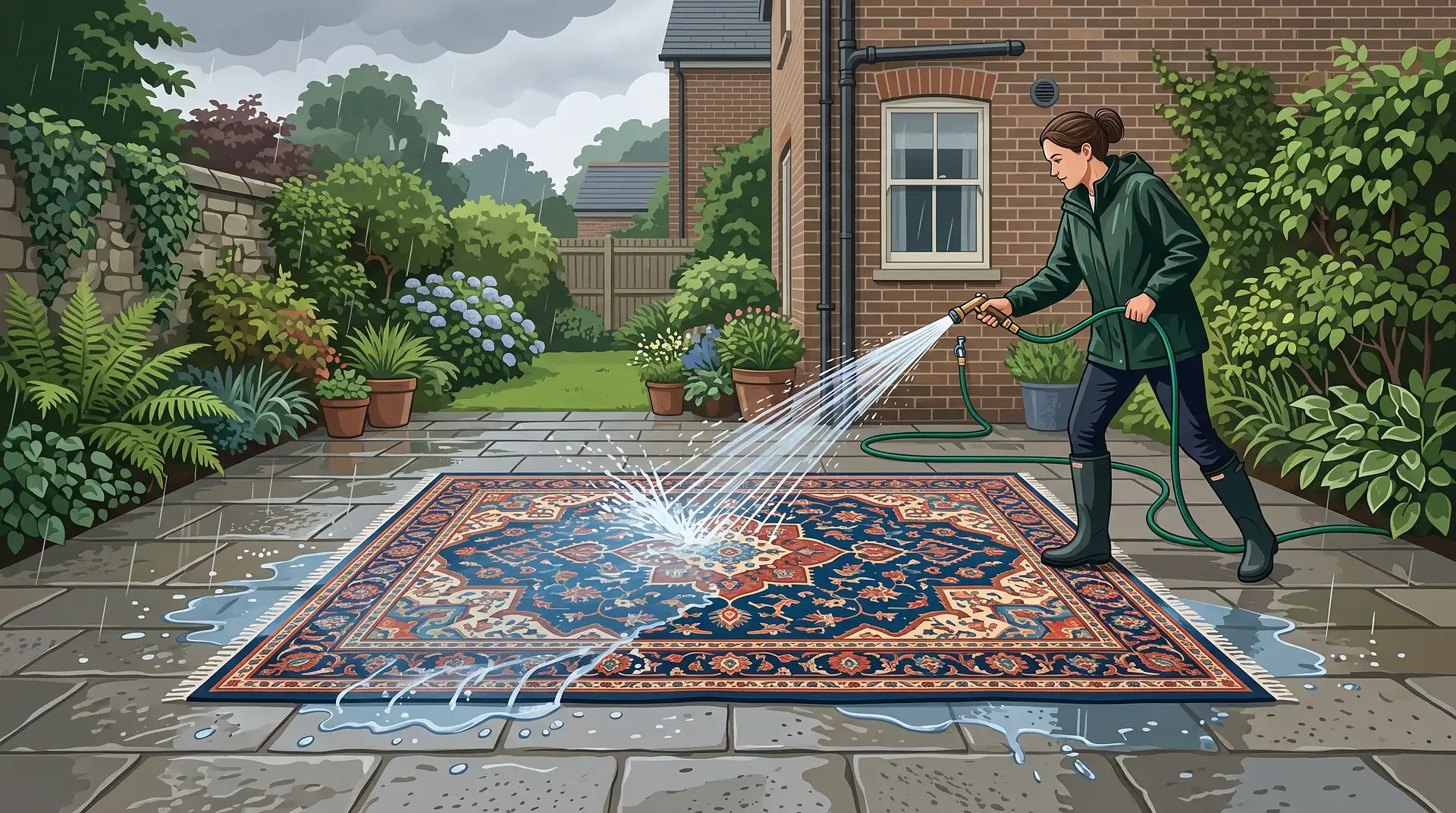
How to Clean an Outdoor Rug
9 September 2026
Quick Answer
Shake off loose dirt and vacuum both sides of the rug, then hose it down thoroughly on a dry day. Mix a small amount of mild detergent with water for general dirt and spot clean stains by blotting, not rubbing. For mould or mildew, use a diluted white vinegar solution rather than bleach, since bleach can fade colour and weaken synthetic fibres over repeated use. Dry the rug fully in the open air, ideally with sun on both sides, before putting it back down or rolling it away.
Why Outdoor Rugs Need a Different Approach
Most outdoor rugs are made from polypropylene, a synthetic material chosen specifically because it resists fading, sheds water and dries quickly. This means an outdoor rug can generally handle a hose, a soft brush and full sun in a way an indoor rug never could. The real risk with outdoor rugs is not usually the cleaning itself, it is what happens afterwards if the rug does not get the chance to dry properly.
The UK's changeable weather is the main complication here. A rug that gets washed on a bright afternoon can still be damp when rain arrives that evening, and repeated wet and damp cycles are exactly what allow mould and mildew to take hold in the fibres and the backing underneath. A rug left slightly damp against a patio slab for days at a time is far more likely to develop a musty smell or dark spotting than one that gets a proper chance to dry through.
If your outdoor rug is a natural fibre or a fibre blend marketed for covered patios rather than full weather exposure, treat it far more carefully. Natural fibres like jute and sisal can suffer permanent cellulosic browning when they get properly wet and take too long to dry, the same issue covered in the guide on cleaning a jute rug. Always check the care label before hosing a natural fibre outdoor rug the way you would a synthetic one.
What You Will Need
A stiff outdoor broom or a vacuum with an upholstery attachment
A garden hose
A bucket
Mild detergent or washing up liquid
A soft bristle brush
Clean cloths or a sponge
Distilled white vinegar
A flat, dry surface or a railing or fence for drying
Step by Step: General Cleaning
Shake and sweep first. Lift the rug and shake it firmly to dislodge loose dirt, leaves and grit. Follow with a stiff broom or a vacuum on both sides to lift anything left behind before any water goes near it.
Choose a dry day. Pick a day with no rain forecast and reasonable drying time ahead, ideally with some wind or sun. Starting a wash on a day that turns damp is the single most common cause of mould developing afterwards.
Hose down both sides. Lay the rug flat on a clean, hard surface such as a patio or driveway, never directly on grass, since detergent run off can harm plants. Hose thoroughly on both sides until the water runs clear.
Mix a mild detergent solution. A small amount of washing up liquid or mild detergent in a bucket of water is enough for general dirt. Avoid strong household cleaners, since these can strip colour and break down the coating on synthetic fibres over time.
Scrub gently with the weave. Use a soft bristle brush and work in the same direction as the weave rather than against it, applying light pressure rather than heavy scrubbing.
Rinse thoroughly. Hose the rug again until all detergent has been washed out. Any leftover soap residue attracts dirt faster once the rug is back in use.
Dry fully before returning it. Hang the rug over a railing, fence or washing line so air reaches both sides, or lay it flat on a clean, dry surface and flip it partway through. Full drying, not just surface dry, is the step that actually prevents mould.
Removing Specific Stains
General dirt, footprint marks and everyday grime. The mild detergent method above is usually sufficient. For very light marks, a quick spot clean with a damp cloth and a little detergent avoids washing the whole rug unnecessarily.
Food and drink spills. Blot up any excess liquid straight away with a clean cloth rather than letting it soak in, then treat as a general stain with mild detergent, working from the outside of the mark inward to avoid spreading it.
Mould, mildew and green algae patches. Mix one part distilled white vinegar with three parts water and apply directly to the affected area, leaving it to work for around fifteen minutes before scrubbing gently and rinsing thoroughly. Vinegar is the safer first choice over bleach, since bleach can fade colour and weaken fibres with repeated use, and any colour or fibre damage on an outdoor rug is permanent. Always do a small patch test on a hidden corner first, particularly on any rug with a printed or dyed pattern.
Rust marks from garden furniture or plant pots. These respond poorly to standard detergent and often need a specific rust remover suited to outdoor fabrics. Treat these as a stubborn exception rather than trying the general method repeatedly, since repeated scrubbing on a rust mark tends to spread it rather than lift it.
Drying Properly in UK Weather
Drying is where most outdoor rug problems actually start. A rug that looks dry on the surface can still be damp in the backing or underlay, and putting it straight back down onto a patio or decking traps that moisture against the ground, which is exactly the condition mould and mildew need.
Where possible, dry the rug standing up or draped over a railing so air reaches both faces, and flip it partway through if it is lying flat. Checking the weather forecast before you start matters more with outdoor rugs than almost anything else in this guide, since a rug caught by rain halfway through drying effectively restarts the whole process. If a full dry day is not realistic, bring the rug indoors or into a covered space such as a garage to finish drying rather than leaving it out overnight while still damp.
What Not to Do
Do not use a pressure washer on a high setting, since this can damage the fibres and weaken the backing
Do not clean a natural fibre outdoor rug the same way as a synthetic one without checking the care label first
Do not rely on bleach as a first option for mould or mildew, since it risks fading colour and weakening fibres over time
Do not roll or store the rug away while it is still even slightly damp
Do not wash the rug directly on grass or soil, since detergent run off can harm plants
Do not scrub hard against the direction of the weave, since this can fray or distort the fibres
When to Call a Professional
A garden hose and mild detergent handles most seasonal grime and light staining well. It is worth calling in a professional clean when mould or mildew has spread across a large area rather than a small patch, when a musty smell persists after the rug has been properly dried, when the rug is a natural fibre piece that cannot safely be hosed down at home, or when a stain such as rust or an oil based mark has not responded to repeated spot cleaning.
Instant Dry Carpet Cleaning can assess and treat outdoor and natural fibre rugs professionally, using methods matched to the fibre type rather than a one size fits all approach. If you are dealing with mould in a similar spot elsewhere, such as garden furniture cushions or a car interior after a wet season, the approach used for cleaning mould off car seats uses the same core principle of thorough drying being just as important as the initial clean. And if your outdoor rug shares a room with indoor upholstery that needs attention too, the guide on cleaning a fabric sofa follows a similarly gentle, low moisture approach.
For anything beyond what a hose and a soft brush can manage, Instant Dry Carpet Cleaning offers a professional rug cleaning service across England and Wales, with rugs collected, cleaned and returned.
Frequently Asked Questions
Can you hose down an outdoor rug?
Yes, most outdoor rugs are made from synthetic polypropylene designed to handle water well. Always check the care label first if the rug is natural fibre or a fibre blend, since these need gentler handling.
What is the best way to remove mould from an outdoor rug?
A diluted solution of one part white vinegar to three parts water is the safest first option. Apply it, leave for around fifteen minutes, then scrub gently and rinse thoroughly, always testing on a hidden area first.
Is it safe to use bleach on an outdoor rug?
Bleach can remove mould effectively but carries a real risk of fading colour and weakening synthetic fibres with repeated use. Vinegar is a gentler first choice, with bleach kept as a last resort and only after a patch test.
How long does an outdoor rug take to dry?
This depends heavily on the weather, but a rug hung with good airflow on a dry, breezy day typically dries within several hours. In damp or still UK weather it can take much longer, so checking the forecast before starting is worth doing.
Can I leave my outdoor rug out in the rain?
Occasional rain on a synthetic outdoor rug is usually fine since these are designed to shed water, but a rug that stays wet or damp for extended periods is far more likely to develop mould or a musty smell.
Can you clean a natural fibre outdoor rug the same way as a synthetic one?
No, natural fibres such as jute or sisal can suffer permanent browning or fibre damage from the same hosing and full sun drying that a synthetic rug tolerates well. Always check the specific care label first.
Why does my outdoor rug smell musty even after cleaning?
This usually means the rug was not fully dry before being put back down or rolled away. Trapped moisture in the backing or underlay is enough to cause a lingering smell even when the surface looks and feels dry.
Suggested Internal Links
Anchor text | Destination | Purpose |
|---|---|---|
cleaning a jute rug | Natural fibre caution, same rug cluster | |
cleaning mould off car seats | Related mould and drying principle, different cluster | |
cleaning a fabric sofa | Related low moisture upholstery method, different cluster | |
professional rug cleaning | Service page, branded link | |
get a fixed quote | Conversion link |
Service Section
If your outdoor rug has established mould, a stain that will not lift, or is a natural fibre piece you are unsure about treating yourself, Instant Dry Carpet Cleaning offers a professional rug cleaning service across England and Wales.
Get a free quote: instantdrycarpetcleaning.co.ukCall or WhatsApp: 07555 856988