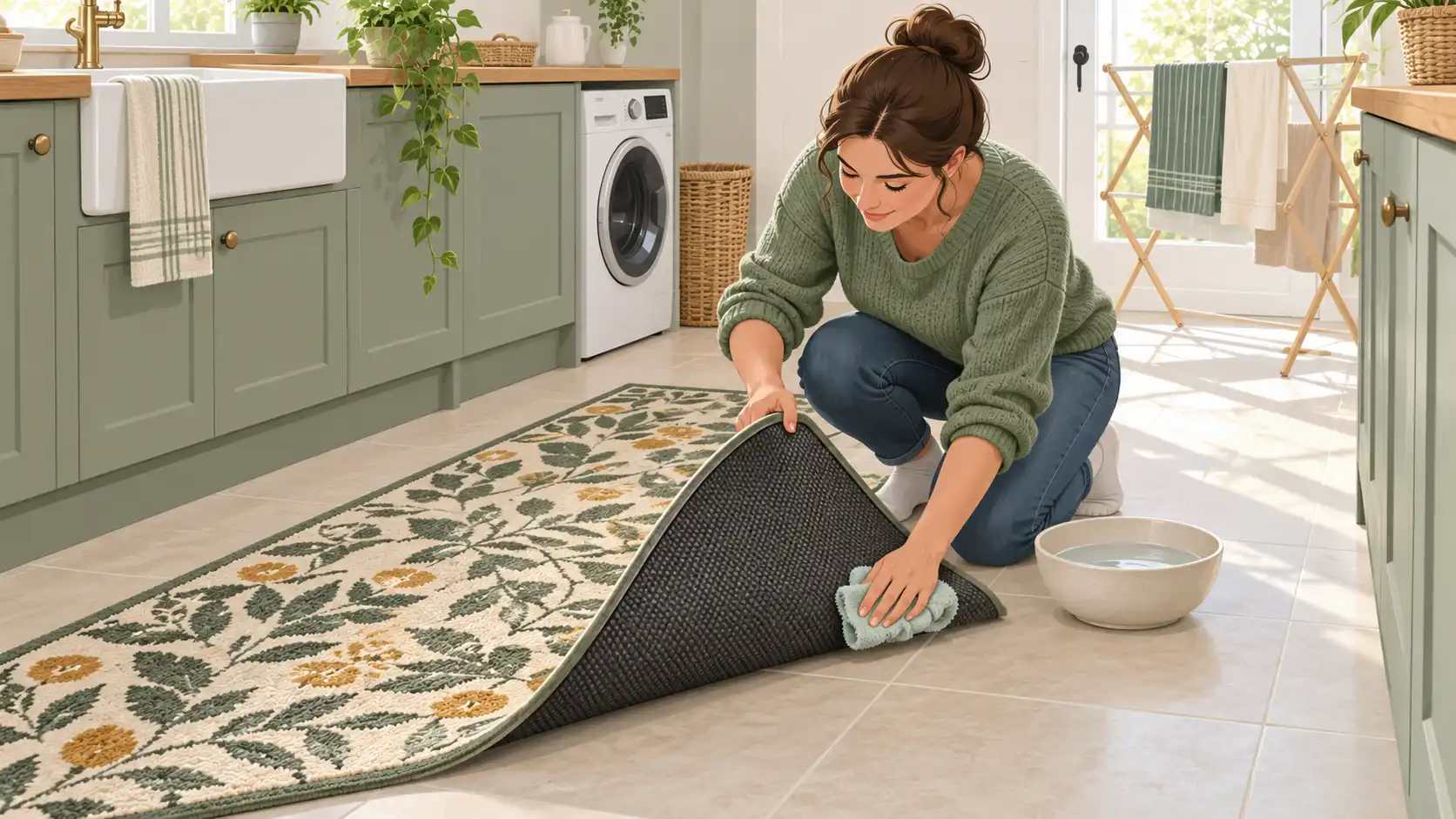
How to Clean and Wash Rubber Backed Rugs
15 October 2026
Would rather leave it to a professional? See our rug cleaning in Manchester.
Quick answer: Vacuum both sides, inspect the rubber for cracks and follow the care label. Spot clean with a cloth, cool water and diluted mild detergent. Machine wash only when the manufacturer permits it. Avoid bleach, solvents and high heat. Air dry with the rubber side exposed before replacing the rug.
Rubber-backed rug do and don’t list
Do | Don’t |
|---|---|
Inspect the backing before adding water | Wash cracked, flaking or sticky rubber |
Use cool water and mild detergent | Use bleach, solvent or fabric conditioner |
Wash only when the label permits it | Assume every rubber-backed rug is machine washable |
Dry the pile and backing completely | Use a radiator, hot dryer or strong direct heat |
What type of rubber backing does your rug have?
“Rubber-backed” is a broad description. The non-slip layer may be natural rubber, latex, thermoplastic rubber, PVC or another flexible coating. Some washable rug systems have a removable fabric cover placed over a separate rubber pad. The cover may be machine washable while the pad is spot-clean only.
The face fibre also matters. Cotton, microfibre, polypropylene and polyester each respond differently to water and agitation. A washable pile does not automatically make its backing washable.
Construction | Usual home method | Main risk |
|---|---|---|
Thin rubber or latex coating bonded to the rug | Spot or machine wash only as labelled | Cracking, peeling or separation |
TPR or synthetic non-slip backing | Cool hand wash or label-approved machine cycle | Heat distortion and loss of grip |
Heavy rubber doormat base | Usually wipe or hose only if the maker permits it | Too heavy for a domestic washer |
Removable rug cover and rubber pad | Wash the cover separately; spot clean the pad | Putting the pad in the machine |
Latex-backed hand-tufted rug | Controlled low-moisture cleaning | Adhesive breakdown and delamination |
Our general guide to cleaning a rug at home explains how pile fibre, dyes and backing work together. For a polypropylene face fibre, also read the specific guide to cleaning a polypropylene rug.
What should you check before cleaning a rubber-backed rug?
Turn the rug over in good light. Flex one corner gently and look for cracks, powder, flakes, bubbles, bare patches or a sticky surface. Smell the back separately from the pile. A strong stale-rubber or musty smell may indicate ageing, retained moisture or adhesive breakdown.
Do not machine wash a rug when the backing is brittle, split, shedding or separating from the textile. Water and drum movement can accelerate the damage and leave rubber pieces inside the washer.
Read the complete care label
Look for the permitted wash temperature, cycle, detergent and drying method. “Washable” may mean hand washable, commercial-machine washable or machine washable only at a stated temperature. Follow the label over general advice.
Test colour and texture
Mix the solution you intend to use, then test it on a hidden edge. Press with a white cloth and allow the area to dry. Continue only if there is no dye transfer, roughness, tackiness or change in the backing.
Check the floor underneath
Rubber and latex can react with some floor finishes, cleaning residues and prolonged heat. Lift the rug regularly and check for sticking, yellowing, dampness or transferred material. Ask the flooring manufacturer which backings are suitable if the rug sits on vinyl, luxury vinyl tile, sealed wood or underfloor heating.
How do you clean a rubber-backed rug by hand?
1. Remove loose soil from both sides
Shake a small rug outdoors if it is safe to handle. Vacuum the pile using a setting suitable for its fibre, then turn it over and vacuum the backing with low suction. Avoid catching damaged edges or lifting loose rubber.
2. Mix a mild solution
Add about 2 ml, roughly half a teaspoon, of clear mild detergent to 500 ml of cool water. If the product specifies another dilution, follow its label. Avoid making a foamy mixture because residue is difficult to remove from both pile and backing.
3. Clean the pile in sections
Dip a white cloth or soft sponge into the solution and wring it out well. Wipe or blot a small section in the pile direction. Use enough moisture to lift soil without saturating the backing. A soft brush may be suitable for a robust, short synthetic pile when the care label allows gentle brushing.
4. Wipe the rubber backing
Use a separate cloth dampened with the same weak solution. Wipe rather than scrub. Pay attention to textured grooves where grit collects. Do not bend the backing sharply while it is wet.
5. Remove detergent residue
Wipe the pile and backing with clean cloths dampened with plain cool water. Change the water when it becomes cloudy. Press the pile with dry white towels to remove moisture.
Ask About Rubber-Backed Rug Cleaning
Large rug or a backing you do not want to risk?
Book professional rug cleaning
Can you wash a rubber-backed rug in a washing machine?
Only when the rug manufacturer permits machine washing and the backing is in good condition. The washing-machine manual must also allow rubber-backed mats. Some appliance makers warn against them because loosened backing can block filters or drainage parts.
Shake and vacuum the rug first.
Wash it separately or only with items permitted by the rug and machine makers.
Use the stated cold or low-temperature gentle cycle.
Add the recommended amount of mild detergent. Do not use extra detergent.
Avoid bleach and fabric conditioner unless the rug label expressly permits them.
Remove the rug promptly and inspect the backing before drying.
A wet rug becomes much heavier. Do not force a large bath mat, runner or room rug into a domestic drum. An overloaded or unbalanced machine may fail to clean properly and can be damaged during spinning. Use a suitable large-capacity machine only when both sets of instructions permit it.
How do you remove stains and odours?
Food and drink
Lift solids with a spoon, then blot liquid from the outside towards the centre. Use the mild detergent solution on a white cloth, rinse by blotting with plain cool water and press dry.
Mud and dry soil
Let ordinary mud dry, break it up gently and vacuum it away before spot cleaning the remaining mark. Adding water too early can spread soil across the pile.
Grease
Blot without rubbing. Use a cleaner approved for both the pile and backing. Avoid solvent-based spot removers unless the rug maker specifically permits them, because solvent can weaken some adhesives and rubber compounds.
Pet urine or vomit
Wear gloves, remove solids and blot quickly. Use a pet-stain product labelled safe for the complete rug. Check the back and floor because liquid can become trapped between the rubber layer and flooring. Persistent odour after complete drying means the contamination may sit below the surface.
Musty smell
Inspect the backing and floor for dampness or visible growth. Washing again will not solve a continuing moisture source. A rug with widespread mould, severe backing deterioration or a smell that returns when the room becomes humid needs assessment and may require replacement.
If the entire rug is heavily soiled, use the checks in the guide to cleaning a really dirty rug. For weather-resistant mats, the guide to cleaning an outdoor rug covers drainage and outdoor drying.
How should you dry a rubber-backed rug?
Air drying is the safest default. Support the rug so the pile keeps its shape and air reaches the rubber side. A drying rack or clean flat mesh support works well. If the care label allows hanging, distribute the weight evenly rather than folding a heavy wet rug over one narrow line.
Use a fan and normal room ventilation. Keep the rug away from radiators, heated floors, hairdryers and strong direct heat. Heat can harden, distort or crack rubber and latex. Tumble dry only when the manufacturer gives a permitted setting, which may be low heat or air only.
Check the backing before returning the rug to the floor. It should feel dry, flexible and at room temperature. A cool or clammy back still contains moisture. Putting it down too soon can trap dampness against wood, vinyl, laminate, tile grout or fitted carpet.
What should you do if the rubber backing is damaged?
Stop washing when the backing cracks, flakes, powders, becomes sticky, forms bubbles or separates from the rug. These are signs of material or adhesive failure rather than ordinary dirt. Cleaning cannot rebuild a degraded backing.
Vacuum loose particles carefully with a suitable attachment and clean the floor beneath using the flooring maker’s method. Do not apply household glue, sealant or a new coating without confirming compatibility. An uneven home repair may transfer to the floor or create raised areas that affect grip.
A repair specialist may be able to replace or stabilise the backing on a valuable rug. Replacement is often more practical for an inexpensive mat with widespread cracking, loss of grip or recurring residue.
How do you clean a rubber-backed rug safely?
Follow every cleaning-product label, ventilate the room and use gloves when directed. The Health and Safety Executive guidance for cleaners explains that some cleaning-product ingredients can contribute to skin allergies or breathing problems. Never mix cleaning chemicals.
Clear the floor while the rug is removed because a damp patch or loose mat can cause a slip. Ask for help before lifting a large wet rug. Keep children and pets away until the rug is rinsed, fully dry and lying flat with reliable grip.
When should you use professional rug cleaning?
Arrange an assessment when the care label is missing, the rug is too large to handle safely, colour transfers during testing, pet contamination reaches the backing or the pile needs cleaning but the backing cannot be wetted. A professional should also assess hand-tufted rugs, powdery latex, delamination and persistent odour.
Tell the cleaner the pile fibre, backing type, rug age and products already used. Cleaning suitability and likely results depend on the complete construction. A worn rubber layer may not survive a wet process even when the pile itself is washable.
Frequently asked questions
Can all rubber-backed rugs go in a washing machine?
No. Both the rug label and washing-machine manual must permit it. Do not machine wash a rug with cracked, sticky, flaking or separated backing.
What temperature should I use?
Use the temperature printed on the care label. Cold or cool water is the cautious default because high heat can shorten the life of rubber, latex and adhesive.
Can I use bleach on a rubber-backed rug?
Avoid bleach unless the manufacturer expressly allows it. Bleach may affect the pile colour, adhesive or backing and should never be mixed with another cleaner.
Can I tumble dry the rug?
Only when the label permits tumble drying and states a setting. Air drying is safer for an unknown backing. High heat can crack or distort rubber.
Why is the backing turning to powder?
Powdering usually indicates aged or degraded latex or adhesive. Washing cannot reverse it and may accelerate the breakdown.
Why has the rug become sticky?
Heat, ageing, chemical exposure or a reaction with floor finish can soften some backings. Lift the rug, stop using it and ask the rug and flooring manufacturers for compatible removal advice.
Can I pressure wash a rubber-backed rug?
Not unless the manufacturer specifically permits it. High pressure can lift edges, force water between layers and damage a weakened backing.
How often should I wash it?
Vacuum according to use and spot clean spills promptly. Full washing should respond to visible soil and the maker’s care schedule rather than a fixed calendar, because repeated wet cleaning can age the backing.
How do I stop the rubber from marking my floor?
Keep both surfaces dry and clean, lift the rug regularly and confirm that its backing is compatible with the floor finish and underfloor heating. Replace it if material begins to transfer.
Can professional cleaning repair damaged backing?
Cleaning removes soil but does not rebuild cracked rubber or failed adhesive. A specialist may offer backing repair for a suitable rug, while widespread deterioration may make replacement more sensible.
Need help choosing a safe method? Include a photograph of the pile and backing when describing the rug.
Can you wash rubber backed rugs in a washing machine?
Only if the care label allows it. Use a cool or 30°C gentle cycle, mild liquid detergent and a low spin. Hot water, harsh detergent and tumble drying break down the rubber, which then crumbles and can leave residue in the machine.
How do you wash kitchen rugs with rubber backing?
Shake the rug outside, vacuum both sides and pre-treat grease spots with a drop of washing-up liquid. Wash on a cool gentle cycle if the label allows, or hand-wash in a bath with lukewarm water. Rinse well and air-dry flat, rubber side up.
Can you tumble dry a rubber backed rug?
No. Heat makes the rubber crack, peel and stick to the drum. Hang it over a rail or lay it flat in a warm, airy room. Most kitchen and bath mats dry in 12 to 24 hours.
Why is the rubber backing on my rug crumbling?
Age, heat, sunlight and repeated machine washing break the rubber down. Once it crumbles it cannot be repaired. Replace the rug or use a separate non-slip underlay, as crumbled rubber can also mark wooden and vinyl floors.
Related guides: how to stop rugs moving on carpet. For a professional finish, see our rug cleaning service or carpet cleaning in Manchester.
Related guides
Need it cleaned properly?
Book our rug cleaning service — from £39 (UK average £60), free in-home survey and pay on completion.