How to Clean a Polypropylene Rug
29 September 2026
Would rather leave it to a professional? See our rug cleaning in Manchester.
Quick answer: Check the care label, vacuum both sides and test a hidden area before using water. For routine marks, blot with a white cloth and a weak solution of mild detergent and cool or lukewarm water. Rinse by blotting with a second damp cloth, press with dry towels and let the rug dry with air reaching both sides. A washable polypropylene rug can usually tolerate more moisture than wool, but its backing, edging and dyes may not.
Polypropylene, also called olefin, is a synthetic fibre found in many indoor, outdoor and low-cost machine-made rugs. It does not absorb water readily, so many spills stay close to the fibre surface. That makes it practical to clean, but it is not indestructible. Heat can damage it, oily soil clings to it, and trapped moisture can still cause smells or mould in the backing.
Before cleaning, confirm the whole rug is washable
A label that says “100% polypropylene pile” describes the visible fibres, not necessarily the entire rug. The backing may contain jute, latex, cotton or an adhesive that reacts badly to soaking. Decorative borders, fringes and printed patterns can also behave differently from the pile.
Read the care label and follow its instructions over any general advice. If the label permits spot cleaning only, do not hose, soak or machine wash the rug. If there is no label, use the low-moisture spot-cleaning method and consider professional cleaning for a full wash.
Test colour and texture first
Dampen a white cloth with your proposed cleaning solution and press it against a hidden corner for several seconds. Check the cloth for colour transfer. Let the tested area dry, then look for fading, roughness, distortion or a water ring. Continue only if the test causes no change.
What you need
A vacuum with adjustable suction or a suction-only floor head
White absorbent cloths and clean towels
A bucket of cool or lukewarm water
A small amount of clear, mild liquid detergent
A soft cloth, sponge or soft-bristled brush
A fan or a well-ventilated drying area
Avoid coloured cloths because their dye may transfer. Use only a little detergent. A strong, foamy mixture is harder to rinse and can leave a sticky residue that attracts fresh dirt.
How to clean a polypropylene rug step by step
1. Remove loose dirt
Take the rug outside and shake it if its size and weight make this safe. Vacuum the top slowly in the direction of the pile. Turn it over, vacuum the back and clean the floor beneath before replacing it.
Use suction only on long pile, looped edges or fringe. A rotating brush can catch loose yarn, disturb the pile or damage stitched borders. Never vacuum over tassels.
2. Deal with spills before general cleaning
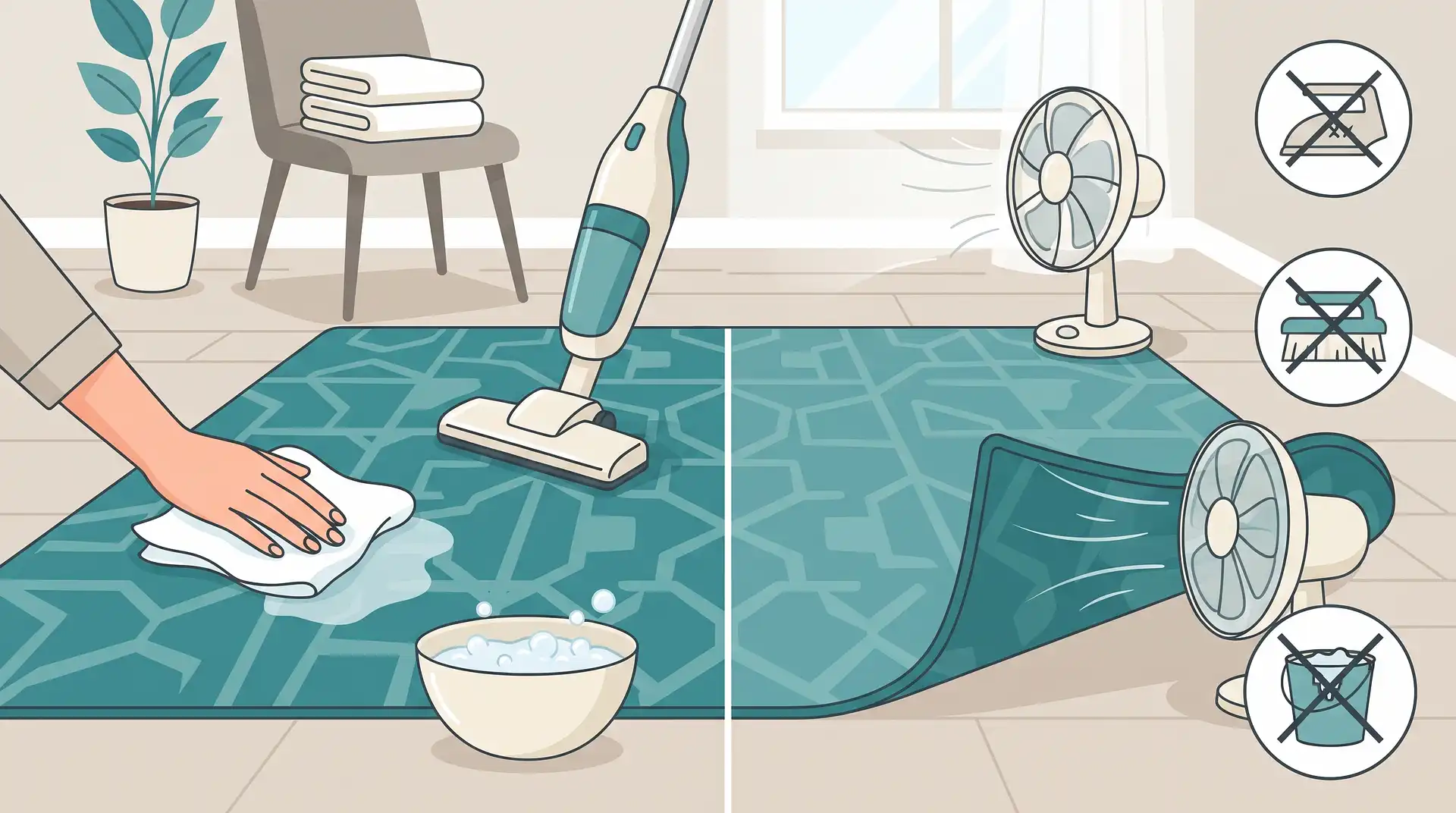
Lift solids with a spoon or blunt edge. Blot liquid with a dry white cloth, working from the outside towards the centre. Press and lift instead of rubbing. Rubbing spreads the spill and can roughen the pile.
3. Mix a mild cleaning solution
Add a few drops of clear, mild liquid detergent to a bowl of cool or lukewarm water. The water should feel barely soapy. Do not use boiling water, and do not assume that a stronger mixture will clean better.
4. Clean a small section at a time
Dip a white cloth or soft sponge into the solution and wring it out. Blot or wipe gently in the direction of the pile. For a robust, care-label-approved rug, a soft brush may be used with light pressure. Avoid hard scrubbing, which can make the surface look fuzzy or uneven.
5. Remove the detergent
Go over the treated area with another white cloth dampened with plain water. Repeat until the cloth no longer lifts foam. Proper rinsing matters because detergent left in the rug holds soil and can create a darker patch later.
6. Extract as much moisture as possible
Press clean, dry towels onto the pile. Do not twist or wring the rug because this can stretch the backing and distort its shape. If the label allows extraction cleaning, make slow dry passes after the final rinse to recover more water.
7. Dry the rug on both sides
Raise the rug so air can circulate around the pile and backing. A small rug can be draped securely over a clean rail, while a larger one can be supported flat on a clean drying rack. Turn it during drying and use a fan indoors.
Do not return it to a wooden floor or carpet until the backing is fully dry. The surface can feel dry while moisture remains underneath. Check for coolness or dampness with the back of your hand.
Ask About Professional Rug Cleaning
Large or heavily soiled rug?
Book professional rug cleaning
Can you deep clean a polypropylene rug?
Many polypropylene rugs can be deep cleaned, but permission depends on the complete construction. A machine-made rug with a stable synthetic backing may tolerate careful rinsing or hot water extraction. A rug containing jute, natural fibre edging, unstable adhesive or a weakened latex backing may not.
If the care label allows washing, clean the rug on a washable surface where dirty water can drain safely. Pre-vacuum it, use a mild rug detergent, agitate gently, rinse thoroughly and remove as much water as possible. Plan the drying method before starting. A wet room-sized rug becomes heavy and difficult to move.
Our wider guide to cleaning a rug at home explains how backings and other fibres change the safest method.
Can you use a carpet-cleaning machine?
Only if the label permits wet extraction and the rug has passed the colour test. Use the lowest suitable heat, avoid flooding the backing and make extra dry passes. Place the rug on a surface that cannot be damaged by moisture. Never extract-clean it while it is lying over a wooden floor, laminate or fitted carpet.
Can you hose down a polypropylene rug?
Some outdoor polypropylene rugs can be hosed, but “polypropylene” alone is not permission. Check the care label and backing first. Use a gentle flow rather than a pressure washer, rinse out all detergent and dry both sides. Our guide on how to clean an outdoor rug covers the extra drying and weather considerations.
Can it go in a washing machine?
Machine wash only when the care label specifically allows it and the rug fits without being forced into the drum. A rug that is too large becomes extremely heavy when wet and may damage the machine or fail to rinse properly. Use the stated cycle and temperature, and do not tumble dry unless the manufacturer expressly permits it.
How to remove common stains from polypropylene
Grease and cooking oil
Polypropylene resists water-based spills well, but it attracts oily soil. Lift any solids, then blot without spreading the mark. Apply a weak solution of clear washing-up liquid to a white cloth, work from the edge towards the centre and rinse carefully. Several light treatments are safer than one concentrated application.
Food, tea, coffee and soft drinks
Blot immediately. Use cool water first, followed by the mild detergent solution if a mark remains. Rinse by blotting with plain water and dry with towels. Avoid rubbing, even if the stain appears to sit on the surface.
Mud
Let ordinary mud dry fully, then break it up gently and vacuum it away. Spot clean the remaining mark. Wet scrubbing at the start can spread soil into a larger patch.
Pet urine
Blot firmly with dry towels, then use an enzyme cleaner labelled safe for synthetic rugs. Follow its dwell time and patch-test first. Treat both the pile and any affected backing where the construction allows, because odour returns if urine remains below the surface. Rinse only as directed and dry completely.
Chewing gum or wax
Place ice in a sealed bag and hold it against the material until it hardens. Lift it carefully with a blunt plastic edge. Do not apply an iron or hairdryer. Polypropylene softens under heat, and melting the residue may drive it deeper into the pile.
Safety guide for cleaning polypropylene rugs
Keep the room ventilated, wear gloves when the product label advises them and keep children and pets away until the rug is rinsed and dry. Follow every cleaner's dilution, contact-time and disposal instructions. The Health and Safety Executive notes that some cleaning-product ingredients can irritate skin or contribute to breathing problems in its guidance on cleaning chemicals.
Never mix cleaning products. In particular, do not combine bleach with ammonia, acids, vinegar or another cleaner. Do not use an unlabelled bottle or transfer chemicals into food or drink containers.
A large wet rug is much heavier than a dry one. Arrange help before lifting it, clear the route and avoid twisting while carrying. If it is too heavy to control, leave it supported where it can drain and use professional help.
What should you avoid?
Hot water, steam mops, irons and high-heat drying
Pressure washing, forceful scrubbing or a stiff wire brush
Soaking a rug whose label allows spot cleaning only
Strong solvent, bleach or disinfectant use without label approval
Leaving detergent in the pile
Drying the rug flat against a floor with no airflow underneath
Rolling or storing the rug while any part remains damp
Polypropylene itself is generally colourfast, but printed colour, edge binding and other materials may not be. A hidden-area test remains necessary even when the fibre has a reputation for stain resistance.
How often should a polypropylene rug be cleaned?
Vacuum once a week in a normally used room and more often in an entrance, dining area or pet household. Blot spills as soon as they happen. Rotate the rug every few months to spread foot traffic and sunlight exposure.
A full clean should respond to condition rather than a rigid calendar. Dull colour, greasy traffic lanes, widespread dirt or a smell after spot cleaning are signs that surface care is no longer enough. Washing too frequently or leaving detergent behind can create its own wear.
Long-pile polypropylene needs gentler vacuuming because the construction, rather than the fibre alone, controls the risk. Read our advice on how to clean a shaggy rug if the strands are deep or loose.
Frequently asked questions
What is the best cleaner for a polypropylene rug?
For ordinary soil, a small amount of clear, mild detergent in cool or lukewarm water is a sensible starting point. Use a product made for synthetic rugs when stronger treatment is needed. The care label and a hidden-area test should guide the final choice.
Can you steam clean polypropylene?
Professional hot water extraction may be suitable when temperature and moisture are controlled, but a domestic steam mop applies heat directly and should not be used. Check the rug's complete construction before any machine treatment.
Does polypropylene shrink when washed?
The polypropylene fibre has good water resistance, but heat, adhesive failure or movement in the backing can still cause distortion. Use cool or lukewarm water, avoid aggressive handling and dry the rug in its proper shape.
Why does the rug feel sticky after cleaning?
Sticky or crunchy pile usually indicates detergent residue. Blot or extract again with plain water, then remove moisture with dry towels or dry machine passes. Use less detergent next time.
Why does a polypropylene rug still smell?
Odour can remain in trapped oily soil, the backing, an underlay or the floor beneath. It can also develop when a washed rug dries too slowly. Identify the source rather than adding fragrance, and make sure every layer is fully dry.
When should a professional clean it?
Professional cleaning is suitable when the rug is too large to handle safely, the backing is unknown, dye transfers during testing, oily traffic lanes remain after spot cleaning, pet contamination has reached the backing, or a musty smell persists after drying.
Are polypropylene rugs safe?
Polypropylene is a stable plastic fibre that is widely used in indoor and outdoor rugs. Some new rugs have a chemical smell for a few days, so air them in a ventilated room. Choose rugs with a non-slip underlay for safety on hard floors.
Can you use bleach on a polypropylene rug?
Polypropylene is solution-dyed, so diluted bleach does not usually fade it. Use no more than 1 part bleach to 10 parts water, test a corner first and rinse well. Never use bleach on the rug backing or on mixed-fibre rugs.
Keep the result clean for longer
Use an appropriate non-slip rug pad, vacuum beneath the rug, clean spills promptly and place entrance mats where outdoor soil enters the room. Avoid placing oily products directly on the pile, and use furniture cups where heavy legs may crush it.
InstantDry can assess the pile, backing, colour stability and level of soil before choosing a cleaning method. Stain removal depends on the substance, previous treatments and how long the mark has been present, so results cannot be assumed before inspection.
Related guides: how to clean rubber backed rugs. For a professional finish, see our rug cleaning service or carpet cleaning in Manchester.
Related guides
Need it cleaned properly?
Book our rug cleaning service — from £39 (UK average £60), free in-home survey and pay on completion.