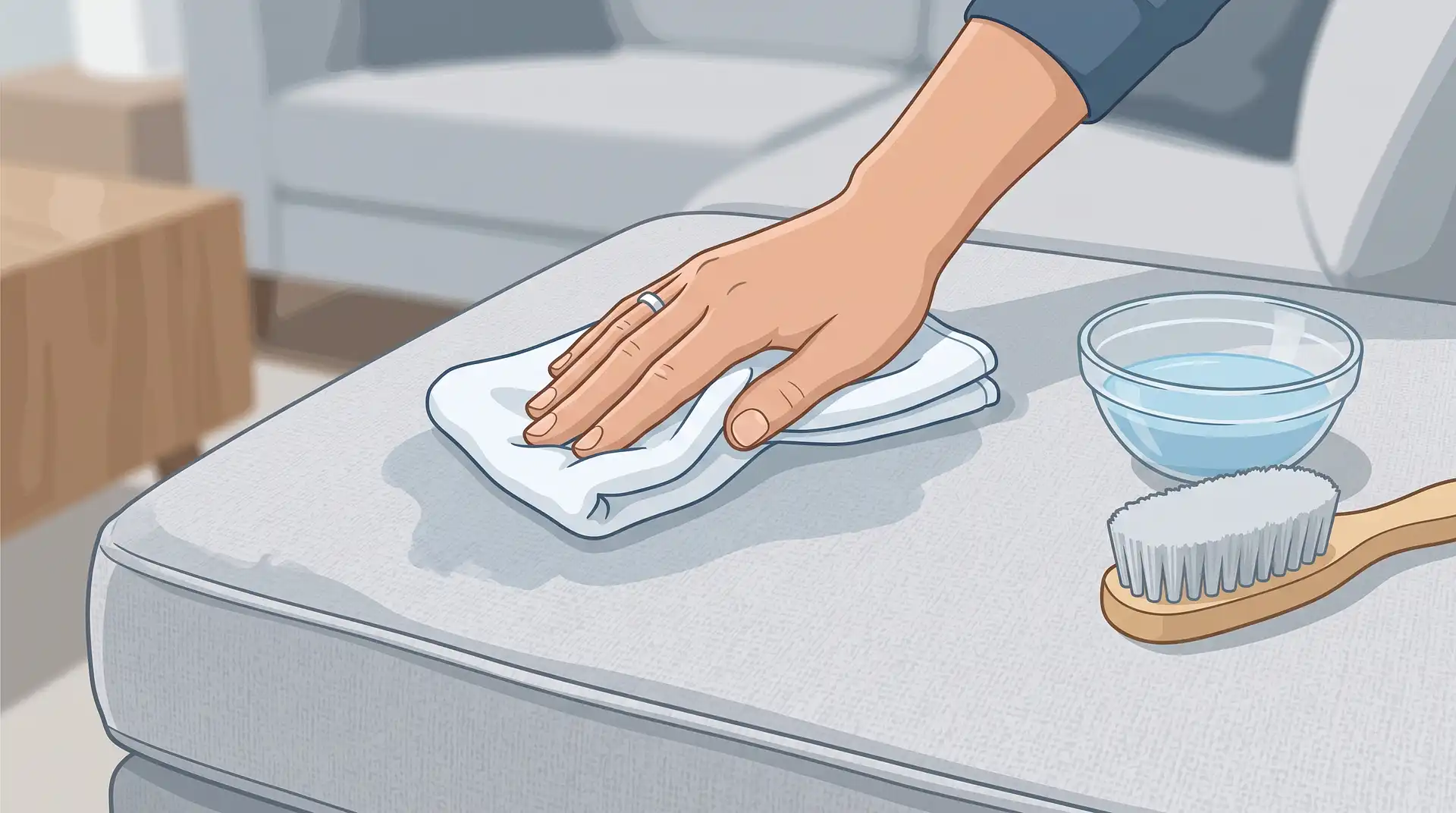
How to Clean a Fabric Sofa
12 August 2026
Quick answer: Check the cleaning code on the label first. W or WS means water-based cleaning is safe, S means solvent only, X means vacuum only. Vacuum thoroughly including seams and under cushions. For light refreshing and odour, a dry method using bicarbonate of soda is often enough and carries no moisture risk. For actual soiling on a W or WS fabric, use a mild detergent solution applied sparingly to a cloth, never poured onto the fabric, then blot away and dry with good ventilation. Keep moisture out of the cushion interior, since foam and fibre fill that stays damp inside is what causes musty smells weeks later.
Fabric sofas are the most forgiving upholstery to live with and the easiest to damage while cleaning, which sounds contradictory until you've seen a few. They take everyday wear well. What they don't take well is too much water, the wrong product for the fabric, or a vigorous scrub in one small area.
This guide covers fabric upholstery specifically. If you have leather, suede or a mixed material sofa, the broader how to clean a sofa guide covers those separately, since they need genuinely different handling.
Check the code first
Every UK sofa carries a label, usually under a seat cushion or on the frame, with a single letter cleaning code. Check it before you use any product at all.
Code | Meaning | What you can use |
|---|---|---|
W | Water-based cleaning is safe | Mild detergent solution, water-based upholstery shampoo, dry methods |
S | Solvent only | Solvent-based upholstery cleaner or dry foam product. No water, no water-based products |
WS | Either method is safe | Water-based or solvent-based, still test first |
X | No liquid cleaner | Vacuum and dry brushing only |
Using water on an S-coded fabric is the most common way a fabric sofa gets permanently marked. It causes watermarking, can shrink the fabric, and can bleed dye. If the label is missing or unreadable, treat it as S and stick to dry methods, or test a water-based approach on a completely hidden patch such as the underside of a cushion before going anywhere near a visible surface.
That label is also usually the permanent fire safety label required on UK upholstered furniture, so leave it attached even if it's visible or scratchy.
Dry cleaning or wet cleaning, which does your sofa actually need?
This is the decision most guides skip, and it saves a lot of trouble.
A dry method is enough when: the sofa looks dull rather than dirty, there's a general stale smell, you're doing routine maintenance, the fabric is X coded, or you're not confident about the cleaning code. It carries essentially no risk of watermarking or trapped moisture.
A wet method is needed when: there's visible soiling, greasy marks on arms and headrests, actual stains rather than general dullness, or a smell that a dry method hasn't shifted.
Plenty of people jump straight to wet cleaning when a dry approach would have done the job with none of the risk. Start dry, escalate only if you need to.
The dry method
Safe on any fabric including X coded, since no liquid touches the sofa.
Vacuum thoroughly. Remove cushions where possible. Use a crevice tool along seams, down the sides and into the join between the seat and the back, where most debris collects. Vacuum the base underneath the cushions and the cushions themselves on both sides.
Brush the fabric. A soft upholstery brush lifts embedded dust and, on fabrics with a nap, restores an even appearance. Work in the direction of the pile.
Apply bicarbonate of soda for odour. Sprinkle lightly over the whole surface, roughly a tablespoon or two per seat, and leave for at least twenty minutes. Longer is better for a persistent smell, and a few hours does no harm.
Vacuum it all off thoroughly. Go over the whole sofa more than once. Bicarb left in the fabric feels gritty and dulls the colour.
For light refreshing this is often all a fabric sofa needs, and it can be done as often as you like with no risk.
The wet method, step by step
For W and WS coded fabrics only.
Step 1: Vacuum first
Never skip this. Wetting loose dirt drives it into the fabric and makes it harder to remove, not easier.
Step 2: Test on a hidden patch
Underside of a cushion, back of an arm, anywhere not visible. Apply your solution, let it dry fully, and check for colour change, watermarking or texture change. Do this in daylight, since colour shifts are easy to miss under a warm bulb.
Step 3: Mix a mild solution
A small amount of clear, uncoloured washing up liquid in warm water is enough for most jobs, or use a proper upholstery shampoo at the dilution stated on the bottle. Don't make it stronger than instructed. Excess detergent left in fabric stays slightly tacky, attracts dirt, and is a common cause of a cleaned area looking worse than the rest a few weeks later.
Step 4: Apply to the cloth, not the sofa
This is the single most important technique point. Dampen a clean white cloth with the solution and work with that, rather than spraying or pouring directly onto the fabric. It gives you control over exactly how much moisture goes in and stops liquid soaking through into the cushion.
Work in gentle circular motions or in the direction of the nap, one panel at a time so the whole surface gets even treatment.
Use white cloths only. Coloured cloths can transfer their own dye into damp fabric.
Step 5: Rinse and lift
Go over the same area with a clean cloth dampened with plain water only, to lift detergent residue out. Then blot with a dry towel to take up as much moisture as possible.
If you have an upholstery attachment for a wet vacuum or carpet washer, a light pass here pulls out considerably more moisture than blotting alone. Check both the machine's guidance and your sofa's cleaning code before using one.
Step 6: Dry properly
Open windows and use a fan. Prop cushions on their edge rather than lying flat so air reaches more surface area. Avoid radiators and direct heat, which dry the outer fabric while leaving the inside of a cushion damp, which is exactly the problem you're trying to avoid.
Don't put cushions back into normal use until they're dry all the way through, not just dry to the touch on the surface.
Stain by stain on fabric upholstery
Blot, never rub, and always work from the outer edge of a stain inwards to avoid spreading it.
Tea and coffee. Blot immediately, then treat with cool water and a mild detergent solution. Never use hot water, since heat helps the tannin bond to the fibre permanently.
Red wine. Blot heavily first to lift as much liquid as possible. Cool water and mild detergent, repeated in several light passes, works better than one heavy attempt.
Grease and food oil. Sprinkle bicarbonate of soda directly onto the mark and leave it for at least twenty minutes to absorb the oil, then vacuum off before doing anything wet. Skipping this step and going straight to detergent spreads the grease rather than lifting it.
Pet accidents. An enzyme-based cleaner is the right tool, since it breaks down the proteins causing the smell rather than masking it. Detergent alone will clean the visible mark and leave the odour behind.
Ink and biro. Genuinely difficult and easy to make worse. Dabbing very sparingly with surgical spirit on a cotton bud can work on some fabrics, but test on a hidden patch first and accept that ink on upholstery is one of the stains most likely to need professional treatment.
Blood. Cold water only, never warm, since heat sets the protein into the fibre. The full method is covered here, and it applies to upholstery as well as carpet.
Mud. Let it dry completely, then vacuum the dried soil off before doing anything else. Attacking wet mud spreads it dramatically.
Cushions, arms and headrests
These wear differently from the rest of the sofa and need slightly different attention.
Arms and headrests collect skin oils and hair products, which build into a darker, slightly shiny patch over time. This is greasy soiling rather than general dirt, so it needs a detergent solution rather than a dry method, and it usually needs a couple of gentle passes rather than one heavy one. Treat the whole arm panel evenly rather than just the darkest patch, or you'll end up with a clean spot surrounded by soiling.
Cushion covers are sometimes removable and machine washable, but check the label carefully before assuming. Many that look removable aren't intended to be washed, and washing can shrink the cover enough that it won't fit back over the insert, or fade it unevenly against the rest of the sofa. If in doubt, clean in place.
Rotate and plump cushions regularly. Not a cleaning tip exactly, but it evens out wear and keeps the sofa looking better for longer between cleans.
What goes wrong and how to fix it
Musty smell days later. Trapped moisture inside the cushion. A fabric cushion is foam or fill inside a cover, and water that soaks through has nowhere to evaporate from. Prop cushions to expose more surface, increase ventilation, and give it more time than seems necessary. On a warm day, outside in open air is the most effective drying you can do. A smell that persists after several days of proper drying may mean the insert itself needs professional attention.
Watermark or ring around a treated spot. Too much moisture in too small an area, drying unevenly. Lightly dampen outward across the whole panel with a barely damp cloth to blend the drying line, then dry evenly.
Fabric feels stiff once dry. Detergent residue. Go over it again with a clean cloth and plain water only, then dry.
The cleaned area looks different from the rest. Usually because one area was cleaned much more thoroughly than everything around it. Cleaning the full panel or the whole sofa evenly avoids this, and is why a light overall clean often looks better than aggressive spot treatment.
When to call a professional
DIY handles routine fabric sofa maintenance well. Consider professional upholstery cleaning when:
The cleaning code is S, or there's no readable label and you're not confident
A stain has already resisted a careful attempt, particularly ink, old pet accidents or set-in grease
There's a smell that hasn't cleared after proper drying, which can mean moisture or contamination inside the cushion
The sofa hasn't been deep cleaned in years and soiling is throughout the fabric rather than in specific spots
It's a valuable, antique or designer piece where the cost of getting it wrong outweighs the cost of getting it done
Professional upholstery cleaning uses controlled extraction that removes far more moisture and dissolved soil than blotting by hand, which matters particularly on upholstery given how hard it is for an enclosed cushion to dry evenly on its own.
7. FAQ Section
How do you clean a fabric sofa at home? Check the cleaning code first, then vacuum thoroughly. For light refreshing, a dry method using bicarbonate of soda is often enough. For actual soiling on a W or WS coded fabric, apply a mild detergent solution to a white cloth rather than directly to the sofa, work one panel at a time, rinse with a plain water cloth, and dry with good ventilation.
Can you use bicarbonate of soda on a fabric sofa? Yes, and it's one of the safest options since it involves no liquid. Sprinkle lightly, leave for at least twenty minutes, then vacuum off thoroughly. It's particularly good for general odour and for absorbing grease marks before wet cleaning.
Is it safe to use vinegar on a fabric sofa? Only if the cleaning code allows water-based cleaning, meaning W or WS, and only after testing on a hidden patch. On an S-coded fabric, vinegar causes the same watermarking and shrinkage risk as any other water-based product.
How do you deep clean a fabric sofa without a machine? Vacuum thoroughly, treat any specific stains individually, then work across the whole sofa panel by panel with a mild detergent solution applied to a cloth rather than sprayed on. Rinse each panel with a plain water cloth, blot dry, and ventilate well. It takes longer than using a machine but gives you more control over moisture.
How do I get grease marks off my fabric sofa? Apply bicarbonate of soda directly to the mark and leave it at least twenty minutes to absorb the oil, then vacuum it off before using anything wet. Going straight to detergent tends to spread grease rather than lift it.
How do I get pet smells out of a fabric sofa? Use an enzyme-based cleaner, which breaks down the proteins causing the odour rather than covering it. Detergent removes the visible mark but leaves the smell. Follow the product's stated dwell time, which is usually longer than people expect.
Why does my fabric sofa smell musty after cleaning? Moisture trapped inside the cushion. The cover dries but the foam or fill inside stays damp, and that's where the smell develops. Prop cushions on edge, increase ventilation, and allow considerably more drying time. Preventing it is a matter of using much less moisture in the first place.
Can I put my sofa cushion covers in the washing machine? Check the label carefully first. Many covers that appear removable aren't intended for machine washing, and washing can shrink them enough that they no longer fit the insert, or fade them unevenly compared to the rest of the sofa. If there's any doubt, clean in place instead.
How often should you clean a fabric sofa? Vacuum every week or two. A light dry refresh with bicarbonate of soda can be done monthly with no risk. A full wet clean, DIY or professional, is generally worth doing every six to twelve months depending on use, more often with pets or young children.
Can you use a carpet cleaner on a fabric sofa? Many domestic carpet washers include an upholstery attachment designed for exactly this. Check the machine's guidance and your sofa's cleaning code before using one, and use it sparingly, since the main risk with any powered wet method on upholstery is putting more water in than the cushion can lose.
Get your fixed quote in 60 seconds
Or call 07555 856988.