How to Clean a Sisal Rug
2 September 2026
Quick answer: Keep moisture away from sisal wherever possible. Vacuum regularly with suction only — no beater bar — working in multiple directions across the weave. For spills, blot immediately with a dry cloth and remove liquid without adding water. For a deep clean, dry cleaning powder worked into the weave and vacuumed out is the correct method. No steam cleaning, no wet shampooing, no saturation with any liquid. If the rug has developed brown staining from moisture, allow it to dry fully before assessing — some fading occurs naturally; significant browning needs professional assessment.
Sisal is one of the most satisfying natural flooring materials available in the UK — tactile, durable, and with a texture that synthetic rugs simply can't replicate. It is also one of the least forgiving of moisture. The two things are connected: the same plant-based composition that gives sisal its texture and durability also makes it react to water in ways that cause permanent damage. Getting the cleaning approach right means working with that composition rather than against it. Instant Dry Carpet Cleaning assesses natural fibre rugs individually before any cleaning begins, because the method that works on a synthetic is often exactly what damages a sisal.
What makes sisal different from other rugs
Sisal fibre comes from the leaves of the Agave sisalana plant, a succulent native to Mexico that is now grown across tropical regions including East Africa and Brazil. The leaves are harvested, the fibre is extracted and dried, and the resulting strands are spun and woven into rugs with a characteristically tight, hard-wearing surface.
That plant origin is the key to understanding sisal's moisture sensitivity. Like jute — which comes from a different plant but shares the same basic vulnerability — sisal contains tannins and other organic plant compounds within its fibre structure. When moisture contacts the rug in any significant quantity, it dissolves those compounds and carries them through the fibre. As the rug dries, the moisture evaporates and those dissolved compounds deposit on the surface, leaving a brown or yellowish mark. The mark is not the spill — it is the rug itself reacting to the moisture used to clean the spill.
This mechanism, cellulosic browning, is covered in detail in the jute rug cleaning guide on this site. It applies equally to sisal.
Sisal also absorbs moisture and swells as it does so. When it dries unevenly — which almost always happens with spot treatment — the fibres shrink at different rates in different areas. The result is warping, buckling and a rug that no longer lies flat. In the UK's often cool and damp climate, the additional risk is mould growth in the backing before the rug has dried fully.
The vacuum technique that protects sisal
Vacuuming is the most important maintenance tool for a sisal rug, and the technique matters as much as the frequency.
Suction only — no beater bar. The rotating brush bar on an upright vacuum or a turbo attachment is designed to agitate carpet pile. On sisal's tight, hard weave, the rotating action frays and pulls the fibres progressively, causing the rug to look worn and rough significantly faster than it should. Use the plain suction nozzle or the hard floor attachment with the brush disabled.
Vacuum in multiple directions. Sisal's weave traps dust and fine debris in the gaps between fibres, and a single directional pass lifts only what's on or near the surface. Vacuum north to south across the full rug, then east to west. The cross-directional passes dislodge debris from deeper within the weave that the first pass doesn't reach.
Flip and vacuum the back periodically. Fine dust settles through the rug onto the backing and then onto the floor beneath. Vacuuming the back once a month dislodges this, improving airflow through the rug and preventing the damp-dust accumulation that encourages mould in the backing.
Frequency. High-traffic areas benefit from two to three times weekly. Lower-traffic rooms, weekly. Sisal in a hallway, which collects more dust and tracked-in debris than most other positions, needs more frequent attention.
Routine care without moisture
Good routine maintenance significantly reduces the need for any wet treatment and keeps sisal looking its best between professional cleans.
Shake and beat outdoors. Carrying the rug outside and beating the back over a railing or fence dislodges embedded debris that vacuuming doesn't fully reach, particularly in the tight weave near the backing. The amount of dust that falls out confirms the value of this step even on a recently vacuumed rug.
Rotate every three to six months. Sisal in a high-traffic position wears more quickly in the main foot path. Rotating distributes this wear across the full surface rather than concentrating it.
Avoid damp positions. Never place a sisal rug in a bathroom, utility room, conservatory, or anywhere with consistently elevated moisture. UK kitchens, particularly near sinks, carry enough ambient moisture to gradually cause backing problems in natural fibre rugs over time.
Use a breathable rug pad. A pad underneath the sisal rug serves two purposes: it prevents the backing from sitting directly on a hard floor where condensation can form, and it protects the backing from abrasion. A breathable pad is better than a solid rubber one for this material — air circulation beneath the rug is important.
Bicarbonate of soda for odour. Sprinkled lightly across the surface, left for at least an hour and vacuumed off thoroughly, bicarbonate of soda absorbs odour compounds from the fibre surface without any moisture risk. Apply to the back too if the odour seems to be coming from the base of the rug.
When a spill happens: the first two minutes
Act immediately. The most important window for a spill on sisal is the first thirty seconds to two minutes, when the liquid is still at the surface rather than absorbed into the fibre.
Blot, never rub. Press a dry white cloth or thick wad of paper towels firmly onto the spill and lift. Work from the outer edge of the spill inward to prevent spreading. The goal is to absorb as much liquid as possible before it contacts the fibre.
Do not add water. Adding water to dilute the spill introduces more moisture than the spill itself. The moisture is the problem.
For dry-cleaning powder on a fresh liquid spill. If you have a dry-cleaning absorbent powder to hand, apply it directly to the spill immediately. The absorbent particles draw the liquid out of the surface before it can penetrate the fibre. Leave for the time specified on the product, then vacuum thoroughly.
For solid spills. Lift the solid material with a plastic scraper working from outside in without pressing into the fibre. Vacuum the debris. Treat any residual stain as described in the stain section below.
Deep cleaning at home: dry powder method
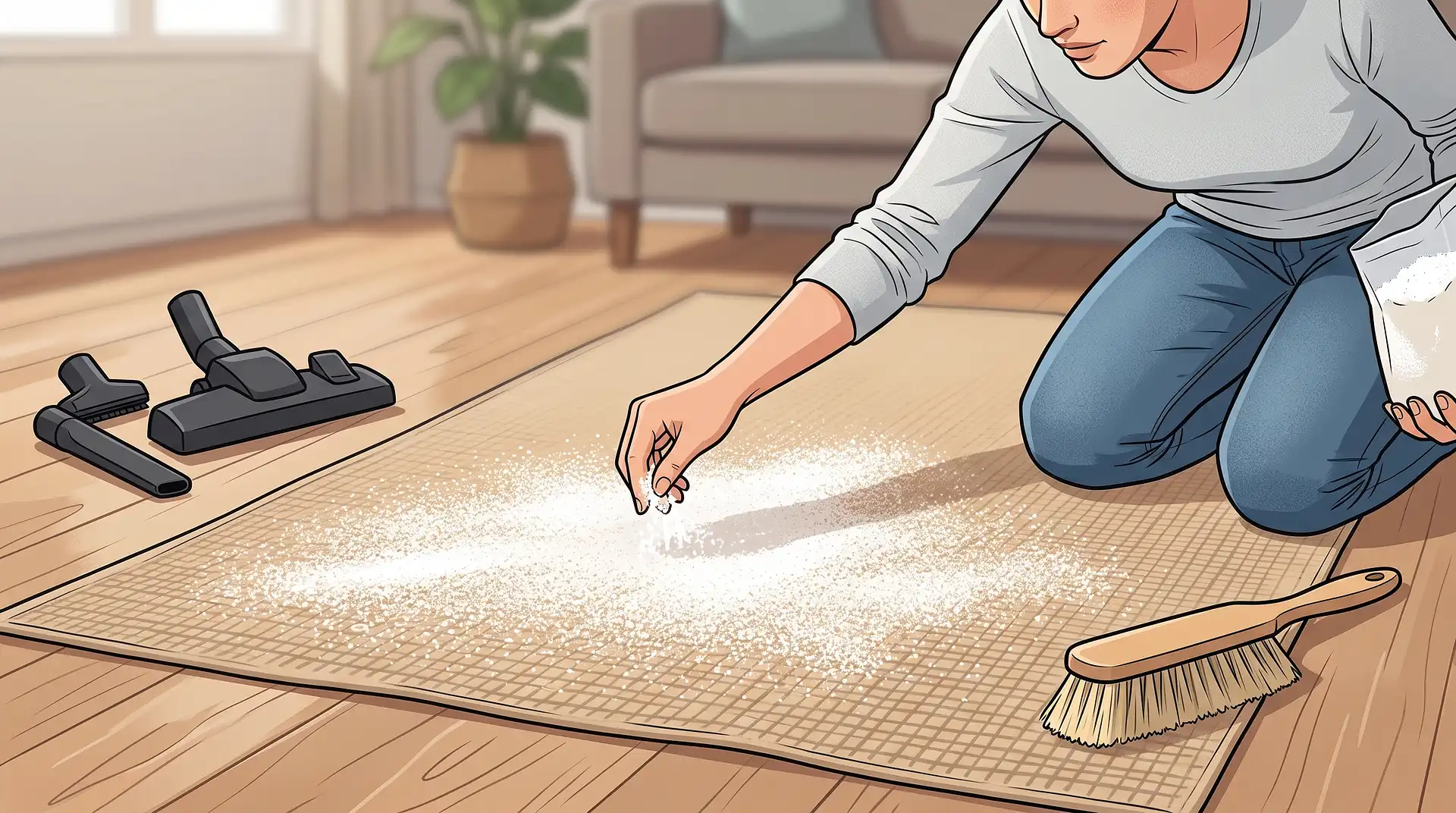
For a full refresh of a sisal rug without moisture, dry cleaning powder is the correct approach and works well on a rug in good general condition.
Dry cleaning powder, sometimes sold as dry carpet cleaner or dry compound cleaner, consists of absorbent particles often combined with a small amount of solvent. The particles attract and bond with oils, dust and general soiling from within the fibre weave without introducing moisture.
Step 1: Vacuum the rug thoroughly first, in multiple directions.
Step 2: Sprinkle the dry cleaning powder evenly across the full rug surface. Don't concentrate it in one area.
Step 3: Work the powder gently into the weave with a soft-bristled brush, using light strokes in multiple directions. This ensures the particles make contact with soil deeper in the weave, not just at the surface.
Step 4: Allow the powder to sit for the time specified on the product — typically thirty minutes to a few hours. During this time it is actively absorbing soil and odour compounds.
Step 5: Vacuum thoroughly, going over the rug several times in multiple directions to remove all the powder. Powder left in the weave eventually becomes part of the soil.
Step 6: Vacuum the back of the rug too, to remove any powder that has worked through.
This method is appropriate for routine deep maintenance, two to three times a year on a well-used rug, and after any spill that has been managed at the surface level.
Stain removal on sisal
The essential constraint throughout is minimum moisture. Everything here assumes a W or WS coded rug — though many sisal rugs are dry-clean only, and the care label governs.
Dry residue (dried food, dried mud, dried pet accident). Allow to dry completely if it isn't already. Use a plastic scraper or stiff card to break up the surface crust and lift it away from the fibre. Vacuum carefully. Treat any residual stain with dry cleaning powder as above.
Oil and grease. Apply bicarbonate of soda or cornstarch directly to the fresh stain. Leave for at least twenty minutes to absorb the oil. Vacuum off carefully. Repeat if needed. This dry absorption approach removes a significant amount of oil without any moisture risk.
Liquid spills with colour (coffee, tea, juice). Blot immediately with a dry cloth. If any residue remains, apply dry cleaning powder. If a faint mark persists after the powder method has been applied and vacuumed, a barely damp cloth — damp as in almost dry, not wet — with a tiny amount of mild cleaner dabbed once only on the mark, followed by immediate blotting with a dry cloth, is the limit of safe home treatment. Dry the area with a fan or hairdryer held well away from the surface to speed moisture removal.
Pet accidents. Blot immediately with a dry cloth, absorb as much liquid as possible. Apply dry cleaning powder. Once dry, treat any residual odour with bicarbonate of soda. For the uric acid element of urine that causes recurring odour, the dog pee rug guide on this site covers the enzyme cleaner approach — on sisal, this must be done with an absolute minimum of moisture and thorough, rapid drying.
What to do when the rug has browned
Brown or yellow staining that appeared after a spill or a cleaning attempt is cellulosic browning — plant tannins drawn to the surface by the moisture. It is not the original stain.
Stop adding moisture immediately. Further cleaning attempts with water make it worse, not better.
Allow the rug to dry completely. Elevate it so air reaches both sides if possible — the backing must be fully dry before assessment.
Once fully dry, assess the result. Mild browning sometimes fades partially as the rug dries and the tannins settle. More significant browning is difficult to reverse and typically requires professional dry-cleaning assessment. Instant Dry Carpet Cleaning assesses each rug individually before any treatment begins — for sisal with browning, controlled dry cleaning methods are the appropriate intervention, and the outcome depends significantly on how much moisture reached the fibre and how quickly it was removed.
What never to use on sisal
Steam cleaner. The condensing steam moisture causes the same damage as liquid water, plus heat.
Wet shampoo or carpet machine. Saturates the rug and almost certainly causes browning, warping and mould.
Vinegar and water solution. Several guides recommend this. On sisal the moisture component causes the same browning risk as any other liquid application.
Beater bar on the vacuum. Frays and pulls the tight sisal weave progressively.
Scrubbing. Pushes staining deeper and damages the weave surface.
Leaving the rug flat while damp. Traps moisture between the backing and the floor. If any moisture has reached the rug, elevate it for drying.
Frequently Asked Questions
Can you use water to clean a sisal rug? In very small amounts on a barely damp cloth, as a last resort for a specific stain, applied and blotted dry immediately. In any significant quantity — wet shampooing, steam cleaning, pouring a solution — water causes tannin browning, fibre warping and backing mould on sisal. Dry methods are always the first and preferred approach.
Why has my sisal rug gone brown? Cellulosic browning: plant tannins within the sisal fibre dissolved in moisture and deposited on the surface as the rug dried. It is caused by the moisture, not the original spill. Stop adding moisture, dry the rug completely, and assess once fully dry. Significant browning typically needs professional dry cleaning assessment.
How do you vacuum a sisal rug correctly? Suction only — no beater bar or rotating brush attachment, which frays the tight weave. Work in multiple directions: north to south, then east to west. Go slowly, with overlapping passes. Vacuum the back periodically to dislodge fine debris from the weave base.
How do you deep clean a sisal rug at home? Dry cleaning powder is the correct method. Sprinkle evenly, work gently into the weave with a soft brush, allow to sit for thirty minutes to a few hours, then vacuum thoroughly in multiple directions. This removes embedded oils and general soiling without moisture.
Can you steam clean a sisal rug? No. Steam condenses on contact with sisal and causes the same moisture damage as liquid water — tannin browning, warping and mould risk. Steam cleaning is specifically unsuitable for all natural plant-fibre rugs.
How do you get stains out of a sisal rug? For dry residue: scrape, vacuum, dry cleaning powder. For oil and grease: absorb with bicarbonate of soda or cornstarch before any liquid contact. For liquid stains: blot immediately with a dry cloth, then dry cleaning powder. Minimal moisture only as a last resort, applied once with a barely damp cloth and blotted dry immediately.
How do you remove pet stains from a sisal rug? Blot immediately with a dry cloth to absorb as much liquid as possible. Apply dry cleaning powder once the excess is absorbed. Treat residual odour with bicarbonate of soda once dry. The uric acid component of pet urine requires enzyme cleaner, but on sisal this must be used with the absolute minimum moisture and rapid drying.
Is sisal the same as jute? No. Sisal comes from the Agave sisalana plant; jute comes from the Corchorus plant. Both are natural plant fibres with similar moisture sensitivity, but sisal has a harder, tighter weave and is generally more durable underfoot. The cleaning approach is essentially the same: dry methods first, minimum moisture for any wet treatment.
Service Section
Browning, pet accidents or a sisal rug that needs more than dry powder?
Significant browning, pet contamination that has reached the backing, or a rug that has been wet-cleaned and warped are all beyond home treatment. InstantDry collects rugs across England and Wales, assesses each one individually before any cleaning begins, and returns them properly dried and wrapped. For sisal specifically, we use dry cleaning methods — wet extraction is not appropriate for this fibre and we won't use it.
Get your fixed quote in 60 seconds
Or call 07555 856988.