How to Clean a Shaggy Rug
26 August 2026
Quick answer: Never use a rotating brush head or beater bar when vacuuming — it pulls and breaks the long fibres. Use suction only with an upholstery attachment and vacuum the back of the rug first to dislodge trapped debris. Shake and beat outside regularly. For stains, blot immediately and use a cool water and mild detergent solution on a cloth. For a full wash, cold water only on wool and viscose types. The most important step people get wrong is drying: a shaggy rug dried flat will have fibres that clump and mat together. Hang it or prop it upright so air reaches both sides, and gently separate the fibres with your fingers while still damp.
Long pile is the quality that makes a shaggy rug worth having. That same quality is what makes cleaning one feel uncertain — all those fibres hiding debris at their base, tangling around vacuum heads, clumping into flat patches after washing. The approach is straightforward once you understand what each step is actually for, and Instant Dry Carpet Cleaning works with long-pile rugs regularly enough to know where the common mistakes happen.
Know your fibres before you start
Shaggy rugs come in several different fibre types that look broadly similar but behave very differently when wet.
Polyester and acrylic: the most common in modern UK shaggy rugs. Practical, durable, colourfast, and the most forgiving to clean. Cool or cold water, mild detergent, machine washable in many cases where the care label confirms it.
Wool: natural fibre, soft and warm, but sensitive to heat, agitation and alkaline products. Cold water only. Risk of felting if washed warm or with heavy agitation. WoolSafe or pH-neutral detergent only. These rugs respond well to careful hand cleaning but need more patience than synthetic types.
Viscose and bamboo silk: the trickiest category. These fibres lose tensile strength when wet, distort easily and leave watermarks that are often permanent. A viscose shaggy rug should not be wet washed at home. Dry cleaning or specialist professional treatment is the appropriate route. If you're not certain whether your rug contains viscose, check the care label carefully — it's often marketed as art silk, faux silk or bamboo silk.
Check the care label before applying anything wet. A dry-clean-only label is not a suggestion.
The vacuum technique that doesn't destroy the pile
Standard vacuum heads with a rotating brush bar or beater bar are designed to agitate short carpet pile to lift dirt. On a shaggy rug with long fibres, the rotating action catches those fibres, wraps them around the mechanism, and pulls them. Over time this frays and breaks the pile at the base, permanently damaging the texture of the rug.
Use the plain suction attachment, either the upholstery nozzle or the basic floor tool with the brush head disabled. Move slowly and with light pressure.
Vacuum the back first. This is the step that makes routine vacuuming considerably more effective on a long-pile rug. Flip the rug over and vacuum the back surface with normal suction. The vibration and suction dislodge debris that has settled at the very base of the fibres, down near the backing where the pile is knotted or tufted. Then flip the rug back and vacuum the pile surface, and you'll find far more debris lifts out than if you'd only vacuumed the front.
Vacuum in the pile direction where the rug has a clear directional nap. Moving against the pile direction lifts the fibres but also moves debris back into the pile rather than to the surface.
Routine care: shake, beat and comb
Regular shaking and beating outside is more effective than vacuuming alone for removing the fine dust and debris that settles at the base of long fibres.
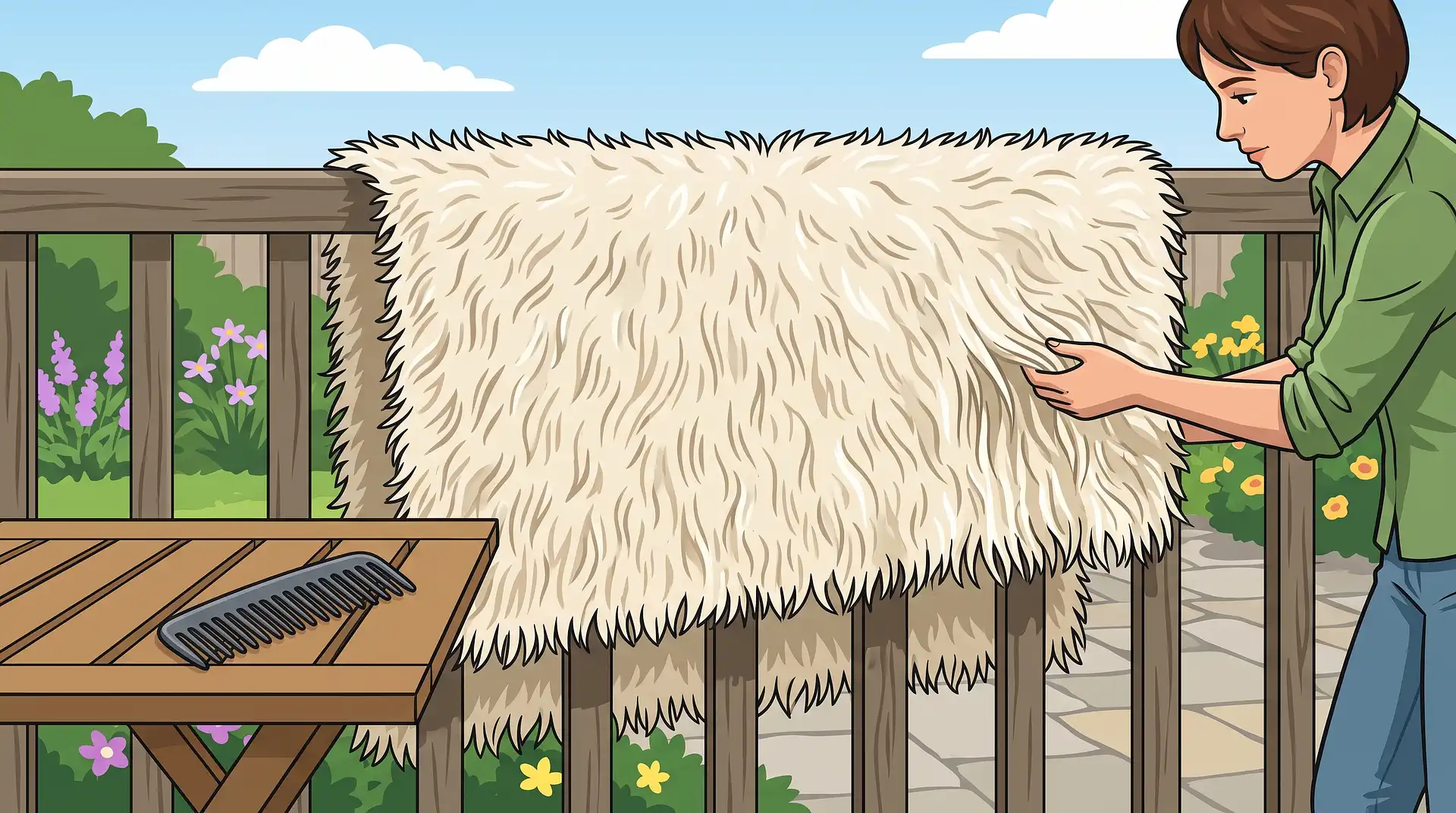
Take the rug outside and hang it over a washing line, fence or railing. Beat the back with a broom handle or carpet beater. The amount that falls out from a rug that was vacuumed last week will confirm the value of this step immediately.
A wide-tooth comb or carpet rake run through the pile gently restores the fibres to an upright position and separates any that have started to mat together from foot traffic or compression. Work in the direction of the nap for most of the rug, and in short, careful strokes on any matted sections. This step is worth doing monthly regardless of whether a full clean is needed, and it keeps the rug looking fluffy between washes.
Spot cleaning on a shaggy rug
Act immediately on any spill. The long pile holds liquid near the surface for a moment before it works its way down to the backing, and catching it in that window significantly reduces how much penetrates to the base.
Blot with a dry white cloth from the outside of the mark inward. Never rub — rubbing pushes liquid deeper and tangles the long fibres. Keep switching to a dry section of cloth.
Apply a mild detergent solution via a cloth, not directly onto the rug. Work gently with the pile rather than across it. For most stains on synthetic and wool rugs, cool water and a small amount of clear washing-up liquid handles the surface problem well.
For pet-related accidents, the dog pee rug guide on this site covers why enzyme cleaners are essential rather than optional, and why the smell keeps coming back if the uric acid fraction isn't treated. The same principle applies to cat accidents.
Rinse by dabbing with a plain cool water cloth and blot dry thoroughly before the rug goes back down. The longer a damp patch stays in a shaggy rug pile, the more the fibres in that area will clump together as they dry.
Full wash: when and how
Reserve a full wash for when the rug genuinely needs it — significant overall soiling, embedded odour, or a stain that spot cleaning hasn't resolved. Washing too frequently stresses the fibres and backing unnecessarily.
Small synthetic shaggy rugs that the care label confirms are machine washable: cold gentle cycle, short or no spin, non-biological detergent. Remove promptly and move straight to the drying stage.
Wool shaggy rugs: hand washing in cold water is significantly safer than machine washing. Fill a bath with cold water and a small amount of WoolSafe or pH-neutral wool detergent. Submerge the rug and gently squeeze the water through the pile without agitating or scrubbing. Rinse in fresh cold water until the water runs clear. Press water out gently by hand — do not wring, which twists the pile and stresses the backing.
Cold water throughout is the requirement, not cold-ish or lukewarm. The risk of felting in wool is real and the damage is permanent.
Viscose shaggy rugs: don't wet wash at home. Dry methods only, and professional cleaning for anything beyond surface maintenance.
The drying problem nobody talks about
This is the step where most shaggy rug cleaning attempts go wrong, and it's almost entirely absent from the competing content landscape.
When a shaggy rug with long, loose fibres dries flat — whether lying on a floor, draped flat on a surface, or laid on grass — the fibres clump together as moisture leaves them. Adjacent fibres touch each other throughout the drying process, and as they dry they can bond into clumps. The result is a rug that looks matted and flat, sometimes in patches, sometimes uniformly, and which requires significant work to restore to its original appearance.
The prevention is simple but time-sensitive.
Hang the rug or prop it upright so the pile hangs freely and air reaches both the surface and the backing. Over a washing line, a garden railing, or propped against a wall or fence with the pile facing outward. This allows each fibre to dry independently rather than in contact with its neighbours.
Separate the fibres while still damp. Once the rug is hanging, run your fingers through the pile gently to separate any fibres that are clumping. Do this periodically during the first hour or so of drying, while the fibres are still pliable enough to separate easily. Once fully dry, it's much harder.
Use a wide-tooth comb on any sections that have clumped, again while still damp. Work from the tip of the fibre toward the base, gently separating rather than pulling.
No tumble dryer and no heat of any kind. Heat risks felting wool pile and can affect the structural integrity of synthetic fibres at sustained temperatures. Instant Dry Carpet Cleaning specifically avoids heat when drying long-pile rugs after professional cleaning for exactly this reason.
Outdoors on a dry, breezy day is the ideal drying environment. Indoors with windows open and a fan circulating air around the hanging rug is the next best option.
Allow the rug to dry completely before returning it to the floor. Check by pressing your hand into the pile near the backing. Any coolness or dampness means more time is needed.
Restoring a flattened shaggy rug
If the pile is already flat from compression, a previous cleaning attempt, or simply from heavy use, there are several approaches that work with varying degrees of success depending on the fibre.
Shake vigorously outdoors. The physical movement of shaking often starts to separate and lift flat fibres better than any tool.
Work through it with a wide-tooth comb or carpet rake. Start at the tips and work toward the base in short strokes. Patience works better than force here.
Light steam from a distance on synthetic rugs. A handheld steamer held 10 to 15 centimetres away, moving constantly and never lingering, can help loosen matted fibres before combing. Not on wool, not on viscose, and always test on a hidden corner first.
On wool: the wool rug washing guide covers restoring wool pile in more detail. The principle is the same — gentle handling while damp gives far better results than working on dry, already-set fibres.
Where the pile has actually broken at the base from vacuum damage or excessive agitation, that is physical damage rather than maintenance, and it won't fully restore regardless of method.
FAQ Section
How do you clean a shaggy rug at home? Check the care label and fibre type first. Vacuum with suction only, no rotating brush head, and vacuum the back of the rug before the pile side. Shake and beat outside regularly. Spot clean stains with a cool water and mild detergent solution on a cloth. For a full wash, cold water only on wool types, and hang the rug to dry rather than laying it flat.
Can you machine wash a shaggy rug? Only if the care label explicitly confirms it and the rug is synthetic or robust cotton. Use a cold gentle cycle, short or no spin, and non-biological detergent. Never machine wash wool or viscose shaggy rugs.
Why has my shaggy rug gone flat after washing? The long fibres clumped together during drying. This happens when the rug dries flat with the fibres in contact with each other. Hang the rug to dry next time and separate the fibres gently with your fingers while still damp. For an existing flat rug, a wide-tooth comb or carpet rake worked through the pile gradually restores it.
How do you make a shaggy rug fluffy again? Shake it vigorously outside first. Then work through the pile with a wide-tooth comb or carpet rake in the direction of the fibres. For synthetic rugs, light steam from a handheld steamer held well above the surface, moving constantly, helps loosen matted fibres before combing.
Can you vacuum a shaggy rug? Yes, but with the right technique. Never use a rotating brush head or beater bar, which catches and pulls the long fibres. Use a plain suction attachment and vacuum the back of the rug first, then the pile surface. Vacuum the back once a month and the pile more frequently.
How do you dry a shaggy rug after washing? Hang it over a line, railing or fence so the pile hangs freely and air reaches both sides. Separate any clumping fibres gently with your fingers while the rug is still damp. No tumble dryer, no heat. Allow to dry completely before returning to the floor.
How do you clean a wool shaggy rug? Cold water and WoolSafe or pH-neutral detergent, applied by gentle hand washing. No agitation or scrubbing, no warm water which risks felting. Press water out gently without wringing. Hang to dry and work through the pile while damp to prevent clumping.
Can you clean a viscose shaggy rug at home? Not with wet methods. Viscose loses strength when wet, distorts easily and watermarks permanently. Vacuum and dry brush only for routine care. Wet cleaning should be done by a specialist.
Service Section
Large, delicate or simply too much to handle at home?
A large shaggy rug, a wool or viscose type, or one that's built up several years of embedded soil is often better handled professionally than attempted at home. InstantDry collects rugs across England and Wales, cleans them in a controlled environment using fibre-appropriate methods, and returns them properly dried and wrapped. Every rug is assessed individually before any cleaning begins.
Rugs from £89.
Get your fixed quote in 60 seconds
Or call 07555 856988.