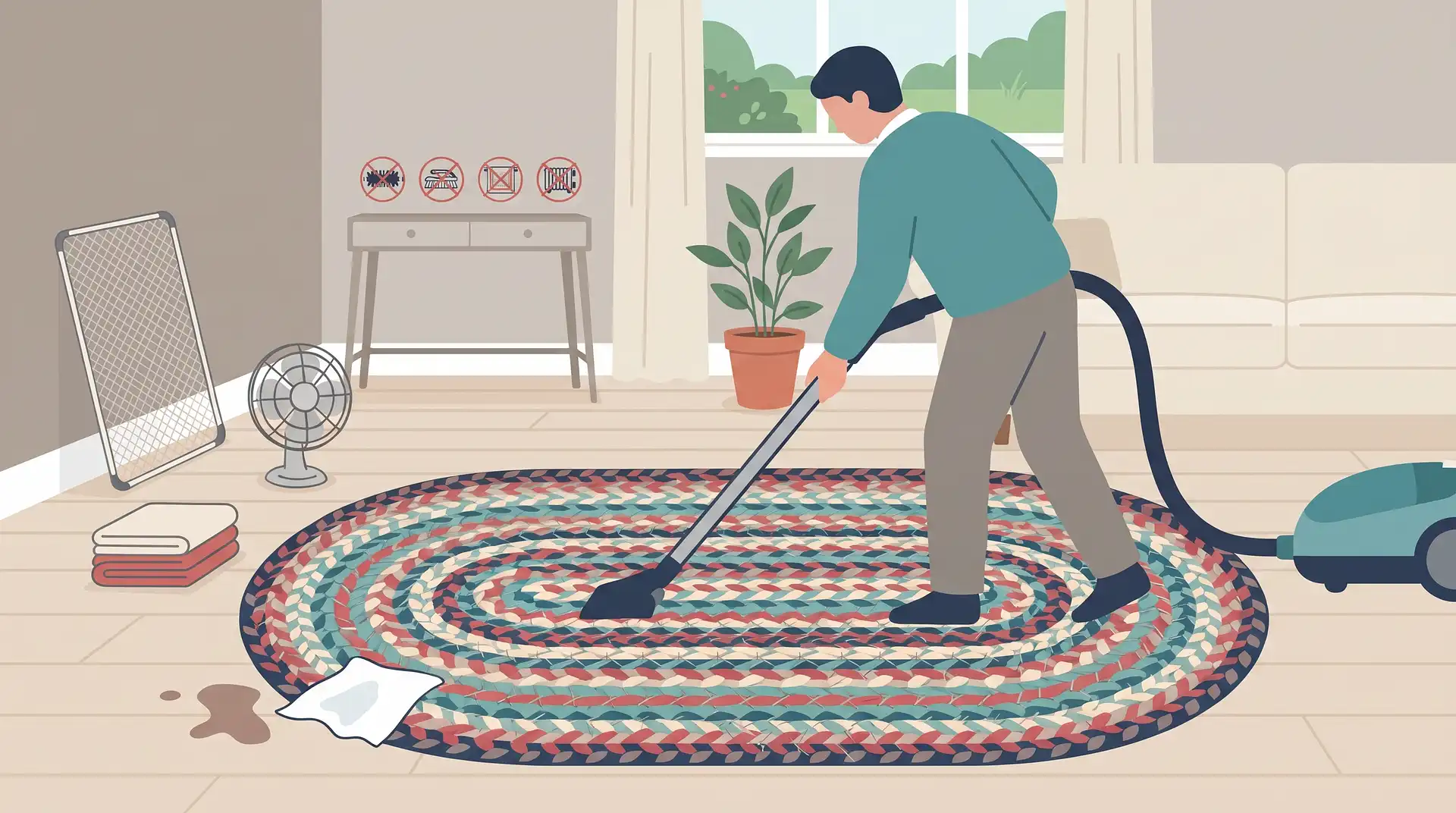
How to Clean a Braided Rug at Home
1 October 2026
Would rather leave it to a professional? See our rug cleaning in Manchester.
Quick answer: Check the care label and identify the fibre before using water. Vacuum both sides with suction only, paying attention to the grooves between the braids. Blot spills with a white cloth and use a fibre-appropriate cleaner only after a hidden-area test. Wash the whole rug only when the label specifically allows it. Dry it flat in its correct shape with air reaching both sides, because hanging a wet braided rug can stretch its stitching.
A braided rug may be made from wool, cotton, polypropylene, polyester, jute or a blend. The braids are coiled or arranged beside one another and held together with stitching or lacing. That structure traps grit in its grooves and can separate if the rug is scrubbed, twisted or handled roughly while wet.
Identify the material before cleaning
“Braided” tells you how the rug is made, not how it should be cleaned. Read the fibre label, cleaning symbols and manufacturer instructions. If the rug has no label, do not assume it is washable simply because it looks robust.
Braided-rug material | Safer home approach | Main risk |
|---|---|---|
Wool | Cool water and wool-approved cleaner, with low moisture | Shrinkage, felting and dye movement |
Cotton or fabric strips | Spot clean; machine or hand wash only when the label permits | Colour bleeding, shrinkage and distortion |
Polypropylene or polyester | Mild detergent and controlled rinsing when approved | Heat damage and stressed stitching |
Jute, sisal or another plant fibre | Dry care with minimal spot moisture | Browning, stiffness, mould and warping |
Mixed or unknown recycled fabric | Dry maintenance and cautious spot testing | Different fibres and dyes reacting unevenly |
Our general guide to cleaning a rug at home explains how fibre, backing and colour stability change the safest method.
Inspect the construction before you start
Lay the rug flat in good light and inspect both faces. Look for loose thread, broken lacing, gaps between coils, torn fabric strips and weak edges. Cleaning will not repair structural damage, and a wet rug places extra strain on already weakened joins.
If a braid is separating, avoid machine cleaning and deal with the repair first. Do not pull a loose end. Pulling can undo a larger section. Trim a harmless surface fibre only when you are certain it is not part of the structural stitching.
Test the colour
Dampen a white cloth with the cleaner you plan to use and press it against a hidden section. Check the cloth for transferred dye. Let the test area dry completely, then look for fading, stiffness, a water ring or a change in shape.
Traditional braided rugs may use several coloured fabrics, and each dye can behave differently. Test every main colour rather than one section alone.
What you need
A vacuum with suction-only control or an upholstery attachment
A soft brush
A spoon or blunt plastic scraper
White absorbent cloths and dry towels
A cleaner approved for the rug's fibre
A clean flat drying surface or supported mesh rack
A fan for gentle airflow
A rotating vacuum brush can catch stitches and loose fabric. Coloured towels may transfer dye when damp, so use plain white materials for testing and blotting.
How to clean a braided rug routinely
1. Shake out loose dirt
Take a small rug outdoors and shake it gently. Support its weight rather than snapping it sharply. Large or fragile rugs should stay flat and be vacuumed instead.
2. Vacuum the top
Use suction only and move slowly along the direction of the braids. Lift the nozzle at the end of each pass rather than dragging it sideways across the joins. Use a crevice tool carefully above deep channels, without scraping the stitching.
3. Vacuum the reverse
Turn the rug without folding it sharply and vacuum the back. Grit works down between braids and can act like an abrasive when the rug is walked on. Clean the floor underneath before returning the rug.
4. Rotate it
Turn the rug through 180 degrees every few months. Rotation spreads foot traffic, furniture pressure and sunlight exposure across more of the surface.
How to spot clean a braided rug
Remove solids without pushing down
Lift food, mud or other solid material with a spoon or blunt scraper. Work from the edge towards the centre. Avoid pressing material into the channels between braids.
Blot liquid immediately
Press a folded white cloth onto the spill, lift it straight up and move to a dry section. If possible, place another cloth underneath a small rug to check whether liquid has passed through.
Apply the correct cleaner to a cloth
Use a product approved for the identified fibre and the stain. Dampen the cloth rather than pouring cleaner onto the rug. Blot from the outside in, then follow the product's rinsing instructions with another barely damp cloth.
Wool needs a pH-neutral or wool-approved product and cool water. Cotton and colourfast synthetic braids may tolerate a weak mild-detergent solution. Jute and sisal need extremely limited moisture because water can cause permanent brown marks.
Press out moisture
Lay a dry towel above and below the affected part and press. Do not twist, wring or scrub the rug. Reshape the coils while damp, then begin drying straight away.
Large braided rug or a stitching worry?
Book professional rug cleaning
How to clean common stains
Food and drink
Lift solids, blot liquid and use the fibre-safe spot method. Sugary residue must be removed because it becomes sticky and attracts soil. Several light blotting passes are safer than flooding the channels.
Grease or cooking oil
Blot without rubbing. Use a treatment approved for the material. On a washable synthetic or colourfast cotton braid, a weak solution of clear washing-up liquid may help lift oil. Wool, jute and unknown blends need a product made for that fibre.
Mud
Let ordinary mud dry completely, then flex the rug gently and vacuum the loosened soil from both sides. Spot clean the remaining shadow instead of spreading wet mud through the braid.
Pet urine or vomit
Wear gloves, remove solids and blot promptly. Use an enzyme product only when its label confirms that it is suitable for the rug fibre. Standard biological cleaners can damage wool, while excess liquid can carry contamination between the coils and into the floor beneath.
When biological material has soaked through a thick braid, surface blotting may not reach it. A returning smell after complete drying is a reason to arrange professional cleaning.
Chewing gum or wax
Hold ice in a sealed bag above the material until it hardens, then lift it with a blunt plastic edge. Avoid an iron or hairdryer. Direct heat may shrink wool or cotton, melt synthetic fibres and spread coloured wax.
Ask About Professional Rug Cleaning
Can you wash a braided rug?
Only when the care label clearly allows washing. A washable fibre does not automatically make the complete rug washable. The stitching, thread, core and mixture of colours also need to tolerate water and movement.
Machine washing
A small cotton or synthetic braided rug may be machine washable if the manufacturer says so. Use the stated programme, temperature, detergent and spin speed. Make sure the rug fits loosely in the drum. A tightly packed rug cannot rinse properly, and a heavy uneven load can affect the machine.
Place a delicate rug in a suitable laundry bag only when the care instructions allow it. Do not machine wash wool, jute, sisal, antique or structurally weak braided rugs unless their specific label expressly permits it.
Hand washing
Hand wash only when approved. Use cool or lukewarm water as directed, mild fibre-safe detergent and gentle compression rather than scrubbing. Support the rug evenly when moving it. Do not lift a large wet rug from one edge.
Using a carpet-cleaning machine
Extraction may be suitable for a stable synthetic braided rug when its instructions allow wet cleaning. Use controlled moisture and make extra dry passes. The machine head must not catch stitching or force the coils apart.
Do not use extraction on jute, sisal or an unknown mixed-fibre braid. For wool, consult the care instructions and use a wool-appropriate professional if a full clean is needed. Our guide on how to wash wool rugs explains the risks from heat, alkalinity and rough handling.
How to dry a braided rug properly
Reshape the rug while damp. Align the outside edge, close any small gaps between coils and make sure an oval or round rug has not stretched unevenly.
Dry it flat on a clean surface that allows airflow underneath, such as a supported mesh rack. Turn it when the top is partly dry if this can be done without stretching it. Use a fan and ventilation indoors.
Do not hang a heavy wet rug from one edge. Its weight may stretch the braid and lacing. Avoid tumble drying unless the label specifically permits it. Keep the rug away from radiators, heated floors and prolonged strong sunlight.
The centre and channels between braids dry more slowly than the exposed surface. Check both sides for coolness or dampness before returning the rug to the floor. Never place a damp rug on wood, laminate, carpet or underlay.
Special care by material
Wool braided rugs
Use suction-only vacuuming, cool water and a wool-approved cleaner. Avoid biological detergent, alkaline cleaners, hot water and hard scrubbing. A large or valuable wool braid is safer with a rug specialist.
Cotton and rag rugs
Cotton may be washable, but it can shrink and release dye. Traditional rag rugs may contain recycled fabrics with unknown colours. Test every colour and follow the complete-rug care label.
Synthetic braided rugs
Polypropylene and polyester generally tolerate careful wet cleaning better than natural fibres, but the stitching and internal core still limit the method. Avoid high heat, pressure washing and forceful brushing.
Jute braided rugs
Keep jute dry. Vacuum carefully and use only the smallest spot moisture allowed by the manufacturer. Full washing can cause cellulosic browning, stiffness, odour and loss of shape. Read our detailed guide on how to clean a jute rug before treating a jute braid.
Antique or handmade braided rugs
Old stitches, mixed fabrics and unstable dyes make home washing risky. Use dry maintenance and arrange a specialist assessment for stains or widespread soil.
Safety guide for cleaning a braided rug
Read the entire cleaner label before use. Hazard symbols and precautionary statements explain ventilation, protective equipment, storage and first-aid requirements. The Health and Safety Executive provides guidance on cleaning-product labels and hazards.
Never mix cleaning products. Keep children and pets away until the rug has been rinsed where required and is fully dry. Wear gloves when directed, ventilate the area and keep products in their original labelled containers.
A wet braided rug becomes heavy. Clear the route before moving it and ask another capable adult for help. Support the weight evenly, avoid twisting your back and do not carry it where it blocks your view.
Common mistakes to avoid
Cleaning by construction without identifying the fibre
Using a rotating vacuum brush over stitches and loose ends
Machine washing because the rug happens to fit in the drum
Scrubbing across braids and forcing coils apart
Soaking jute, sisal, wool or an unknown mixed-fibre rug
Using hot water, steam, an iron or a high-heat dryer
Wringing, folding or hanging the rug while it is wet
Returning it to the floor before the centre and reverse are dry
Frequently asked questions
Can you vacuum a braided rug?
Yes. Use suction only and vacuum both sides. Follow the direction of the braids and take care around stitching, loose strips and the outer edge.
Can you put a braided rug in the washing machine?
Only if the manufacturer specifically says the complete rug is machine washable. Small cotton and synthetic rugs are the most likely candidates, while wool, jute, antique and damaged rugs generally need another method.
Can you hose down a braided rug?
Do not hose it unless the label confirms that the fibre and construction tolerate full rinsing. Hosing can saturate the core, strain the lacing and make even a synthetic rug difficult to dry evenly.
Why is a braided rug becoming wavy?
Uneven moisture, shrinkage, stretched stitching or improper drying can distort the coils. Reshape a washable rug while damp and dry it flat. A dry rug with separated or stretched joins may need repair.
How do you remove a smell from a braided rug?
Vacuum both sides and identify the source. A musty smell suggests moisture remains inside the braid or beneath the rug. A biological smell may indicate contamination between coils. Fragrance will only cover the problem temporarily.
When is professional cleaning appropriate?
Use a specialist for wool, jute, antique or mixed-fibre rugs; unstable colours; damaged stitching; widespread soil; contamination that reached the centre; or a smell that returns after complete drying. Tell the cleaner about every product already used.
Are braided rugs washable?
Small cotton or synthetic braided rugs are often machine-washable on a cool gentle cycle if the label allows it. Wool and jute braided rugs are not. Large braided rugs are too heavy for home machines and should be spot-cleaned.
Can you power wash a braided rug?
Not recommended. High pressure can break the stitching that holds the braids together and force water into the core, which then dries slowly and smells. Use a hose on low pressure for outdoor synthetic rugs only.
How do you dry a braided rug?
Lay it flat on a clean surface or over several rails so air reaches both sides. Turn it over halfway through. Do not hang it from one edge, which stretches the braids out of shape.
Protect the braids as well as the fibres
The safest routine is simple: remove grit from both sides, rotate the rug, blot accidents quickly and keep moisture matched to the fibre. Treat the lacing as part of the rug rather than focusing only on the visible material.
InstantDry can assess the fibre, dye stability, stitching and depth of contamination before recommending a method. Stain-removal results depend on the material, age of the mark and any earlier treatments.
Request a Rug Cleaning Assessment
Related guides: how to clean a rug with a steam cleaner. For a professional finish, see our rug cleaning service or carpet cleaning in Manchester.
Related guides
Need it cleaned properly?
Book our rug cleaning service — from £39 (UK average £60), free in-home survey and pay on completion.