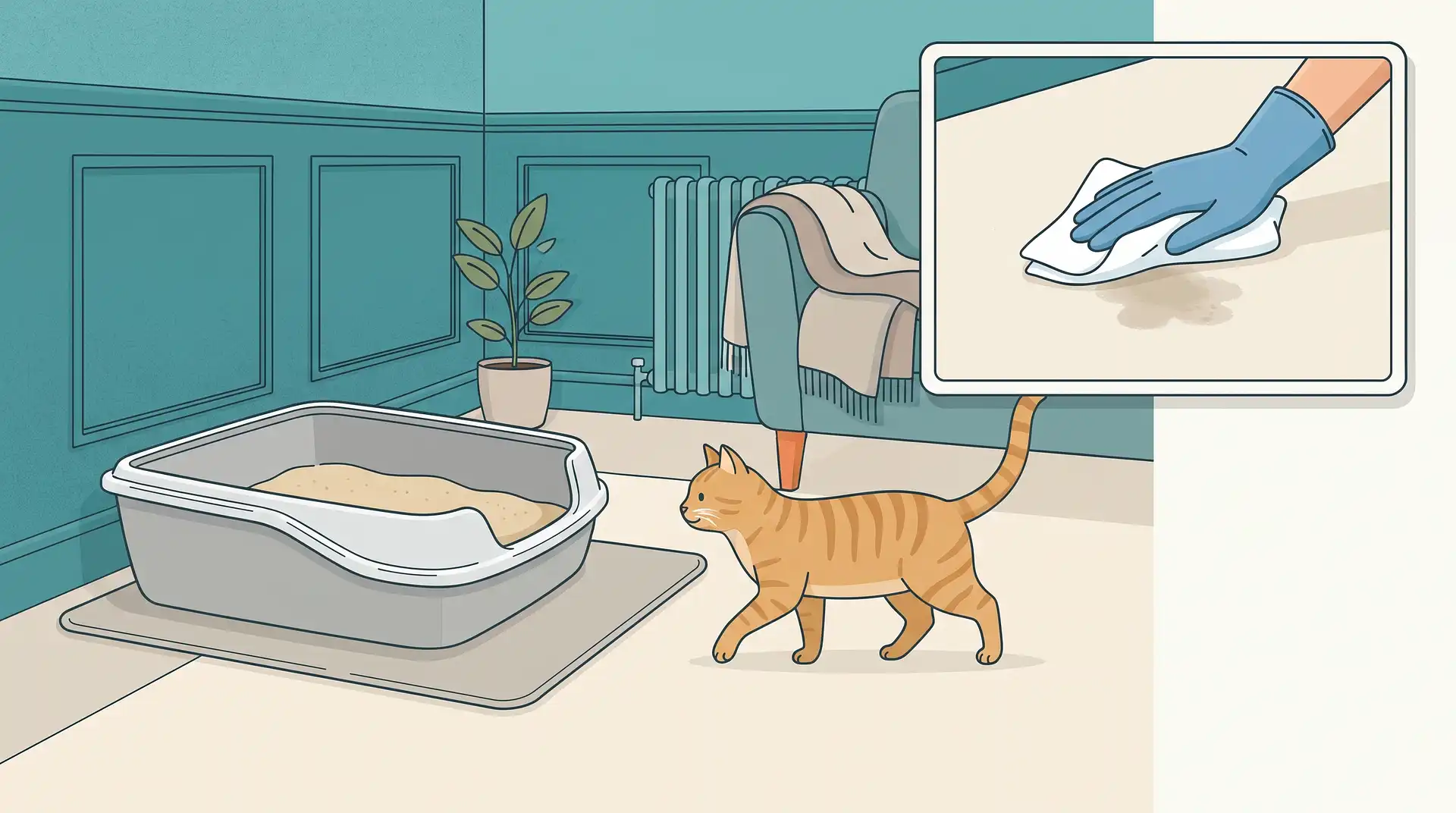
How to Stop a Cat Urinating on the Carpet
26 September 2026
Would rather leave it to a professional? See our pet stain removal in Manchester.
Quick answer: To stop a cat from urinating on the carpet, arrange a vet check for a new or recurring change, make the litter trays clean and easy to reach, reduce sources of stress and clean urine with a treatment suitable for your carpet. Do not punish your cat or rely on a strong-smelling spray. Cleaning helps remove the scent, but the reason for the accidents needs attention too.
Safety guide: check your cat before treating the carpet
If your cat repeatedly tries to urinate but passes little or nothing, contact a vet immediately. Straining, crying or repeated unsuccessful trips to the tray can indicate a blocked bladder. This is a life-threatening emergency, especially in male cats. Do not wait overnight or delay the call while you clean.
Blood in the urine, increased thirst or a sudden change in toilet habits also needs prompt veterinary advice. A puddle on the carpet cannot tell you whether the cause is illness, discomfort or stress.
When cleaning, keep your cat and children away from the treated area until the product's instructions say it is safe to return. Wear gloves where directed, ventilate the room and wash your hands afterwards. Never mix cleaning products or use bleach on a urine-soiled patch. Avoid essential oils and homemade scented deterrents around cats.
Keep a safe resting space and an accessible toilet available while the room is out of use. The government's guidance on a suitable environment for cats explains the importance of safe hiding places and a quiet, accessible toilet area.
Why is your cat urinating on the carpet?
Possible causes include a urinary problem, difficulty getting into the tray, an unsuitable litter setup or something that makes your cat feel unsafe. More than one factor can be involved.
For example, an older cat may find a high-sided tray painful to enter. Another cat may avoid a tray beside a noisy appliance. A neighbouring cat at the window or a new pet in the home can also affect how secure your cat feels.
Start with the vet rather than assuming your cat is being naughty. Tell the vet when the accidents began, whether the amount of urine has changed and whether your cat is drinking more.
Is your cat spraying or emptying its bladder?
A cat that squats and leaves a puddle is usually toileting. A cat that stands with its tail raised and directs a small spray towards a wall or furniture is more likely to be marking.
These are useful clues, not a diagnosis. Sprayed urine can reach the carpet too. Note the posture, location and amount so your vet can understand what is happening.
How to stop a cat from urinating on the carpet
1. Provide enough litter trays in separate places
A useful starting point is one tray for each cat, plus one extra. That means two trays for one cat and three for two cats. Spread them across suitable locations instead of lining them up together.
In a home with several floors, make sure your cat can reach a tray without a difficult journey. Keep an indoor option even if your cat normally toilets outside.
2. Make the tray comfortable and easy to enter
Choose a tray with enough space for your cat to turn around comfortably. A low entrance can help a cat with joint pain or reduced mobility.
Place it somewhere quiet, away from food, water and busy walkways. Check whether another pet can block the approach or corner your cat when it leaves.
3. Check litter and cleaning habits
Scoop wet clumps and waste at least twice daily, and sooner if needed. Wash the tray regularly using a cat-safe method, rinse it well and dry it before refilling.
Use unscented litter that your cat accepts. If the problem began after changing litter, mention that to your vet. Avoid changing every tray at once; retaining a familiar option helps you see what your cat prefers.
4. Reduce pressure around the home
Keep feeding and play routines predictable. Provide places to hide and rest without interruption. In homes with several cats, spread out resting places, food and water so one cat cannot control access to everything.
If incidents cluster near a window where unfamiliar cats appear, discuss that pattern with your vet or a qualified cat behaviourist. Reducing the view through the lower part of the window may help some cats feel more secure.
5. Record accidents without punishment
Keep a short note of when and where each accident happens, the amount of urine and any recent changes at home. Record which cat is affected if you know, rather than guessing.
Do not shout, spray water at your cat or rub its nose in the patch. Punishment can increase fear and make the problem harder to resolve. Use the record to help your vet assess progress.
Repeated accidents can leave contamination below the carpet surface. Tell InstantDry how long the problem has been happening and which products you have already used when asking about cleaning.
Ask About Cat Urine Carpet Cleaning
Urine smell soaked into the underlay?
Clean the urine patch without soaking the carpet
Cleaning is part of prevention because remaining scent can encourage a cat to revisit the same place. Air freshener may cover the smell for you without removing the urine.
Blot a fresh accident
Press clean white towels or kitchen roll onto the patch to absorb as much liquid as possible. Replace them as they become wet. Do not scrub the fibres or pour a bucket of water over the area.
Choose a suitable urine treatment
Look for a product intended for cat urine and approved for your carpet material. An enzyme-based urine treatment may be suitable, but the word enzyme alone does not confirm that a product is safe for wool, dyes or the backing.
Check the carpet maker's guidance and the cleaner's label. For wool or wool blends, use a product specifically approved for that use. Test an inconspicuous area as directed before treating the visible patch.
Follow the stated dilution, application amount and contact time. Some treatments need time to work before extraction or drying. Do not replace those instructions with a homemade mixture or repeatedly add more liquid.
Dry the area and check for deeper contamination
Follow the product's removal and drying directions. Keep pets away for the full period specified, and do not cover damp carpet with a rug or furniture.
If the smell returns or the same patch has been soaked repeatedly, the underlay or floor may need assessment. A surface treatment cannot reliably resolve contamination it does not reach. Some damaged materials may need replacing.
For wider care after the urine problem has been assessed, see our guide to cleaning a carpet. Follow the instructions for your particular carpet and urine treatment before using a machine.
If accidents have also reached a bed, use our separate guide to removing urine from a mattress. A mattress filling needs different moisture control from a fitted carpet.
What if your cat keeps returning to the same spot?
Tell your vet that the behaviour is continuing, even if an earlier examination found no obvious problem. They may recommend further investigation or referral to a qualified cat behaviourist.
While a treated patch dries, you can temporarily close off that room if your cat still has easy access to its trays, water and safe resting areas elsewhere. Restricting access to one patch does not treat the underlying cause and may simply move the accidents.
Ask the cleaner whether the backing and underlay need checking. Keep working on the litter setup and any veterinary treatment alongside the carpet work. Neither part replaces the other.
Frequently asked questions
What smell stops cats urinating on carpet?
No scent reliably resolves every cause. Strong fragrances can be unpleasant for cats, and some essential oils are harmful. Focus on your cat's health, its litter setup and proper urine removal instead.
Will vinegar stop my cat peeing in the same place?
Vinegar does not address a medical problem or an unsuitable tray. It is not a guaranteed deterrent or a universal carpet treatment. Choose a suitable urine cleaner and follow the carpet's care instructions.
Can neutering stop urine spraying?
It may reduce hormonally driven spraying, so discuss it with your vet if your cat is not neutered. Neutered cats can still spray because of stress or other factors. It is not a guaranteed fix for every accident.
Why is my older cat suddenly using the carpet?
Age-related mobility difficulties or a medical condition can change toileting habits. Arrange a vet check rather than assuming your cat has forgotten its training. An accessible tray may help while you follow the vet's advice.
How long does it take to stop repeat accidents?
There is no fixed timescale. It depends on the cause and your cat's response to treatment or changes at home. Keep your vet updated and seek urgent help if your cat develops difficulty passing urine.
Why is my cat suddenly peeing on the carpet?
Common causes are a dirty or badly placed litter tray, stress, a new pet or a change at home, and medical problems such as cystitis or kidney disease. A sudden change in toilet habits should be checked by a vet first.
What smell stops cats peeing on carpet?
Cats dislike citrus and strong vinegar smells. But the most important step is removing the urine smell completely with an enzyme cleaner, because cats return to places that still smell of urine.
How do you clean cat urine from carpet so they do not go again?
Blot up as much as possible, then soak the area with an enzyme cleaner to the same depth as the urine and leave it for the full label time. Avoid ammonia cleaners, which smell like urine to a cat.
Get help with lingering cat urine in your carpet
Contact InstantDry to discuss the affected area, the carpet material and how often it has been soiled. Include any treatments already applied so the cleaning options can be assessed. Carpet cleaning can address contamination, but it cannot promise to stop a cat's toileting behaviour.
Request a Carpet Cleaning Quote
Related guides: how to get urine smell out of carpet, how to stop cats scratching carpet. For a professional finish, see our pet stain and odour removal service or carpet cleaning in Manchester.
Related guides
Need it cleaned properly?
Book our pet stain & odour removal service — from £25 (UK average £40), free in-home survey and pay on completion.