How to Clean a Carpet
30 August 2026
Quick answer: Vacuum first, always, and vacuum in overlapping passes against and then with the pile direction to lift embedded soil rather than just surface debris. For stains, identify the fibre type and the stain type before reaching for any product — cold water for protein stains, cool water and mild detergent for tannin, dry absorption for grease. For a full deep clean, hot water extraction is the most effective home method. Dry the carpet thoroughly before replacing furniture: a carpet laid back on underlay before it's dry traps moisture between the layers and causes mould.
Carpet cleaning has accumulated more bad advice per square metre than almost any other household topic. Vinegar as a universal treatment, baking soda as a deep cleaner, scrubbing as a stain removal technique — all of them appear regularly and all of them have limits or risks that the guides recommending them don't mention. This article covers what actually works, why, and how to approach your specific carpet rather than carpet in general. For professional results across any fibre type, Instant Dry Carpet Cleaning covers England and Wales with hot water extraction that reaches deeper than any home method.
Know your carpet before you clean it
The most useful thing you can do before applying any cleaning method to your carpet is identify what it's made of. The fibre changes what's safe.
Polypropylene (olefin). The most common carpet fibre in UK homes, used in the majority of mid-range and budget fitted carpets. Synthetic, water-resistant, reasonably tolerant of cleaning products and machine extraction. The most forgiving carpet type to clean.
Wool and wool-blend. Higher-end carpets, often in traditional patterns. A protein fibre with alkaline sensitivity: products with high pH, including many household cleaners, damage wool at the fibre level over time. Cold water for protein stains, never hot. WoolSafe or pH-neutral products only. Prone to felting under sustained heat and agitation.
Nylon. Durable, responds well to cleaning, holds colour well. Less sensitive than wool but benefits from pH-appropriate cleaners rather than the most aggressive options.
Polyester. Soft, often used in cut-pile bedrooms. Less resilient to crushing than nylon and can retain oil-based soiling more readily. Generally tolerant of water-based cleaning.
If you don't know what you have, the burn test is a reliable home method: pull a small fibre from an inconspicuous area. Wool burns slowly and smells of hair. Synthetic fibres melt into a hard bead. Knowing which category you're working with changes the products and temperatures you should use.
Vacuuming: the step most people get wrong
Most people vacuum the most obvious areas with a few back-and-forth passes and consider it done. Vacuuming done well is considerably more effective than that, and it matters more than any cleaning product.
Why vacuuming matters beyond appearance. Dry soil particles are abrasive. When you walk on carpet containing embedded grit and soil, those particles act like fine sandpaper on the fibre shafts. The fibres gradually lose their lustre, appear matted, and thin out from the base upward. Regular thorough vacuuming removes this abrasive material before it causes physical damage. It extends carpet life in a way no cleaning product can replicate.
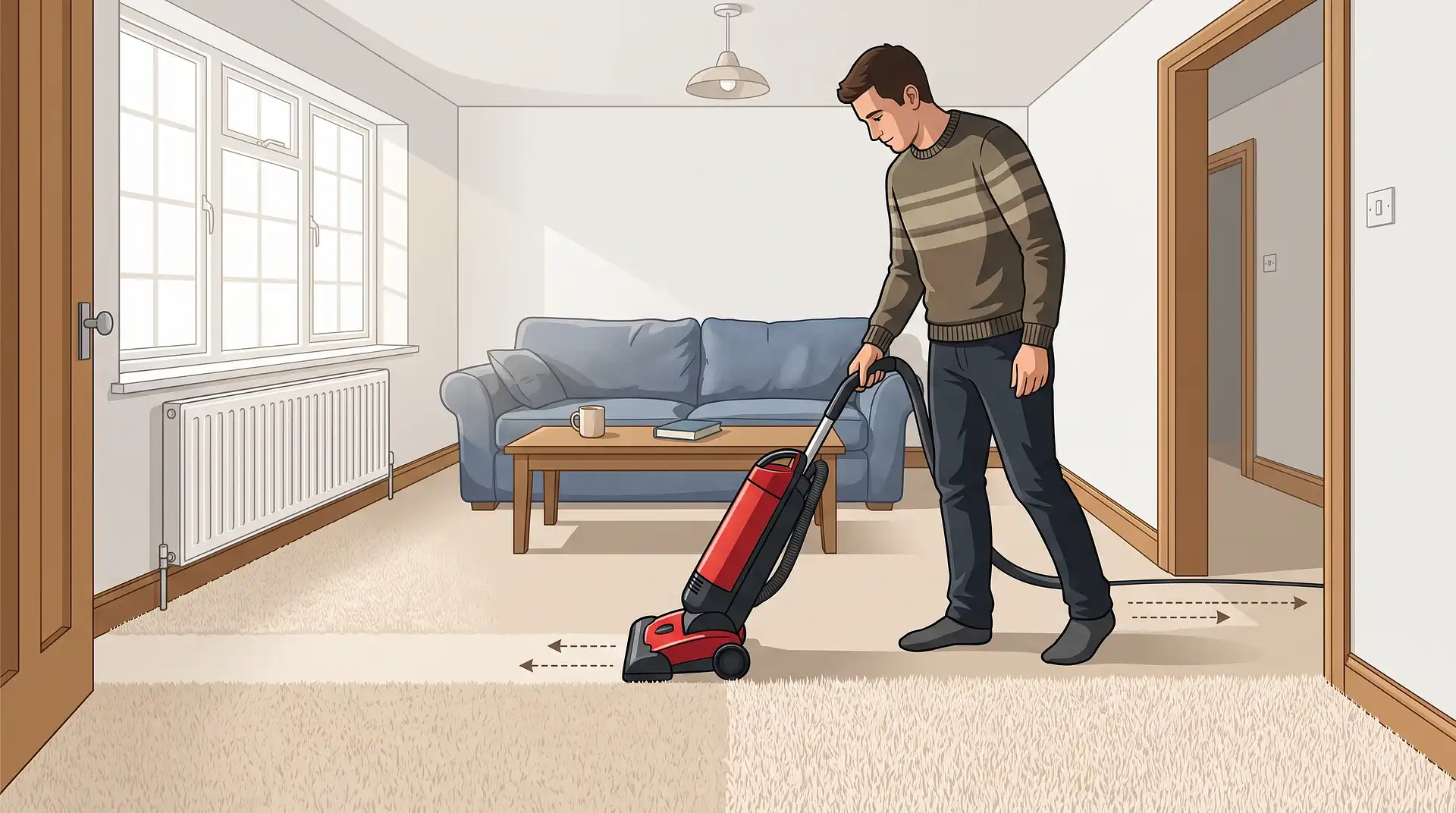
Vacuum in two directions. A single pass in one direction lifts surface debris but leaves embedded soil. Work first against the pile direction, which opens the fibres and exposes what's sitting at the base, then with the pile direction, which closes the fibres back and lifts the loosened soil to the surface for the vacuum to collect. On a plain carpet, this takes more time but produces a noticeably cleaner result.
Overlapping passes. Work in slow, overlapping strips rather than quick random sweeps. Each pass should overlap the previous one by around a third. Move slowly enough to allow the suction to act.
Vacuum frequency. High-traffic areas and households with pets or children benefit from vacuuming at least twice a week. Lower-traffic rooms can be weekly. No room in regular use benefits from less than weekly vacuuming.
Brush roll setting. For loop pile (Berber-style) and some delicate cut pile carpets, a lower brush roll height or a suction-only pass prevents the rotating brush from catching and pulling the pile loops.
Routine spot cleaning
Address spills immediately. The longer liquid sits in carpet, the further it penetrates through the pile to the backing and underlay, and the harder it becomes to extract fully.
Step 1: Blot, not rub. Press a dry white cloth firmly onto the spill, working from the outer edge inward. Never rub: rubbing spreads the stain and drives it deeper. Lift, refold to a clean section, repeat until no more transfers.
Step 2: Cold water first on unknowns. If you're not sure what caused the stain, cold water on a cloth is the safe starting point. Never use hot water without knowing the stain type, since heat sets protein stains permanently.
Step 3: Identify the stain category. Four categories cover most household carpet stains: protein (blood, urine, milk, food), tannin (tea, coffee, wine), oil and grease, and dye. Each needs a different approach. The coffee stain guide on this site explains the four-category framework in detail and covers the most common tannin stains.
Step 4: Apply solution to a cloth, not the carpet. Pour or spray cleaning solution onto a white cloth, then apply the cloth to the stain. Applying directly to the carpet saturates a larger area, pushes liquid toward the backing, and makes drying harder.
Step 5: Rinse thoroughly. Detergent left in carpet fibres acts as a soil magnet. A clean cloth dampened with plain cold water, used to blot the treated area several times, removes residue.
Deep cleaning at home
A full deep clean is needed every six to twelve months for most UK households, more frequently in high-traffic areas or homes with pets and children.
Vacuuming before anything wet. Wetting loose soil embeds it further. Vacuum thoroughly before any cleaning solution goes near the carpet.
Hot water extraction (carpet machine). The most effective home method available. A domestic carpet cleaner or hire machine injects heated water and cleaning solution into the pile and extracts it with suction, pulling dissolved soil, bacteria and biological matter out from significantly deeper in the pile than any surface method. Pre-treat visible stains, then work in slow, methodical overlapping passes. Use less water than the machine can deliver — an overlapping extraction-only pass after each cleaning pass removes more moisture and speeds drying considerably.
Dry cleaning powder. Sprinkled into the pile, agitated in and vacuumed out. Effective as a maintenance method and particularly useful where moisture is a concern. Doesn't achieve the same soil removal depth as hot water extraction but has a much faster return-to-use time.
Bicarbonate of soda for odour. Sprinkled lightly across the carpet, left for an hour or more, then vacuumed thoroughly. Absorbs odour compounds without any moisture risk. It doesn't deep clean — it's an odour management tool, not a cleaning method.
Drying: why it matters more than you think
Every wet cleaning method introduces moisture to the carpet pile and backing. Returning the carpet to use before it has dried fully causes two problems.
Moisture trapped between carpet and underlay. A fitted carpet that's still damp when furniture is replaced on it, or when people walk on it extensively, compresses the damp pile against the underlay beneath. The moisture has nowhere to go. In a UK home with central heating running, the warm, damp space between carpet and underlay is ideal for mould growth. The result is a musty smell that gets worse when the heating comes on — and that usually prompts a second cleaning attempt which makes it worse, not better.
Wicking. Dissolved soil and detergent drawn back to the carpet surface during drying can leave a tide mark or cause a stain that appeared to have been removed to reappear. Thorough extraction during cleaning, and elevating drying speed with airflow, reduces this significantly.
How to dry properly: open windows, use a fan directed at the carpet, run the central heating if it helps move air. Don't replace furniture until the carpet is genuinely dry. Test by pressing the back of your hand firmly into the pile — any coolness indicates residual moisture. On a typical UK day, a carpet cleaned with a domestic machine takes two to six hours to dry properly with good ventilation.
Stains by category
Full stain guides are available for the most common types in the carpet stain cluster on this site. The framework here covers what distinguishes each category.
Protein stains (blood, urine, milk, egg, pet accidents). Cold water only. Never warm or hot, which bonds protein to the fibre permanently. Enzyme cleaners for residual odour and deep protein removal. The urine mattress guide covers the uric acid chemistry that explains why the smell returns without enzyme treatment — the same applies to carpet.
Tannin stains (coffee, tea, red wine). Cool water and mild detergent. Act quickly. Tannins don't set permanently the way protein does, but they do bond to wool fibres faster than to synthetics, so prompt treatment matters more on a wool carpet.
Oil and grease. Absorb with bicarbonate of soda or cornstarch before any liquid. Leave the dry absorber for twenty minutes or more, vacuum off gently, then treat any residue with a small amount of washing up liquid solution on a cloth.
Dye and ink. The hardest category. A specialist solvent-based stain remover tested on a hidden area first. Significant lightening is often achievable; complete removal on dark or deeply set dye staining is not always possible. On wool, be particularly careful with any solvent — test in an inconspicuous area first.
What vinegar does and doesn't do. White vinegar neutralises some ammonia-based odours and has mild antibacterial properties. It is not a universal carpet cleaner, it doesn't address uric acid crystals in pet accidents, and on wool it can cause pH damage over repeated use. It has a place in a cleaning toolkit but a narrower one than most guides suggest.
How often should you clean your carpet?
Weekly vacuuming is a minimum for carpets in regular use. Twice weekly for high-traffic areas and pet households.
Professional or machine deep clean every six to twelve months for most households. Every three to six months for households with pets, children or allergy sufferers.
Immediate attention for spills. The single most effective thing you can do for carpet longevity is treat spills the moment they happen, before they penetrate to the backing.
Rotate furniture occasionally to prevent concentrated wear paths from developing permanently, particularly in living rooms and bedrooms where furniture positions rarely change.
When professional cleaning makes more sense
For routine maintenance, a domestic carpet cleaner hire or a borrowed machine handles most situations well. Consider professional cleaning when:
The carpet hasn't been deep cleaned in more than twelve months
There is a persistent odour that vacuuming and home treatment haven't resolved
A stain hasn't responded to careful home treatment
The carpet has significant soiling across its full area
The carpet is wool, silk or another delicate fibre where the wrong product or technique carries real risk
The household includes allergy sufferers who would benefit from deeper allergen and dust mite removal than domestic equipment provides
Professional hot water extraction by a qualified company uses significantly higher water temperatures and suction pressures than domestic hire equipment, removes more dissolved soil, and leaves the carpet drier at the end of the job than a domestic machine typically manages. Instant Dry Carpet Cleaning uses hot water extraction across all carpet types in England and Wales, with carpets typically up to 90% dry on completion and fully dry within one to two hours. Free survey and fixed price before any work begins.
FAQ Section
How do you clean a carpet at home? Vacuum thoroughly first, working in overlapping passes in two directions. Address any stains using the appropriate method for the stain type — cold water for protein, cool water and mild detergent for tannin, dry absorption before any liquid for grease. For a full deep clean, a hire carpet machine using hot water extraction is the most effective home option. Dry the carpet with good airflow before returning it to use.
How do you clean a wool carpet? Cold water for any protein stains. WoolSafe or pH-neutral detergent only. No scrubbing, which damages the cuticle structure of wool fibres. Never hot water, which causes felting and sets protein staining permanently. Dry thoroughly with good ventilation.
How do you clean carpet without a carpet cleaner? Vacuum thoroughly and treat stains by category: blot with a dry cloth, apply appropriate solution to a cloth rather than the carpet, rinse with a plain water cloth and blot dry. Bicarbonate of soda absorbs odours without moisture. For a surface refresh without extraction, a dry cleaning powder applied, agitated and vacuumed off is an effective maintenance method.
How often should you deep clean your carpet? Every six to twelve months for most UK households. Every three to six months for households with pets, children or allergy sufferers. More frequent deep cleaning in high-traffic areas like hallways and stairs.
Does vinegar clean carpets? It neutralises some odours and has mild cleaning properties for certain surface stains. It isn't a universal carpet cleaner: it doesn't address uric acid in pet accidents, and on wool it can cause pH damage with repeated use. It works best as a supporting tool rather than a primary cleaning method.
Why does my carpet smell worse after cleaning? Usually because the carpet or the underlay beneath it didn't dry fully. Moisture trapped between carpet and underlay creates conditions for mould and musty odour. Make sure the carpet dries completely before replacing furniture — test by pressing your hand firmly into the pile. Any coolness means more drying time is needed.
Is hot water extraction the best way to clean a carpet? For removing embedded soil, bacteria and biological material from the pile and backing, yes. It forces heated water into the pile and extracts it with suction, removing dissolved soil from significantly deeper than surface methods. At professional grade, it also leaves the carpet drier at the end of the job than domestic machines typically achieve.
How do you stop carpet stains from coming back? Wicking — stain material migrating back to the surface as the carpet dries — is the most common cause. It happens when moisture from the cleaning process draws dissolved soil back up through the pile. Thorough extraction during cleaning and fast drying with good airflow reduces it. If a stain reappears, re-treat promptly while the dissolved material is still accessible.
Service Section
For results that go deeper than any home method
Hot water extraction at professional grade reaches further into the carpet pile, uses higher temperatures and leaves the carpet significantly drier than a domestic hire machine. For a carpet that needs more than routine maintenance, or for wool, silk or delicate carpets where the wrong method carries real risk, Instant Dry Carpet Cleaning provides professional carpet cleaning across England and Wales. Every visit starts with a free survey and a fixed price before any work begins.
Single rooms from £49. Whole home including stairs and landing from £179.
Get your fixed quote in 60 seconds
Or call 07555 856988.