How to Get Urine Smell Out of Carpet for Good
28 September 2026
Would rather leave it to a professional? See our pet stain removal in Manchester.
Quick answer: Blot fresh urine immediately with white towels, then treat the affected area with a urine cleaner that is suitable for your carpet fibre. An enzyme-based product can help break down urine residue, but it must be approved for the material and used for the full contact time on its label. Rinse or extract it as directed and dry the carpet completely. If the smell returns, urine may have reached the backing, underlay or floor, where surface treatment cannot reach it.
Why pee smell can remain after the carpet looks clean
Urine does not always stay in the visible carpet pile. Liquid can move into the backing, underlay and floor beneath, especially after a large accident or repeated incidents in the same place.
Some urine compounds remain after ordinary detergent has lifted the visible mark. Moisture in the air can make an old odour noticeable again, which is why a patch may smell worse during humid weather or after another cleaning attempt.
Air freshener and scented powder can cover the smell temporarily without removing the source. Successful treatment depends on reaching all the contaminated material without spreading the liquid farther.
Check the carpet before choosing a cleaner
Find the carpet care information if possible. Synthetic carpet, wool, natural plant fibres and blends do not tolerate the same products.
Synthetic carpet: often accepts a wider range of water-based treatments, but dyes and backing still need testing.
Wool or wool-rich carpet: needs a wool-safe product and controlled pH. Many general biological or enzyme products are unsuitable for protein fibres.
Sisal, jute and other plant fibres: can brown, shrink or distort when wet.
Unknown carpet: use the maker's guidance or obtain professional advice before applying a strong product.
Test the chosen cleaner in a hidden area and allow it to dry. Check for colour transfer, fading, texture change or a tide mark before treating the main patch.
How to remove fresh pee smell from carpet
1. Blot up as much urine as possible
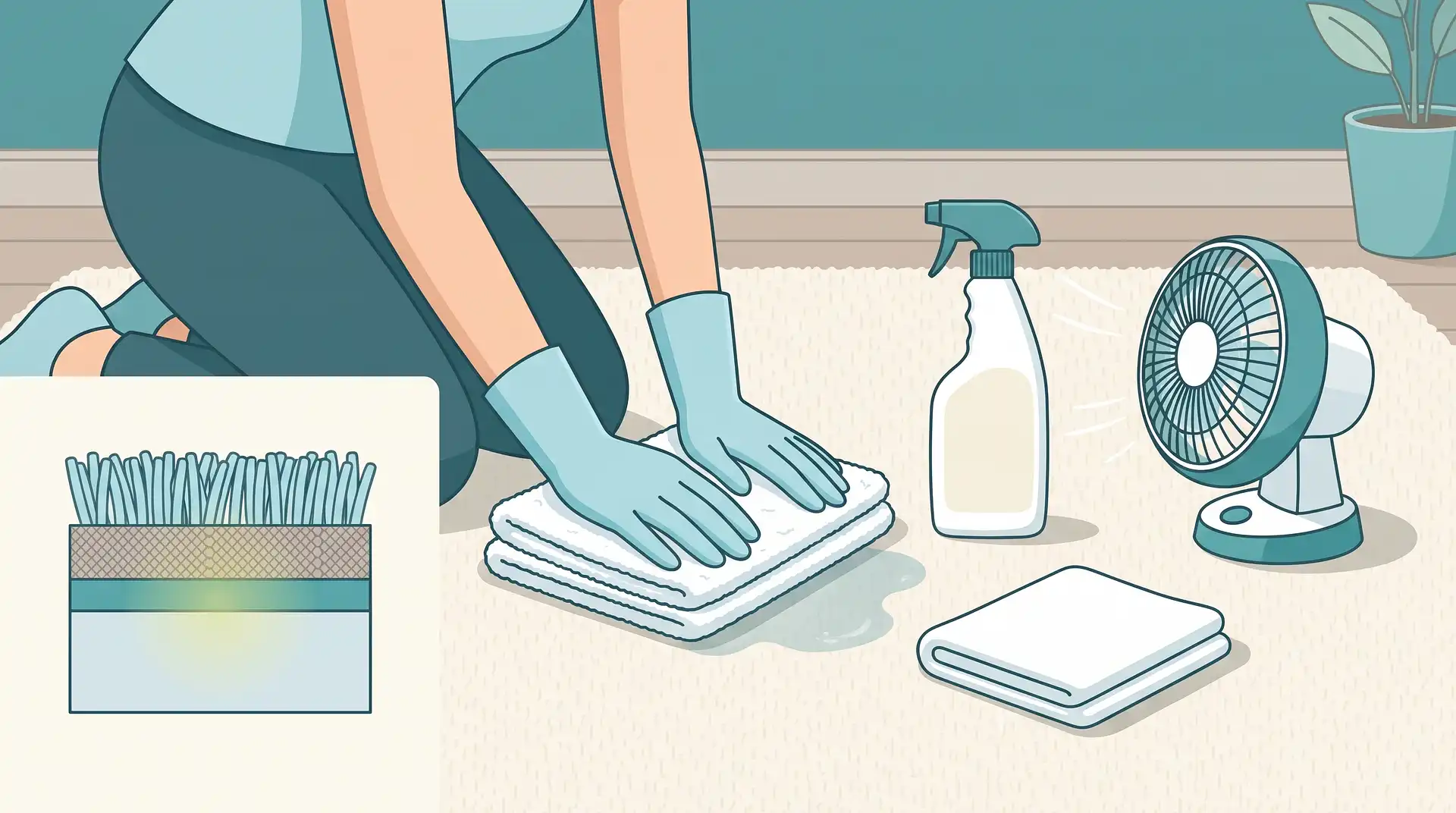
Place folded white towels over the wet area and press firmly. Lift the towel, move to a clean section and repeat until little moisture transfers.
Do not rub or scrub. This spreads the patch across more fibres and can push liquid deeper. Do not stand on the towel, as uncontrolled pressure may drive contamination farther into the backing.
2. Apply a suitable urine treatment
Choose a product intended for urine odour and confirmed as suitable for the carpet. Follow its dilution, quantity and application method. Some products are applied directly, while others should be transferred with a cloth or extraction tool.
An enzyme-based treatment needs the full contact time stated by its manufacturer. Wiping it away immediately may prevent it from working. Do not assume every enzyme product is safe for wool or natural fibres.
3. Remove the treatment as directed
Some urine products are designed to dry in place, while others require rinsing or extraction. Follow the label rather than adding an unnecessary rinse.
When rinsing is required, use a clean cloth lightly dampened with cool water. Blot repeatedly, then press dry towels onto the area. A machine designed to collect liquids may be used only when the carpet and product instructions allow it.
4. Dry the carpet completely
Ventilate the room and use safe air movement where appropriate. Keep people and pets away until the carpet is fully dry and the product label says the area is ready for use.
Do not replace furniture or cover the patch with a rug while it is damp. Trapped moisture can create a separate musty smell.
How to find and treat an old urine smell
Identify the full affected area
Start with where the odour is strongest and look for changes in colour or texture. Ask when accidents occurred and whether the area has already been cleaned.
A UV torch may help locate some dried biological residue in a dark room, but it is not a urine detector. Cleaning products, drinks and other materials can also fluoresce. Confirm likely spots by their history and location rather than treating every glowing mark.
Treat the depth, not only the visible edge
Use an approved urine treatment according to its instructions. Applying too little may leave deeper residue, while flooding the carpet can spread contamination and extend drying time. The right amount depends on the original accident and carpet construction.
Old deposits may need assessment between treatments. Allow the carpet to dry fully before deciding whether the odour remains.
Check the underlay when the smell returns
A returning smell after correct surface treatment suggests urine may be held below the pile. Repeated pet accidents can saturate underlay and sometimes reach floorboards or a concrete subfloor.
Professional assessment may involve checking moisture and contamination beneath the surface. In severe cases, part of the underlay may need replacing and the floor may need suitable treatment before the carpet is relaid.
For a recurring smell, tell InstantDry whether the urine came from a pet or person, how often the area was affected and which products have already been used.
Ask About Urine Odour Treatment
Smell still there after cleaning? It is probably in the underlay.
Safety guide for urine cleaning
Wear disposable gloves. Wash your hands after handling towels, cleaning tools or contaminated material.
Never mix cleaning products. Do not combine bleach, ammonia, vinegar, peroxide, disinfectant or enzyme products.
Avoid ammonia-based cleaners. They can create an unpleasant smell and may encourage some pets to investigate or mark the area again.
Follow the label. Use the required ventilation and protective equipment, and keep products in their original containers.
Protect children and pets. Keep them away during treatment and until the carpet is completely dry and safe for use.
Use electrical equipment correctly. Never collect liquid with an ordinary dry vacuum. Use only equipment designed for wet extraction and keep plugs and connections away from wet areas.
Hertfordshire County Council's household cleaning-chemical guidance advises never mixing products, following their instructions, ventilating the room and storing chemicals safely.
Household remedies and their limits
Bicarbonate of soda
Bicarbonate of soda can absorb some surface moisture and odour after the main treatment, but it does not reliably remove urine held in the backing or underlay. Fine powder can also remain in dense carpet if it is not vacuumed thoroughly.
White vinegar
Vinegar may reduce some odour, but it is not a complete treatment for deep or repeated urine contamination. It can affect some fibres and dyes. Do not combine it with another cleaner.
Steam and hot water
Do not use heat as an improvised urine treatment. Heat may make biological residue harder to remove, and excess water can spread contamination. Use a carpet-appropriate product and controlled extraction instead.
Air fresheners and fragranced sprays
Fragrance changes what the room smells like without confirming that the urine has been removed. Strong scents can also be unpleasant for people and pets.
Pet urine, human urine and repeated accidents
The cleaning process starts in a similar way for pet and human urine, but the cause of repeated accidents also needs attention.
If a cat suddenly starts urinating outside its litter tray, arrange veterinary advice because a change in toileting can have a medical cause. Cleaning the carpet will not resolve illness, discomfort or an unsuitable litter setup.
For bedwetting, incontinence or mobility difficulties, use suitable washable protection and address the person's care needs with an appropriate professional. Repeatedly cleaning the carpet without prevention allows contamination to build beneath the surface.
When professional carpet cleaning is needed
Professional help is sensible when:
The smell remains after suitable treatment and complete drying.
The same area has been affected repeatedly.
Urine has reached the underlay or floor.
The carpet is wool, a delicate natural fibre or of unknown construction.
A large area is affected.
Previous products have left residue or discolouration.
Professional extraction can remove treatment residue and contamination from deeper in the pile than surface blotting. It cannot guarantee recovery of permanently damaged fibres or underlay.
For general maintenance after the urine problem is resolved, read our guide to cleaning a carpet. If you plan to use a domestic machine, follow our guide to using a Vax carpet cleaner alongside the instructions for your model and urine product.
Frequently asked questions
Will pee smell disappear when the carpet dries?
A fresh smell may become less noticeable, but drying alone does not remove urine residue. If the source remains, the odour can return during warm or humid conditions.
What neutralises urine smell in carpet?
Use a urine treatment that is suitable for the carpet and designed to break down the odour source. Enzyme-based cleaners are commonly used, but the product must be compatible with the fibre and applied for the stated contact time.
Why does the smell return after shampooing?
The shampoo may have cleaned only the pile while urine remained in the backing or underlay. Moisture from shampooing can also reactivate a deeper odour.
Can I use an enzyme cleaner on wool carpet?
Only if the product is specifically approved for wool and the carpet manufacturer permits it. Wool is a protein fibre, so a general biological cleaner may damage it.
Does the underlay need replacing?
Not after every accident. Replacement may be necessary when repeated or heavy contamination cannot be removed safely. The carpet, underlay and floor should be assessed before deciding.
How do you get urine smell out of carpet permanently?
Use an enzyme cleaner and soak it to the same depth as the urine, usually wider than the visible mark. Leave it for the full time on the label, blot, then let it dry slowly. Smell that returns after drying means urine has reached the underlay and needs extraction.
What gets urine smell out of carpet at home?
A pet enzyme cleaner works best because it breaks down uric acid. White vinegar diluted 1:1 with water can help on fresh accidents, followed by bicarbonate of soda once dry. Avoid ammonia-based cleaners, as their smell encourages pets to go in the same spot.
Why does carpet smell of urine again when it gets wet?
Dried uric acid salts reactivate with moisture, so humid weather or a home clean brings the smell back. The source is usually in the underlay or subfloor. A UV torch shows the full area so it can be treated properly.
Does steam cleaning remove urine smell from carpet?
Not on its own. Heat can bond urine proteins to the fibres and make the smell worse. The urine needs an enzyme or oxidising treatment first, then hot-water extraction to rinse it out.
Get help with a persistent pee smell
Tell InstantDry where the smell is strongest, whether accidents were repeated and which products were used. The treatment, likely result and price depend on the carpet, contamination depth and work required.
Request a Carpet Cleaning Quote
Related guides: how to get urine out of a mattress, how to stop a cat urinating on the carpet, how to clean dog urine from a rug, how to get smells out of carpet. For a professional finish, see our pet stain and odour removal service or carpet cleaning in Manchester.
Related guides
Need it cleaned properly?
Book our pet stain & odour removal service — from £25 (UK average £40), free in-home survey and pay on completion.