How to Get Red Wine Out of Carpet
8 September 2026
Quick answer: Blot immediately with a dry white cloth from the outside in — never rub. Apply cold water sparingly to a cloth and dab to dilute, but don't pour water directly on the stain. Follow with a mild detergent solution on a cloth, then rinse with a plain water cloth and blot dry. For the stain residue that remains, a small amount of hydrogen peroxide mixed with washing-up liquid works on pale synthetic carpets — test on a hidden area first, never use on wool or dark carpet. Salt works well as an immediate absorber if applied within the first minute. The single most damaging thing most people do is rub, use hot water, or pour liquid onto the stain.
A red wine spill on a carpet sits in a category of its own. Most common stains are one substance with one removal approach. Red wine is three substances — natural pigment, tannin and sugar — each of which behaves differently. That's why the method that lifts the surface colour sometimes leaves a shadow, why rinsing with water seems to improve things and then the stain reappears as the carpet dries, and why some home remedies that clearly do something don't quite finish the job. Instant Dry Carpet Cleaning treats red wine in carpets regularly across England and Wales, and the stains that respond best to professional treatment are nearly always the ones that have been scrubbed or over-wetted in the first attempt.
Why red wine stains are harder than most
Red wine contains three distinct staining components that need addressing separately, even if you're applying one cleaning solution.
Anthocyanins. The natural pigment molecules that give red wine its colour. These bind to carpet fibres quickly, especially at warmer temperatures, and are what make the stain visually prominent. They are soluble in water when fresh but become progressively harder to shift as they bond to the fibre.
Tannins. Plant-based polyphenol compounds that give wine its structure. Tannins have a natural affinity for protein fibres — wool in particular — and bond to them readily. On synthetic fibres the bond is weaker. Cold water is more effective on tannins than warm water.
Sugars. Residual sugars from the fermentation process, which become slightly sticky as they dry and can attract further soiling if not rinsed out completely.
These three components explain why a single pass with one product often doesn't clear the stain fully — you may be addressing one component while another remains. They also explain why detergent residue left in the pile from cleaning attracts more soiling in the weeks afterward.
The first two minutes: what you do right now
These two minutes determine most of the outcome. A fresh spill that's treated correctly in this window is often almost completely recoverable. The same spill treated incorrectly becomes a set stain.
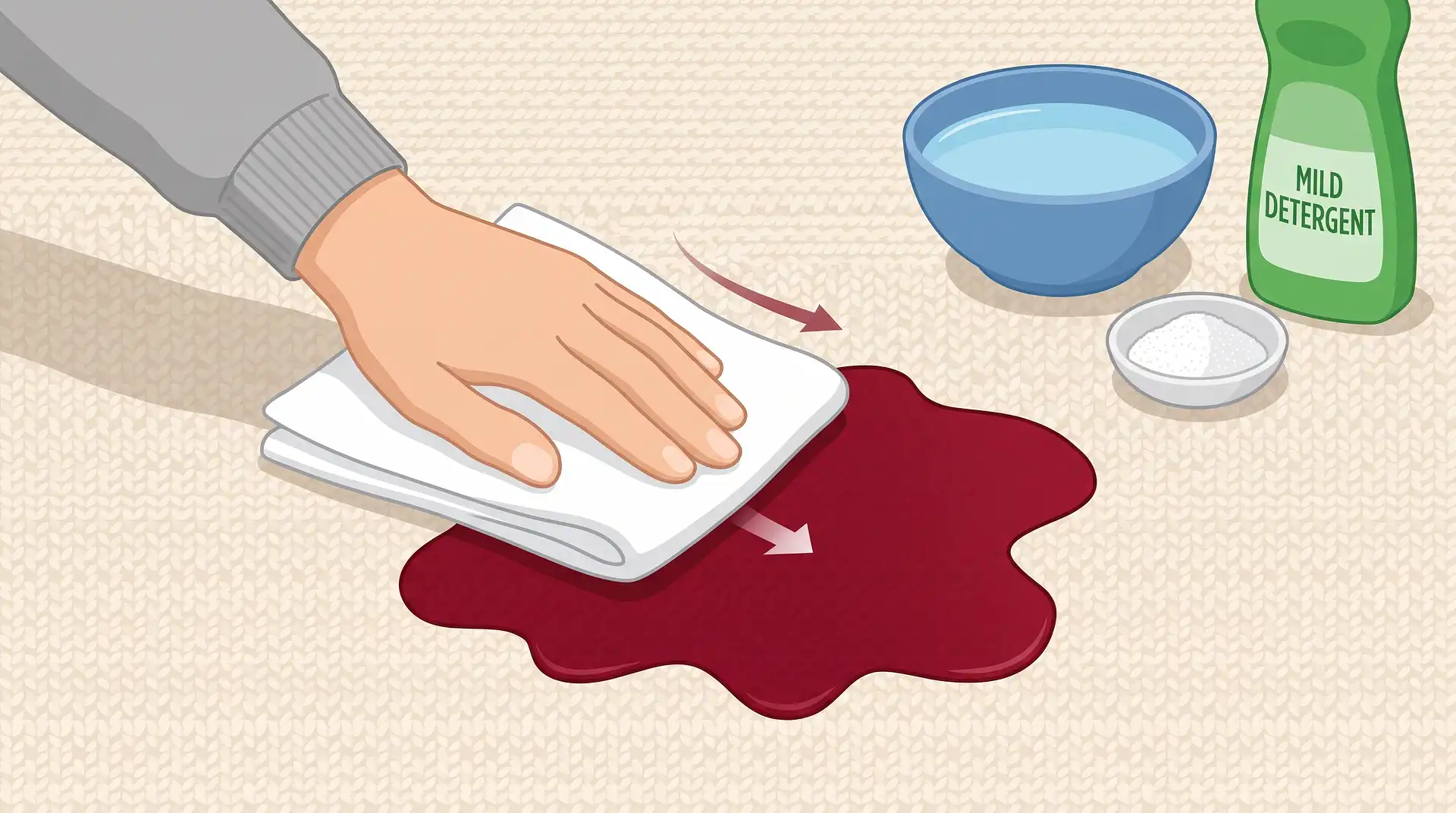
Step 1: Blot with a dry white cloth. Press firmly from the outer edge of the spill inward. Lift, move to a clean section and repeat. The goal is to absorb as much wine as possible before it wicks downward through the pile. Never rub — rubbing spreads the stain outward and drives the pigment deeper into the fibre.
Step 2: Salt, if you have it within the first minute. Pour a generous amount of table salt directly onto the spill immediately after blotting. The salt draws moisture out of the pile by osmosis. Leave for one to two minutes then vacuum or brush off. This works significantly better on a fresh wet spill than on one that has already started to dry.
Step 3: Cold water, applied to a cloth. Dampen a clean white cloth with cold water and dab at the stain to dilute what remains. Apply the water to the cloth, not directly to the carpet — pouring water onto the stain saturates the underlay and wine that reaches the underlay will wick back up to the carpet surface during drying, producing a shadow that appears after the carpet looks clean.
Cold water throughout. Hot water accelerates the bonding of anthocyanins to the fibre in exactly the same way heat sets protein stains. The same no-heat rule that applies across every stain guide on this site applies here.
The cleaning method, step by step
Once the immediate blotting is done:
Step 1: Mild detergent solution
Mix one teaspoon of clear washing-up liquid with 250ml of cold water. Apply to a white cloth, not directly to the carpet. Dab from the outer edge of the stain inward, working in small, controlled passes. Change to a clean section of cloth constantly as wine lifts onto it.
Step 2: Rinse thoroughly
Detergent left in the carpet pile attracts soil and creates a sticky patch that looks progressively worse over the following weeks. A clean cloth dampened with plain cold water, used to go over the treated area several times, removes residue. Blot dry after each rinse pass.
Step 3: Assess the result
Once dry, assess what remains. Most fresh spills handled promptly with the above method will be significantly reduced or cleared. If a faint residual mark remains, the further options below address it.
Step 4: Dry correctly
Blot out as much moisture as possible with dry towels. Allow the carpet to dry with good ventilation rather than placing anything on the treated area while damp. The wicking risk — dissolved wine and detergent being drawn back to the surface as the carpet dries — is reduced by thorough blotting and fast drying.
Dried red wine: a different approach
A stain discovered after the wine has already dried needs rehydrating before cleaning can progress.
Dampen a white cloth with cold water and hold it against the dried stain for two to three minutes. This softens the dried pigment and tannin deposits and makes them workable. Don't scrub — just hold the damp cloth against the stain.
Once softened, proceed with the detergent method above. Dried red wine lifts in layers across several treatment passes rather than in one attempt. Judge progress by comparison with the starting point, not by expecting complete removal in one session.
For old, well-set red wine stains — weeks or months old — significant improvement is usually achievable. Complete removal on pale wool carpet is not always possible, and setting honest expectations before beginning saves frustration.
By carpet type
Synthetic carpet (polypropylene, nylon, polyester). The most forgiving. The anthocyanin and tannin bonding is weaker on synthetic fibres, and the mild detergent method above works well. Hydrogen peroxide (covered below) is an option on pale synthetic carpet where colour fastness testing has passed.
Wool and wool-blend. The tannin component bonds readily to wool's protein structure, making red wine harder to shift on wool than on synthetic. Cold water is essential. WoolSafe or pH-neutral detergent only — no baking soda paste, no aggressive alkaline cleaners. Hydrogen peroxide carries a bleaching risk on wool and is not recommended. The how to clean a carpet guide on this site covers wool-specific cleaning principles in detail.
Pale and cream carpets. The stain is more visible and the temptation to use aggressive treatments is greater. Hydrogen peroxide is appropriate here on synthetic carpet after a colour fastness test, but the bleaching risk is also higher on pale carpet if over-applied. Use diluted, on a cloth, on the stain area only.
Dark or strongly coloured carpets. Hydrogen peroxide risks visible lightening on dark carpets. Stick with the detergent method and accept that a subtle shadow may remain — it will be far less visible on a dark carpet than a lightened patch from peroxide would be.
What actually works for the stubborn residue
After the initial detergent treatment, if a faint stain remains on a pale synthetic carpet that has passed a colour fastness test:
Hydrogen peroxide and washing-up liquid. Mix two parts hydrogen peroxide (three percent, available from a pharmacy) with one part washing-up liquid. Apply to a cloth and dab onto the stain. Leave for five to ten minutes. Blot with a dry cloth, then rinse with a cold water cloth and blot dry.
Colour fastness test is non-negotiable before using this. Press the solution onto a completely hidden area first. If any colour change occurs, do not proceed. The bleaching risk is real and irreversible.
Never combine hydrogen peroxide with other products in the same application. Use it after rinsing out the detergent solution, not alongside it.
Club soda. The carbonation helps lift residual pigment from the surface fibres and is safe on most carpet types. Pour a small amount onto a cloth and dab at the residual stain. Blot dry. A useful addition between detergent passes, particularly on synthetic carpet.
Myths and mistakes
White wine as a counter-measure. Applying white wine to a red wine spill dilutes the stain slightly but adds more sugar and acid to the pile. It does not remove the anthocyanin pigment and leaves additional residue that attracts further soiling. Not a useful step.
Rubbing. Spreads the stain wider and drives the pigment further into the pile. Blotting lifts the material upward; rubbing pushes it down and sideways.
Hot water. Accelerates the bonding of wine pigment to carpet fibre in the same way that heat sets any stain. Cold water throughout.
Pouring liquid directly onto the stain. Saturates the underlay and sends wine into a layer that surface cleaning can't reach. Apply all liquids to a cloth first.
Baking soda paste on wool. Baking soda is mildly alkaline and can affect wool fibres over sustained wet contact. Dry bicarbonate of soda sprinkled and vacuumed for odour control carries lower risk, but a wet paste applied to wool carpet is not recommended.
Leaving detergent in the pile. Creates a sticky patch that attracts soil progressively. Rinse thoroughly and blot dry after every cleaning agent.
For professional results on a red wine stain that's resisted careful home treatment, or on a wool or light-coloured carpet where the risk of home treatment escalating the problem is real, Instant Dry Carpet Cleaning provides professional carpet cleaning across England and Wales with a free survey and fixed price before any work begins.
Frequently Asked Questions
How do you get red wine out of carpet? Blot immediately with a dry white cloth from outside in. Apply cold water to a cloth and dab to dilute. Follow with a mild detergent solution on a cloth, working from the outer edge inward. Rinse thoroughly with a plain cold water cloth and blot dry. Never rub, never use hot water, never pour liquid directly onto the stain.
Does salt remove red wine from carpet? Applied within the first minute or two of a fresh spill, yes — it draws moisture out of the pile by osmosis. Leave for a minute or two then vacuum or brush off. It's most effective as an immediate first step on a very fresh spill, before other treatment begins, not as a standalone remedy.
Can you use hydrogen peroxide on red wine carpet stains? On pale synthetic carpets, yes, after testing on a hidden area for colour change. Mix two parts three percent hydrogen peroxide with one part washing-up liquid, apply to a cloth, dab onto the stain and rinse off after a few minutes. Not recommended on wool, and not recommended on dark or coloured carpets due to the bleaching risk.
How do you get dried red wine out of carpet? Rehydrate first by holding a cold damp cloth against the stain for two to three minutes. Then treat with cold water and mild detergent solution on a cloth, working in passes. Dried wine lifts gradually across several treatment cycles rather than in one attempt.
Does white wine remove red wine from carpet? No. White wine dilutes the spill slightly but adds more sugar and acid to the pile without removing the pigment. It is not a useful treatment and leaves additional residue.
Why does my carpet still have a red wine shadow after cleaning? Either the wine reached the underlay and wicked back up during drying, or residual anthocyanin pigment remains in the pile that the cleaning solution didn't fully lift. For wicking, re-treat the area and blot thoroughly before drying. For persistent pigment, hydrogen peroxide on a colour-fast synthetic carpet is the next step.
Is red wine easier to remove from synthetic or wool carpet? Synthetic. The tannin and anthocyanin components bond more readily to wool's protein fibre structure than to synthetic fibres. Red wine on wool requires patient, careful treatment and may leave a faint shadow even after thorough cleaning.
How do you stop red wine from setting in carpet? Speed is the primary factor. Blot immediately, apply cold water to a cloth and dab, and keep the treatment going rather than leaving it. The longer wine sits in the pile, the more completely the pigment bonds to the fibre.
Service Section
Stain that's not shifting, or on a wool or pale carpet?
A red wine stain that's been rubbed, treated with hot water, or left for more than a day is harder than a fresh spill but still often improvable. Professional hot water extraction removes dissolved pigment from deeper in the pile than surface treatment reaches and leaves the carpet drier than most home methods, which reduces the wicking risk. Instant Dry Carpet Cleaning provides professional carpet cleaning across England and Wales with a free survey and fixed price before any work begins.
Get your fixed quote in 60 seconds
Or call 07555 856988.