How to Fit a Carpet
14 September 2026
Quick Answer
Measure the room and order around ten percent extra carpet to allow for trimming. Remove the old carpet and underlay, then check the subfloor is clean, dry, and level before doing anything else. Fit gripper rods around the perimeter of the room, leaving a small gap from the skirting board for tucking. Lay the underlay with its seams at right angles to where the carpet seams will be, then lay the carpet, working it onto the gripper rods with a knee kicker and stretching it fully with a power stretcher before trimming and tucking the edges. Checking that the subfloor is genuinely dry, not just dust free, is the step most guides gloss over and the one most likely to cause problems later if skipped.
What You Will Need
Tape measure
Carpet knife or utility knife
Carpet gripper rods, also called tack strips
Underlay suited to your carpet type
Knee kicker
Power stretcher, for larger rooms
Carpet tucker or bolster
Hammer or staple gun for fixing gripper rods
Knee pads, genuinely worth having for a job like this
Ideally a second person to help hold and position the carpet
Step by Step: Fitting a Carpet in a Standard Room
Measure the room accurately. Measure both the length and width, and order around ten percent extra carpet to cover trimming, cutting errors, and tucking allowance.
Clear the room and remove the old flooring. Take out furniture, then lift the existing carpet, underlay, and any old gripper rods that are damaged or in the wrong position.
Prepare the subfloor. Sweep and vacuum thoroughly, check for and remove any protruding nails or staples, and fix any loose or creaky floorboards. The subfloor needs to be clean, dry, and as level as possible before you continue.
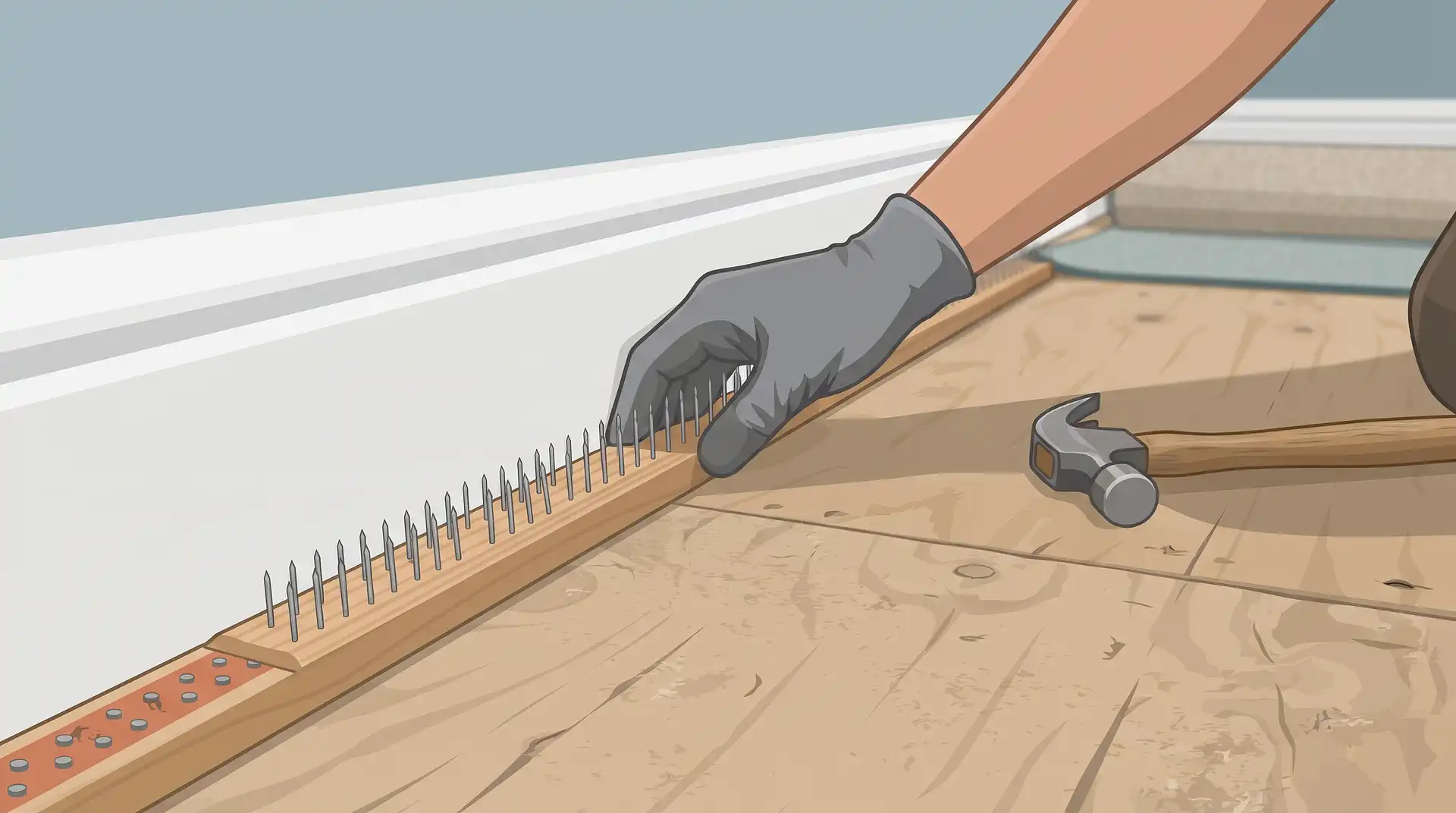
Fit the gripper rods. Cut the rods to size and nail or staple them around the perimeter of the room with the pins facing the wall, leaving a gap of around seven to eight millimetres from the skirting board, roughly a fingertip's width, where the carpet edge will later be tucked in. Do not run gripper rods across doorways.
Lay the underlay. Roll it out to cover the whole floor, keeping any underlay seams at right angles to where the carpet seams will fall. Tape the joins and staple or tape the edges to hold it in place against the gripper rods.
Position the carpet. Roll the carpet out starting from one corner, leaving excess around every edge for trimming and tucking.
Anchor and stretch the carpet. Using a knee kicker, push the carpet onto the gripper rods along one wall first, then use a power stretcher to pull the carpet tight diagonally across the room before anchoring the opposite walls. This step is what prevents the carpet from developing loose ripples over time.
Trim the excess. Use a sharp carpet knife to cut away excess carpet close to the skirting board, leaving just enough to tuck in cleanly.
Tuck the edges. Use a carpet tucker or bolster to push the trimmed edge firmly down into the gap between the gripper rods and the skirting board for a neat, secure finish.
Checking the Subfloor Is Genuinely Dry Before You Start
Every guide on this topic tells you to make sure the subfloor is dry, but few explain how to actually check this properly or why it matters as much as it does. A subfloor that looks dry on the surface, particularly a concrete floor, can still be releasing moisture from underneath if it has not fully cured or if there is a damp problem in the room that has not been addressed. Carpet and underlay sitting on top of that moisture have very little chance to let it evaporate, and trapped moisture under a carpet is one of the most common causes of a musty smell, mould growth, and even carpet backing failure that often does not become obvious until months after fitting.
A simple check for a concrete subfloor is to tape a small square of clear plastic sheeting firmly to the floor and leave it overnight. If condensation forms on the underside of the plastic the next day, the floor is still releasing moisture and is not ready for carpet yet. Newly laid concrete in particular can take weeks or even months to cure fully depending on thickness and ventilation, and fitting too early is a genuine risk worth taking seriously rather than assuming a floor that feels dry to the touch is actually ready.
Do Not Cover an Existing Problem, Solve It First
If the old carpet being removed had a stain, a damp patch, or a persistent odour, it is worth addressing that properly before the new carpet goes down rather than simply covering it and hoping it does not resurface. A subfloor stain or lingering smell rarely disappears on its own, and fitting a brand new carpet directly over an unresolved problem often means it works its way back through to the surface eventually, undoing the whole point of replacing the carpet in the first place. Cleaning or treating the subfloor properly first, and allowing it to fully dry, gives the new carpet a genuinely clean start rather than a fresh layer over an old issue.
Underlay Choice Affects More Than Comfort
Underlay is often chosen purely on softness and price, but it also plays a role in how the carpet copes with everyday life afterward. A good quality underlay with some moisture resistance helps protect the subfloor if a spill is not caught immediately, while a poor quality or overly thin underlay offers little buffer and can let liquid reach the subfloor faster. This matters for both immediate spill damage and for how effectively a carpet can be properly deep cleaned in future, since the underlay condition affects drying time during a professional clean as much as the carpet fibre itself does.
When to Bring in a Professional Fitter Instead
DIY fitting works well for a straightforward rectangular room with a competent, patient approach. It is worth bringing in a professional fitter for stairs, awkward or irregularly shaped rooms, very large open plan areas, or premium carpets where a fitting mistake would be costly to put right. A professional fitter also has the tools and experience to properly assess subfloor moisture and levelling issues that can be easy to miss as a first time DIY fitter.
Once your new carpet is down, keeping it properly maintained is what protects the investment long term. The guide on how to clean a carpet covers the general maintenance routine worth building in from the start, and if you are dealing with an existing subfloor odour or damp issue before fitting, Instant Dry Carpet Cleaning can assess and treat that properly before your new carpet goes down.
Frequently Asked Questions
Can I fit a carpet myself without professional help?
Yes, fitting carpet yourself is realistic for a standard rectangular room if you have the right tools and take your time. Stairs, large open spaces, and awkward shaped rooms are generally better left to a professional fitter.
How much extra carpet should I order?
Order around ten percent more than your measured room size to allow for trimming, cutting errors, and tucking the edges in neatly.
How do I know if my subfloor is dry enough to fit carpet?
A subfloor can feel dry to the touch while still releasing moisture underneath, particularly newly laid concrete. Taping a small piece of clear plastic sheeting to the floor overnight and checking for condensation the next day is a simple way to test this before fitting.
What happens if you fit carpet over a damp subfloor?
Trapped moisture under a carpet with nowhere to evaporate is one of the most common causes of musty smells, mould growth, and carpet backing problems, which often do not become obvious until well after the carpet has been fitted.
Should I clean a stain on the subfloor before fitting new carpet over it?
Yes, an unresolved stain, damp patch, or odour on the subfloor rarely disappears on its own and can work its way back through a new carpet over time. Treating it properly before fitting gives the new carpet a genuinely clean start.
Does underlay quality actually matter for carpet maintenance?
Yes, a better quality underlay offers more protection if a spill is not caught immediately and affects how well the whole carpet system copes with future cleaning, not just how soft it feels underfoot.