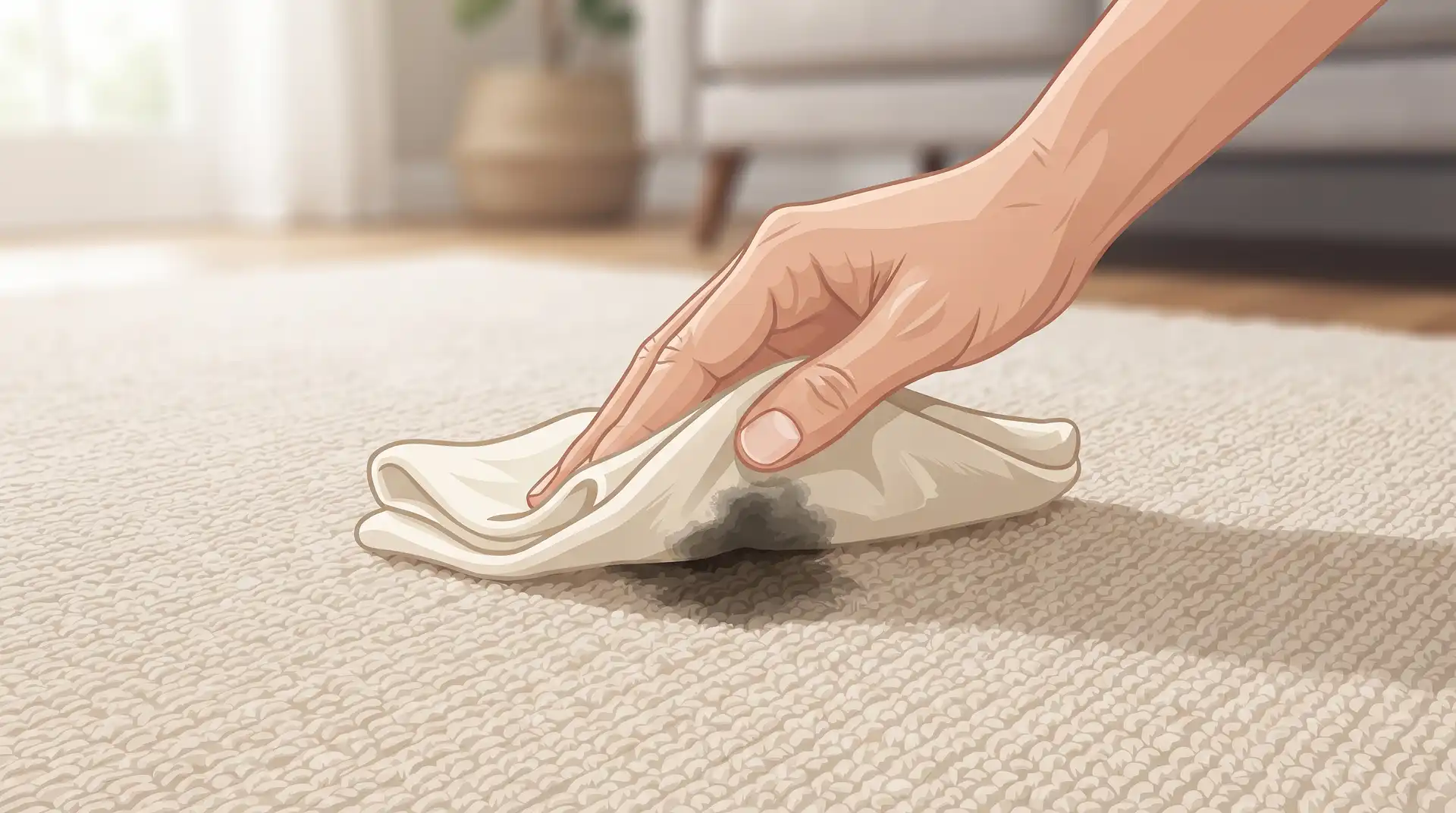
How to Get Oil Out of Carpet
16 September 2026
Quick Answer
Blot up as much fresh oil as possible with a clean cloth or paper towel, scraping off any thick excess with a spoon first. Cover the area with bicarbonate of soda or cornflour and leave for fifteen to thirty minutes to absorb what has soaked into the fibres, then vacuum it away. Mix a small amount of washing up liquid with warm water and blot the remaining mark, working from the outside of the stain inward, then rinse with a clean damp cloth and blot dry. For an older, set in stain, expect to repeat this process more than once, and consider a stronger degreasing product or isopropyl alcohol for stubborn residue that mild detergent alone does not fully lift.
Why Oil Needs a Different Approach to Most Stains
Most carpet stains, tea, juice, wine, are water based, which means plain water can dilute and lift a good portion of the mark on its own. Oil behaves completely differently, since oil and water naturally repel each other rather than mixing. Blotting an oil stain with water alone does very little, because there is nothing in plain water that can actually break the oil's grip on the carpet fibres.
This is where washing up liquid earns its place as the key ingredient. Detergent works through emulsification, meaning it surrounds tiny particles of oil and allows them to be lifted away and carried off in water rather than repelled by it. This is the same reason washing up liquid cuts through grease on a dinner plate, and it is exactly what makes it effective on a carpet as well.
Does Water Temperature Matter for Oil Stains
Some guides recommend warm or hot water, others avoid the subject entirely, and this inconsistency causes genuine confusion, particularly for anyone who has read that cold water is the rule for carpet stains. That cold water rule exists specifically for protein based stains like blood or urine, where heat cooks the protein and binds it permanently into the fibres. Oil is not a protein stain, so that rule simply does not apply here. Warm water actually helps with oil, since it makes the detergent solution more effective at breaking the oil down and lifting it out of the fibres, without the risk that applies to protein based marks.
What You Will Need
Clean cloths or paper towels
A spoon, for scraping off thick excess oil
Bicarbonate of soda or cornflour
Washing up liquid
Warm water
A soft bristle brush, for working powder into the pile if needed
Isopropyl alcohol, only needed for stubborn set in residue
Step by Step: Treating a Fresh Oil Spill
Act as quickly as possible. Oil sinks into carpet fibres fast, so the sooner you start, the better your chances of full removal.
Scrape off any thick excess. If the spill is substantial, use a spoon to lift off as much oil as possible before you introduce anything else.
Blot, never rub. Press a clean cloth or paper towel onto the stain and lift, moving to a fresh section each time. Rubbing spreads the oil further into the fibres rather than lifting it out.
Cover with an absorbent powder. Sprinkle bicarbonate of soda or cornflour generously over the area and leave it for fifteen to thirty minutes to draw out oil that has already soaked into the fibres.
Vacuum the powder away. Go over the area thoroughly, since the powder is now carrying absorbed oil with it.
Apply a detergent solution. Mix a small amount of washing up liquid with warm water and blot it onto the remaining mark, working from the outside of the stain toward the centre.
Rinse and dry. Blot with a clean, damp cloth to remove any leftover detergent, then blot dry thoroughly with a towel.
Treating an Older, Set In Oil Stain
An oil stain that has been sitting for weeks or longer has usually bonded more firmly to the fibres and often left a slightly darker mark than a fresh spill would. The same basic method above still applies, but expect to repeat the powder and detergent steps more than once, since a single pass is less likely to fully lift an older stain. For residue that does not respond after two or three attempts, a small amount of isopropyl alcohol applied with a cloth can help break down what mild detergent alone cannot, though this should always be patch tested first, particularly on wool or any carpet with a strong dye.
Why a Treated Oil Stain Sometimes Attracts Dirt Faster Afterward
A common and confusing complaint is that a spot where oil was cleaned seems to get dirty again faster than the rest of the carpet. This is not the oil stain returning on its own, it is usually a thin, invisible film of grease residue left behind from an incomplete clean. That residue acts like a magnet for new dirt and dust settling on the carpet, making the area look dirty again far sooner than it should. Rinsing thoroughly with clean water after the detergent step, rather than stopping as soon as the visible mark seems to lift, is what actually prevents this from happening.
Motor Oil and Other Stubborn Oils
Motor oil tends to leave a darker, more stubborn mark than cooking or beauty oils, and follows the same core method with a stronger detergent mix if needed, roughly one tablespoon of washing up liquid to a litre of warm water. If a significant pool of motor oil has had time to seep down into the carpet backing or underlay rather than sitting on the surface, this is generally beyond what a DIY clean can fully resolve, since the source of the smell or mark is no longer just in the visible pile.
What Not to Do
Do not rub or scrub the stain, since this spreads oil further into the fibres rather than lifting it out
Do not use hot water on a protein based stain elsewhere on the same carpet using the same warm water logic, since blood or urine still need cold water specifically
Do not skip the rinse step, since leftover detergent or grease residue is what causes the area to resoil faster afterward
Do not use isopropyl alcohol or a stronger degreaser without patch testing first, particularly on wool or coloured carpets
Do not assume a large motor oil spill that has been sitting for a long time is a straightforward DIY job, since it may have already reached the backing or underlay
When to Call a Professional
DIY methods handle most fresh spills and moderate set in stains well. It is worth calling in a professional when an oil stain has not responded after several repeated attempts, when a large motor oil spill may have reached the carpet backing or underlay, or when the carpet is wool or another delicate fibre and you are not confident using a stronger degreasing product yourself.
Instant Dry Carpet Cleaning can treat oil based stains professionally, including cases where the oil has soaked beyond what surface cleaning can reach. If wax has left a mark on the same carpet, the guide on getting wax out of carpet uses heat rather than detergent, since wax and oil need genuinely different approaches despite both being greasy in appearance. And if a similar oily or greasy mark has ended up on a sofa rather than the carpet, the method in cleaning a fabric sofa follows the same detergent based principle.
For anything beyond what powder and detergent can manage, Instant Dry Carpet Cleaning offers a professional carpet cleaning service across England and Wales.
Frequently Asked Questions
Does water alone remove oil stains from carpet?
No, oil and water repel each other, so plain water does very little on its own. A detergent is needed to break the oil down through emulsification so it can actually be lifted out of the fibres.
Should I use hot or cold water on an oil stain?
Warm water is fine and genuinely helps oil break down more effectively. The cold water rule that applies to blood or urine is specific to protein based stains, which oil is not, so that rule does not apply here.
How do I remove an old, set in oil stain from carpet?
The same detergent and absorbent powder method works, but expect to repeat it more than once. For residue that does not lift after a few attempts, a patch tested application of isopropyl alcohol can help with more stubborn cases.
Why does my carpet get dirty again quickly after I clean an oil stain?
This usually means a thin film of grease residue was left behind rather than the stain actually returning. That residue attracts new dirt faster than the rest of the carpet, so rinsing thoroughly after cleaning helps prevent it.
Can bicarbonate of soda remove oil from carpet on its own?
It helps absorb oil that has soaked into the fibres, but it works best as a first step before a detergent solution, rather than as a complete stain removal method on its own.
Is motor oil harder to remove than cooking oil?
Generally yes, since motor oil tends to be darker and can be more stubborn. The same core method applies, though a large motor oil spill that has seeped into the carpet backing may need professional treatment.
Service Section
If an oil stain has not lifted after repeated attempts, or a motor oil spill may have reached the carpet backing, Instant Dry Carpet Cleaning offers professional carpet cleaning across England and Wales.
Pricing:
Single rooms from £49
Whole home including stairs and landing from £179
Get a free quote: instantdrycarpetcleaning.co.uk Call or WhatsApp: 07555 856988