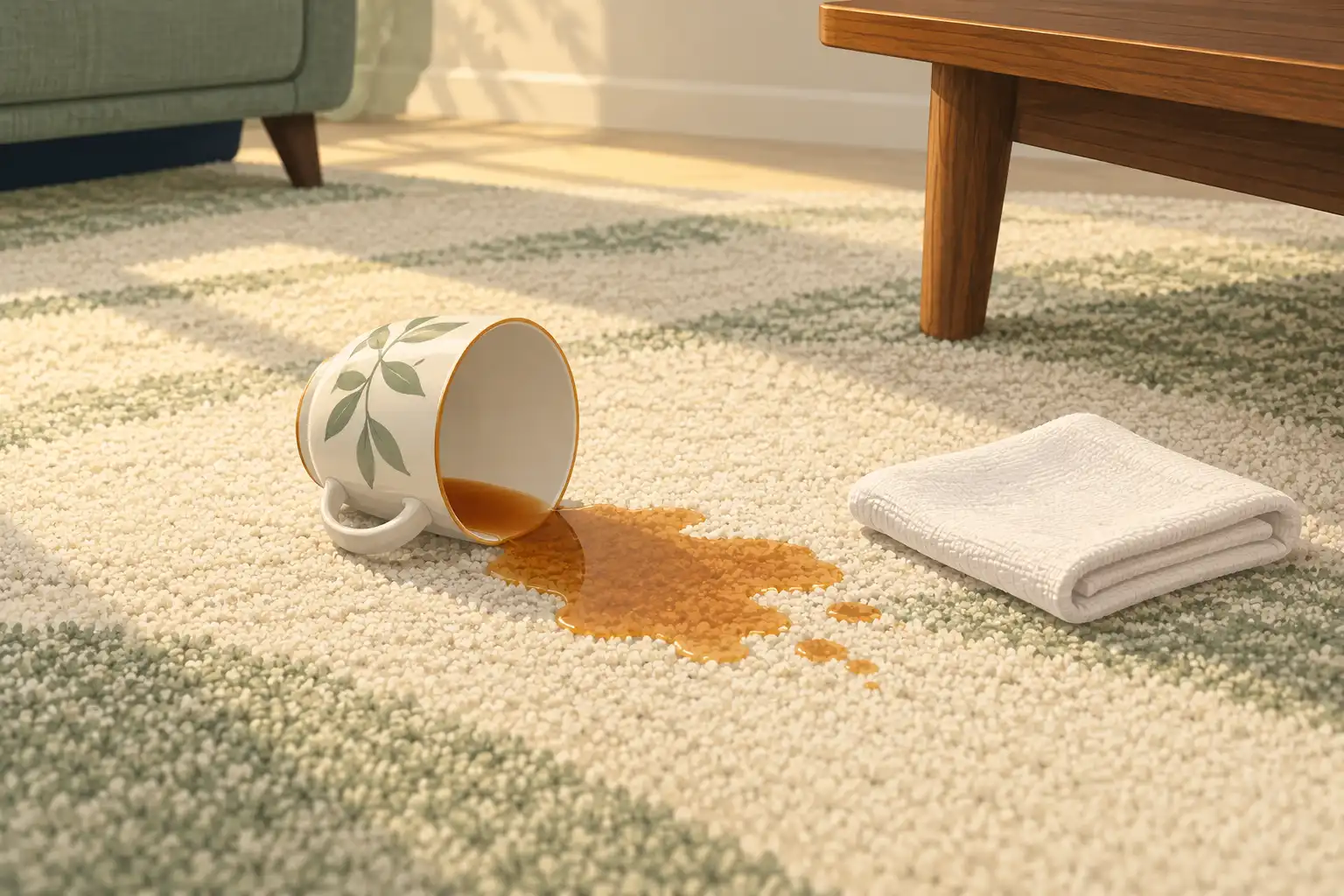
How to Get Tea Stains Out of Carpet
17 October 2026
Would rather leave it to a professional? See our carpet cleaning in Manchester.
Quick answer: Blot fresh tea with white towels, working from the edge towards the centre. Add a little cool water and blot again. If colour remains, patch-test a solution of 1 ml clear washing-up liquid in 250 ml cool water. Dab it on with a cloth, rinse lightly and blot dry. Never scrub or soak the carpet.
Do | Don't |
|---|---|
Blot while the tea is fresh | Rub, scrub or press the spill deeper |
Use cool water and white cloths | Use hot water, steam or a hairdryer |
Patch-test every cleaner | Mix vinegar, bleach or other products |
Rinse out detergent residue | Flood the pile or underlay |
Tea is a tannin stain. Its natural colour can attach to carpet fibres, while milk, sugar and flavourings add fat, protein or sticky residue. The right method therefore depends on what was in the cup, how long the mark has been there and what the carpet is made from.
Why does tea stain carpet?
Tea contains coloured plant compounds called tannins. A fresh spill is diluted and mobile, so much of it can be transferred into an absorbent towel. As the liquid dries, its colour becomes more concentrated and can bond more firmly with the fibre.
Black tea usually leaves the strongest brown mark. Green and herbal teas may look lighter, but berries, turmeric and added colourings can produce a different dye stain. Tea with milk is a mixed stain because it contains tannin, protein and fat. Sweet tea can also leave sugar that makes the treated patch attract soil.
Spill | Main problem | Best first action |
|---|---|---|
Plain black or green tea | Tannin colour | Blot, dilute lightly with cool water, then blot again |
Tea with milk | Tannin, protein and fat | Use cool water and a mild detergent solution |
Sweetened tea | Tannin and sticky sugar | Rinse carefully after the stain lifts |
Fruit or spiced tea | Natural or added pigments | Check the ingredients and avoid heat |
Old dried tea | Concentrated, oxidised colour | Rehydrate gradually and treat in short passes |
How do you get a fresh tea stain out of carpet?
1. Absorb the spill immediately
Place a folded white towel or plain kitchen roll over the wet area. Press straight down, lift and move to a dry section. Begin at the outside edge and work inwards. Do not wipe sideways, as this widens the stain.
2. Dilute the remaining tea
Dampen a clean white cloth with cool water and blot the mark. Use a small amount at a time. Follow with a dry towel after each pass so the liquid moves out of the carpet rather than down into the backing.
3. Use mild detergent if colour remains
Mix 1 ml, about one quarter of a teaspoon, of clear mild washing-up liquid with 250 ml of cool water. Patch-test it in a hidden place and let that spot dry. If there is no colour or texture change, apply the solution to a cloth and dab the stain. Wait two minutes, then blot with a clean section.
4. Rinse and dry
Use another cloth lightly dampened with plain cool water to remove detergent. Blot with dry towels until little moisture transfers, then allow air to circulate. Do not cover the damp patch with furniture or a rug.
How do you remove an old or dried tea stain?
First vacuum loose soil around the mark. Place a cool, damp white cloth on the tea stain for two to three minutes to soften the dried residue without soaking the carpet. Blot dry, then use the same weak detergent solution in short treatments.
Allow the carpet to dry between repeated attempts. Wet carpet looks darker, which makes it easy to keep adding cleaner after the tea has already lifted. If a dry brown shadow remains after two careful treatments, stop. A labelled carpet tannin remover may be appropriate, but only when its directions approve the fibre.
Do not use a stronger mixture simply because the stain is old. Excess detergent is difficult to rinse and can leave a sticky patch. The related guide to removing coffee stains from carpet explains how similar tannin marks behave.
Tea or coffee stain that will not lift?
Book professional carpet cleaning
What if the tea contained milk or sugar?
Cool water matters when milk is present because heat can make protein residue harder to remove. Mild detergent helps suspend the milk fat and sugar. Blot patiently, rinse lightly and dry fully.
If a sour smell develops after drying, some milk may remain deeper in the pile or backing. Do not mask it with fragrance or keep wetting the surface. A carpet-compatible product labelled for milk residue may help, but check whether it is suitable for wool. A persistent smell or returning mark may need controlled extraction.
How does the carpet fibre change the method?
Carpet type | What to consider |
|---|---|
Wool or wool-rich | Absorbs tannin readily. Use a wool-approved, pH-suitable product and minimal moisture. |
Polypropylene | Usually resists water-based staining well, but backing and dye still require a patch test. |
Nylon | Can hold acid dyes and tannin colour. Avoid heat and strong unlabelled mixtures. |
Polyester | Often releases plain tea well, though milk fat may leave an oily shadow. |
Unknown fibre | Use the cautious wool approach or obtain professional advice. |
If the whole floor also needs attention, follow the broader guide to cleaning a carpet only after dealing with the concentrated spill.
Which home remedies remove tea stains?
Remedy | Verdict | Reason |
|---|---|---|
Washing-up liquid | Useful when diluted | Helps lift residue, but too much leaves a soil-attracting film. |
White vinegar | Sometimes suitable, not a default | It may affect some dyes or fibres and should not be mixed with other cleaners. |
Bicarbonate of soda | Limited value | It may absorb moisture or odour but does not reliably remove tannin colour. |
Salt | Skip it | It does not neutralise the tannin and granules can remain in dense pile. |
Bleach or strong peroxide | Avoid | It can remove carpet colour and create a permanent pale patch. |
Steam | Avoid for spot treatment | Heat and excess moisture can spread the mark or affect the fibre. |
Why does a tea stain return after the carpet dries?
A mark that reappears may be caused by wicking. Tea below the visible pile travels upwards as the carpet dries, leaving colour at the tips. Overwetting makes this more likely. Blotting under a folded dry towel and using less liquid can help.
A grey or dark ring that appears later may instead be detergent residue collecting soil. Rinse it with a lightly dampened cloth, blot thoroughly and reassess only when dry. For other drink stains, see the guide to getting red wine out of carpet.
How can you clean tea stains safely?
Read the product label, follow its dilution and ventilation instructions, and keep children and pets away until the carpet is dry. Wear any protective equipment named on the label. Never mix cleaning substances. The Health and Safety Executive guidance on cleaning substances warns against mixing cleaners.
Stop if carpet colour transfers to the cloth, the pile changes texture, the backing becomes wet or fumes cause discomfort. Do not use a product intended for hard surfaces, laundry or bathroom cleaning unless its label specifically approves carpet.
When is professional cleaning sensible?
Arrange an assessment when the stain is large, old, repeatedly treated, on valuable wool, or has soaked into the backing. Help is also sensible when milk odour remains, colour keeps wicking back, or the carpet care instructions prohibit home spot treatment.
Explain what the tea contained, when it spilled and every product already used. The likely result and treatment depend on the fibre, dye stability, stain age and depth. No cleaning method can promise complete removal where tannin or a previous chemical has permanently changed the carpet colour.
Frequently asked questions
Does tea permanently stain carpet?
Not always. Fresh tea often responds well to prompt blotting. Old tannin marks, wool fibres and previous heat or chemical treatment increase the risk of lasting colour.
Can washing-up liquid remove tea from carpet?
A very weak clear washing-up liquid solution can help. Use about 1 ml in 250 ml cool water, patch-test it and rinse the residue out afterwards.
Should I use hot or cold water on a tea stain?
Use cool water. It is safer for unknown fibres and is especially important when the tea contains milk protein.
How do I remove tea with milk from carpet?
Blot, dilute lightly with cool water, then use a weak mild-detergent solution. Rinse carefully and dry fully so milk residue does not develop an odour.
Will bicarbonate of soda remove a tea stain?
It may absorb some moisture, but it does not reliably remove tannin colour. Blotting, controlled dilution and a suitable cleaner are more useful.
Can I use vinegar on a wool carpet?
Do not assume vinegar is safe. Follow the carpet maker's advice and use a WoolSafe-approved product where required.
Why is the tea stain still visible when wet?
Wet fibres naturally look darker. Let the carpet dry fully before judging whether more treatment is needed.
Why did the tea stain come back?
Tea may have wicked upwards from the backing during drying, or leftover detergent may have attracted soil. Both problems are made worse by overwetting.
Can a carpet-cleaning machine remove tea?
It may help when the carpet, machine and cleaning product are compatible. Spot-treat first as directed and avoid repeatedly saturating one area.
When should I stop treating the stain myself?
Stop after colour transfer, texture change, backing saturation or two careful attempts without improvement. Repeated treatment can cause more damage than the original spill.
Is the tea mark still visible after drying?
How do you get an old tea stain out of carpet?
Dampen the stain with cool water, then blot with a mix of 1 tablespoon white vinegar, 1 tablespoon washing-up liquid and 500 ml warm water. Leave it for 10 minutes, blot, rinse with clean water and blot dry. Repeat for stubborn stains.
Does milk in tea make the stain harder to remove?
Yes. Milk adds protein, so avoid hot water, which can set it. Use cool water and an enzyme cleaner after the vinegar mix if a dull patch remains.
Are instant stain removers safe for light carpets?
Most are, but always test on a hidden area first and follow the label. Some oxygen-based removers can lighten coloured or wool carpets. Blot rather than rub, and rinse afterwards so residue does not attract new dirt.
Related guides: what is a good carpet stain remover. For a professional finish, see our carpet cleaning service or carpet cleaning in Manchester.
Related guides
Need it cleaned properly?
Book our carpet cleaning service — from £29 (UK average £45), free in-home survey and pay on completion.