How to Dry Car Seats
19 August 2026
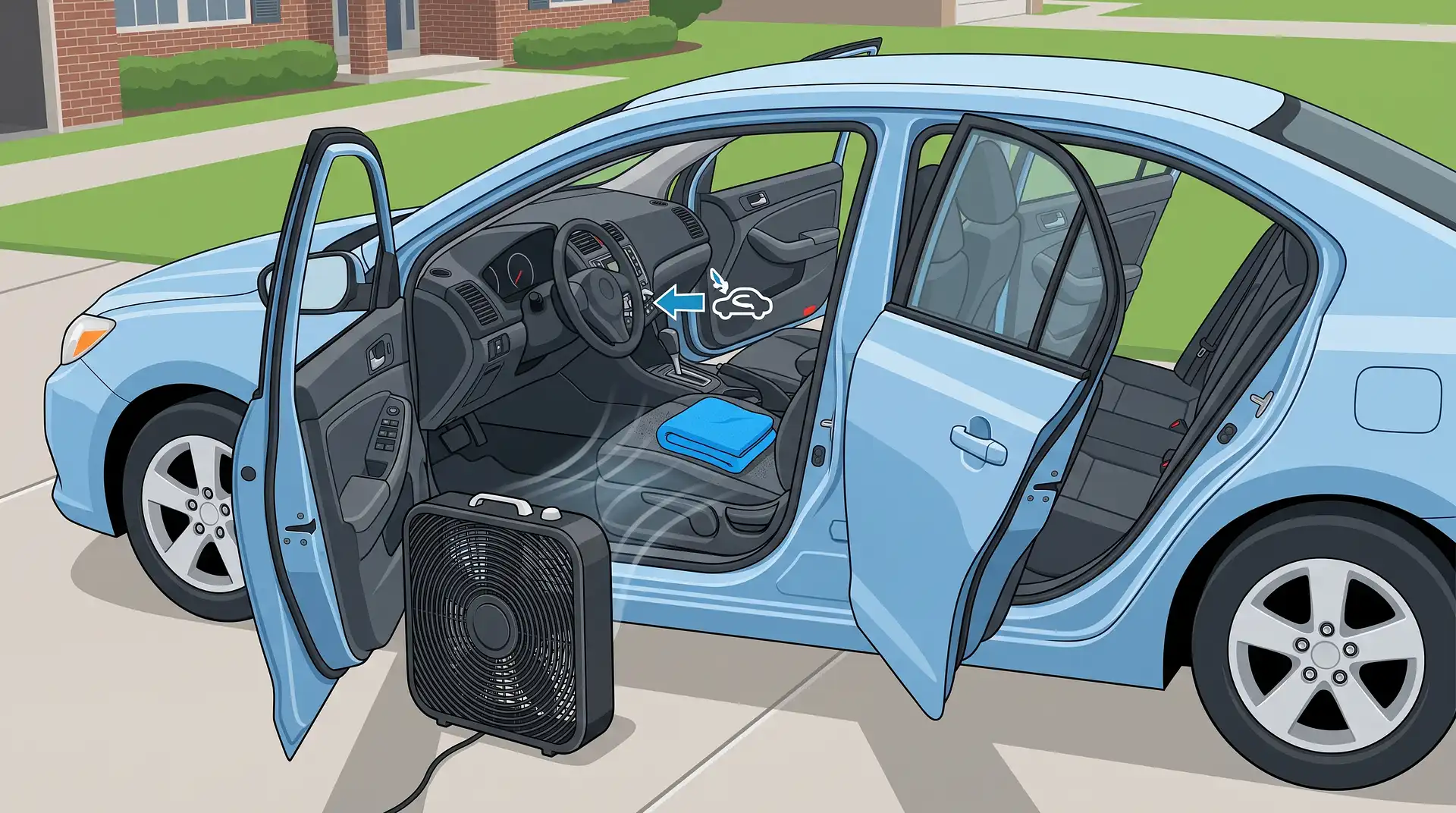
Quick answer: Open all the doors rather than just the windows. Use the car's fan on the fresh air setting, not recirculate, so you're exchanging damp cabin air with outside air. A portable fan directed into the car accelerates this further. If the seat is significantly wet, use a wet vacuum first to pull moisture out mechanically before relying on evaporation. Never use a hairdryer or heat gun directly on the seats. Check the foam is dry by pressing firmly with a dry hand, not by judging the fabric surface, and don't close the car up until it is.
Drying a car seat properly matters more than most people realise, and it matters for three specific reasons. Moisture left in the foam grows mould. Moisture drying unevenly across the fabric surface leaves water rings and tide marks. Moisture wicking back up through the fabric during drying carries dissolved residue to the surface and makes a treated stain reappear.
Every one of those problems is caused by the drying step, not the cleaning step. Get the drying right and the cleaning almost always works. Get it wrong and the problem you started with gets worse.
Why a car is the worst place to dry upholstery
A sofa cushion in a living room can be propped on its side in a ventilated room with windows open, air moving around it from multiple directions, and it will dry reasonably well over a few hours. A car seat cannot.
The car interior is sealed. Moisture that evaporates from the seats stays in the cabin air unless it's actively exchanged with outside air. In a closed car on a typical UK day, cabin humidity rises quickly to a level where evaporation from the seat slows to almost nothing. The moisture has nowhere to go.
The seat is foam over springs or padding. Foam cannot dry from the inside outward. Once moisture reaches the foam core, it has to evaporate back out through the fabric surface, which is slow, and it can only happen if the air directly above that surface is being replaced with drier air. If the cabin air is already saturated, it doesn't happen at all.
The UK climate works against you. Cool temperatures slow evaporation. Damp outdoor air has less capacity to absorb moisture from the seat. A car parked outside in October with a wet seat is in a genuinely difficult drying environment.
This is why musty smells develop. It's not that something dirty was left behind. It's that the seat foam stayed damp long enough for microbial growth to establish, and the smell is a byproduct of that process.
The right approach: airflow first, heat second
Most instincts about drying involve heat. Heat does help, but it's a secondary factor. Airflow is primary.
Evaporation from a wet surface into air is limited by how quickly the air immediately above the surface is replaced with drier air. Still air becomes saturated quickly and evaporation stops. Moving air constantly replaces saturated air with drier air and evaporation continues.
In practical terms: a fan on a cool setting moves more moisture out of a car seat than a heater with no airflow. Warm air with good airflow is the most effective combination.
The car's own HVAC system matters here, and one setting is wrong. If you run the car's fan or heater on the recirculate setting, you're moving the damp cabin air around the interior without exchanging it with outside air. Humidity in the cabin rises and drying slows. The correct setting is fresh air, which draws outside air in and pushes cabin air out, exchanging the moist air rather than recycling it. This is true even if the outside air is cool and damp, since almost any outdoor air in the UK has more drying capacity than the interior of a car that's just had seats cleaned.
Step by step: drying after cleaning
Step 1: Remove mechanical moisture first
Before relying on evaporation, remove as much liquid as possible physically.
Press dry towels firmly into the seat using your body weight. Lift, refold to a dry section, repeat. The more moisture you extract by blotting, the less there is to evaporate.
If you have a wet vacuum or a carpet washer with an upholstery attachment, use it. A single extraction pass removes dramatically more moisture than towel blotting, and the difference in drying time is significant. This is covered in detail in our fabric car seats guide.
Step 2: Open all the doors
Not just the windows. All four doors, fully open. This creates the maximum possible air exchange across the interior. A cracked window creates a pocket of still, humid air inside; fully open doors let actual cross-ventilation occur.
If you can park the car where it catches a breeze rather than in a sheltered spot, do so.
Step 3: Set the car's fan to fresh air, not recirculate
Run the fan at medium speed on fresh air mode. Don't use recirculate. Don't use the highest heat setting, which dries the surface fabric while leaving the foam underneath damp and can affect some seat materials. A moderate temperature on fresh air is better than high heat on recirculate.
Step 4: Direct a portable fan into the car
A household fan, a box fan or even a desk fan directed into the open door dramatically accelerates drying compared to relying on the car's own system alone. Position it to create airflow across and through the seat rather than just at the surface.
Electrical safety note: you're working with a mains-powered appliance near moisture. Use a fan with an intact cable and plug, don't use damaged equipment, and if your consumer unit has RCD protection, you're working through it. Plug in an RCD adaptor if you're working from an older circuit without it. Keep the cable clear of the damp areas.
Step 5: Check progress by pressing into the foam
Surface fabric dries faster than foam. A seat that feels dry to a light touch on the surface may still have significant moisture in the padding underneath. Press firmly with a flat hand, using some body weight. Any coolness or give that feels different from a dry area indicates residual moisture.
Don't rely on the surface. Check the foam.
Step 6: Don't close the car until it's genuinely dry
Closing the car seals humid air inside. If the seat is still damp when you close up, you've created the conditions for mould growth, and particularly in a sealed car parked outside overnight in cool UK conditions, a damp foam seat can grow mildew within 24 to 48 hours.
If you need to use the car before it's fully dry, drive with the windows down or on fresh air mode to continue the drying process rather than sealing it.
Emergency drying: a soaked seat
A seat flooded by a significant spill, by rain through an open window, or by a cleaning attempt that used too much water, needs a more urgent approach.
Extract first, extract hard. If you have access to a wet vacuum, use it. Multiple passes. The goal is to remove as much liquid from the foam as possible before evaporation has to do the rest. Blot with as many dry towels as you have, pressing hard.
Don't leave it overnight closed. A soaked seat sealed in a car overnight almost certainly produces mould. If you can't get the seat dry on the day, leave a window cracked (where it's safe to do so), park in the best-ventilated spot available, and continue drying the next morning.
Prop the seat if possible. On cars where the rear bench lifts out easily, removing it and standing it on its side in a ventilated space dramatically accelerates drying, since air reaches both faces of the cushion rather than just the top. Don't attempt this with front seats, which are wired and bolted and should not be removed without knowing what you're doing.
A dehumidifier inside the car with the doors closed for a few hours actively removes moisture from the cabin air, which helps when the outdoor conditions are also damp. Small car dehumidifiers are available from motor accessory retailers, or a household unit placed inside with the doors closed achieves the same effect.
In the boot or garage: if the car is in an enclosed space, a dehumidifier running in that space helps the overall ambient humidity, which helps the car interior.
What goes wrong and what it causes
What happens | Why | Result |
|---|---|---|
Car closed too soon | Humid air sealed inside, evaporation stops | Mould and musty smell within 24 to 48 hours |
Heat used without airflow | Surface dries, foam stays damp | Persistent smell, mould in the foam |
Recirculate setting used | Humid cabin air recycled, not exchanged | Very slow drying, same outcome as above |
Uneven drying across the seat | Minerals and residue concentrate at the drying boundary | Water rings and tide marks |
Moisture wicking back from foam | Residue drawn to surface during drying | Treated stain reappears after drying |
Fan or equipment used unsafely | Mains appliance near moisture | Electrical hazard |
How long it actually takes
Honestly, longer than most guides suggest, and it depends on several variables.
A lightly damp seat after careful cleaning on a dry, mild UK day with all doors open and a fan: one to three hours.
A moderately wet seat after heavier cleaning or a small spill: three to six hours under good conditions.
A significantly soaked seat after a major spill or rain: potentially a full day or more, and mechanical extraction first is strongly recommended.
Poor conditions — cold, damp, no fan, windows only rather than full doors open — multiply all of those figures significantly. A soaked seat in November with inadequate ventilation may not be genuinely dry for two to three days, and it will smell before then.
The reliable test is always the same: press firmly into the foam with a flat hand and feel for coolness or residual dampness. Time estimates are guidance; the press test is the actual answer.
8. FAQ Section
How do you dry car seats after cleaning? Blot out as much moisture as possible with dry towels, open all the doors fully, run the car's fan on fresh air mode rather than recirculate, and direct a portable fan into the car. Check the foam is dry by pressing firmly rather than judging by the surface. Don't close the car until it's genuinely dry throughout.
How long do car seats take to dry? One to three hours for a lightly damp seat under good conditions. Three to six hours for a more significantly wet seat. A soaked seat can take a full day or longer, and mechanical extraction beforehand makes a large difference. Cold, damp UK conditions slow all of these considerably.
Why do car seats smell musty after cleaning? The foam didn't dry fully. Moisture left in the padding creates conditions for microbial growth, and the smell follows. Using too much water, inadequate ventilation and closing the car too soon are the three most common causes.
Should I use heat or airflow to dry car seats? Airflow is more important. Warm air with good airflow is the ideal combination, but cool moving air dries more effectively than warm still air. Run the car's fan on fresh air mode rather than recirculate, and add a portable fan directed into the car.
Can I use a hairdryer to dry car seats? Not recommended. A hairdryer dries the surface fabric quickly while leaving foam underneath still damp, which is the failure mode that causes musty smells and mould. It can also affect some seat materials under sustained heat. Airflow rather than direct heat is the correct approach.
What does fresh air mode do for drying car seats? It draws outside air into the cabin and pushes cabin air out, exchanging the damp interior air with drier outside air. Recirculate does the opposite, moving the same humid air around without exchanging it. Fresh air mode is the correct setting when drying a wet interior.
How do I dry a soaked car seat fast? Extract as much liquid as possible first with a wet vacuum or by hard blotting with dry towels. Open all doors, run fresh air mode, and use a portable fan. A dehumidifier inside the car with the doors closed for a few hours also removes significant moisture from the cabin air. Mechanical extraction at the start makes more difference than anything else.
How do I stop car seats smelling after cleaning? Use as little moisture as possible during cleaning, blot thoroughly, extract with a wet vacuum if available, dry with maximum airflow on fresh air mode, and don't close the car until the foam is genuinely dry. The smell comes from moisture, not from the cleaning product.