How to Clean Sofa Cushions (Covers and Foam)
2 October 2026
Would rather leave it to a professional? See our sofa cleaning in Manchester.
Quick answer: Vacuum the cushion first, then check the care label for both the outer cover and the filling. Wash a removable cover only when the manufacturer says it is washable. For fixed or non-washable fabric, apply a suitable cleaner to a white cloth and blot gently without soaking the cushion. Foam, fibre and feather inserts should not be washed unless their own instructions allow it. Dry every part completely before putting the cushion back together.
A sofa cushion has at least two parts: the visible upholstery and the insert that provides support. A zip does not mean either part can go into a washing machine. Covers can shrink or lose colour, while foam and feather fillings can hold moisture long after the surface feels dry.
Check the cushion before cleaning
Find the sofa care label and any separate label on the cushion insert. Check the manufacturer's online instructions if the wording is unclear. Instructions for the sofa frame, outer cover and filling may be different.
Read the upholstery cleaning code
W: a suitable water-based upholstery cleaner may be used.
S: use an approved solvent-based upholstery product only.
WS or SW: an approved water-based or solvent-based product may be used.
X: vacuum and dry brush only. Do not apply liquid cleaner at home.
The code is a starting point. The sofa maker's full instructions still take priority. Our guide to cleaning a fabric sofa explains these codes in more detail.
Identify the filling
Common inserts contain foam, polyester fibre, feathers, down or a combination such as foam wrapped in fibre or feathers. Do not choose a cleaning method from the feel alone. Check the insert label or the specification for the sofa model.
Inspect for damage
Look for open seams, a broken zip, crumbling foam, leaking feathers and weakened lining. Arrange repairs before washing or wet cleaning. Water and movement can make an existing split worse.
What you need
A vacuum with a clean upholstery attachment and crevice tool
White absorbent cloths and dry towels
A soft upholstery brush where the fabric allows it
A cleaner approved for the cushion's care code
A bowl of cool water for rinsing water-safe fabric
A fan and a well-ventilated drying area
Use white cloths so their dye cannot transfer. Avoid starting with a strong mixture. Excess detergent is difficult to rinse from upholstery and may leave a sticky area that attracts dirt.
Routine sofa-cushion cleaning
1. Remove loose debris
Take loose cushions off the sofa. Vacuum both faces, the piping and the zip area. Use the crevice tool lightly along seams and tufts. Clean the platform beneath the cushions before returning them.
2. Brush suitable fabric
If the maker allows brushing, use a soft upholstery brush in the direction of the nap. This can release surface dust and improve the appearance of flattened fabric. Do not brush fragile loops, loose threads, velvet or chenille without checking the care guidance.
3. Rotate and plump
Swap left and right cushions where their shape allows, and turn reversible cushions regularly. Plump fibre and feather cushions by pushing air back through the filling from every side. Foam needs less plumping but still benefits from rotation to spread wear.
How to clean removable cushion covers
Remove covers only when the instructions allow it. Some zips exist for assembly or replacement rather than home laundering. Photograph each cushion first so seams, labels and orientation are easy to match later.
If the cover is machine washable
Vacuum and treat stains only as the label permits.
Close zips and fastenings unless the instructions say otherwise.
Use the stated programme, maximum temperature and detergent.
Do not overload the drum or wash one cover separately if matching covers must be cleaned together.
Check the mark before drying and follow the approved drying method.
A cold or delicate programme cannot make a non-washable cover safe for the machine. Our dedicated guide explains how to wash sofa covers safely without shrinking or fading them.
If the cover is hand wash or dry clean only
Follow the stated method exactly. Hand wash does not mean soak indefinitely, scrub or wring. A dry-clean-only cover should go to a suitable professional cleaner. Tell the cleaner that it belongs to a matched sofa so colour and finish can be considered.
Refitting the cover
Do not force a damp cover over an insert in the hope that it will stretch into shape. Refit it at the stage specified by the manufacturer. Support the zip and ease the corners into place rather than pulling on the zip tape.
How to clean fixed or non-washable cushion covers
Test first
Apply the approved cleaner to a hidden area with a white cloth. Let the test dry fully, then check for colour transfer, fading, texture change or a water ring.
Use controlled moisture
For W or WS fabric, apply a small amount of water-based upholstery cleaner to a cloth rather than spraying it directly onto the cushion. Blot or wipe gently in the direction of the weave or nap. Work across the complete fabric panel when spot cleaning would leave an obvious clean patch.
For an S-coded cover, use only an approved solvent product and follow its ventilation instructions. For an X-coded cover, stop after vacuuming and dry brushing.
Rinse and blot
When a water-based product requires rinsing, use another white cloth that is barely damp with plain water. Blot away residue, then press a dry towel onto the area. The aim is to clean the cover without sending liquid into the insert.
Ask About Professional Sofa Cleaning
Cushions badly stained or smelly?
Book sofa and upholstery cleaning
How to clean foam cushion inserts
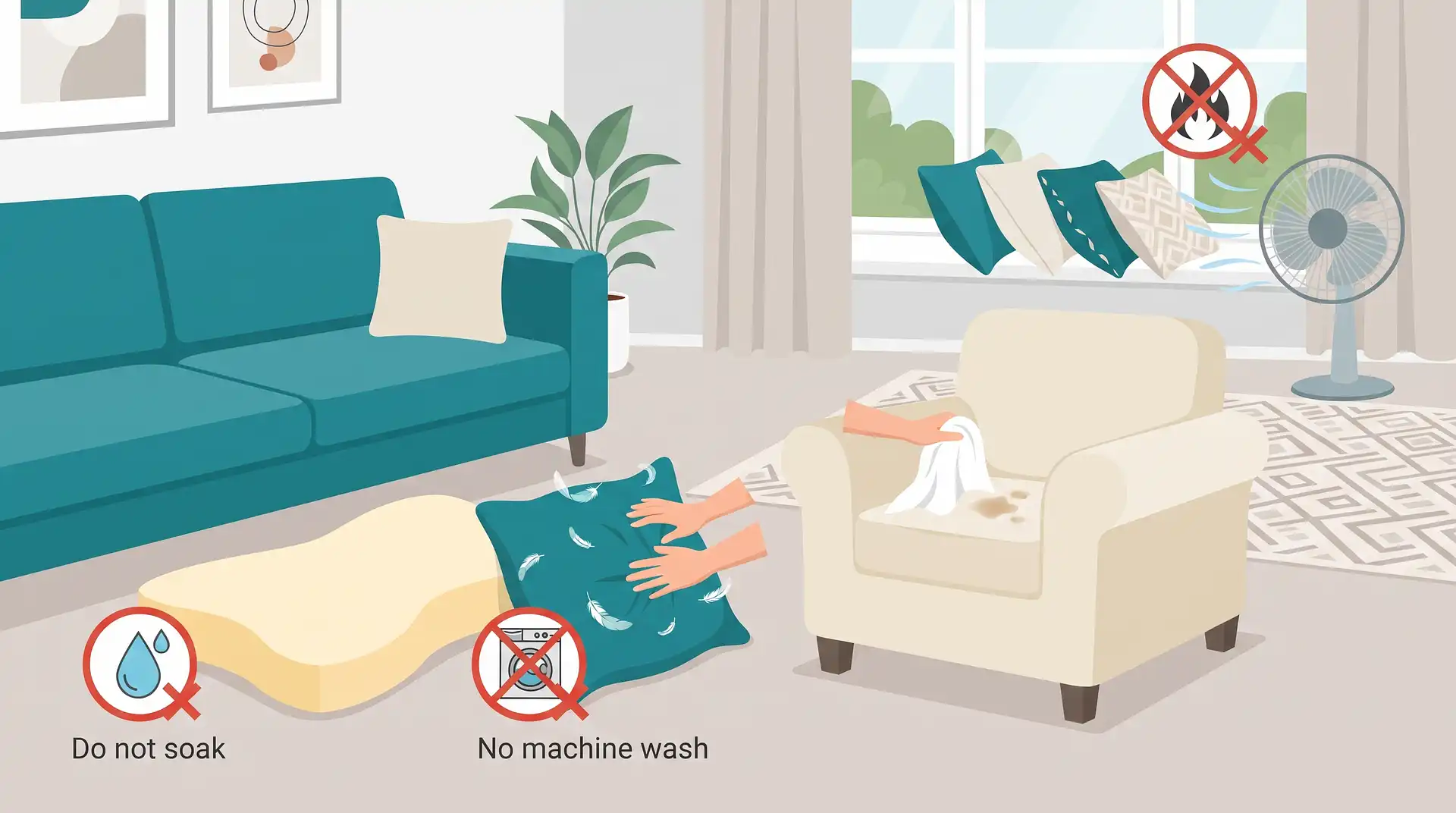
Do not put foam into a washing machine unless its own label expressly permits it. Agitation can tear foam, while soaking leaves water deep inside its cells. Dense foam may remain damp after the outside appears dry.
For routine care, remove the approved cover and vacuum the insert gently with low suction. If the manufacturer allows spot cleaning, blot the mark with a cloth carrying the smallest possible amount of mild solution. Follow with a barely damp rinsing cloth and press with dry towels.
Stand the foam on an edge in a ventilated room and use a fan. Turn it regularly. Do not twist, wring or use a hairdryer, radiator or tumble dryer. Replace the cover only when the middle of the foam is fully dry.
How to clean fibre-filled cushions
Loose polyester fibre can clump when soaked or compressed. Unless the insert label confirms that it is washable, limit cleaning to vacuuming, airing and controlled spot treatment.
Plump the insert from every side to separate compressed fibres. If a small area has been spot cleaned, redistribute the filling gently as it dries. Persistent flatness may be wear rather than dirt and will not be corrected by washing.
How to clean feather or down cushions
Feather interiors absorb moisture and need regular plumping. Many sofa manufacturers advise against washing them because natural oils can be removed and complete drying is difficult. Follow the exact insert label rather than instructions written for bed pillows.
Blot spills before they enter the filling. If the insert is not approved for washing, use only light surface dabbing and professional help for deeper contamination. Damp feathers can clump, develop mildew and produce a strong smell.
If washing is expressly allowed, follow the stated machine size, programme, detergent and drying process. The insert must be dry throughout, with all feather clumps separated, before it returns to the sofa.
How to clean mixed foam, fibre and feather inserts
Combination cushions may have a foam core inside a feather or fibre wrap. Treat them according to the complete manufacturer's instructions. A cleaning method that suits the foam may not suit the feather channels, fabric casing or adhesive.
Regular rotation and plumping are normally safer than washing. If a large spill reaches several layers, controlled professional extraction or replacement of the affected insert may be more realistic than soaking it at home.
How to remove common cushion stains
Food and drink
Lift solids with a spoon and blot liquid immediately. Use the cleaner permitted by the upholstery code, working from the edge towards the centre. Rinse where required and dry thoroughly.
Chocolate and grease
Let soft chocolate firm, lift it with a blunt edge and blot the oily residue. Use a mild detergent only on water-safe fabric. Our guide to removing chocolate from a sofa covers the complete process for fabric and leather.
Urine, vomit or another biological accident
Wear gloves, remove solids and blot quickly. Use an enzyme cleaner only when it is approved for the cover and filling. Do not assume a pet-stain product is suitable for wool, silk, velvet or feather. If contamination reaches the insert, surface cleaning may not remove it fully.
Ink or dye
Do not begin with nail-varnish remover, hairspray or bleach. Ink type and upholstery fibre determine the correct solvent. Large or transferred dye marks are easy to spread and are suitable for professional assessment.
How to dry sofa cushions properly
Drying is part of cleaning, not an optional final step. Prop loose cushions on an edge so air reaches several faces. Open windows where suitable and direct a fan across the cushion. Turn it regularly and keep it out of use.
Do not use direct heat. A radiator or hairdryer can shrink the cover, damage foam and dry the surface while leaving the centre damp. Tumble dry only when the separate care label clearly permits it.
Check seams, piping and the centre of the insert. Any coolness, dampness or musty smell means more drying time is needed. Do not stack cushions or place them back against the sofa frame until every part is dry.
Safety guide for cushion cleaning
Read the entire cleaner label before use. Hazard symbols and precautionary statements explain ventilation, protective equipment, storage and first aid. The Health and Safety Executive provides further information about cleaning-product labels and hazards.
Never mix cleaning products. Keep children and pets away from wet upholstery and cleaning supplies. Wear gloves when directed, ventilate the room and store products in their original labelled containers.
Disconnect a powered or reclining sofa from the mains before removing cushions or cleaning near controls, cables, motors or charging ports. Keep liquids away from electrical parts and reconnect the sofa only when the area is fully dry.
Common mistakes to avoid
Assuming a zipped cover is machine washable
Using the cover instructions for the cushion insert
Soaking foam, fibre or feather without explicit permission
Cleaning a W, S, WS or X fabric with the wrong product
Scrubbing one small patch and changing its texture
Using too much detergent and leaving sticky residue
Refitting covers or stacking cushions while they are damp
Using steam, a radiator or a hairdryer to speed drying
Frequently asked questions
Can you put sofa cushions in a washing machine?
Only when the label for the complete cushion says it is machine washable. More often, a removable outer cover may be washable while the foam, fibre or feather insert is not.
How do you clean cushions that cannot be removed?
Vacuum thoroughly, check the upholstery code and test the approved cleaner. Apply it to a white cloth, clean with controlled moisture, rinse where required and dry with strong airflow.
Can you wash foam sofa cushions in a bath?
Do not soak foam unless the manufacturer specifically allows it. Thick foam is difficult to dry internally and can tear or lose shape when handled wet.
Why does a cushion smell after cleaning?
Moisture or contamination may remain inside the insert, or detergent residue may remain in the cover. Increase airflow and allow more drying time. A smell that continues after complete drying needs professional assessment.
Can bicarbonate of soda freshen sofa cushions?
It may help with light surface odour on compatible dry upholstery, but it does not remove deep contamination. Test first, use a light amount and vacuum it away completely. Do not apply a wet bicarbonate paste unless the manufacturer permits it.
How often should sofa cushions be cleaned?
Vacuum them every week or two, depending on use, pets and children. Treat spills immediately. A deeper clean should be based on visible soil, odour and the manufacturer's care schedule rather than an arbitrary date.
When should you use a professional?
Arrange professional cleaning when the code is S or X, the material is delicate, a large spill reached the insert, biological contamination remains, colour transfers during testing, or a smell returns after drying. Also seek help for antique or valuable upholstery.
Can you wash sofa cushion covers in the washing machine?
Only if the label says the covers are removable and washable. Wash on a cool gentle cycle, and put them back on while slightly damp so they do not shrink. Many covers are designed to be cleaned on the cushion, not removed.
How do you clean couch cushions that do not come off?
Vacuum, check the cleaning code, then spot-clean with the right product. Clean the whole face of the cushion evenly to avoid rings, blot, and stand the cushion on its edge to dry with good airflow.
How do you clean the foam inside a sofa cushion?
Remove the cover, sprinkle bicarbonate of soda on the foam, leave it for a few hours and vacuum. For spills, blot with mild soapy water and press out the moisture. Dry fully before putting the cover back on.
Keep covers and inserts in good condition
Vacuum regularly, rotate suitable cushions, plump feather and fibre fillings and treat spills before they travel inside. Use washable throws where repeated accidents are likely, and follow the sofa maker's care instructions throughout.
InstantDry can assess the upholstery, insert and depth of contamination before recommending a cleaning method. Results depend on the material, stain age, previous treatments and whether liquid has entered the filling.
Request a Sofa Cleaning Assessment
Related guides: how to remove water stains from a sofa. For a professional finish, see our sofa and upholstery cleaning service or carpet cleaning in Manchester.
Related guides
Need it cleaned properly?
Book our upholstery & sofas service — from £49 (UK average £70), free in-home survey and pay on completion.