How to Get Blood Out of a Sofa
27 August 2026
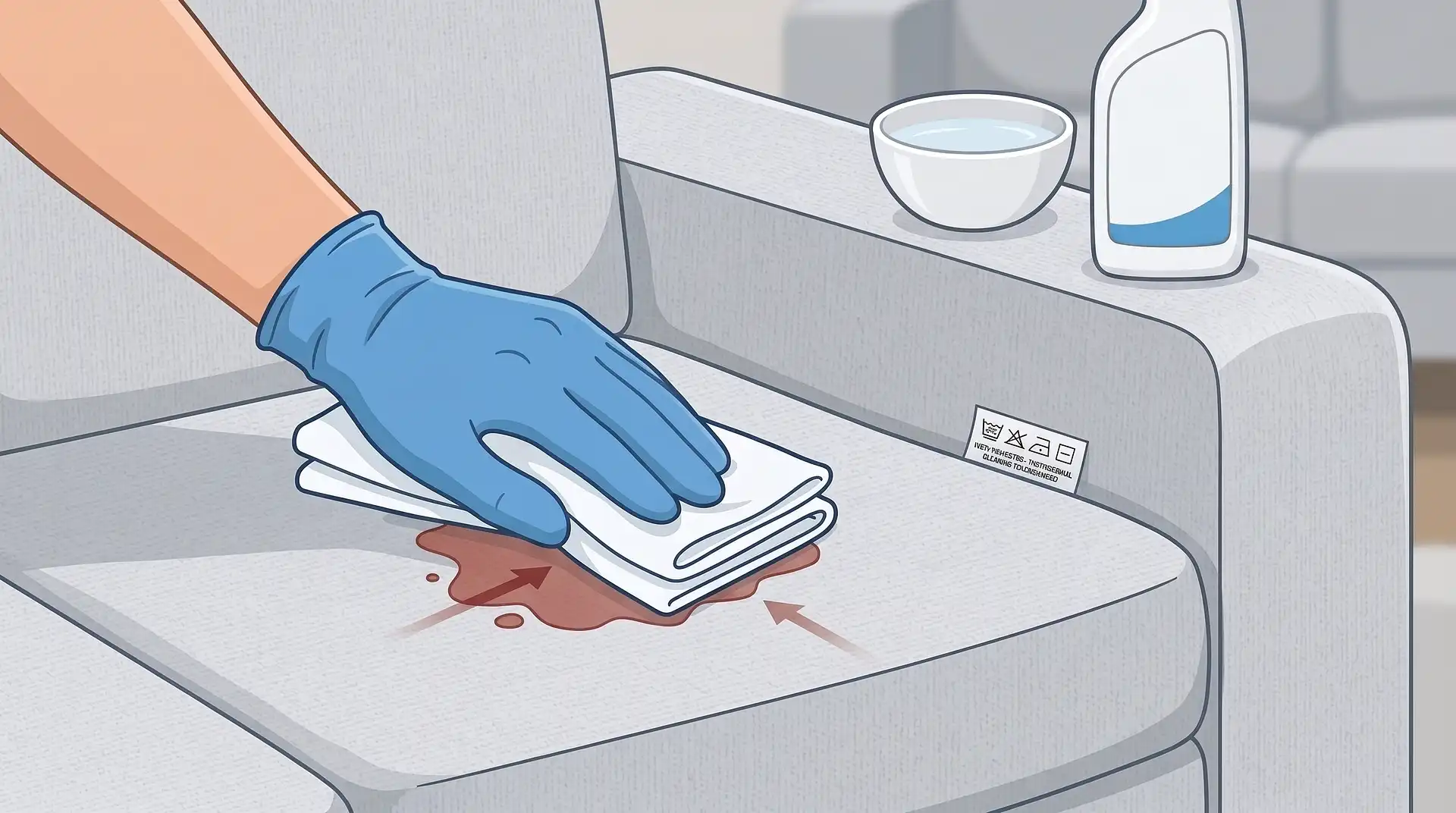
Quick answer: Put gloves on before touching the stain. Use cold water only — heat sets blood permanently into fabric. Check the cleaning code on the sofa label: W or WS means water-based cleaning is safe, S means solvent only. Blot with a dry white cloth from the outside in, then apply a small amount of mild detergent solution via a cloth. For dried stains, rehydrate with cold water first, then use an enzyme cleaner. Dry the cushion properly afterwards — trapped moisture in foam causes a musty smell that's worse than the original stain.
A blood stain on a sofa is one of those accidents that feels worse than it is, particularly when the instinct is to reach for hot water and scrub. Both make it significantly harder to fix. The method is straightforward if you know two things: that blood is a protein that sets permanently in heat, and that your sofa's cleaning code determines what's safe to use on it. Instant Dry Carpet Cleaning treats upholstery stains regularly and blood is among the most recoverable when approached correctly.
Before you start: blood is a body fluid
Worth stating clearly before anything else, as most competing guides skip it.
Blood can carry bloodborne infections. The practical risk from your own blood, or blood from someone in your immediate household whose health you know well, is low in normal domestic circumstances. The basic precautions below are sensible regardless.
Wear disposable nitrile or vinyl gloves before touching the stain. This matters more if the blood isn't clearly your own. Keep gloves on throughout and dispose of them, and any used cloths, in a sealed bag directly into the outdoor bin.
White cloths only throughout. Coloured cloths transfer their own dye into damp upholstery.
Wash hands thoroughly with soap and water once finished, even though you wore gloves.
Check the cleaning code first
The care label on your sofa carries a single letter that determines what's safe.
W — water-based cleaning is safe. This guide's main method applies. S — solvent only. No water, no water-based products. Water on an S-coded fabric causes watermarking and possible fibre damage. For an S-coded sofa with blood, use a solvent-based upholstery cleaner applied sparingly to a cloth, or contact a professional. WS — either method is safe. Water-based cleaning applies. X — vacuum only. No liquid cleaning. If blood has reached an X-coded sofa, professional treatment is needed.
Test any solution on a hidden area first regardless of the code — inside a cushion seam or behind a back cushion. Let it dry fully and check for colour change before working on a visible area. The blood on sofa mattress article and the fabric sofa cleaning guides on this site cover the cleaning codes in detail; the how to clean a fabric sofa guide has a full explanation with a table.
The cold water rule and why it matters
Blood contains haemoglobin, a protein-based compound. When protein meets heat — warm water, a warm cloth, a hairdryer on a damp patch — it denatures: the protein structure changes and bonds permanently to the textile fibre. It's the same process that turns a clear egg white opaque and solid when cooked.
A fresh blood stain treated with warm water becomes a permanent stain in seconds. Cold water is not a preference: it is the only option throughout this entire process, from first blot to final rinse.
This applies to the temperature of your water, the temperature of the cloth, and any drying method. No heat at any stage.
Fresh blood on a fabric sofa
Act as quickly as possible. Fresh blood hasn't bonded with the fibres yet and is still mobile.
Step 1: Blot with a dry white cloth. Press firmly from the outer edge of the stain inward. Lift, refold to a clean section and repeat. Get out as much as possible before adding any liquid. Never rub — rubbing spreads the stain and drives it toward the foam beneath.
Step 2: Cold water only on a cloth. Dampen a clean white cloth with cold water, wring it nearly dry, and dab at what remains. This dilutes the haemoglobin before it has time to fully bond. Blot dry again after each pass.
Step 3: Mild detergent solution if needed. A small amount of clear washing-up liquid in cold water, applied to a cloth and dabbed gently at the stain, lifts what cold water alone hasn't. Keep the amount of moisture going into the sofa to the minimum needed.
Step 4: Rinse thoroughly. Detergent left in sofa fabric attracts soil and dulls the appearance. A clean cloth dampened with plain cold water, used to go over the area several times, removes residue.
Step 5: Blot dry and dry the cushion properly. Covered below — this step matters more than most guides suggest.
Dried blood on a fabric sofa
Dried blood has oxidised, which is why it turns from red to brown. This makes it harder but not necessarily permanent on most upholstery fabrics.
Rehydrate first. Hold a cold, damp cloth against the dried stain for a few minutes without rubbing. This brings the oxidised haemoglobin back toward a state where cleaning can reach it.
Apply an enzyme cleaner. Enzyme cleaners break down protein compounds specifically, which is why they're more effective on dried blood than detergent alone. Apply to a cloth, not directly to the sofa, dab onto the stain, and allow the product's stated dwell time. Keep the area damp during this period — enzymes stop working as things dry out.
Blot, reapply and repeat. Dried blood lifts in layers across several passes rather than in one attempt. Judge progress by comparing to how the stain looked at the start, not by expecting complete removal after one cycle.
On hydrogen peroxide for stubborn dried stains: it does work on blood by oxidising the haemoglobin. On a pale synthetic fabric where the colour-fastness test passed, it's an option. On coloured fabric, patterned fabric, or any sofa with wool in it, the bleaching risk is real and the colour-fastness test is not optional. Apply diluted, to a cloth, on the stain spot only, and stop if any colour change appears. Never combine it with other products. The same hydrogen peroxide guidance established in the how to get blood out of carpet guide applies directly here.
Blood on leather
Leather is less absorbent than fabric on its surface, which gives you a slightly longer window with a fresh spill. The method is gentler throughout.
Blot immediately with a dry white cloth. Then wipe with a barely damp cloth and a small amount of pH-neutral leather cleaner rather than a water and detergent solution. Leather should never be soaked.
Dry immediately with a second dry cloth. Never allow leather to air dry with moisture sitting on the surface.
Condition afterwards. Any cleaning strips some of the natural oils that keep leather supple. A conditioning pass once the area is fully dry protects the surface.
For dried blood on leather, rehydrate with a barely damp cloth held against the stain, then apply a leather-specific cleaner. On delicate aniline or semi-aniline leather, professional treatment is the safer option for a significant blood stain.
Blood on suede and velvet
Suede: use the minimum moisture possible. Blot immediately, then a barely damp cloth with a specialist suede cleaner applied to the cloth rather than the fabric. Dampen the surrounding panel lightly to prevent watermarks forming at the drying boundary — the same watermark-prevention technique from the suede sofa guide. No scrubbing, no excess moisture.
Velvet: blot immediately, then treat with a cold damp cloth in the pile direction. Apply any solution to a cloth, not the velvet directly. Dampen the whole panel lightly once treatment is done to prevent tide marks at the drying edge. Brush the pile back into position once fully dry.
Both materials are sensitive enough that a significant blood stain, or one that doesn't respond to careful home treatment, is worth professional attention.
The cushion drying problem
This is the step that creates a new problem after the stain has been treated, and it's absent from every competing guide.
A sofa cushion is foam or fibre fill inside a fabric cover. Liquid that soaks through the fabric cover reaches the foam, which cannot dry from the inside out. A cushion left flat on a sofa with damp foam inside stays wet for far longer than the surface suggests — sometimes days in a UK home with limited ventilation and heating running.
Damp foam develops mould and generates a musty smell that's distinct from any original stain odour. It's a consequence of the cleaning rather than the original accident, and it happens when the cushion isn't dried properly.
After cleaning: if the stain was treated with any wet product, prop the cushion on its edge or remove it from its cover if the cover is removable, and allow proper air circulation on both sides. Keep the room ventilated. Don't put the cushion back into use or replace the cover until the foam is genuinely dry — check by pressing firmly with a dry hand. Any coolness or give indicates residual moisture.
This is the same enclosed-foam drying principle established across the fabric sofa, mattress and car seat guides on this site. On a sofa it matters just as much as anywhere else.
What not to use
Hot or warm water. Sets haemoglobin permanently into the fibre.
Scrubbing or rubbing. Spreads the stain, drives it toward the foam, and permanently damages the pile on velvet and suede.
Baking soda paste on wool or wool-blend upholstery. Baking soda is mildly alkaline and can affect wool fibres over sustained contact. On synthetic fabric the risk is lower; on wool it should be avoided.
Bleach. Strips colour reliably and irreversibly. There is no version of bleach that improves a blood stain on upholstery.
A hairdryer or direct heat to speed drying. Sets any remaining protein into the fibre.
Hydrogen peroxide without a colour-fastness test. Bleaches coloured fabric and affects wool.
FAQ Section
How do you get blood out of a sofa? Put gloves on, check the cleaning code, and use cold water only throughout. Blot with a dry white cloth from the outside in, then dab a mild detergent solution on a cloth onto the stain. For dried blood, rehydrate with cold water first then use an enzyme cleaner. Rinse and dry the cushion properly to prevent trapped moisture causing a musty smell later.
How do you get dried blood out of a sofa? Hold a cold damp cloth against the dried stain for a few minutes to rehydrate it. Then apply an enzyme cleaner to a cloth and dab it onto the stain, allowing the product's stated dwell time while keeping the area damp. Blot and repeat over several passes — dried blood lifts gradually rather than in one attempt.
Can you use hydrogen peroxide on a sofa? On pale synthetic fabric that has passed a colour-fastness test, yes. On coloured fabric, patterned fabric or any upholstery with wool content, the bleaching risk is real. Always test on a completely hidden area first, apply diluted via a cloth rather than directly, and stop if any colour change appears.
Why can't you use hot water on blood stains? Blood contains haemoglobin, a protein that bonds permanently to fabric when heated. The same process that cooks an egg white makes blood bond irreversibly to upholstery fibres. Cold water is the only correct option.
How do you get blood out of a leather sofa? Blot immediately with a dry white cloth. Then wipe with a barely damp cloth and a pH-neutral leather cleaner. Dry immediately with a dry cloth and condition the area once fully dry.
How do you get blood out of a suede sofa? Blot immediately with a dry white cloth. Apply a specialist suede cleaner to a barely damp cloth and work gently in the nap direction. Lightly dampen the surrounding panel to prevent watermarks. No scrubbing, no excess moisture.
Should I use an enzyme cleaner or detergent on blood? Both can help, but an enzyme cleaner is more effective on dried blood because it breaks down the protein compounds specifically. Detergent lifts water-soluble elements; enzymes address what detergent leaves behind.
What should I do if the sofa smells musty after cleaning? The foam inside the cushion is still damp. Prop the cushion on its edge with air reaching both sides and ventilate the room. Check by pressing firmly with a dry hand — any coolness indicates moisture. Don't replace the cover until it's completely dry.
Service Section
Stain not shifting, or the sofa smelling musty after cleaning?
Blood that has soaked into the foam beneath the cover, or a stain on delicate leather, suede or velvet, is harder to treat at home without risk of damage. Professional upholstery cleaning reaches deeper and removes more residue than hand cleaning allows, without leaving moisture in the foam. Instant Dry Carpet Cleaning provides professional upholstery cleaning across England and Wales, with a free survey and fixed price before any work begins.
Get your fixed quote in 60 seconds
Or call 07555 856988.