How to Get Chocolate Out of a Sofa
30 September 2026
Would rather leave it to a professional? See our sofa cleaning in Manchester.
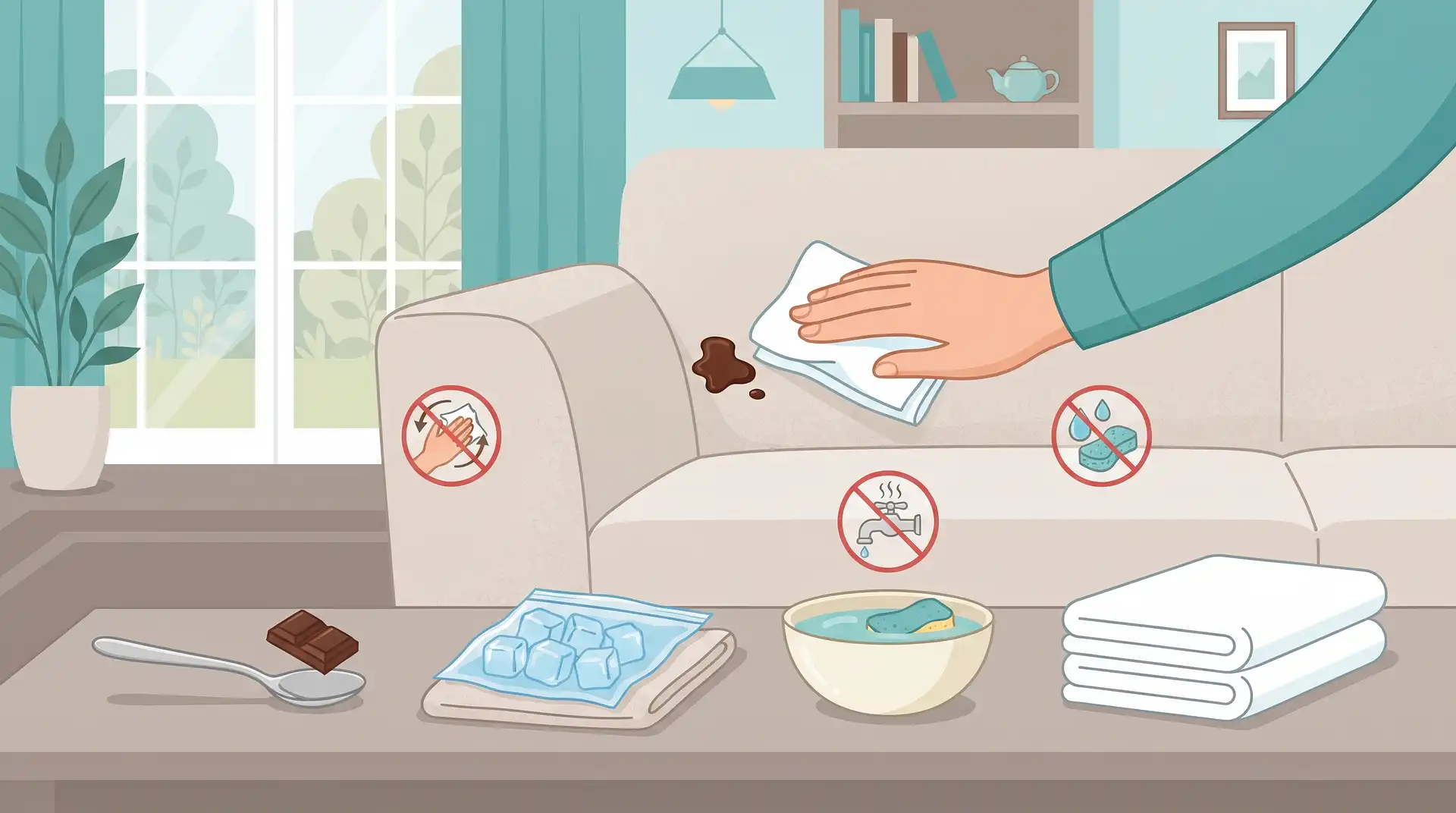
Quick answer: Let soft chocolate firm up, then lift away as much as possible with a spoon or blunt plastic edge. Check the sofa's cleaning code. On a water-safe fabric, blot the mark with a white cloth dampened in cool water and a small amount of clear washing-up liquid. Work from the outside towards the centre, rinse by blotting with a second damp cloth and press with dry towels. Do not rub, use hot water or soak the cushion.
Chocolate is more complicated than an ordinary drink spill. It contains fat, sugar and dark cocoa particles, while milk chocolate and chocolate desserts can also contain protein. Heat melts the fat and can set protein into fabric, so a hairdryer, steam cleaner or hot water can make the stain harder to remove.
Check the sofa before treating the chocolate
Find the care label under a seat cushion, beneath the sofa or inside a zipped cover. The upholstery cleaning code tells you which type of cleaner the fabric can accept.
W: Use a water-based upholstery cleaner.
S: Use a suitable solvent-based upholstery cleaner only.
WS or SW: Either an approved water-based or solvent-based product may be used.
X: Vacuum only. Do not apply water or solvent at home.
Codes can vary between manufacturers, and a cleaning code does not replace the sofa's own instructions. If the label is missing, contact the manufacturer or begin with dry removal only. Our guide to cleaning a fabric sofa explains these codes and the wider care process.
Test every product first
Apply a small amount to a hidden area using a white cloth. Let it dry fully, then check for colour transfer, fading, water rings, texture change or a flattened pile. A test that looks fine while damp can change as it dries.
What you will need
A spoon or blunt plastic scraper
A sealed bag containing ice, if the chocolate is soft
Several clean white cloths
Plain white paper towel or clean dry towels
Cool water for W or WS fabric
Clear, mild washing-up liquid for water-safe fabric
A fan to help the treated area dry
Do not use a coloured cloth because its dye may transfer. Keep the mixture weak. Too much detergent creates foam, takes longer to rinse and leaves a sticky patch that attracts dirt.
How to remove fresh or melted chocolate from a fabric sofa
1. Stop the chocolate spreading
If the chocolate is still soft, place ice in a sealed bag and hold it above the mark briefly until the chocolate firms. Do not put loose ice directly onto the upholstery because melting water adds unnecessary moisture.
Do not wipe melted chocolate. Wiping pushes grease and pigment across a wider area and deeper into the weave.
2. Lift off the excess
Use the edge of a spoon or a blunt plastic scraper to lift the chocolate from the surface. Work inwards from the outside and wipe the tool after every pass. Hold a clean paper towel beside the mark so removed chocolate does not fall onto another part of the sofa.
3. Blot the remaining grease
Press a folded white paper towel or dry white cloth onto the stain. Lift it straight up and move to a clean section each time. Continue until little or no brown residue transfers. Avoid rubbing or pressing so hard that the chocolate moves into the cushion filling.
4. Mix a mild solution
For W or WS upholstery, mix about one-quarter of a teaspoon of clear washing-up liquid with 250 ml of cool water. The solution should be only lightly soapy. Use a proper upholstery product instead if the manufacturer specifies one.
5. Work from the edge towards the centre
Dampen a white cloth with the solution and wring it out well. Blot the outside edge first, then move gradually towards the middle. Turn the cloth frequently so lifted chocolate is not pressed back into the fabric.
Use several light treatments rather than saturating the stain. Liquid that reaches the cushion filling can spread sideways and return to the surface as a brown ring while drying.
6. Rinse out the detergent
Dampen a fresh white cloth with plain cool water and wring it out. Blot the treated area to remove soap. Repeat with clean sections of cloth until no foam or slippery feeling remains.
7. Blot and dry
Press a dry towel firmly onto the area to draw out moisture. Allow the sofa to air dry with good ventilation or a fan directed across the fabric. Do not sit on it, replace a throw or turn the cushion over until it is dry through the cover and filling.
Ask About Professional Sofa Cleaning
How to remove dried chocolate from a sofa
Do not wet a thick layer of dried chocolate straight away. Break it into smaller pieces with a spoon or blunt edge, working gently so you do not pull threads. Vacuum loose crumbs with an upholstery attachment held just above the surface.
Once the solids are gone, use the care-code-appropriate method. On W or WS fabric, repeat the cool-water detergent process in light passes. An old stain may need more than one treatment because the fat and cocoa can remain after the visible chocolate has been lifted.
If the stain has already been treated with heat, strong chemicals or several home remedies, stop if the colour or texture changes. Mixing more products into the residue makes the reaction harder to predict.
Chocolate stain spread or set in?
Book sofa and upholstery cleaning
What to do if a greasy shadow remains
A pale brown or slightly darker shadow often means cocoa fat remains in the fibres. Do not increase the water. On a W-coded fabric, repeat the weak washing-up-liquid treatment because detergent helps lift grease. Rinse carefully after each pass.
For S-coded upholstery, do not substitute water and washing-up liquid. Use only the solvent product approved by the sofa manufacturer, following its instructions, or arrange professional treatment. Solvent cleaning needs good ventilation and careful control.
A visible clean spot can form when the rest of the sofa is generally soiled. Treating the same small area repeatedly may make that contrast stronger. In this situation, cleaning the full cushion panel evenly is usually more suitable than continuing to concentrate on the centre.
Chocolate on removable sofa covers
A zip does not automatically mean a cover is machine washable. Check the washing symbols and the sofa manufacturer's instructions. If washing is allowed, remove the solid chocolate first and spot-treat only with an approved product. Use the stated programme and temperature.
Check the stain before drying. Tumble-dryer heat can make a remaining greasy or protein mark harder to remove. Do not wash one cover alone if the manufacturer advises washing the full matching set to avoid uneven colour. Read our guide on how to wash sofa covers safely before removing them.
How to clean chocolate from a leather sofa
Lift the chocolate carefully with a spoon, then blot grease with a dry, soft cloth. For protected or pigmented leather, use a small amount of pH-neutral leather cleaner on a cloth, following the product directions. Wipe away residue with a barely damp cloth and dry immediately.
Do not use washing-up liquid, vinegar, alcohol, baby wipes or an all-purpose spray on genuine leather. These can strip its protective finish and natural oils. Aniline and semi-aniline leather are porous and can darken permanently, so a noticeable chocolate mark is better assessed by a leather specialist.
Once the leather is clean and dry, apply a compatible conditioner if the manufacturer's instructions recommend it. Our complete guide to cleaning a leather sofa explains how to identify common leather finishes.
Chocolate on velvet, suede and delicate upholstery
Velvet
Check whether the velvet is cotton, synthetic or another fibre and follow its cleaning code. Lift solids without pressing them into the pile. Blot in the direction of the nap with the least moisture allowed. When dry, use a clean velvet or upholstery brush to restore the pile gently.
Suede or nubuck
Do not use the general water-and-detergent method. Remove dry solids carefully and use a suede-specific cleaner only if the manufacturer permits it. Grease can darken unprotected suede quickly, so professional treatment is sensible for anything larger than a small surface mark.
Silk, viscose or antique upholstery
Stop after lifting loose chocolate. These materials can watermark, distort or lose colour when spot cleaned. A specialist should inspect the sofa before liquid is applied.
Safety guide for treating sofa stains
Read every product label, keep the room ventilated and wear gloves when instructed. Keep children and pets away from the treatment area until it is rinsed, dry and safe for normal use. The Health and Safety Executive warns that some cleaning-product ingredients can contribute to skin irritation or breathing problems in its guidance on cleaning chemicals.
Never mix cleaners. Do not combine bleach with vinegar, ammonia, descaler or any other product. Avoid spraying a fine mist around the room. Apply the cleaner to a cloth where the product instructions allow, and store it in its original labelled container.
Disconnect a powered recliner or sofa from the mains before cleaning near buttons, cables, motors or charging sockets. Keep liquid away from electrical parts and do not reconnect the sofa until the area is completely dry.
Common mistakes that make chocolate stains worse
Using hot water: it melts the fat and may set dairy protein into the fabric.
Rubbing: it spreads cocoa pigment and grease through a larger area.
Pouring cleaner onto the sofa: it can soak the filling and create a drying ring.
Using too much detergent: residue becomes sticky and attracts new soil.
Applying heat: steam, irons and hairdryers can set the stain or damage upholstery.
Trying several remedies together: mixed residues may cause fading, odour or an unsafe reaction.
Refitting a damp cover: this can stretch the fabric and trap moisture against the cushion.
Frequently asked questions
Does chocolate permanently stain a sofa?
Not always. A fresh mark on colourfast, water-safe fabric often responds well to careful solid removal, mild detergent and controlled rinsing. The outcome depends on the upholstery, chocolate type, stain age and any earlier treatments.
Should you use cold or warm water on chocolate?
Use cool water on water-safe upholstery. Chocolate can include fat and milk protein, so hot water risks spreading or setting parts of the stain. Follow the sofa label if it specifies a particular product or method.
Can washing-up liquid remove chocolate from a sofa?
A very weak solution can help lift chocolate fat from W or WS fabric. Choose a clear liquid without added colour, test it first and rinse out the residue. Do not use it on S-coded, X-coded or leather upholstery.
Can bicarbonate of soda remove chocolate?
It may absorb some oily residue when used dry on suitable fabric, but it does not replace proper stain treatment. Fine powder can remain in textured fabric or enter the cushion. Check the manufacturer's instructions before using it and vacuum thoroughly afterwards.
Why did the chocolate stain return after drying?
Chocolate or cleaning solution may have travelled into the filling and wicked back to the surface, or detergent residue may have attracted soil. Over-wetting is the usual cause. Controlled extraction or full-panel professional cleaning may be needed.
Can a steam cleaner remove chocolate?
Do not begin with steam. Heat can melt the fatty part of the stain and set protein. A professional may use controlled hot water extraction after suitable pre-treatment, but that is different from holding a domestic steam tool against the mark.
When should you call a professional?
Arrange an assessment when the care code is S or X, the fabric is delicate, colour transfers during testing, chocolate has reached the cushion filling, a large greasy shadow remains, or an earlier treatment has caused a ring. Professional cleaning is also practical when the affected area needs to be blended into the whole cushion or sofa.
How do you remove chocolate from a fabric couch?
Let it harden or chill it with an ice pack in a bag, then scrape it off with a blunt knife. Blot with a few drops of washing-up liquid in cool water, then rinse with a damp cloth. Never use heat, which melts it further into the fibres.
How do you get melted chocolate out of a sofa?
Scrape up as much as you can, then cool the rest with an ice pack so it hardens. Treat the fat with washing-up liquid solution and the brown dye with a little diluted white vinegar on water-safe fabrics.
How do you get chocolate out of a leather sofa?
Wipe off what you can, then use a soft cloth with a little leather cleaner. Do not use washing-up liquid or water heavily on leather. Condition the area afterwards.
Finish with complete drying
Once no more chocolate transfers and the detergent has been rinsed out, press with dry towels and allow moving air to do the rest. Prop a removable cushion on its edge if the manufacturer permits it, so air reaches more than one face. Avoid direct heat and do not judge dryness from the surface alone.
InstantDry can inspect the upholstery code, fibre, stain depth and any products already used before choosing a suitable method. Complete removal cannot be promised without seeing the condition, particularly when chocolate has been heated, rubbed or left for a long time.
Related guides: how to get pen out of a sofa, how to get blood out of a sofa. For a professional finish, see our sofa and upholstery cleaning service or carpet cleaning in Manchester.
Related guides
Need it cleaned properly?
Book our upholstery & sofas service — from £49 (UK average £70), free in-home survey and pay on completion.