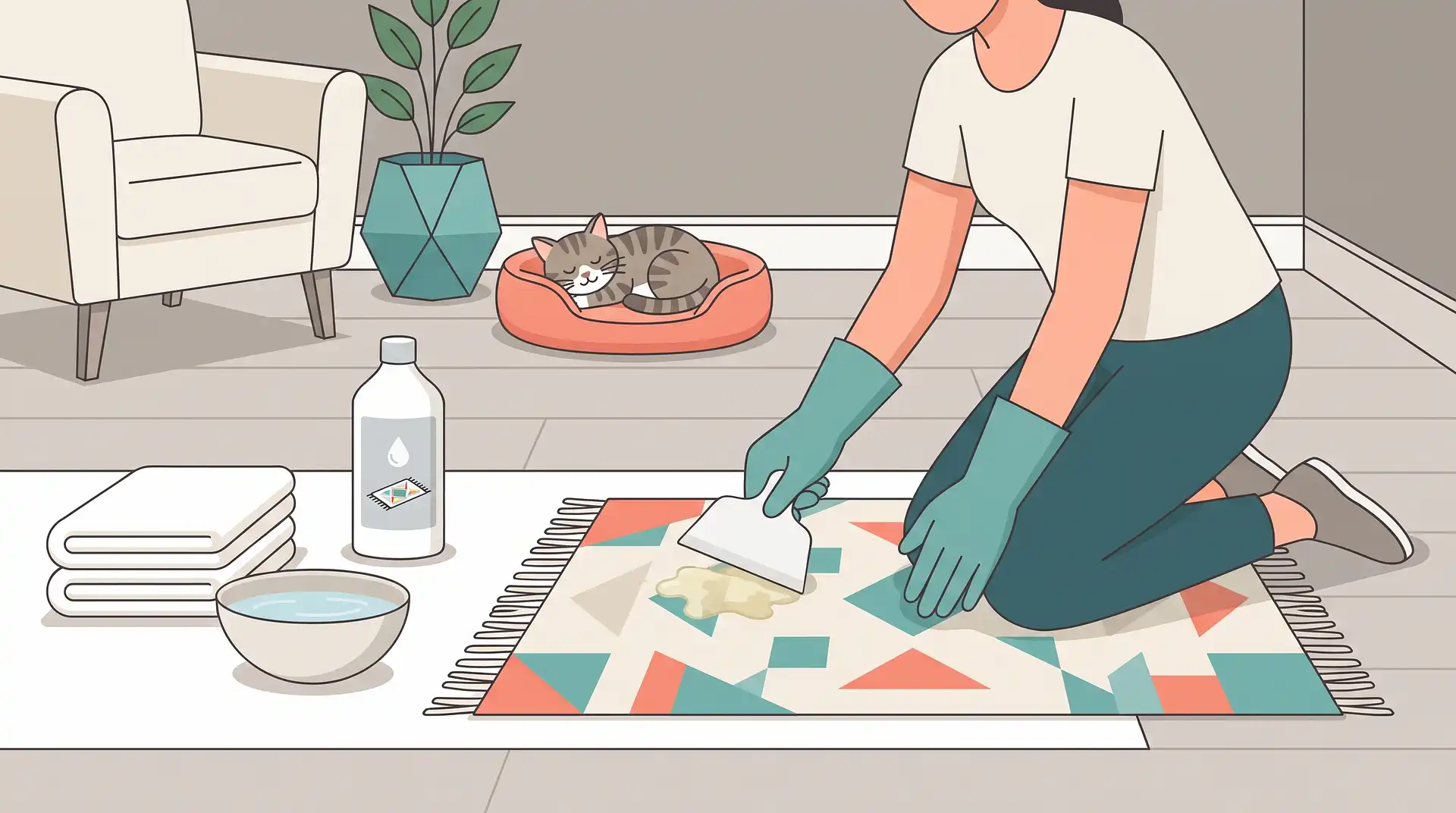
How to Clean Cat Vomit from a Rug or Carpet
28 September 2026
Would rather leave it to a professional? See our pet stain removal in Manchester.
Quick answer: Put on gloves, lift away solid material without pressing it into the pile, then blot the remaining moisture with white towels. Check the rug's fibre and care label before using any cleaner. For a colourfast synthetic rug, apply a small amount of suitable pet-stain cleaner to a cloth and blot from the edge towards the centre. Rinse with a separate cloth dampened with cool water, blot again and dry the rug completely on both sides. Wool, silk, viscose, jute and valuable hand-knotted rugs need extra care.
Act quickly, but identify the rug first
Cat vomit can contain moisture, partially digested food, bile and colour from the cat's food. Lifting it promptly reduces the chance of the material reaching the base of the pile or leaving a permanent colour change.
Before adding water, find the care label and identify the fibre. A washable synthetic rug is usually more tolerant of careful spot cleaning than wool, silk, viscose, jute or an antique rug.
Synthetic rugs: often suitable for limited water-based spot treatment when the label allows it.
Wool rugs: need a wool-safe product, gentle handling and controlled moisture.
Silk or viscose rugs: can lose texture, water-mark or suffer dye movement. Professional treatment is safer.
Jute and sisal rugs: can brown, shrink or distort when wet.
Hand-knotted and antique rugs: may contain unstable dyes and delicate foundations.
If the label is missing and the rug may be valuable, stop after removing the surface material and ask a rug specialist. Our broader guide to cleaning a rug at home explains how fibre, construction and backing change the method.
What you will need
Disposable gloves
A spoon, blunt scraper or stiff piece of card
White paper towels or clean white cloths
Cool water
A cleaner approved for pet stains and the rug fibre
A second clean cloth for rinsing
Dry towels
A safe way to raise the treated area for airflow
Use white cloths so that dye from a coloured towel cannot transfer to the rug. Keep a bag nearby for the waste and used paper towels.
How to clean fresh cat vomit from a rug
1. Remove solid material
Put on gloves. Slide the spoon, card or scraper under the material and lift it upwards. Work from the outside towards the centre so the affected area does not become larger.
Do not press down or scrub. Pressure pushes soft material between the fibres and towards the backing.
2. Blot the remaining moisture
Place a folded white towel over the patch and press gently. Lift it straight up, move to a clean section and repeat. Continue until little moisture transfers.
If possible, place a clean towel beneath a small movable rug to see whether liquid has passed through. Do not spread contamination by dragging the rug across the floor.
3. Test the cleaning product
Read both the rug instructions and the cleaner label. Test the product on a hidden corner using the stated dilution. Let the test area dry before checking for colour transfer, fading, texture change or a water ring.
A product described as natural, pet stain or enzyme-based is not automatically suitable for every fibre. Enzymes that digest protein-based mess can also be unsuitable for protein fibres such as wool unless the product specifically states that use is safe.
4. Blot with a suitable cleaner
Apply the prepared solution to a clean cloth unless the product directions specify another method. Work from the outer edge towards the centre, using small blotting movements.
Use only enough moisture to treat the affected fibres. Soaking the patch can carry vomit and cleaner into the backing, where they are harder to remove and slower to dry.
5. Rinse away residue
Dampen a separate white cloth with cool water and wring it out well. Blot the treated area to lift cleaner residue. Repeat with a clean section of cloth, then press dry towels onto the patch.
Do not keep adding detergent when a mark is slow to lift. Excess residue can leave the pile sticky and make the area attract soil.
6. Dry the pile and backing completely
Raise the damp section so air can reach both sides without stretching the rug. Use ventilation and allow enough time for the backing to dry. Keep the rug away from direct high heat.
Do not return a damp rug to a wooden floor or carpet. Trapped moisture can create odour, staining and damage beneath the rug.
If the vomit reached the backing or the rug is wool, silk, viscose or hand-knotted, ask InstantDry about a fibre-appropriate professional clean.
Ask About Professional Rug Cleaning
Vomit soaked into the backing or a smell that keeps coming back?
Book pet stain and odour removal
How to remove dried cat vomit
Dried material needs softening before it can be lifted, but the rug should not be flooded.
Put on gloves and gently lift loose, dry pieces with a spoon or blunt scraper.
Hold a cloth lightly dampened with cool water against the residue for a short time.
Lift the softened material without rubbing it into the pile.
Test and apply a cleaner suitable for the rug fibre.
Rinse by blotting with a barely damp cloth, then dry both sides thoroughly.
Several controlled treatments are safer than one aggressive attempt. Stop if colour transfers, the pile changes texture or the mark spreads.
Safety guide for your cat, family and rug
Check the cat as well as the rug. Contact a vet promptly if vomiting repeats, your cat seems unwell, cannot keep water down, has blood in the vomit or may have swallowed something harmful.
Keep a useful sample or photograph. If poisoning or an unusual substance is suspected, your vet may ask what the vomit contained. Do not delay urgent advice to finish cleaning.
Wear gloves and wash your hands. Seal the removed material and disposable towels before putting them in the appropriate household waste.
Keep pets and children away. Follow the cleaner's instructions and do not allow access until the rug is rinsed where required and completely dry.
Never mix cleaning products. Do not combine bleach, ammonia, vinegar, peroxide, disinfectant or an enzyme cleaner.
Avoid improvised fragrances. Essential oils and strongly scented sprays are not safe substitutes for removing contamination and may be harmful around cats.
The government's code of practice for cat welfare advises owners to monitor cats for signs of illness and contact a vet promptly when a cat appears ill or injured.
Special care for delicate rugs
Wool rugs
Use only a cleaner confirmed as suitable for wool and the particular stain. Avoid biological laundry detergent and unapproved enzyme products. Keep the treatment cool, gentle and limited to the affected area.
Persian, Oriental and antique rugs
Remove surface solids and blot moisture, but avoid further wet treatment if the dyes or value are uncertain. Read our guide to cleaning Persian and hand-knotted rugs before attempting spot treatment.
Jute and sisal rugs
These plant fibres are highly sensitive to moisture and can develop brown marks as they dry. Remove and blot the accident promptly, then follow the care label or seek professional advice. Our guide to cleaning a jute rug explains the moisture risk.
Silk and viscose rugs
Home wet cleaning can change the sheen, texture and colour. After carefully lifting surface contamination, arrange a specialist assessment.
Why the rug may still smell after cleaning
A remaining smell can come from residue in the base of the pile, contamination in the backing, cleaner that was not rinsed away or incomplete drying.
Check the back of the rug and the floor beneath it. If the rug has a separate pad, inspect that too. Repeatedly spraying the top will not resolve material held underneath and can make drying more difficult.
Professional rug cleaning may be needed when the smell returns after the rug is fully dry, the accident covered a large area or liquid passed through to the backing.
Frequently asked questions
Can I use an enzyme cleaner on cat vomit?
It may be suitable for a colourfast synthetic rug when the product label allows it. Do not use it on wool, silk or another delicate fibre unless the cleaner is specifically approved for that material.
Can I use bicarbonate of soda?
It may absorb some odour, but it does not replace removal, rinsing and full drying. Fine powder can also remain deep in a dense pile. Check the rug's care instructions before using it.
Should I use hot water?
No. Start with cool water and the approved cleaning method. Heat can make some organic stains harder to remove and may affect fibres, dyes or backing materials.
Can I put the rug in a washing machine?
Only when the care label clearly allows machine washing and the machine can safely take the load. A small washable rug and a wool, jute or hand-knotted rug need very different care.
When should I call a professional?
Get help for a valuable or delicate rug, unstable colours, widespread contamination, backing penetration, a returning smell or a stain that has not improved after suitable spot treatment.
How do you clean cat vomit off a carpet rather than a rug?
Use the same method: lift solids with a spoon, blot with cool water, then use a pet enzyme cleaner and blot again. Fitted carpet cannot be lifted to dry, so blot hard and run a fan, as moisture trapped in the underlay causes smells.
How do you get dried cat vomit out of a rug?
Scrape off the crust, then mist the area with cool water and leave it for 5 to 10 minutes to soften. Blot, apply an enzyme cleaner for its full contact time, rinse lightly and dry. Repeat once rather than scrubbing, which spreads the stain.
What gets rid of cat vomit smell on carpets?
An enzyme cleaner breaks down the proteins that cause the smell. Air fresheners and bicarbonate of soda only mask it. If the smell returns after drying, the vomit has reached the backing or underlay and needs hot-water extraction.
Will cat vomit stain a rug permanently?
Stomach acid and food dyes can set into wool and light fibres within hours, so act fast. Most fresh accidents come out fully. Old or yellow stains on wool may only lighten, and a professional clean gives the best chance.
Get help with a cat-vomit stain on a rug
Tell InstantDry what the rug is made from, when the accident happened and which products have already been used. Suitability, likely results and price depend on the rug and the work required.
Related guides: how to get sick out of carpet, how to get smells out of carpet, how to clean a wool rug. For a professional finish, see our pet stain and odour removal service or carpet cleaning in Manchester.
Related guides
Need it cleaned properly?
Book our pet stain & odour removal service — from £25 (UK average £40), free in-home survey and pay on completion.