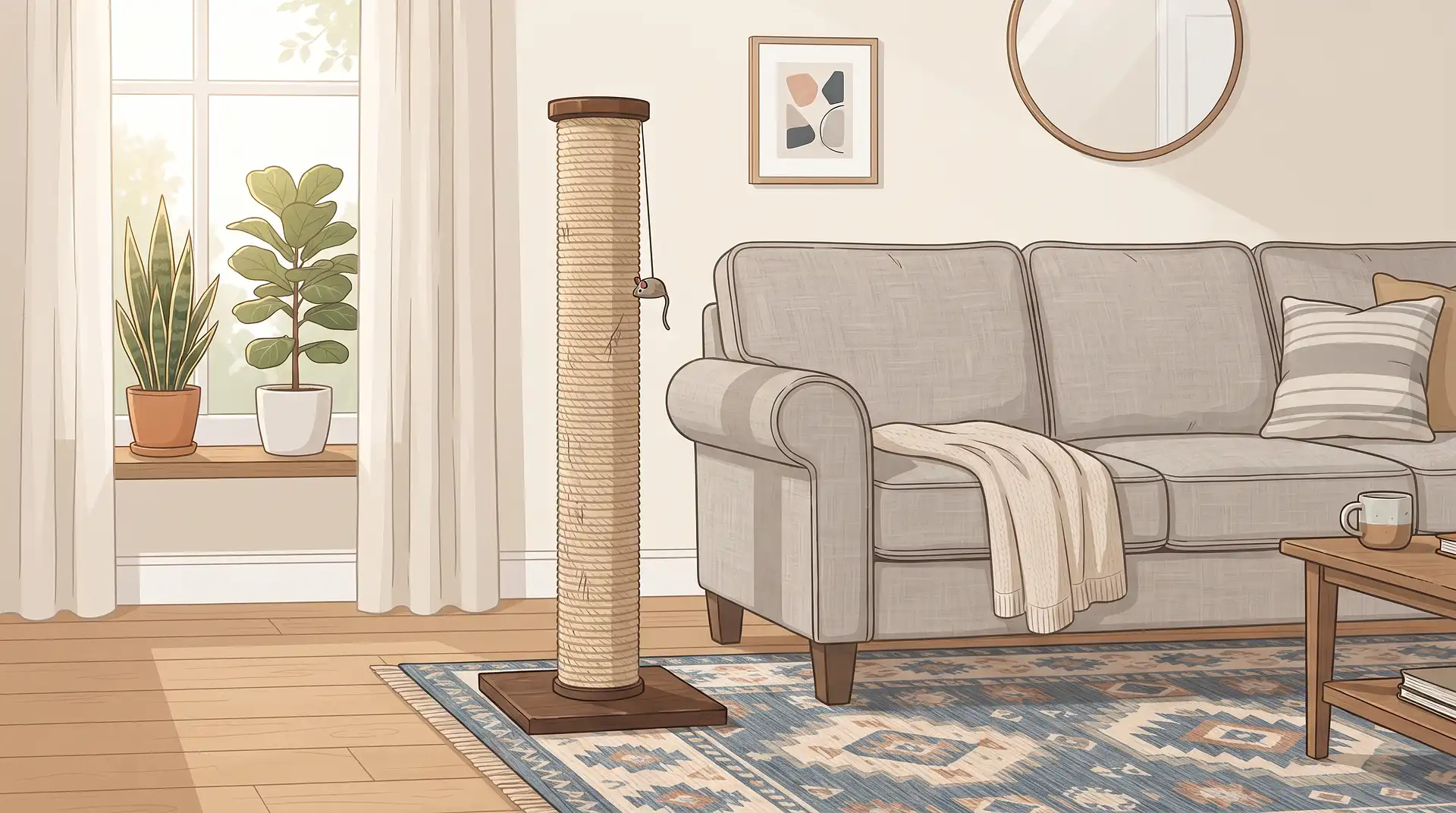
How Do You Stop a Cat Scratching the Sofa
16 September 2026
Quick Answer
Scratching is a normal, healthy behaviour for cats, so the goal is to redirect it rather than eliminate it entirely. Provide a sturdy scratching post at least eighty centimetres tall, positioned near where your cat already likes to scratch or sleep. Clean the scratched area of the sofa properly to remove scent marks, since cats are drawn back to the same spot by scent even after visible clawing stops. Apply a texture based deterrent such as double sided tape, foil, or a throw over the area while the new scratching post becomes the preferred habit, and use positive reinforcement rather than punishment when your cat uses the post correctly.
Why Cleaning the Area Properly Actually Matters
Every deterrent method works better once the underlying scent mark is genuinely removed, since cats are drawn back to scratch the same spot partly by scent as much as habit. This is where most general pet advice falls short, since "wash it with soap and water" is not a safe instruction for every sofa fabric.
Fabric sofas. A mild detergent and water solution, applied with a cloth and blotted rather than soaked in, works well and is covered in more detail in the guide on cleaning a fabric sofa
Leather sofas. Never use standard soap, laundry liquid, or disinfectant directly on leather, since this can strip natural oils and cause cracking or discolouration over time. The pH balanced approach covered in the guide on cleaning a leather sofa is the safer way to clean the area without damaging the material
Velvet and suede. These need a very light touch, since excess moisture can leave visible watermarks or flatten the pile. A barely damp cloth with minimal detergent, tested on a hidden area first, is generally the safest approach
Any fabric. Always patch test in a hidden area first, particularly if the sofa has a pattern, a strong colour, or a delicate weave
Providing a Genuinely Appealing Alternative
Choose the right height and stability. A scratching post around eighty to ninety centimetres tall lets a cat stretch to their full height, and it needs to feel completely stable, since a wobbly post will usually be ignored
Position it strategically. Placing the post near where the cat already sleeps or near the exact spot they have been scratching on the sofa makes the switch far more natural than putting it somewhere out of the way
Match the material if possible. If your cat is drawn to a specific sofa fabric texture, choosing a scratching post with a similar material or texture can make the alternative more appealing
Add encouragement. A dangling toy or a little catnip on the post can help draw initial interest if your cat seems uninterested at first
Using Deterrents on the Sofa Itself
Once the scent marks are properly removed, a texture based deterrent on the affected area can discourage a return visit while the new scratching post becomes the habit. Double sided tape, aluminium foil, or a decorators' protective film are commonly used, since most cats dislike the texture and feel of these against their paws. Always patch test any of these directly on the fabric first, particularly on a delicate or coloured sofa, since some adhesives or materials can leave a mark or residue behind. If you would rather cover the area more discreetly while training progresses, a throw draped over the affected section works as both a visual cover and a mild deterrent, and the tucking method covered in the guide on covering a sofa with a throw helps keep it in place.
A pheromone spray or plug in diffuser can also help, particularly if the scratching seems linked to stress or a change in the home, since these products are designed to create a sense of calm and territorial security that reduces the urge to scratch and mark.
Training With Positive Reinforcement
If you see your cat approaching the sofa to scratch, calmly redirect them to the scratching post rather than reacting with a loud noise or punishment, which can increase anxiety and make scratching worse rather than better. Gently guiding their paws in a scratching motion on the post, and offering praise or a small treat when they use it, reinforces the behaviour you actually want. This kind of retraining genuinely does take time, often several weeks of consistent redirection, so patience matters more than any single product or trick.
What to Do If the Fabric Is Already Damaged
If scratching has already left pulled threads, small snags, or visible fraying, cleaning the area properly is still worth doing first, since a damaged patch surrounded by dirt or old scent marks looks worse and is harder to assess accurately. Small pulled threads can sometimes be carefully trimmed rather than pulled, which reduces how visible they are without making the damage worse. For more significant damage, such as a torn seam or a noticeably frayed corner, a full repair may mean recovering the affected panel rather than a simple clean. The guide on reupholstering a sofa covers the process if the damage has gone beyond what cleaning and prevention alone can fix.
Frequently Asked Questions
Why does my cat keep scratching the same spot on the sofa?
Scent plays a significant role, since cats are drawn back to areas they have previously marked. Properly cleaning the area to remove scent, using a method safe for your specific fabric, is an important part of breaking the cycle alongside providing an alternative.
Is it safe to use soap and water on any sofa fabric to remove cat scratch marks?
No, this depends heavily on the material. Fabric sofas generally tolerate a mild detergent solution well, but leather needs a pH balanced approach rather than standard soap, and velvet or suede need a much lighter, barely damp touch to avoid watermarks.
Do cats grow out of scratching furniture?
Scratching is a lifelong, natural behaviour rather than something cats grow out of, so the realistic goal is redirecting it to an appropriate scratching post rather than expecting it to stop entirely.
Will punishing my cat stop them scratching the sofa?
No, punishment tends to increase stress and anxiety, which can actually make scratching worse. Positive reinforcement, redirecting to a scratching post, and rewarding correct use tends to be far more effective.
Can I use double sided tape on any sofa fabric as a deterrent?
It is generally safe on sturdy fabric, but always patch test first on a delicate, coloured, or textured sofa, since some adhesives can leave residue or affect certain materials.
What should I do if my cat has already damaged the sofa fabric?
Clean the area properly first, then assess the extent of the damage. Small pulled threads can sometimes be carefully trimmed, while more significant tears or fraying may need a professional repair or reupholstery of the affected panel.
Service Section
If scent marks or scratching damage have left your sofa needing more than a quick wipe down, Instant Dry Carpet Cleaning offers professional sofa and upholstery cleaning across England and Wales, using methods matched to your specific fabric type.
Get a free quote: instantdrycarpetcleaning.co.uk Call or WhatsApp: 07555 856988