How to Clean a Persian Rug
2 September 2026
Quick answer: Most routine care for a Persian rug is safely done at home: regular vacuuming with suction only following the pile direction, prompt blotting of fresh spills, airing outdoors and protecting from direct sunlight. Before any wet cleaning, test colour fastness on a hidden corner with a damp white cloth — if any colour transfers, stop. For light, fresh stains on a rug that passes the colour fastness test, a barely damp cloth with a small amount of pH-neutral detergent, followed by a clean water cloth and thorough drying, handles most surface marks. For antique rugs, silk rugs, significant staining, pet accidents or any rug of meaningful value, professional cleaning is the right answer.
A Persian rug is rarely just a floor covering. Many are heirlooms, investments or the result of months of skilled hand-knotting. That is why the cleaning guidance for a Persian rug should start from a different place than the guidance for a synthetic hall runner. The goal is not to clean it as aggressively as possible — it is to maintain it as safely as possible, and to know clearly when to hand that task to someone with specialist knowledge. Instant Dry Carpet Cleaning assesses Persian and Oriental rugs individually before any cleaning begins, because the method that's appropriate for one piece may cause permanent damage to another.
Why Persian rugs need different care
Authentic Persian and Oriental rugs are hand-knotted — each knot tied individually onto warp threads, row by row, over weeks or months of skilled work. The pile is wool in most cases, sometimes silk for the finest pieces, occasionally a combination of both. The foundation is typically cotton or wool warp and weft threads. The dyes are either traditional natural plant and mineral dyes or, in more modern pieces, synthetic dyes.
Several of these characteristics create care requirements that are different from machine-made rugs.
Dye instability. Natural dyes, particularly in older and antique rugs, can be unstable when wet. Different colours in the same rug may have different stability, meaning that a cleaning solution safe for the red areas might cause the blue areas to bleed. This variability is what makes the colour fastness test non-negotiable on any Persian rug before wet cleaning.
Structural fragility. The warp threads are under tension in a hand-knotted rug. Aggressive vacuuming, scrubbing and excessive moisture can stress these threads over time in ways that eventually affect the rug's structural integrity.
Value. A rug worth hundreds or thousands of pounds should not be treated the same way as a rug from a high-street retailer. The cost of a professional clean is a small fraction of the cost of a mis-treatment that permanently damages colour, fibre or backing.
The colour fastness test: before any wet cleaning
This test takes two minutes and prevents the most common expensive mistake in Persian rug cleaning.
Dampen a clean white cloth with plain cool water. Press it firmly onto a completely inconspicuous area of the rug — the underside of a corner, or beneath a furniture leg that doesn't move. Hold for five to ten seconds and lift.
If any colour has transferred to the cloth, the rug's dyes are not stable and wet cleaning at home is not appropriate. Stop. This rug needs a professional with dye-testing capabilities and the knowledge to work with each colour zone individually.
If no colour transfers, the rug is a reasonable candidate for careful home cleaning of light surface marks.
Repeat this test for each distinct colour in the rug if you're planning to clean across the full surface — different dye lots in the same rug can have different stability.
Routine care at home
The majority of what a Persian rug needs is straightforward maintenance that poses no risk to the rug if done correctly.
Vacuum regularly, with care. Dust and fine soil embedded in the pile acts as an abrasive on the fibres during foot traffic, gradually dulling the pile and thinning it over time. Regular vacuuming removes this before it causes physical wear. The technique matters — covered below.
Rotate every six to twelve months. Hand-knotted rugs in high-traffic positions develop uneven wear. Rotation distributes this across the full surface rather than concentrating it at the entry side or the main foot path.
Protect from direct sunlight. Both natural and synthetic dyes in Persian rugs fade under sustained UV exposure. A rug in a south-facing room that receives direct afternoon sun will show noticeable fading over several years if not protected. Position the rug out of the direct sun line where possible, or use curtains or blinds during peak UV hours.
Air outside periodically. Hang the rug over a railing or washing line on a dry, calm day. Fresh air and limited sunlight reduce dust mite populations and freshen the fibres. Keep it out of sustained direct sun, and don't leave it out in damp conditions.
Check underneath regularly for moth activity. Wool-pile Persian rugs are a primary target for textile moths. The larvae eat wool from the base of the pile, creating bald patches that are often only noticed when the damage is already significant. Lift the rug periodically and look for silky webbing, frass or bare patches at the pile base near the underside. The carpet moth guide on this site covers identification and treatment in detail.
Shake gently outdoors. For smaller Persian rugs, careful shaking over a railing removes loose surface dust. For large rugs, rolling loosely and setting it on end allows loose debris to fall before unrolling and laying it back down.
Vacuuming correctly
Vacuuming a hand-knotted rug incorrectly causes cumulative damage that's easy to avoid.
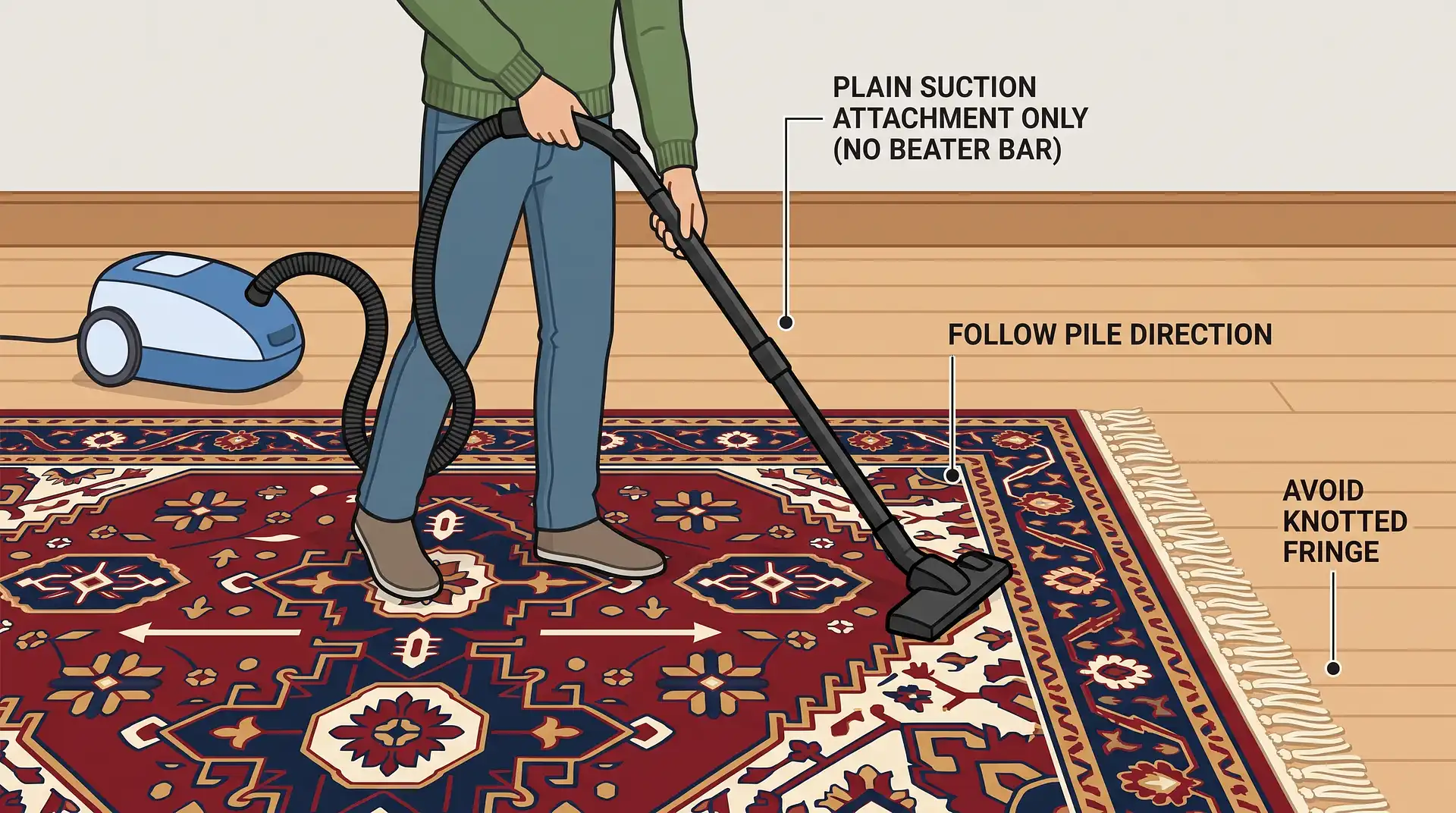
Suction only — no beater bar or rotating brush. The beater bar is designed to agitate short machine-made pile. On a hand-knotted rug it puts stress on the knot structure and warp threads and can pull or fray the pile surface over time. Use the plain suction nozzle or disable the brush roll.
Follow the pile direction. Run your hand across the rug in both directions. One way feels smooth — that is with the pile. The other feels slightly resistant — that is against the pile. Vacuum with the pile direction for regular cleaning. An occasional gentle pass against the pile helps dislodge embedded debris but shouldn't be the primary direction.
Do not vacuum the fringe. The fringe on a Persian rug is typically the exposed ends of the warp threads — it is structurally part of the rug, not a decorative trim. Running a vacuum nozzle over fringe pulls and damages these threads progressively. Clean the fringe gently by hand, shaking or combing it with fingers, not a vacuum.
Vacuum the back periodically. Flip the rug and vacuum the backing once every month or two. Fine dust settles through the pile to the backing and accumulates there. Vacuuming the back dislodges this debris and improves airflow through the rug.
Fresh spill response
Act immediately. The window before a spill penetrates from the surface into the pile base and warp threads is short.
Blot with a dry white cloth from outside in. Never rub. Press firmly and lift. Move to a clean section of cloth constantly. For liquid spills, the goal in the first minute is to absorb as much as possible before the pile wicks it downward.
Cold water only. The same protein stain rule applies here as across every article on this site. If you don't know what caused the spill, cold water is the safe starting point. Warm water risks setting any protein component permanently.
Blot dry. Once you've blotted with a damp cloth, go over the area with a dry cloth to absorb moisture before it travels further down the pile.
Do not scrub. Scrubbing distorts the pile direction, damages the knot structure and spreads the spill. Blotting lifts the material without working it further in.
Light spot cleaning for minor stains
For a rug that has passed the colour fastness test, and where the stain is minor, fresh and on the surface rather than embedded:
Mix a very small amount of pH-neutral or mild wool-safe detergent with cool water. The solution should be barely soapy.
Dampen a clean white cloth with this solution and dab gently at the stain, working from outside in.
Move to a clean cloth section as material lifts, to avoid redistributing it.
Rinse by dabbing with a plain cool water cloth.
Blot dry with a dry white cloth.
Allow to air dry completely, elevated if possible so air reaches both the pile and the backing.
This is the limit of safe home stain treatment on most Persian rugs. The how to clean a rug at home guide covers the broader principles that apply across different rug types.
Where home cleaning ends
This is the most honest and useful thing this article can offer, and it's where most competing guides fail their readers by either overclaiming or refusing to engage.
Home cleaning is appropriate for:
Routine vacuuming and maintenance
Fresh surface spills responded to promptly
Light, minor stains on rugs that pass the colour fastness test
General freshening, airing and rotation
Professional cleaning is the right answer for:
Antique rugs of any kind — the dye instability risk is too high and the value too significant
Silk rugs or rugs with significant silk content
Any rug where the colour fastness test showed dye transfer
Full washing or deep cleaning — home drying is too slow and too uncontrolled for a fully wet Persian rug
Set-in or old stains that surface cleaning hasn't resolved
Pet urine — the uric acid chemistry covered in the dog pee rug guide requires enzyme treatment that reaches the base of the pile, and doing this on a valuable rug at home risks the dye stability
Any significant or widespread soiling
Rugs with a musty smell indicating moisture has reached the backing
Drying after any wet treatment
Any wet cleaning of a hand-knotted rug introduces the same drying risks covered across this site's rug and upholstery articles.
Elevate the rug so air reaches both the pile and the backing. A rug laid flat on a hard floor or carpet before it is fully dry traps moisture against the backing, creating conditions for mould growth and the bacterial activity that causes yellowing and persistent musty smell.
This is more consequential on a Persian rug than on a synthetic because the wool pile holds moisture for longer and the warp thread foundation is more susceptible to bacterial growth when damp.
Dry in a well-ventilated area, out of direct strong sunlight, and check the backing by pressing your hand firmly against it before returning the rug to use. Any coolness indicates residual moisture.
For a significant wet treatment, such as a full hand wash, the drying time for a hand-knotted wool rug can be twenty-four to forty-eight hours or more. This is one of the reasons professional washing is preferable for anything beyond surface maintenance — controlled drying is as important as the washing process, and most home environments don't allow sufficient airflow management for a large, dense wool pile rug. Instant Dry Carpet Cleaning provides professional rug cleaning across England and Wales with controlled drying as a standard part of the process.
Frequently Asked Questions
Can you clean a Persian rug at home? Routine maintenance — vacuuming, fresh spill response, airing — is well within home care. Light spot cleaning of minor fresh stains on rugs that pass the colour fastness test is also appropriate. Full washing, antique rugs, silk rugs, set-in stains and pet accidents are professional jobs.
How do you vacuum a Persian rug? Suction only, no beater bar. Follow the pile direction for regular cleaning. Do not vacuum the fringe — it is part of the warp thread structure and pulling it with a nozzle causes progressive damage. Vacuum the back periodically to dislodge debris from the pile base.
How do you test if a Persian rug is colourfast? Dampen a white cloth with cool water and press firmly onto a completely hidden area of the rug for five to ten seconds. If any colour transfers to the cloth, the dyes are unstable and wet cleaning at home is not appropriate. Repeat for different colour zones in the rug.
How do you get stains out of a Persian rug? Pass the colour fastness test first. For a fresh surface stain, blot with a dry white cloth, then dab with a barely damp cloth and a tiny amount of pH-neutral detergent, working from outside in. Rinse with a plain cool water cloth. Blot dry and allow to air dry elevated. For set-in stains, antique rugs or pet accidents, professional cleaning is the appropriate response.
Should you vacuum Persian rug fringe? No. The fringe consists of exposed warp threads that are structurally part of the rug. Vacuuming it pulls and damages these threads. Clean fringe gently by hand or by careful shaking.
How do you dry a Persian rug after cleaning? Elevate so air reaches both the pile and the backing. Never lay flat on a floor or carpet while still damp. Allow twenty-four hours or more for a dense wool pile rug. Check the backing by pressing with a dry hand before returning it to position.
How often should a Persian rug be professionally cleaned? Most Persian rug specialists recommend a professional clean every one to three years, depending on traffic, household and rug condition. More frequent professional cleaning is appropriate for rugs in high-traffic positions, households with pets, or where there are allergy sufferers.
Can you use carpet cleaner on a Persian rug? Most household carpet cleaners are too alkaline, too concentrated, or both for use on hand-knotted wool or silk pile. A pH-neutral, wool-safe product used in very small amounts on a passing colour fastness test is the appropriate limit. Standard carpet shampoo, enzyme spray cleaners not tested on the rug, and foam cleaners are not recommended.
Service Section
For the rugs that matter most, professional assessment comes first
A Persian rug that needs more than routine maintenance — whether that's a significant stain, a musty smell, a full clean after years of use, or the peace of mind of a professional assessment — is worth treating with the same level of care its maker put into it. InstantDry collects rugs across England and Wales, assesses each piece individually before any cleaning begins, and returns them properly dried and wrapped. For Persian and Oriental rugs, we will always tell you honestly whether a piece is appropriate for our process or needs a specialist with dye-stabilisation capability.
Get your fixed quote in 60 seconds
Or call 07555 856988.