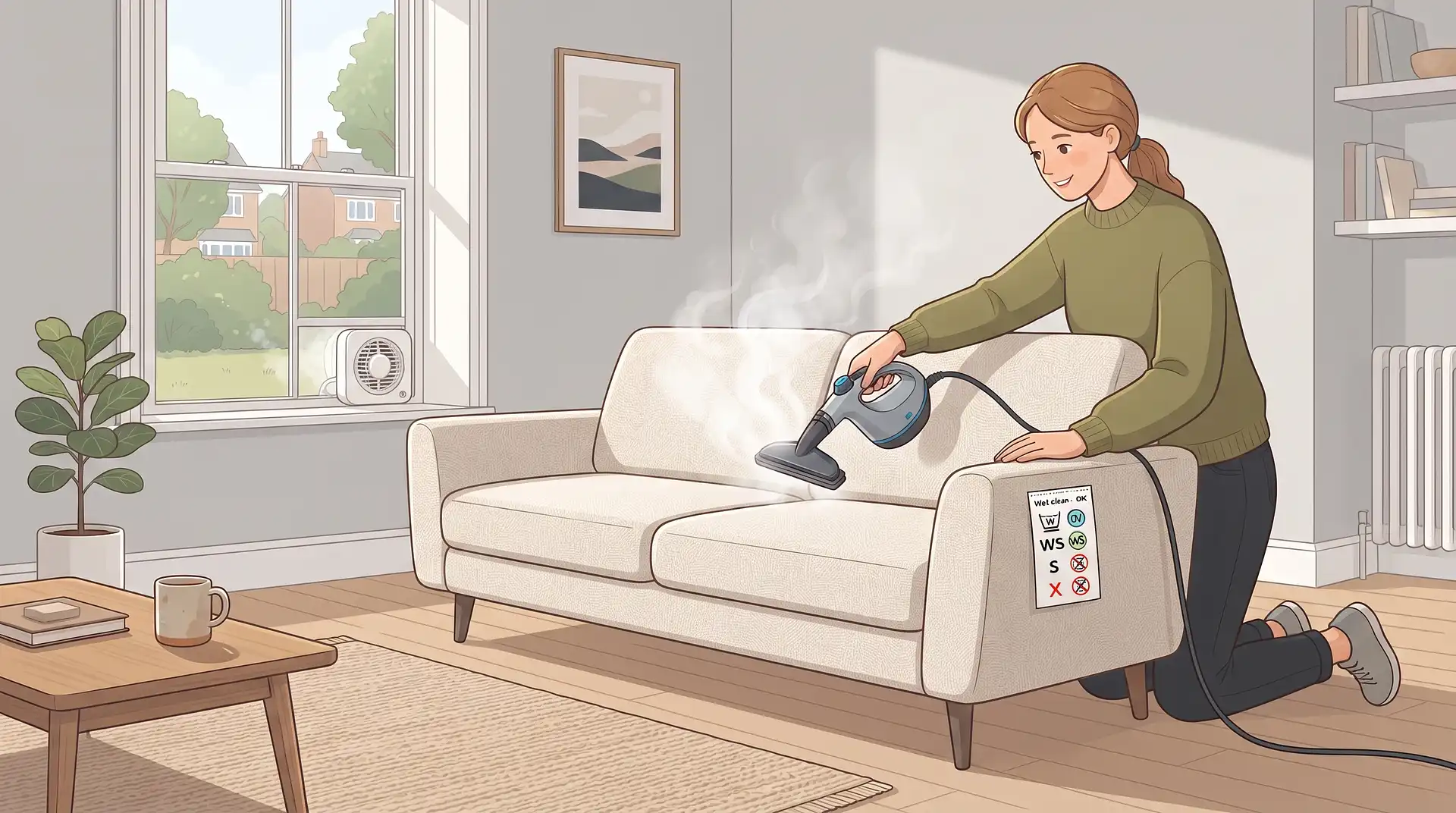
How to Steam Clean a Fabric Sofa Safely
4 October 2026
Would rather leave it to a professional? See our sofa cleaning in Manchester.
Quick answer: Check the sofa manufacturer’s instructions and care code before using steam. A W or WS code means water-based cleaning may be allowed, but it does not automatically confirm that the fabric can tolerate high heat. Do not steam an S-coded, X-coded or unidentified fabric. Vacuum first, test the lowest steam setting on a hidden area, let the test dry completely and check for colour or texture changes. If the test is safe, work one panel at a time with an upholstery attachment, keep the tool moving and use as little steam as possible. Ventilate the room and leave every part completely dry before use.
A steamer can loosen light surface soil, reduce creasing and freshen some water-safe synthetic fabrics. It does not suck dissolved dirt or moisture back out of the sofa. That is why careful preparation, controlled steam and fast drying matter.
Can you use a steamer on a fabric sofa?
You can use a steamer only when the sofa maker and the steam-cleaner instructions allow it. Start with the permanent label under a cushion or beneath the frame, then look up the exact sofa model if the label does not mention steam.
Care code | General meaning | Should you use steam? |
|---|---|---|
W | Water-based cleaning is permitted | Possibly, if the manufacturer also permits heat and the test patch is safe |
WS or SW | Water-based or suitable solvent cleaning may be permitted | Possibly, with the same manufacturer check and test |
S | Solvent cleaning only | No. Steam contains water and may leave rings, shrinkage or dye changes |
X | Vacuum or light brushing only | No, unless the sofa manufacturer gives specific written approval |
A W code covers moisture, not every temperature or machine. A hidden test remains essential because heat can affect dye, pile, backing, adhesive and decorative finishes even when water alone is acceptable.
Steam cleaner or upholstery extraction machine?
People often call both machines steam cleaners, but they work differently.
A true steam cleaner sends hot vapour through a nozzle. It may loosen light grime and relax some crushed fibres, but it has no recovery tank and does not rinse extracted soil away. A clean bonnet around the upholstery head can collect some loosened material.
An upholstery extraction machine applies a controlled water-and-cleaning solution and immediately recovers much of it through suction. The visible vapour sometimes associated with professional equipment does not define the process. Soil removal and moisture recovery do.
Check which machine you own before following any instructions. Do not pour detergent into a steam cleaner unless its manual expressly permits the exact product.
When you should not steam a sofa
Avoid steam when the care code is S or X, the label is missing, or the manufacturer prohibits it. It is also a poor choice for leather, suede, silk, many viscose or rayon fabrics, delicate velvet, antique upholstery and any material with unstable dye or a heat-sensitive finish.
Do not apply steam over an unknown stain. Heat can make some protein-based marks, including blood, milk and egg, harder to remove. Grease, ink, paint and adhesive also need stain-specific treatment rather than more heat.
Stop if the upholstery is frayed, split, delaminating or loose around seams. Steam can push moisture through damaged fabric and into foam, feathers, webbing or the wooden frame.
What you will need
The instructions for the sofa and steam cleaner
A vacuum with a soft upholstery attachment and crevice tool
A steam cleaner approved for upholstery
The correct wide upholstery head and a clean fabric bonnet, if supplied
Clean white microfibre cloths
Distilled or demineralised water if the machine manual recommends it
A fan and good room ventilation
Protective gloves if required by the machine instructions
Use white cloths because coloured towels can transfer dye when warm and damp. Avoid scented additives, fabric conditioner, washing capsules and homemade mixtures in the machine.
Not sure your sofa fabric can take steam?
Book sofa and upholstery cleaning
How to clean a fabric sofa with a steamer
1. Read both sets of instructions
Confirm that the sofa fabric can be steamed and that the machine has an approved upholstery setting and attachment. The manufacturer’s guidance takes priority over general advice. Check any warranty conditions before starting.
2. Inspect the sofa
Look for loose stitching, damaged piping, worn pile, dye loss, water rings and cracked electrical controls on powered furniture. Identify stains before using heat. Arrange a suitable repair or stain treatment first when needed.
3. Vacuum thoroughly
Remove loose cushions where allowed. Vacuum the back, arms, seats, cushion faces, seams and the base below the cushions. Use the crevice tool carefully around joins. Steam applied over crumbs, dust and pet hair can turn dry debris into a muddy residue.
4. Test a hidden area
Fit the upholstery attachment and select the lowest suitable steam output. Test beneath a loose cushion or at the back near the floor. Make one short pass, then blot with a white cloth.
Let the patch dry completely. Do not judge it while damp because wet fabric naturally looks darker. Check in daylight for dye transfer, water marks, shrinkage, stiffening, shine, flattened pile or a changed texture. Do not continue if you notice any change.
5. Prepare the machine
Fill the tank only as the manual directs and fit the correct upholstery tool. Let the machine reach its working temperature. Release the first burst of condensation into a sink or towel rather than onto the sofa, if the instructions permit this.
Ask About Fabric Sofa Cleaning
6. Work one panel at a time
Begin at the top so you can see where you have worked. Move the wide attachment in steady, overlapping passes. Keep it moving and avoid holding the steam over one area. Use the minimum output needed to lightly treat the surface.
Follow the direction of the pile on textured fabric. Treat each complete panel evenly instead of concentrating repeatedly on a single mark, which can leave a visible ring or patch.
7. Change the bonnet when it becomes dirty
If the tool uses a fabric bonnet, inspect it often. Replace it with a clean one once it becomes soiled. Continuing with a dirty bonnet can spread lifted grime back across the sofa.
8. Blot excess moisture
Press a clean white towel over the treated area without rubbing. The fabric should feel lightly damp, never wet. If moisture reaches deeply into the cushions, stop and improve drying rather than applying another pass.
9. Dry the sofa completely
Open windows when weather allows and direct a fan across the room. Stand removable cushions on an edge with space between them. Do not replace cushions or sit on the sofa until the fabric, seams and fillings are dry.
Avoid radiators, hairdryers and strong direct heat. They can dry the surface unevenly, alter fibres and leave the centre of a cushion damp.
10. Check the finish
Once dry, inspect the sofa in natural light. Brush an approved pile fabric gently in its normal direction. Vacuum again only if the care instructions allow it and any loosened debris remains.
Safety guide
Steam can cause serious scalds. Keep your hands, face, children and pets away from the jet and hot attachment.
Never point the nozzle towards a person and do not open a pressurised tank until the machine has cooled as instructed.
Inspect the plug, cable, hose and machine body before use. Do not operate damaged equipment.
Keep the plug, extension connections and electrical controls dry. Disconnect a powered sofa before cleaning and keep steam away from motors, sockets, switches, charging ports and cables.
Place the machine on a stable surface and route the cable so nobody can trip over it.
Wear the protection stated in the machine manual and ventilate the room.
If a scald occurs, follow the NHS guidance for treating burns and scalds and seek medical help when advised.
Common mistakes to avoid
Assuming a W code automatically means high-temperature steam is safe
Skipping the fully dried test patch
Using a narrow jet that concentrates heat and moisture
Trying to remove every stain with steam
Holding the tool still over a stubborn area
Adding detergent, fragrance or disinfectant to a machine that is designed for water only
Soaking foam or feather filling beneath the upholstery
Sitting on the sofa before the seams and inner filling are dry
What steam can and cannot do
Controlled steam can freshen compatible fabric, relax light creasing and loosen some surface soil. A bonnet may pick up part of that soil. Results depend on the fibre, construction, temperature, dwell time and machine.
Steam alone is not a complete answer for heavy body oils, old drink marks, urine, ink or deeply embedded grime. It does not provide the rinse-and-recovery action of an extraction machine. It should not be described as disinfecting the sofa unless the machine has a validated process for that exact fabric, temperature and contact time.
If you need a broader routine without relying on steam, read our guide to cleaning a fabric sofa. It explains dry and water-based options for different care codes.
When to use a professional cleaner
Professional assessment is sensible when the fabric is unknown, valuable or delicate; the care label is missing; dyes transfer during testing; the cushions are heavily soiled; or an odour appears to come from the filling rather than the surface.
Tell the cleaner what caused any stains and which products or machines have already been used. That information can change the safest treatment. Cleaning suitability and cost vary with the fabric, sofa size, construction, condition and work required, so the quotation should be confirmed for the individual sofa.
Frequently asked questions
Can I use a clothes steamer on my fabric sofa?
Only if both manufacturers allow it and the test patch dries without change. A clothes steamer may help release light creases, but its small head can concentrate steam and it does not remove loosened dirt through suction.
Can I steam a sofa with a W cleaning code?
A W code means water-based cleaning may be used. It does not confirm that high heat is safe. Check the sofa instructions and test the lowest steam setting in a hidden place before treating a visible panel.
Can I steam clean an S-coded sofa?
No. An S code calls for a suitable solvent method rather than water. Steam contains water and can cause rings, shrinkage or dye movement.
Does steam remove sofa stains?
It may loosen some light water-based surface marks, but many stains need a specific treatment. Heat can set protein stains and worsen some residues, so identify the mark before using steam.
How long does a sofa take to dry after steaming?
There is no fixed time. It depends on steam output, fabric, cushion filling, room temperature and airflow. Keep the sofa out of use until the surface, seams and inner filling are completely dry.
Can steam remove smells from a sofa?
It may reduce a light surface smell on compatible fabric, but it will not remove an odour source deep in foam or padding. Pet urine, damp and other absorbed contamination usually need targeted treatment.
What is the best way to clean a fabric sofa at home?
Check the cleaning code on the label first. W means water-based cleaners, S means solvent only, W/S means either, and X means vacuum only. Vacuum, spot-test, then clean with the right method and dry with good airflow.
Can you steam clean any fabric sofa?
No. Steam suits most W and W/S coded synthetics and cotton blends. Avoid it on velvet, silk, viscose, chenille with a loose pile and any S or X coded fabric, as heat and moisture can shrink, mark or flatten them.
How long does a fabric sofa take to dry after steam cleaning?
Usually 2 to 6 hours with a window open or a fan running. Thick cushions can take longer. Do not sit on it while it is damp, as pressure pushes moisture into the foam and can cause watermarks.
Will a steamer remove stains from a fabric sofa?
Steam lifts fresh, water-based marks but can set protein stains like blood, milk and vomit. Treat those with cool water and an enzyme cleaner first, then steam to refresh the whole area evenly.
Get the right treatment for your sofa
InstantDry can assess the care code, fibre, stains and cushion construction before recommending a suitable upholstery-cleaning method. Share a photograph of the sofa and its label when enquiring, along with details of anything already applied.
Related guides: how to clean sofa cushions, how much sofa cleaning costs. For a professional finish, see our sofa and upholstery cleaning service or carpet cleaning in Manchester.
Related guides
Need it cleaned properly?
Book our upholstery & sofas service — from £49 (UK average £70), free in-home survey and pay on completion.