How to Get Rid of Fleas in Your Mattress
21 September 2026
Quick Answer
Strip all bedding, including the mattress protector, and wash it on the hottest setting the fabric allows, ideally sixty degrees or above, then tumble dry on high heat for at least thirty minutes. Vacuum the entire mattress thoroughly on both sides, paying close attention to seams, edges, and tufting, and dispose of the vacuum contents outside immediately to stop any fleas escaping back into the home. Treat the mattress with a flea spray or a light application of food grade diatomaceous earth, and treat any pets in the household at the same time, since they are the most common source. Repeat the whole process every few days for at least two to three weeks, since a single treatment rarely catches fleas at every stage of their life cycle.
Why One Treatment Is Never Enough
This is the part of flea treatment that most guides skip, and it is the reason so many people feel like they have solved the problem only for it to reappear. Fleas go through four life stages, egg, larva, pupa, and adult, and the pupal stage is genuinely resistant to most cleaning and treatment methods. A flea pupa can remain dormant inside a protective cocoon for weeks or even months, waiting for the vibration, warmth, or carbon dioxide of a nearby host before hatching. This means a mattress can appear completely flea free after a thorough clean, only for a new wave of adult fleas to emerge from pupae that survived the treatment entirely undisturbed.
This is exactly why repeating the full treatment process every few days over a period of two to three weeks matters so much more with fleas than it would with most other pests. Each round of vacuuming, washing, and treatment catches newly hatched fleas before they can lay more eggs, gradually breaking the cycle rather than relying on a single pass to catch every stage at once.
What You Will Need
A vacuum cleaner with an upholstery attachment
A washing machine capable of a hot wash, ideally sixty degrees or above
A tumble dryer
A flea spray suitable for mattresses and furniture, or food grade diatomaceous earth
A vet approved flea treatment for any pets in the household
A washable mattress protector, for ongoing prevention
Step by Step: Treating the Mattress
Strip everything from the bed. Remove all sheets, pillowcases, duvet covers, blankets, and the mattress protector itself, since fleas and their eggs can hide in seams and folds throughout.
Wash on the hottest setting the fabric allows. A temperature of sixty degrees or above is generally needed to reliably kill fleas, larvae, and eggs. Check care labels first, since not every fabric tolerates this heat.
Tumble dry on high heat. Dry everything on the highest heat setting for at least thirty minutes, since heat is one of the most reliable ways to kill fleas at every stage.
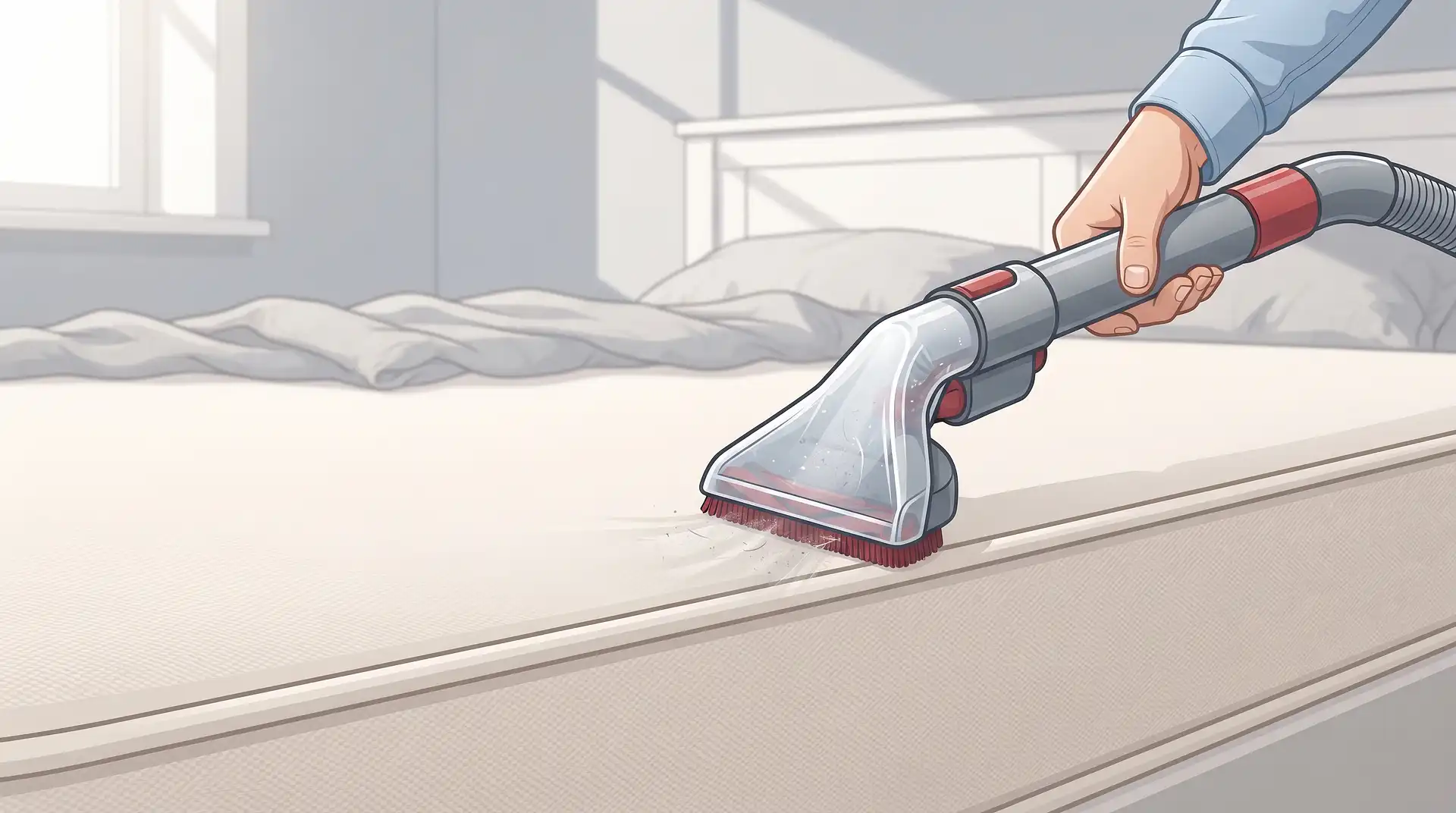
Vacuum the entire mattress thoroughly. Go over both sides completely, paying particular attention to seams, edges, and any tufted or buttoned areas where fleas and eggs commonly hide.
Dispose of the vacuum contents immediately. Empty a bagless vacuum straight into an outdoor bin, or remove and seal a vacuum bag before disposing of it outside, to prevent any surviving fleas escaping back into the home.
Apply a treatment to the mattress. A flea spray designed for mattresses and furniture, or a light dusting of food grade diatomaceous earth left for several hours before vacuuming off, both work well. Follow the product instructions closely and allow the mattress to dry fully before remaking the bed.
Treat the surrounding room, not just the bed. Vacuum carpets, rugs, and any upholstered furniture nearby, and treat skirting boards and dark corners where flea larvae tend to shelter away from light.
Treat any pets in the household. Fleas almost always originate from a pet, so treating your cat or dog with a vet approved flea treatment at the same time is essential, otherwise the mattress will simply be reinfested from the same source.
Repeat the full process every few days. Continue this cycle for two to three weeks to catch newly hatched fleas emerging from any pupae the first round of treatment did not reach.
Preventing Fleas From Coming Back
Once the infestation is genuinely cleared, a washable mattress protector adds a useful ongoing barrier, since it is far easier to wash a protector regularly than to repeat a full mattress treatment. Keeping up with your pet's flea treatment schedule, vacuuming regularly, and washing pet bedding on a hot cycle alongside your own all help prevent the cycle starting again. The general routine covered in the guide on how often should you wash a mattress protector is worth building into your ongoing schedule, particularly if pets regularly sleep on the bed.
Fleas or Bed Bugs? Telling the Difference
Fleas and bed bugs are often confused, since both leave itchy bites and are found on or near a mattress, but they are genuinely different pests needing different treatment. Fleas are small, dark, and can jump considerable distances, and they need a host, usually a pet, to feed and survive, which is why they rarely persist on a mattress for long without an animal present. Bed bugs are flat, reddish brown, do not jump, and feed directly on humans overnight, often leaving bites in a distinctive line or cluster. If your bites do not match the flea pattern, or if you are not seeing any small jumping insects but are finding tiny reddish stains or a musty smell on the mattress, the guide on getting rid of bed bugs in a mattress covers the different signs and treatment approach needed for that specific pest.
When to Call a Professional
DIY treatment resolves most flea infestations within a few weeks if the full process is repeated consistently. It is worth calling in a professional pest control service when the infestation has been ongoing for a long time and DIY treatment has not fully resolved it after several rounds, when fleas are present throughout multiple rooms rather than just the bedroom, or when a heavily used mattress may have fleas or eggs embedded deeper into the material than home vacuuming and spraying can fully reach.
Instant Dry Carpet Cleaning offers professional mattress cleaning that goes further than a home vacuum, and can help address a mattress that has been affected by fleas alongside your pest control treatment. If pets regularly use furniture elsewhere in the home too, the guide on cleaning a fabric sofa covers a similar thorough approach worth applying to sofas during a whole home flea treatment.
For anything beyond what a hot wash, thorough vacuuming, and repeated treatment can manage, Instant Dry Carpet Cleaning offers a professional mattress cleaning service across England and Wales.
Frequently Asked Questions
How long does it take to get rid of fleas in a mattress?
Full treatment usually takes two to three weeks of repeated washing, vacuuming, and applying treatment, since a single round rarely catches fleas at every life stage, particularly the resistant pupal stage.
Why do fleas keep coming back after I clean my mattress?
This is usually because flea pupae can survive dormant in a protective cocoon for weeks or months, hatching later once they sense a nearby host. Repeating treatment regularly over several weeks is what breaks this cycle.
Can I get rid of fleas in my mattress without treating my pet?
Not effectively. Pets are almost always the actual source of a flea infestation, so treating the mattress alone while leaving an untreated pet in the home usually means the fleas simply return.
Is diatomaceous earth safe to use on a mattress?
Food grade diatomaceous earth is generally considered safe when used sparingly and vacuumed off after a few hours, though it should be applied lightly and away from anyone with respiratory sensitivities, since inhaling the fine dust is not advisable.
How do I know if I have fleas or bed bugs in my mattress?
Fleas are small, dark, and can jump, and they need a host such as a pet to survive. Bed bugs are flat, do not jump, and feed directly on humans, often leaving bites in a distinctive line or cluster. The treatment approach differs between the two.
Do I need to treat the whole room or just the mattress for fleas?
The whole room, ideally the whole home if pets have access to multiple areas. Treating only the mattress while carpets, pet bedding, and skirting boards remain untreated means fleas can simply migrate back from those areas.
Service Section
If a flea infestation has not fully cleared after repeated home treatment, Instant Dry Carpet Cleaning offers professional mattress cleaning across England and Wales.
Pricing:
Single rooms from £49
Whole home including stairs and landing from £179
Get a free quote: instantdrycarpetcleaning.co.uk Call or WhatsApp: 07555 856988