How to Get Chewing Gum Out of Carpet
4 October 2026
Would rather leave it to a professional? See our carpet cleaning in Manchester.
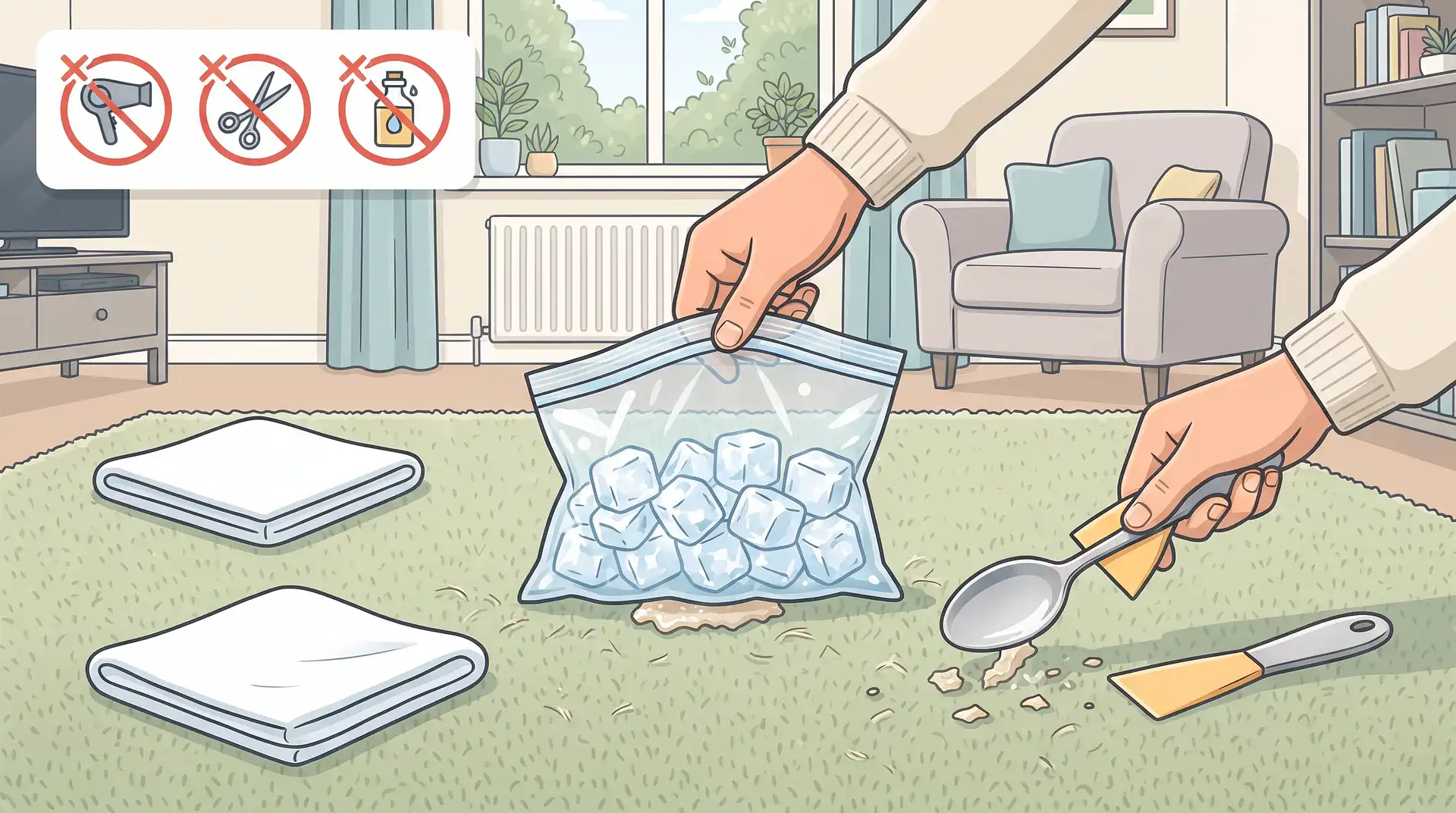
Quick answer: Put ice cubes in a sealed bag and hold the bag against the chewing gum until it becomes hard and brittle. Use a blunt plastic scraper, spoon or stiff card to lift small pieces from the outside towards the centre. Repeat the freezing step instead of pulling at soft gum. If sticky residue remains, use only a carpet gum remover or solvent approved for your carpet fibre, apply it to a white cloth and test a hidden area first. Rinse as directed, blot dry and keep people off the area until it is completely dry.
Chewing gum is easier to remove as a solid than as a sticky smear. Warm gum stretches between carpet fibres and can be pushed deeper by rubbing, while cold gum becomes firm enough to break away in controlled pieces. The safest method therefore begins with physical removal and uses a cleaning product only for residue that remains.
What you will need
Ice cubes or a reusable ice pack
A strong, leak-free plastic bag
A blunt plastic scraper, spoon or stiff card
Paper or a small container for collecting removed pieces
Clean white cloths
A carpet gum remover or solvent approved for the fibre, if needed
Plain water for rinsing when the product label requires it
A dry towel and good ventilation
Do not begin with a knife, scissors, hairdryer or household lubricant. These can cut the pile, melt synthetic fibres or leave an oily mark that is harder to remove than the gum.
Check the carpet before you begin
Find the manufacturer’s care information and identify the fibre if possible. Wool, polypropylene, nylon, polyester and natural plant fibres do not react in the same way to heat or solvents. If the label is missing, use the freezing method only and stop before applying a chemical product.
Look at the pile construction as well. A cut-pile carpet has individual fibre ends. A loop-pile carpet has continuous loops that can pull into a long run if caught by a scraper or blade. Work especially gently on loop pile, Berber-style carpet and hand-finished edges.
What you see | Best first action | Main risk |
|---|---|---|
A fresh blob sitting on top | Keep traffic away, freeze it and lift it | Pulling while soft spreads it |
Gum flattened into the pile | Freeze in repeated stages and lift from the edge | Forceful scraping damages fibres |
A sticky film after lifting | Patch-test an approved gum remover | The wrong solvent can affect colour or backing |
Wool, delicate or unknown carpet | Use ice and minimal mechanical action only | Home chemistry may cause permanent damage |
How to get chewing gum out of carpet step by step
1. Stop the gum being walked on
Keep children and pets away and place an object nearby to make the spot visible. Do not step on the gum while gathering supplies. Foot pressure can spread it across more fibres and push it closer to the backing.
2. Put the ice in a sealed bag
Place several ice cubes in a leak-free bag or use a clean reusable ice pack. A barrier keeps melting water out of the carpet and prevents the ice sticking directly to the gum.
Hold the cold pack against the gum without rubbing. Keep it in place until the whole piece feels firm, including the section nearest the base of the pile. A thick blob takes longer to harden through than a thin mark.
3. Test whether the gum is brittle
Press the edge very lightly with the blunt tool. Properly chilled gum should resist stretching and begin to crack or lift. If it bends or forms strings, apply the ice again. Patience at this stage prevents most spreading.
4. Lift from the outside towards the centre
Slide a blunt plastic edge beneath the outer part of the gum and lift upwards in short movements. Avoid scraping sideways across the pile. Work around the edge, gradually making the stuck area smaller.
Collect each piece as it comes free. Do not leave fragments on the surrounding carpet and do not vacuum sticky pieces because they may attach to the hose, brush or interior of the machine.
5. Repeat the freeze-and-lift cycle
The gum may soften as the room warms it, especially when it has been pressed deep into a dense carpet. Stop when it begins to stretch, apply the ice again and continue only when it is firm.
Do not try to finish the job in one aggressive scrape. Several controlled cycles protect the pile and usually remove more of the gum.
6. Inspect the carpet for residue
Once the solid gum is gone, separate the fibres gently with your fingers or the blunt edge. Look for a clear sticky coating, coloured shadow or fibres bonded together near the base.
A coloured mark and a sticky residue are different problems. The residue may need a suitable gum remover, while colour transferred from flavoured gum may need separate stain treatment after the adhesive material has gone.
7. Patch-test an approved residue remover
Choose a product whose label names carpet and confirms suitability for the fibre. Test it in an inconspicuous place, such as inside a cupboard or behind furniture. Apply it in the same concentration and manner you plan to use on the gum, then let the test area dry fully.
Check for colour transfer onto a white cloth, fading, pile changes or damage to the backing. A successful wet test is not complete until it has dried and been inspected in good light.
8. Treat only the remaining residue
Apply the approved product to a white cloth rather than pouring or spraying it directly onto the carpet. Dab the residue lightly from the outside in. Give the product only the contact time stated on its label, then lift softened material with a clean section of cloth or the blunt scraper.
A small amount is safer than saturation. Solvent reaching the backing can affect adhesive, latex or floor finishes beneath the carpet.
9. Rinse only as directed
If the gum-remover label calls for rinsing, blot the spot with a separate cloth lightly dampened with plain water. Use repeated light passes instead of soaking the pile. Press with a dry white towel to recover moisture and residue.
If the product uses a different finishing method, follow that instruction. Leaving solvent or detergent behind can attract dirt and create a dark patch later.
10. Dry and reset the pile
Ventilate the room and allow the carpet to dry completely. Keep people and furniture off the area during drying. When it is dry, gently separate and groom the fibres with your fingers or a soft tool approved for the carpet.
Gum trodden in across a whole area?
Book professional carpet cleaning
How to remove old or trodden-in gum
Old gum is not automatically permanent, but it may be spread across a wider area and wrapped around many fibres. Freeze one small section at a time and remove it before moving to the next. This maintains control and keeps softened pieces from attaching elsewhere.
If the gum is level with the carpet surface, do not dig down with a blade. Alternate cold treatment with gentle lifting. Stop if loops begin to pull, the pile starts to fuzz or backing becomes visible.
A dark patch may be soil attached to gum residue rather than colour damage. Remove the physical gum first, then judge the remaining mark after the carpet has dried. Cleaning around gum that is still present can spread its sticky coating.
Does the carpet fibre change the method?
Wool and wool-rich carpet
The sealed-ice method is the safest home starting point. Wool can lose dye or texture when exposed to unsuitable solvent, high alkalinity or rough scraping. If a product is required, choose one approved by the carpet maker or carrying appropriate WoolSafe approval. Stop after careful physical removal if the remaining residue needs chemistry not confirmed as safe.
Polypropylene carpet
Polypropylene often releases stains well, but it is sensitive to heat. Avoid irons, boiling water, steam and hairdryers. Binding, backing and printed colour may still react differently from the face fibre, so patch-test every product.
Nylon and polyester carpet
These synthetic fibres may tolerate an approved carpet gum remover, but dyes and backing can still be affected. Freeze first, use the smallest amount of product needed and rinse only as directed.
Loop pile and Berber-style carpet
Do not pull, shave or cut a loop. Damage to one continuous yarn can create a visible run across the carpet. Use a blunt tool with upward movements and stop if a loop begins to stretch.
Jute, sisal and other plant fibres
These fibres can stain, swell or distort with moisture. Use sealed ice without allowing condensation into the pile, and follow the maker’s instructions before applying any liquid or solvent.
Safety guide for using a gum remover
Read the product label before opening it and follow its instructions for ventilation, gloves, application and disposal.
Test the product on a hidden area and let it dry before using it on the visible mark.
Apply solvent to a cloth rather than saturating the carpet.
Keep children and pets away from the work area until the carpet is clean and completely dry.
Never mix gum remover with bleach, vinegar, ammonia, detergent or another chemical product.
Keep any flammable product away from flames, cigarettes, heaters and other ignition sources as directed on its label.
Wear suitable gloves when the label requires them and wash your hands after finishing.
Follow the Health and Safety Executive guidance on solvent cleaners and degreasers, which explains ventilation, safe handling, flammability and reducing contact with harmful products.
Popular methods that can cause another stain
Peanut butter, cooking oil or mayonnaise
Oil can soften gum, but it introduces a grease stain into the carpet. Removing the new oil may require more chemistry and moisture than the original gum.
WD-40 and household lubricants
A general lubricant is not a universal carpet treatment. It may leave oil, smell or residue and can affect dye or backing. Use only a product specifically approved for the carpet and its fibre.
Hairdryers, irons and boiling water
Heat softens gum and can spread it further down the pile. It may also glaze, shrink or melt synthetic fibres. Cold treatment gives greater control.
Nail-varnish remover or acetone
Strong solvent can remove colour and damage some synthetic fibres, carpet backing and the floor beneath. Do not substitute it for a labelled carpet product.
Scissors or a razor blade
Cutting the affected fibres can leave a permanent low patch that becomes more visible as the surrounding pile moves. A blade can also sever loops and cause a run.
Loose ice directly on the carpet
The cold helps, but melting cubes add unnecessary water. A sealed bag or clean ice pack gives the cooling effect without wetting the backing.
When to arrange professional removal
Professional treatment is sensible when gum has been walked deeply into the carpet, covers a large area, sits in a loop-pile construction, or remains sticky after repeated freezing. It is also safer for valuable wool carpet, delicate natural fibres, rugs with unstable dye and any carpet whose fibre is unknown.
Stop home treatment if colour transfers, the pile distorts, loops lift or an earlier product has left an oily mark. Tell the cleaner what has already been used. The suitable treatment and quotation depend on the carpet fibre, construction, affected area and previous attempts.
For everyday care after the gum is removed, our guide on how to clean a carpet explains safe spot cleaning, rinsing and drying.
Frequently asked questions
How long should ice stay on chewing gum?
Keep the sealed ice bag in place until the gum is hard through its full thickness and cracks rather than stretches. The time varies with the size of the gum, pile depth and room temperature.
Can you remove chewing gum without ice?
A reusable cold pack can work in the same way. A specialist freezing product may also be suitable when its label approves carpet and the exact fibre. Do not improvise with an aerosol that is not intended for stain removal.
Does vinegar dissolve chewing gum?
Vinegar is not the best first treatment. It introduces moisture without making physical removal easier in the controlled way freezing does, and acidity may not suit every fibre or dye.
Can I use a steam cleaner on gum?
Do not begin with steam. Heat softens gum and may spread it into more fibres. Remove the physical material with cold treatment first. Any later machine cleaning must suit the carpet and residue-removal product.
Why is the carpet still sticky after the gum has gone?
A thin gum film may remain around the fibres. Use a patch-tested carpet gum remover approved for the fibre, then finish it exactly as the label directs. A professional can treat residue when the fibre is delicate or unknown.
Will the carpet need to be cut?
Usually not. Freezing and careful lifting remove many gum spots without cutting. Trimming pile can leave a permanent visible depression, so it should not be the normal home solution.
How do you get chewing gum out of carpet with ice?
Put ice cubes in a plastic bag and hold them on the gum for a few minutes until it goes hard and brittle. Chip it off with a blunt knife or spoon, then blot any residue with a little washing-up liquid in warm water.
How do you get gum out of carpet without freezing it?
Warm it gently with a hairdryer on low to soften it, then lift it with a plastic bag. A little vegetable oil or a solvent spot cleaner can loosen residue; then wash the area with washing-up liquid solution to remove the oil.
Does WD-40 remove gum from carpet?
It can loosen gum, but it is an oil and leaves a greasy stain if not cleaned off fully. Use a tiny amount, then wash the spot with washing-up liquid solution and rinse.
Get help with stubborn chewing gum
InstantDry can assess the carpet fibre, pile construction, gum depth and any products already applied before recommending a suitable treatment. Send a clear photograph of the mark and the carpet label when requesting advice.
Request a Carpet Cleaning Quote
Related guides: how to get slime out of carpet, how to get wax out of carpet, how to get oil out of carpet. For a professional finish, see our carpet cleaning service or carpet cleaning in Manchester.
Related guides
Need it cleaned properly?
Book our carpet cleaning service — from £29 (UK average £45), free in-home survey and pay on completion.