How to Get Stains Out of a Mattress
15 August 2026
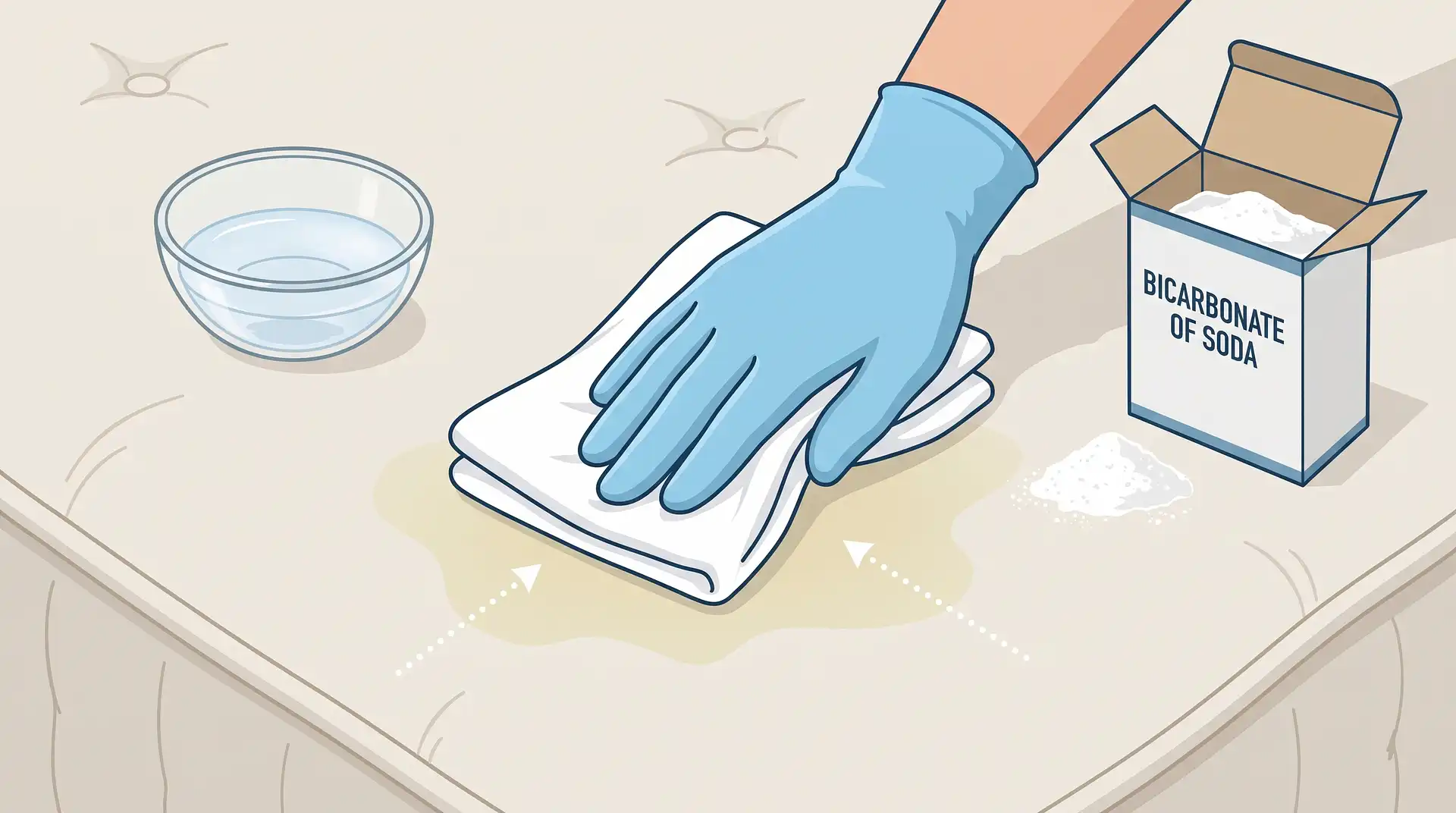
Quick answer: Work out which category your stain falls into, since the category decides the method. Protein stains (blood, sweat, urine, vomit) need cold water and an enzyme cleaner, and heat sets them permanently. Tannin stains (tea, coffee, wine) also need cool water for the same reason. Oil and grease need bicarbonate of soda to absorb first, before anything wet. Dye stains like ink are the hardest and most likely to be permanent. In every case: apply solution to a cloth rather than to the mattress, blot rather than rub, work from the outside in, and dry thoroughly, since a mattress core that stays damp is a worse problem than the stain was.
Most guides give you a list of stains and a separate recipe for each. That works until you get a stain that isn't on the list.
There are really only four categories, and once you know which one you're dealing with, the method follows from the chemistry rather than from a lookup table.
Four stain types, not twenty stains
Category | Examples | What it is | Key rule |
|---|---|---|---|
Protein | Blood, sweat, urine, vomit, milk | Organic proteins that bond to fibre and set under heat | Cold water only. Enzyme cleaner for odour |
Tannin | Tea, coffee, red wine, fruit juice | Plant compounds that behave like a dye | Cool water. Never hot |
Oil and grease | Body oils, food oil, lotions, hair products | Non-water-soluble, repels water-based cleaners | Absorb with bicarbonate of soda first |
Dye | Ink, biro, makeup, hair dye | Already a dye, designed to bond permanently | Hardest category. Often permanent |
The single most useful thing to know: protein and tannin stains both set under heat. That covers the overwhelming majority of mattress stains, and it means the same rule applies to almost everything you'll encounter. Cold or cool water, never warm, never hot, no hairdryer, no steam.
The rules that apply to every mattress stain
Check the care label first. Some UK manufacturers advise against vigorous cleaning or heavy moisture on their own products, and memory foam in particular tolerates less moisture than sprung mattresses.
Test on a hidden area. A side panel near the base, or an area that sits under the frame. Apply, let it dry fully, check for colour change before going near the visible stain.
Apply to the cloth, never to the mattress. Dampen a white cloth and wring it out well. Spraying or pouring directly onto a mattress means you have no control over how deep the liquid goes, and depth is the whole problem with a mattress.
White cloths only. Coloured cloths transfer their own dye into damp fabric.
Blot, don't rub. Rubbing drives the stain into the layers below and damages the cover.
Work from the outer edge inwards. Stops you spreading the stain wider than it started.
Repeat lightly rather than escalating. Three gentle passes beat one aggressive attempt on every stain type. Aggression is what damages covers.
Dry thoroughly, every time. More on this below, because it's where most mattress stain removal actually fails.
Protein stains: blood, sweat, urine, vomit
The largest category on a mattress by a considerable margin, and the one where the cold water rule matters most.
Why heat sets them. Proteins denature under heat, the same process that turns a clear egg white opaque and solid in a pan. Once that happens on a fibre, the protein is bonded and no amount of subsequent cleaning reverses it. Warm water on a fresh blood stain converts a removable problem into a permanent one.
Blood
Cold water only. Blot with a cold, damp white cloth, working from the outside in, and expect several patient passes. Fresh blood usually lifts well. Dried blood has oxidised, which is why it's brown rather than red, and it takes longer but often still lifts substantially.
Our full guide to removing blood covers the method in more detail including hygiene precautions, which apply equally to a mattress.
Urine
Two problems in one: the visible mark and the odour, and they need different treatment.
Blot up as much as possible if fresh. Then use an enzyme-based cleaner, which breaks down the compounds causing the smell rather than masking them. This is why detergent alone appears to work and then disappoints, it lifts the mark and leaves the odour source in place.
Follow the product's stated dwell time, which is usually longer than people expect, then blot and dry thoroughly. Old urine stains often need two or three enzyme treatments across separate drying cycles.
Sweat and yellowing
Not a discrete stain but accumulated body oils and proteins deposited over months or years, then oxidised. That's why it's yellow and why it's diffuse rather than sharp-edged.
Patient repeated treatment with cold water and a mild detergent solution lightens it. Bicarbonate of soda afterwards helps with any residual odour. Be realistic about the outcome, covered in the final section.
Vomit
Remove solids first, then treat as a protein stain: cold water, enzyme cleaner, thorough drying. Ventilate well throughout.
Tannin stains: tea, coffee, wine
Tannins are plant compounds that behave much like a fabric dye, which is why coffee marks fabric so readily.
Cool water, never hot, for the same heat-setting reason as protein stains. Blot heavily first to lift as much liquid as possible, then treat with cool water and a small amount of clear detergent applied to a cloth. Repeat in light passes.
The mechanism is the same one covered in detail in our coffee stain guide, and the principles transfer directly from carpet to a mattress cover.
Oil and grease stains
Body oils, hair products, food oil and lotions. These repel water-based cleaners, which is why going straight to detergent spreads them rather than lifting them.
Absorb first. Sprinkle bicarbonate of soda directly onto the mark and leave it several hours, ideally overnight, to draw the oil out. Vacuum or brush off gently rather than wiping, which smears it.
Then treat what's left with a mild detergent solution on a cloth, since detergent works on the residual oil once the bulk has been absorbed.
Dye stains: ink and makeup
The hardest category, because a dye is engineered to bond permanently to fibre. That's its purpose.
Surgical spirit on a cotton bud, applied very sparingly, can lift some ink. Test on a hidden area first, work in small dabs, and change the cotton bud frequently so you're lifting ink rather than moving it around.
Be realistic. Ink on a mattress cover is one of the situations most likely to end in a partial result, and aggressive attempts damage the cover more reliably than they remove the ink.
Why the stain came back as it dried
This one catches people out and no other mattress guide covers it.
If liquid soaked below the cover into the layers underneath, cleaning the surface only cleans the surface. As the mattress dries over the following day, moisture travels back up through the material by capillary action and carries the remaining stain with it, redepositing it at the surface. The stain reappears, sometimes looking larger than before.
It's called wicking, and it's the same effect covered in our coffee stain guide for carpets. A mattress is particularly prone to it because it's thick and dries slowly.
The fix isn't to attack it harder. Re-dampen lightly with cold water, blot thoroughly to lift what's wicked up, then dry under a dry towel with weight on it. You may need to repeat across two or three drying cycles.
Persistent wicking means the spill went deep. At that point the liquid is in the core, and surface treatment won't reach it. That's where extraction equipment, which pulls moisture out rather than putting more in, does something home methods can't.
What genuinely won't come out
Worth saying plainly, since every competing page implies otherwise.
Long-established sweat yellowing frequently won't lift completely. It's years of oxidised protein and oil, and it lightens rather than disappears. Escalating to bleach or strong peroxide damages the cover for marginal cosmetic gain on a stain nobody sees under a fitted sheet and protector.
Set ink is usually partial at best.
Anything that reached the core can't be fully treated from the surface, whatever product you use.
A word on hydrogen peroxide, since it's the default recommendation across most mattress stain content. It genuinely works on protein stains, and it's an oxidising agent with a real bleaching risk on covers of unknown colour-fastness. If you use it, test on a hidden area, dilute it well, treat the stain spot only rather than broadly, wear gloves and open a window. And don't mix it into multi-product recipes, one product at a time.
The realistic goal for an old mattress stain is significant improvement plus complete odour removal, not invisibility. Odour is the part that actually affects you nightly, and enzyme treatment handles it well even when the visible mark persists.
8. FAQ Section
How do you get old stains out of a mattress? Identify the stain category first. Rehydrate the mark with cold water, apply the appropriate treatment for that category with a longer dwell time than a fresh stain needs, blot, and repeat across several passes. Old stains lift in layers, so judge progress against how it started rather than expecting one attempt to clear it.
How do you get yellow stains out of a mattress? Yellowing is usually accumulated sweat and body oils that have oxidised over time. Patient repeated treatment with cold water and mild detergent lightens it, and bicarbonate of soda afterwards helps residual odour. Long-established yellowing rarely disappears completely, and harsher products risk damaging the cover for limited gain.
Why does hot water make mattress stains worse? Most mattress stains are protein or tannin based, and both set under heat. Heat denatures protein and bonds it to the fibre, and it drives tannin deeper. Cold or cool water is correct for almost every mattress stain.
Why did my mattress stain come back after cleaning? Wicking. The liquid soaked below the surface, and as the mattress dried, moisture carried the remaining stain back up to the top. Re-dampen lightly, blot thoroughly, and dry under a weighted towel. If it keeps returning, the spill reached the core and needs extraction rather than surface treatment.
How do you get urine stains and smell out of a mattress? Use an enzyme-based cleaner, which breaks down the compounds causing the odour rather than masking them. Detergent alone lifts the visible mark and leaves the smell. Follow the product's dwell time, blot, and dry thoroughly. Old urine often needs two or three treatments.
Can you remove dried blood from a mattress? Often, at least substantially. Dried blood has oxidised, which is why it's brown, and it takes longer than fresh blood but still responds to patient cold water treatment. Never use warm water, which sets it permanently.
Is hydrogen peroxide safe on a mattress? It works on protein stains but carries a real bleaching risk, and mattress covers vary in colour-fastness. Test on a hidden area, dilute it well, apply only to the stain rather than broadly, and ventilate the room. Don't combine it with other products.
Do mattress stains ever come out completely? Fresh stains treated promptly usually do. Old, set stains, particularly years of sweat yellowing, usually lighten rather than disappear. The realistic goal on an old stain is significant improvement plus full odour removal, which is the part that actually affects your sleep.
What's the safest all-round approach if I don't know what the stain is? Treat it as a protein stain. Cold water, mild detergent on a cloth, blot from the outside in, then an enzyme cleaner if there's any odour. It's the most common category on a mattress and the method won't damage anything if you're wrong.
Get your fixed quote in 60 seconds
Or call 07555 856988.