How to Get Furniture Dents Out of Carpet
10 October 2026
Would rather leave it to a professional? See our carpet cleaning in Manchester.
Quick answer: Remove the furniture, vacuum the dent from several directions and gently lift the pile with your fingers or the rounded edge of a spoon. If the fibres stay flat and the carpet maker permits moisture, place a small ice cube in the depression, let it melt, blot the area and lift the damp pile gently. Allow it to dry fully, then vacuum again. Avoid direct heat, hard scraping and soaking. Deep, old marks may involve compressed underlay or permanent pile wear and may not disappear completely.
Carpet depressions usually appear beneath sofa feet, beds, cabinets and other heavy furniture. The weight holds the pile down for months or years, while the backing and underlay may also compress. A fresh dent often lifts with patient grooming. An old, sharply defined hollow can be harder to restore.
What causes depressions in carpet?
A carpet pile is made from upright yarns attached to a backing. Everyday footsteps press those yarns down briefly, but heavy furniture concentrates weight in one small place for a long time. The pile bends, the carpet backing settles and the underlay underneath may lose some of its spring.
The result depends on the carpet fibre, pile construction, furniture weight and how long the item remained in place. Dense wool may recover differently from polypropylene, nylon or polyester. A dent in a soft cut pile is also more visible than one in a short, firm loop pile.
Is it a dent or permanent wear?
Look at the area from different directions. A clean depression with intact fibres is usually a pressure mark. Frayed, shiny, thin or missing fibres indicate wear or damage instead. If the floor feels lower beneath the mark even after the pile has been raised, the underlay may be compressed.
Cleaning can lift compacted pile, but it cannot replace worn yarn or rebuild damaged underlay. This distinction prevents repeated treatment that only makes the area wetter.
What you will need
A vacuum cleaner with a suitable carpet setting
A clean white absorbent cloth
A rounded spoon or your fingers
One or more small ice cubes, if moisture is permitted
Furniture cups or wide protective pads
Check the carpet care instructions before using water. If you cannot identify the fibre or the carpet has an unusual finish, start with dry grooming only.
How to get carpet depressions out step by step
1. Move the furniture safely
Clear a route and ask for help with bulky furniture. Lift the item rather than dragging it across the carpet, because dragging can stretch the backing or catch looped fibres. Keep feet and fingers away from pinch points.
2. Leave the carpet to recover
Some recent impressions begin to rise once the weight is removed. Leave the area uncovered for several hours before adding moisture. This also gives you a more accurate view of what still needs treatment.
3. Vacuum from several directions
Use slow passes across and along the dent. Suction helps separate the yarns, while a suitable brush roll can lift many cut-pile carpets. Use suction only if the care instructions warn against a rotating brush, especially on delicate loop pile.
4. Lift the fibres gently
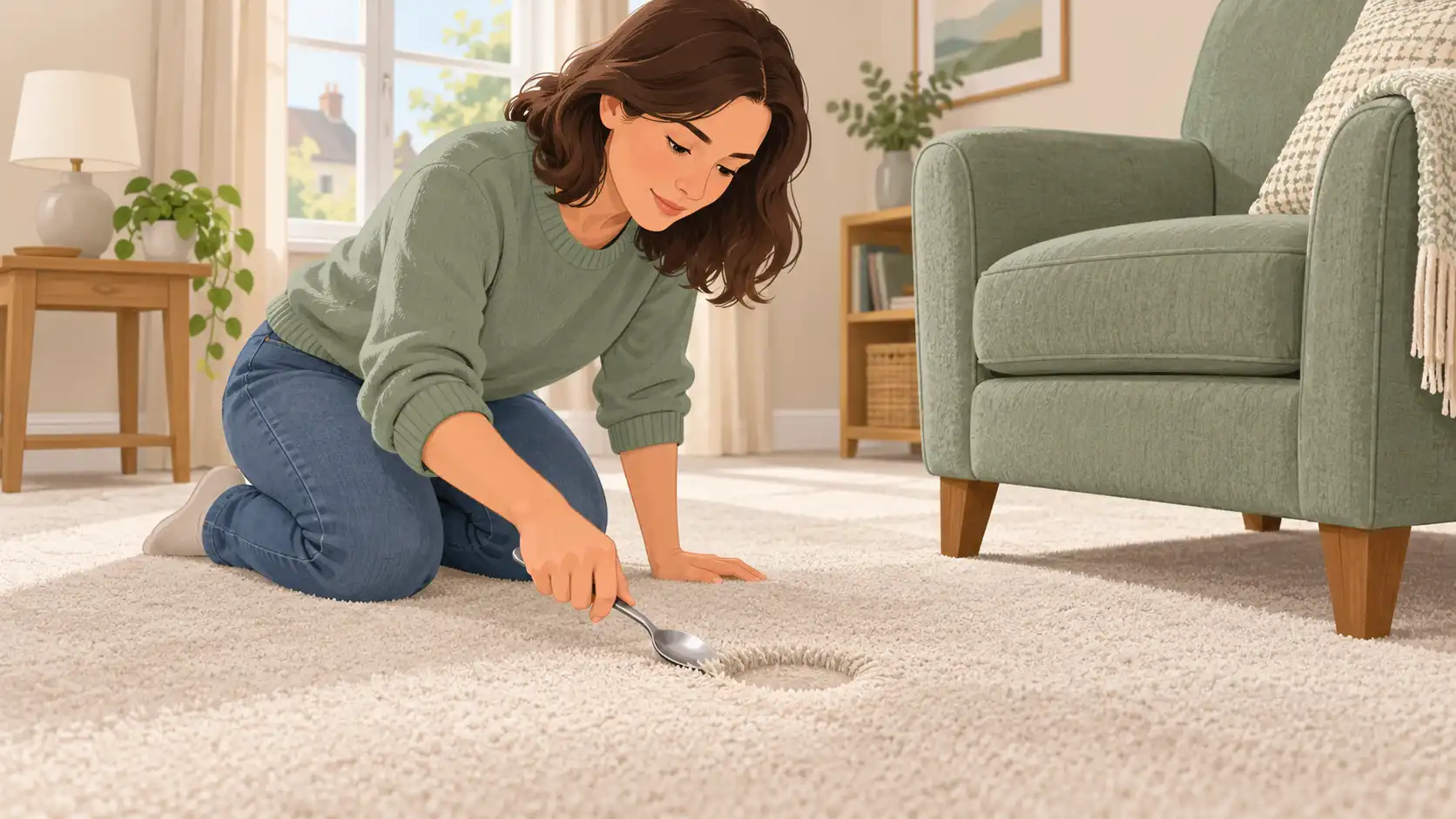
Work around the edge of the depression with clean fingers or the rounded edge of a spoon. Tease the pile upwards without pulling the yarns. Do not use a fork, knife or sharp tool, as it can split, snag or cut the carpet.
5. Use controlled moisture if needed
If dry grooming is not enough and the care guidance allows water, place a small ice cube in the centre of the dent. Use only enough ice to dampen the compressed pile as it melts. Protect moisture-sensitive flooring nearby and do not use this method where water could reach exposed wood, carpet joins or an uncertain backing.
Once the ice has melted, blot firmly with a clean white cloth. Do not rub. While the yarns are slightly damp, lift them again with your fingers or a rounded spoon.
6. Dry the area completely
Keep furniture off the treated spot and allow air to circulate. A fan can help, but avoid intense heat. When the pile and backing feel fully dry, vacuum once more in two directions to blend the restored area with the surrounding carpet.
Ask About Professional Carpet Cleaning
Flattened areas across the whole room?
Book professional carpet cleaning
Should you use steam on a carpet dent?
Steam can relax some compressed fibres, but it also adds heat and moisture. A hot iron must never touch carpet. Direct contact can melt synthetic yarn, flatten pile, leave a shiny patch or transfer colour. Too much steam can also carry moisture into the backing and underlay.
Follow the carpet manufacturer's instructions if they specifically permit steaming. Otherwise, use vacuuming and controlled cold moisture first. Wool, natural fibres, glued carpet tiles and carpets beside moisture-sensitive flooring deserve extra caution. A professional assessment is sensible when the fibre is unknown or valuable.
Methods to avoid
Do not pour water over the dent. Saturation can affect the backing, underlay and floor beneath.
Do not place an iron directly on the carpet. Heat can melt or glaze fibres very quickly.
Do not scrape with a fork or blade. Sharp edges may damage individual yarns.
Do not scrub hard. Rough movement can fuzz cut pile or catch loops.
Do not replace furniture while the area is damp. The pile will compress again and moisture may become trapped.
Do not keep repeating wet treatments. If the mark does not improve after careful treatment and complete drying, further water is unlikely to repair worn pile or underlay.
Safety guide
Moving the furniture is often the riskiest part of this job. Empty drawers and shelves first, separate removable sections and use another person or suitable moving equipment for a heavy item. The Health and Safety Executive guidance on manual handling explains how to assess lifting and carrying risks. Do not attempt a lift if the object is too heavy, unstable or difficult to grip.
Keep children and pets away from melting ice, electrical equipment and the damp area. Unplug an iron or steamer immediately after use if the carpet manufacturer has approved that method. Never combine water with powered equipment unless the appliance is designed for carpet cleaning and its instructions allow it.
How to prevent furniture dents
Place wide furniture cups beneath narrow legs to spread the load over a larger area. Choose cups that are suitable for carpet and large enough for the furniture foot. Check them occasionally because a cup can shift or crack.
Move movable furniture a short distance from time to time and vacuum underneath it. Even a small change in position prevents the same yarns from carrying the full load continuously. When rearranging a room, lift each item instead of dragging it. Our guide to cleaning a carpet correctly also explains how fibre type, vacuum settings and drying affect the pile.
When a carpet depression may not come out
A very old dent may remain visible because the yarn has lost resilience, the backing has distorted or the underlay has permanently compressed. Heat damage, worn fibres and missing pile cannot be reversed through cleaning. If several areas feel sunken, the issue may sit below the carpet and require a carpet fitter rather than a cleaner.
Professional carpet cleaning may improve flattened pile when soil is holding the fibres together, but no responsible cleaner can promise that every furniture dent will vanish. The likely result depends on the fibre, construction, age and condition of the carpet.
Frequently asked questions
Do ice cubes remove dents from every carpet?
No. Controlled moisture can help some resilient carpets recover, but results vary. Do not use ice when the manufacturer forbids wet treatment, the fibre is unknown or moisture could damage the backing or floor.
How long does a carpet dent take to disappear?
A light, recent mark may improve within several hours after the furniture is removed. A deeper indentation may need controlled treatment, complete drying and another vacuum. Long-standing dents may never recover fully.
Will professional carpet cleaning remove furniture marks?
It can improve depressions caused by dirty or compacted pile. It cannot replace damaged fibres or restore underlay that has lost its structure. The carpet should be assessed before any result is predicted.
Can I use a hairdryer?
High heat can distort or melt synthetic carpet, so it is safer to use normal airflow or a fan. If the manufacturer's care instructions permit a hairdryer, use a cool setting from a safe distance and keep it moving.
Why did the dent return?
The pile may have been compressed again before it dried, or the backing and underlay may still hold the shape of the furniture foot. Returning the same heavy item to the spot without a wide furniture cup will also recreate the pressure.
How do you get furniture dents out of carpet with ice?
Place an ice cube in each dent and let it melt overnight. Next day, blot up the water and fluff the fibres with a fork or your fingers. The water swells the fibres so they stand back up.
Can you use a hairdryer to remove carpet dents?
Yes, on synthetic carpet. Lightly dampen the dent, then blow warm air from a hairdryer while lifting the fibres with your fingers or a spoon. Keep it moving and on a low setting so you do not melt the fibres.
How do you stop furniture leaving dents in carpet?
Use furniture cups or coasters to spread the weight, and move heavy furniture a few centimetres every few months. Regular vacuuming also keeps the pile lifted.
Need help with flattened carpet pile?
If careful vacuuming and fibre-safe treatment have not improved the mark, arrange an assessment before applying more heat or water. The carpet's material and the condition beneath the pile determine what can realistically be restored.
Related guides: how to fix a burnt carpet, how to stop rugs moving on carpet. For a professional finish, see our carpet cleaning service or carpet cleaning in Manchester.
Related guides
Need it cleaned properly?
Book our carpet cleaning service — from £29 (UK average £45), free in-home survey and pay on completion.