How to Dismantle a Sofa
22 September 2026
Quick Answer
Remove all cushions and loose pillows first. Turn the sofa over and unscrew the legs, which may free up enough clearance to fit through a doorway on its own. If the arms or back still need to come off, locate the bolts or brackets connecting them, usually accessible once you pull back a section of fabric secured with staples, and remove them with a screwdriver or Allen key. For a flat-pack or knock-down sofa such as an IKEA or Swyft model, reverse the original assembly instructions rather than guessing. Corner, sectional, or U-shaped sofas usually separate at the connecting brackets between sections rather than needing full disassembly. Label and bag all screws and bolts as you go, and take photographs at each stage to guide reassembly.
Check Whether Your Sofa Is Flat-Pack or Traditionally Upholstered First
This distinction changes the whole approach. A flat-pack or knock-down sofa, common with brands like IKEA and Swyft, is designed to come apart using visible bolts and fittings, and the most reliable method is simply reversing the original assembly manual step by step, using the same tools provided with the original flat-pack kit. A traditionally upholstered sofa is built differently, with the fabric cover stapled directly to the wooden frame, meaning the arms and back are usually hidden underneath the upholstery rather than accessible from the outside, and getting to the connecting bolts means carefully pulling back a section of stapled fabric first.
What You Will Need
A screwdriver set, both flathead and Phillips
An Allen key set, for flat-pack style fittings
A staple puller or pliers, for traditionally upholstered sofas
Small bags or containers for screws and bolts
A permanent marker or masking tape for labelling
A camera or phone for reference photographs
Protective gloves
Furniture blankets or moving covers
A second person, given the weight involved
Step by Step: Dismantling a Traditionally Upholstered Sofa
Remove all cushions and pillows. Set them aside and pack them separately, since this immediately reduces weight and bulk.
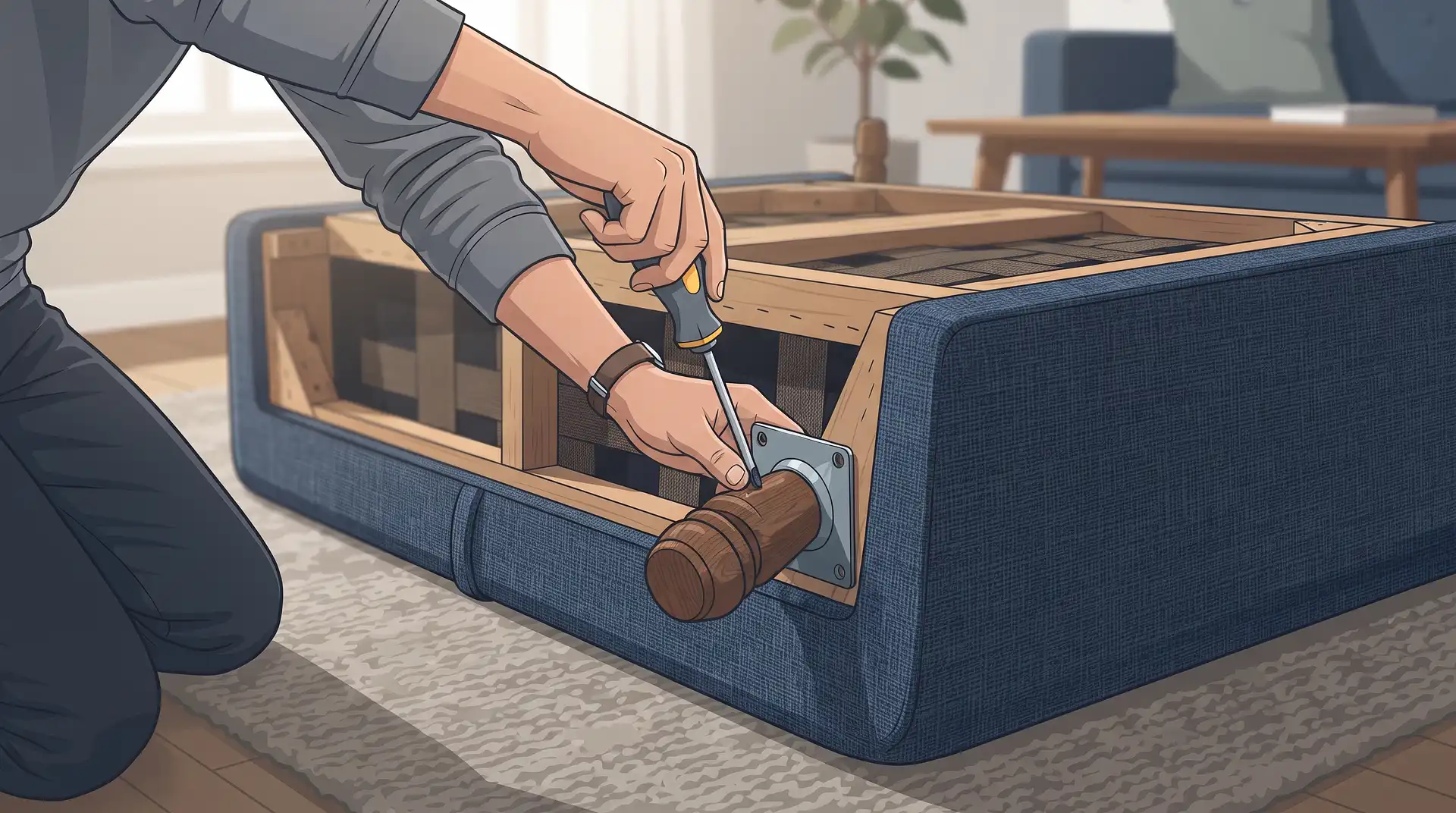
Turn the sofa over to access the legs. With a second person's help, tip the sofa carefully and unscrew each leg, placing screws into a labelled bag. Removing the legs alone is sometimes enough to fit a sofa through a doorway that previously seemed too tight.
Locate the staples securing the underside fabric. Use a staple puller or a flathead screwdriver and pliers to carefully remove these, working steadily rather than rushing, since old staples can be sharp and prone to snapping if pulled at the wrong angle.
Pull back the fabric to expose the frame fittings. Once the underside staples are out, gently roll back enough fabric to reveal the bolts or brackets connecting the arms and back to the main frame.
Remove the connecting bolts or brackets. Using a screwdriver, Allen key, or wrench as needed, detach the arms and back from the base frame, keeping all fixings labelled by section.
Separate the sections. With the fixings removed, the sofa should now come apart into more manageable pieces, small enough to fit through most standard doorways and stairwells.
Step by Step: Dismantling a Flat-Pack or Knock-Down Sofa
Find the original assembly manual if possible, or look up the model online if the physical copy has been lost.
Remove cushions first, exactly as with a traditional sofa.
Work backwards through the assembly steps, using the same tools originally provided or their modern equivalent, removing bolts and connecting brackets in the reverse order to how the sofa was built.
Keep fixings grouped by section, labelling each bag clearly, since flat-pack sofas often have several similar looking bolts that are not actually interchangeable between sections.
Separating a Corner, Sectional, or U-Shaped Sofa
These designs are generally built to separate at the connecting points between individual sections rather than needing the full frame disassembly a fixed three seater might require. Locate the brackets, pins, or bolts joining each section, usually along the base where units meet, and remove them one connection at a time. This is often enough on its own to move a large modular sofa through a space a single solid piece never could, without needing to touch the legs, arms, or upholstery at all.
A Safety Point Most Guides Skip: Older Foam and Flame Retardant Chemicals
This is worth knowing before you start cutting into or heavily disturbing old upholstery. UK furniture fire safety regulations mean most sofas sold in Britain have used flame retardant treated foam, but the specific chemicals used in that treatment have changed over time, and some older types, sometimes referred to as persistent organic pollutants, were restricted and phased out as recently as 2019 in some cases. Older sofas, including some flat-pack models made before this point, may still contain foam treated with these older chemicals. This does not mean dismantling an older sofa is dangerous under normal handling, but it is worth avoiding unnecessary cutting into old foam, wearing gloves when handling exposed padding, and being particularly mindful of dust if the foam is crumbling or degraded, rather than treating old exposed foam as something to handle casually.
Handling Exposed Staples Safely
Once the underside or arm fabric is pulled back, exposed staples are a genuine, if minor, injury risk that most guides only mention in passing. Old staples can be rusted, bent, or partially working loose from the frame, and pulling fabric back carelessly can leave sharp edges exposed at hand height. Wear gloves throughout this stage, work slowly rather than yanking fabric free in one motion, and dispose of removed staples immediately into a container rather than leaving them loose where they could be stepped on or caught by hand later.
Use the Opportunity to Check the Sofa Before It Goes Into a New Home
If you are dismantling a sofa as part of a house move, this is a genuinely useful moment to check the frame and padding for anything you would not want to bring into your new home. A musty smell, visible mould spotting, or damp padding found once the fabric is pulled back is far easier to deal with now than after the sofa has already been moved and reassembled somewhere new. If you find any of this, it is worth addressing before deciding whether the piece is worth taking with you at all, rather than assuming it will sort itself out once it is back together in a new space. The guide on cleaning a fabric sofa covers general stain and odour treatment, though a genuine damp or mould problem found deep in the frame is usually better assessed professionally before you commit to moving the piece.
Reassembling at the Other End
Lay out all labelled parts and hardware bags before starting, and work through your reference photographs in reverse order to how you took the sofa apart. Attach the frame sections and legs first, then reattach the arms and back, and finally re-staple or clip any fabric you pulled back to access the fixings. If a section does not sit flush or feels loose once reassembled, check that every bolt from that section's labelled bag has actually been used, since a missing fixing is the most common cause of a wobbly or uneven reassembly.
Frequently Asked Questions
Do I need to remove the fabric cover to dismantle a sofa?
Only partially, and only on a traditionally upholstered sofa. You generally need to pull back a section of stapled fabric to access the bolts connecting the arms and back to the frame, rather than removing the whole cover entirely.
Is it different to dismantle a flat-pack sofa compared to a normal one?
Yes, a flat-pack or knock-down sofa such as an IKEA or Swyft model is designed to come apart using visible bolts, and the most reliable method is reversing the original assembly manual rather than searching for hidden staples and fixings.
How do I take apart a corner or sectional sofa?
These usually separate at the connecting brackets or pins between individual sections, which is often enough on its own to move the piece without needing to dismantle the legs, arms, or upholstery.
Is it safe to handle old foam inside a sofa when dismantling it?
Generally yes under normal handling, but older sofas may contain foam treated with flame retardant chemicals that have since been restricted, so it is worth wearing gloves, avoiding unnecessary cutting into old foam, and being mindful of dust if the foam is crumbling.
What should I do if I find mould or a damp smell when dismantling a sofa for a house move?
Address this before deciding whether to bring the sofa into your new home, since it is far easier to deal with at this stage than after the piece has already been moved and reassembled elsewhere.
Why are exposed staples a safety concern when dismantling a sofa?
Old staples can be rusted or partially loose, leaving sharp edges exposed once fabric is pulled back. Wearing gloves and working slowly rather than pulling fabric free quickly reduces the risk of a cut.