How to Dismantle a Recliner Sofa
21 September 2026
Quick Answer
Unplug and remove any battery pack from an electric or power recliner before doing anything else. Remove all cushions and any removable covers to reduce weight and improve access. Locate the release levers or brackets, usually where the backrest meets the seat frame, and detach the backrest according to your specific model. Turn the sofa over to access and unscrew the legs, keeping all screws and bolts in labelled bags. For a multi seat recliner, remove the cross rails or glides connecting the sections to separate them for easier transport. Take photographs at each stage to guide reassembly, and be aware that the reclining mechanism itself can hold real tension, so handle it carefully rather than forcing any part that feels stuck.
Check Your Specific Model First
Recliner mechanisms vary considerably between manufacturers and models, particularly between manual, electric, and rise and recline versions. If you still have the manual or can find the model online, it is worth a quick check before starting, since the exact release mechanism, whether it is a lever, a keyhole bracket, or a bolted cross rail system, can differ enough between models that a generic method may not match your specific sofa exactly.
What You Will Need
A screwdriver set, both flathead and Phillips
An adjustable wrench or socket set for bolts
Small bags or containers for screws and bolts
A permanent marker or masking tape for labelling parts
A camera or phone for reference photographs
Protective blankets or moving covers
A second person, given the weight of most recliner sofas
Step by Step: Dismantling a Recliner Sofa
Unplug any electric components first. If your recliner is powered, disconnect it from the mains and remove any battery packs before touching the mechanism, both for safety and to prevent accidental movement during the process.
Take reference photographs. Photograph the sofa from several angles before you begin, along with close ups of any visible brackets, levers, or fixings, to guide reassembly later.
Remove cushions and covers. Take off all loose cushions and any removable fabric covers, checking for zips, Velcro, or buttons securing them. This reduces weight significantly and gives you a clearer view of the frame underneath.
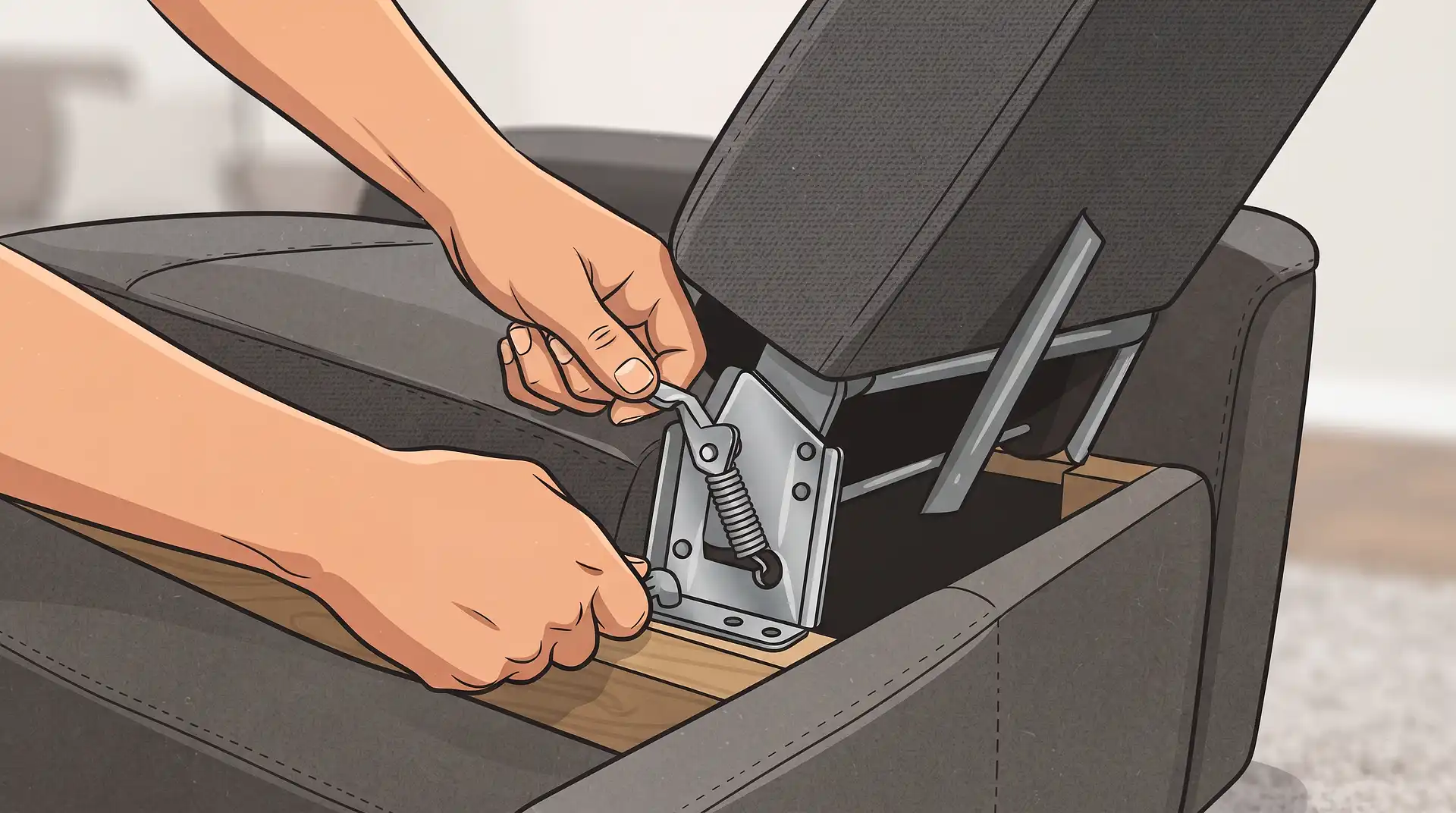
Locate and release the backrest mechanism. Most recliners have a lever or keyhole bracket system where the backrest meets the seat frame. Tilt the sofa forward or backward as needed, following your model's specific release method, and lift the backrest away once released.
Turn the sofa over to access the legs. With help from a second person, carefully tip the sofa to access the underside, then unscrew each leg using a screwdriver or wrench. Place all screws and bolts into labelled bags matched to each leg or section.
Separate multi seat sections if applicable. For a 3 seater or larger recliner, locate the cross rails or glides connecting the sections underneath, and remove the bolts or pins securing them to separate the sofa into smaller, more manageable pieces.
Wrap and secure each piece. Once separated, wrap each section in protective blankets or moving covers to prevent scuffs or damage during transport, and secure loose parts with straps if loading into a vehicle.
The Mechanism Safety Risk Most Guides Do Not Mention
Reclining mechanisms rely on springs, gas struts, or tensioned metal arms to move smoothly under normal use, and this same tension does not simply disappear once the sofa is being dismantled. A mechanism that has been partially released or loosened can move suddenly and with real force if handled carelessly, which creates a genuine pinch or impact risk to fingers and hands, particularly around hinge points and locking brackets. Work slowly, keep hands clear of moving joints once a lever or bolt has been released, and never force a section that feels stuck, since resistance often means a fixing has not been fully released yet rather than needing more force.
Use This as an Opportunity to Clean Inside the Frame
Once the backrest and cushions are off and the frame is exposed, this is genuinely one of the best opportunities you will get to properly clean areas that normal vacuuming never reaches. Crumbs, pet hair, dust, and general debris commonly build up inside the mechanism cavity and the gaps around the frame, since this area is completely sealed off during everyday use. Vacuum thoroughly around the exposed mechanism and frame joints before reassembling, and take the chance to check for any musty smell or sign of dampness, particularly if a spill has ever happened near the reclining section, since a mechanism cavity can trap moisture in a similar way to enclosed foam, with nowhere for it to dry out on its own. If you notice a persistent smell or staining once the frame is exposed, it is worth addressing properly before putting everything back together, since reassembling over an unresolved issue simply seals it away again.
Reassembling and What to Check If It Does Not Recline Smoothly
Reverse the steps you took to dismantle the sofa, using your reference photographs to guide the order and positioning of each part. If the mechanism does not recline smoothly after reassembly, check that all bolts and pins on the cross rails or glides are fully seated and tightened, since a loose connection here is the most common cause of a recliner that feels stiff, uneven, or does not lock properly. For an electric recliner, confirm the wiring or connector for the motor has been reconnected correctly before testing the mechanism, and avoid forcing the recline function if it meets resistance, since this usually points to a misaligned part rather than something that will free up with pressure.
Frequently Asked Questions
Can I dismantle a recliner sofa on my own?
It is possible for a single seat recliner chair, but a 2 or 3 seater recliner sofa is heavy and awkward, so having a second person helps significantly, particularly when turning the sofa over or separating sections.
Do I need to unplug an electric recliner before dismantling it?
Yes, always disconnect an electric or power recliner from the mains and remove any battery packs first, both for safety and to prevent the mechanism moving unexpectedly during the process.
Why is my reclining mechanism stiff or not working properly after reassembly?
This is usually caused by a bolt or pin on the cross rails or glides not being fully tightened or seated correctly. Checking these connections first is more likely to solve the problem than forcing the mechanism.
Is it safe to force a stuck part while dismantling a recliner?
No, resistance usually means a fixing or bracket has not been fully released yet, and forcing a tensioned mechanism can cause a sudden, forceful movement that risks injury. Stop and check for a missed release point instead.
Should I clean my recliner sofa while it is dismantled?
Yes, this is a good opportunity to vacuum inside the frame and mechanism cavity, an area that normal cleaning never reaches. It is also worth checking for any musty smell or dampness before reassembling.
Do all recliner sofas separate into individual seats?
Most multi seat recliner sofas are built as one piece with a shared frame rather than separating into individual seats, though many do allow the cross rails or glides connecting the sections to be removed to make the whole piece easier to move.