How to Cover a Sofa with a Throw
10 September 2026
Quick Answer
Drape the throw evenly over the back of the sofa first, then pull it down over the seat cushions so it covers the areas most exposed to spills and daily wear. Tuck the excess fabric into the creases between the cushions and the arms to stop it slipping when someone sits down. For genuine protection rather than just a tidy look, choose a throw made from a washable fabric and be aware that most throws absorb spills rather than blocking them, so a large or fast moving spill can still reach the sofa underneath.
What a Throw Actually Protects Against
A throw is genuinely useful against everyday wear such as pet hair, light dust, and the general fading and flattening a sofa fabric experiences from regular use. It also gives you something easy to wash regularly instead of tackling the sofa fabric itself every time, which matters since most fabric sofas cannot be laundered the way a throw can.
Where a throw falls short is against anything more than a light or slow spill. Most throw fabrics, including cotton, wool, and chunky knits, absorb liquid rather than repelling it, so a knocked over drink can still soak through the throw and reach the sofa fabric underneath within moments. The team at Instant Dry Carpet Cleaning regularly treats sofa stains that the owner assumed a throw had caught, only to find the liquid had already worked its way through to the cushion fabric before anyone noticed.
If real spill protection matters to you, look for a throw with a water resistant backing or a tightly woven synthetic blend rather than a purely absorbent natural fibre. These are less common but genuinely change what the throw can protect against, rather than just giving a false sense of security.
Choosing the Right Throw for Protection
Washable fabric first. A throw you cannot easily machine wash quickly becomes a second stained item rather than a solution, so check the care label before anything else
Size for full coverage. A throw that only covers the back or one arm leaves the seat cushions, the part that takes the most daily wear and the most spills, completely unprotected
Darker or patterned fabric for high use areas. A plain pale throw shows marks and pet hair faster than a patterned or mid tone one, which matters if it is doing daily protective work rather than just sitting decoratively
Tightly woven over loosely knitted for spill resistance. A chunky, open knit throw lets liquid straight through to the sofa far faster than a tightly woven cotton or synthetic blend
Step by Step: Covering a Sofa With a Throw
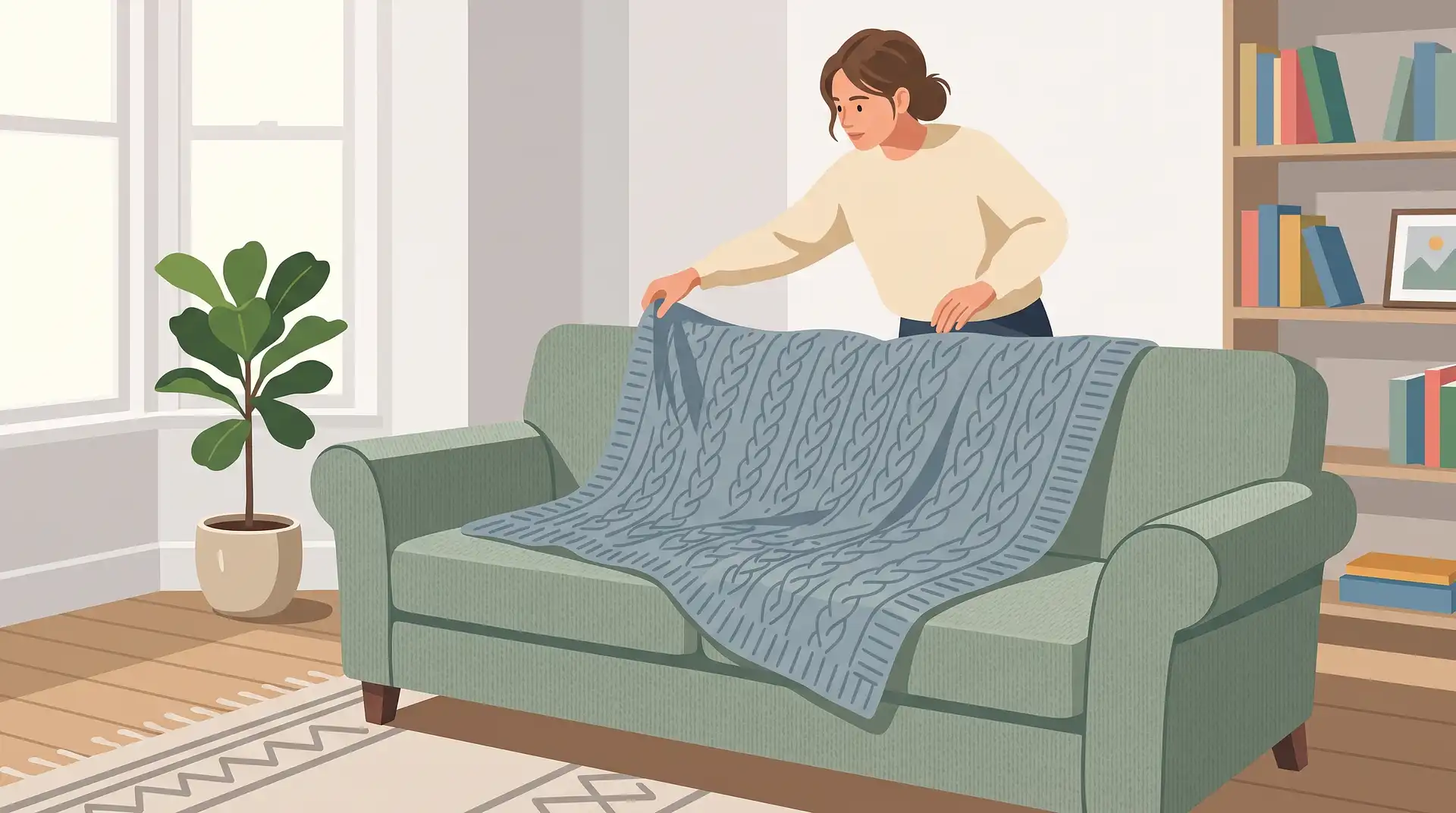
Drape the throw over the back of the sofa first. Centre it so an even amount hangs down on both sides, which makes the next steps easier to keep symmetrical.
Pull the throw down and over the seat cushions. This is the step most decorative guides skip, since covering only the back looks neat but leaves the most used and most spilled on part of the sofa exposed.
Tuck the excess into the creases. Push the edges of the throw into the gap between the seat cushions and the arms, and between the seat and the backrest, to stop it sliding when someone sits down.
Smooth out the surface. Once tucked, pull gently at the corners and smooth any bunching so the throw sits flat rather than creating a lump that will loosen and slip with use.
Check coverage of the arms if pets or children are a concern. Arms take a surprising amount of daily contact, so folding a section of the throw over each arm gives extra coverage where hands, paws, and drinks tend to land.
Covering a Sectional or Corner Sofa
A single throw rarely covers a full sectional or corner sofa without constant readjustment, since the shape has more surface area and more awkward angles than a standard three seat sofa. Rather than fighting to stretch one large throw across the whole piece, it usually works better to use two smaller throws, one for the main seating section and one for the chaise or corner unit, each tucked in separately. This also means only one throw needs washing if a spill happens on one side, rather than removing a single oversized throw from the entire sofa.
What to Do If the Sofa Underneath Already Has a Stain
If you are using a throw partly to hide an existing mark rather than purely for style, it is worth treating that stain properly rather than covering it indefinitely, since fabric stains left untreated for a long time become progressively harder to remove. The method for cleaning a fabric sofa covers general stain removal, and if the mark is specifically blood, the dedicated guide on getting blood out of a sofa goes into the enzyme based method needed for that particular stain type. Treating the stain first also means the throw goes back to doing a protective job going forward, rather than permanently hiding a mark that is still there underneath.
When to Call a Professional
A throw is a good ongoing protection habit, but it is not a substitute for a proper clean once a spill has soaked through or a stain has set in over time. It is worth calling in a professional when a spill has reached the sofa fabric despite the throw, when there is a stain underneath that has been there for a while and has not responded to a gentle DIY attempt, or when the sofa fabric itself needs a full refresh rather than ongoing cover up.
Instant Dry Carpet Cleaning offers professional sofa and upholstery cleaning across England and Wales, treating the actual fabric properly rather than relying on a throw to manage the problem long term.
Frequently Asked Questions
Does a throw actually protect a sofa from spills?
It helps with light spills and general wear, but most throw fabrics absorb liquid rather than blocking it, so a larger or fast spill can still reach the sofa fabric underneath. A tightly woven or water resistant throw offers better genuine protection than a loosely knitted one.
How do I stop a throw sliding off the sofa?
Tuck the edges into the creases between the seat cushions and the arms, and between the seat and the backrest. This holds the throw in place far better than simply draping it over the top.
Can I use one throw to cover a corner or sectional sofa?
A single throw rarely covers a full sectional well. Using two smaller throws, one for the main section and one for the corner or chaise unit, generally gives better coverage and is easier to wash separately if only one side gets a spill.
What is the best fabric for a protective sofa throw?
A tightly woven cotton or synthetic blend offers more genuine spill resistance than a loosely knitted or highly absorbent natural fibre. Whatever the fabric, being machine washable matters most for long term protective use.
Should I still clean my sofa if I always keep a throw on it?
Yes, a throw reduces new staining but does not remove any marks already on the fabric underneath. Treating existing stains properly means the throw is protecting a clean sofa going forward rather than permanently hiding a mark.
Can a throw hide pet hair and everyday wear on a sofa?
Yes, this is one of the areas a throw genuinely helps with, since it takes the daily contact and can be washed regularly, unlike the sofa fabric itself. Choosing a mid tone or patterned fabric hides pet hair better than a plain pale one.
Suggested Internal Links
Anchor text | Destination | Purpose |
|---|---|---|
cleaning a fabric sofa | General stain treatment for what a throw may be hiding | |
getting blood out of a sofa | Specific stain type, same cluster | |
cleaning a rug at home | Related fabric protection and washability principle, different cluster | |
professional sofa cleaning | Service page, branded link | |
get a fixed quote | Conversion link |
Service Section
If a spill has already reached the sofa underneath a throw, or there is a stain you have been covering rather than treating, Instant Dry Carpet Cleaning offers professional sofa and upholstery cleaning across England and Wales.
Get a free quote: instantdrycarpetcleaning.co.uk Call or WhatsApp: 07555 856988