How to Clean Dog Poop Off a Rug
2 September 2026
Quick answer: Gloves on before you touch anything. For fresh solid poop, remove as much as possible with a plastic scraper or folded paper towel without pressing it into the pile, then treat the stain with cold water and mild detergent on a cloth. For diarrhoea, counterintuitively let it dry first — trying to clean liquid waste makes it spread. For dried poop, rehydrate briefly with a cold damp cloth, then scrape. In all cases, finish with an enzyme cleaner to remove the bacterial residue and stop the smell returning. Cold water throughout — dog faeces contains protein and heat sets it permanently.
Dog accidents happen, and a rug is one of the harder surfaces to deal with because the pile holds material at different depths and the backing can trap moisture if the clean-up isn't done carefully. The method isn't complicated but the sequence matters — getting it right in the first few minutes determines most of the outcome. For professional rug cleaning when home treatment hasn't fully resolved the problem, Instant Dry Carpet Cleaning collects rugs across England and Wales and treats them in a controlled environment.
Before you start: hygiene first
Dog faeces contains bacteria that can cause illness in humans, including E. coli and Campylobacter. These are not remote risks on contaminated surfaces in a home environment.
Put on disposable nitrile or vinyl gloves before touching the rug, the waste, or any cleaning materials. Keep them on throughout. If you don't have gloves to hand, use two layers of plastic bags over your hands as a temporary measure.
Use paper towels or disposable cloths rather than anything you'll keep and reuse.
Dispose of everything directly into a sealed bag and into the outdoor bin. Waste materials left in a kitchen bin are a contamination risk.
Wash your hands thoroughly with soap and water once finished, even though you wore gloves.
This is the same hygiene framework established in the blood and urine articles on this site. Dog faeces carries a higher and more varied bacterial load than most other household staining situations.
Fresh solid poop: act in this order
Speed matters because fresh waste is still surface-level. Every minute it sits, more of it works its way toward the base of the pile.
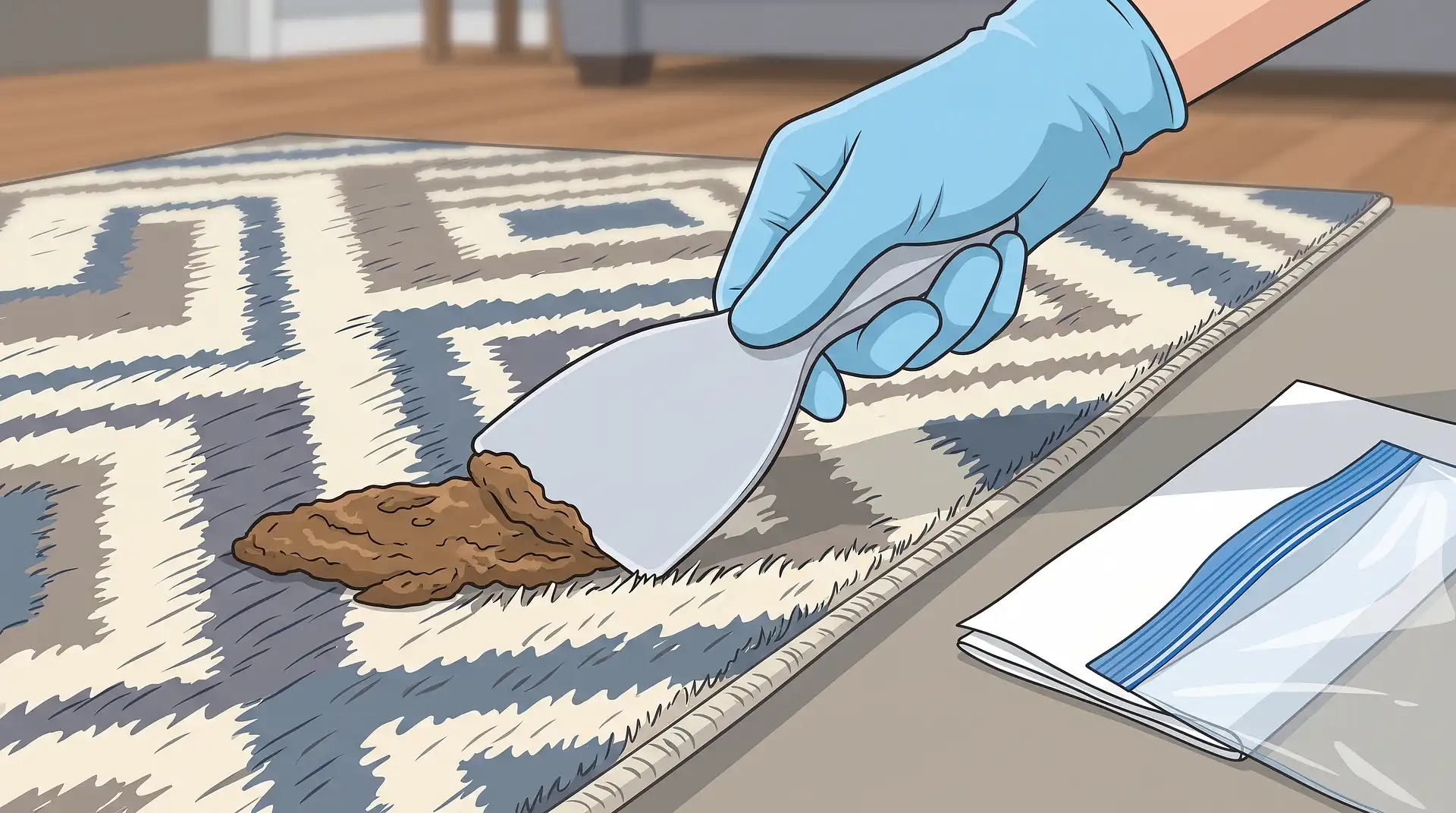
Step 1: Remove the solid material first. Use a plastic scraper, a folded piece of card, a plastic spoon or the edge of a credit card to lift the solid waste off the pile surface. Work from the outside of the deposit inward. Never press down — pressing drives the material further into the fibres. Scoop upward and away.
Collect all the removed waste in a paper towel and seal it in a bag immediately.
Step 2: Blot any remaining surface residue. Once the solid bulk is gone, press a dry white paper towel or cloth firmly onto the affected area and lift. Do this several times, moving to a clean section each time.
Step 3: Cold water only. Dog poop contains protein, and the same cold water rule that applies to blood and urine applies here — warm or hot water partially cooks the protein into the fibre before you've had a chance to lift it. Apply cold water to a clean white cloth and dab at the stain, working from the outer edge inward.
Step 4: Mild detergent solution. A small amount of clear washing-up liquid in cold water, applied via a cloth, lifts the dissolved residue. Work gently and blot rather than rub. On wool, use a WoolSafe or pH-neutral product only.
Step 5: Rinse. A clean cloth dampened with plain cold water removes detergent residue from the pile. Blot dry.
Step 6: Enzyme cleaner. Covered below — this is what stops the smell returning.
Diarrhoea: the counterintuitive approach
Liquid or semi-liquid dog waste is the harder case, and the instinct to clean it immediately usually makes it worse.
Let it dry first. Cover the area loosely with a bowl or pot to prevent anyone walking on it or pets returning to it. Leave it until the material has dried to a solid or semi-solid state — this may take thirty minutes to a few hours depending on consistency and room temperature.
Why this works: trying to clean liquid waste when it's still liquid spreads it across a significantly larger area. Once dried, it lifts as a solid rather than smearing.
Once dried, use a plastic scraper or stiff card to break up and lift the dried material. Vacuum the loose debris carefully. Then treat the stain as you would dried solid waste, as described below.
Dried poop
Finding a stain that's already dried — either because you didn't notice it at the time or because it was dealt with incorrectly — is common and very treatable.
Break up the surface crust first. Use a plastic scraper or the back of a spoon to gently break up the dried material. Work carefully to avoid damaging the pile. Vacuum to remove the loose fragments.
Rehydrate lightly. Hold a cold, damp white cloth against the stain for a minute or two. This softens the dried protein slightly, making it more workable. Don't saturate the rug — you're moistening, not soaking.
Treat as above. Cold water and mild detergent solution on a cloth, blotted from outside in. Then rinse and enzyme cleaner as described below.
Treating the stain
After the physical removal stage, a brown or yellowish stain often remains in the pile. This is the protein residue from the faeces and responds to the same treatment as any protein stain.
Cold water throughout. Repeated blotting with a cloth dampened in cold water and a small amount of mild detergent lifts most staining progressively. Work in passes rather than one heavy application — multiple gentle passes remove more than one aggressive attempt.
Hydrogen peroxide for stubborn residue on synthetic rugs. On pale synthetic rugs where the colour-fastness test passes, diluted hydrogen peroxide (three percent solution) applied via a cloth can lift staining that detergent hasn't cleared. Test on a completely hidden area first. Never use on wool. Never combine with ammonia or any other chemical — the combination produces toxic fumes.
Rinse thoroughly after any detergent or peroxide treatment to remove residue from the pile.
Removing the smell
The stain may look clean but the smell can persist — and if it does, the dog is likely to return to the same spot. The dog pee rug guide on this site covers the uric acid mechanism in detail, but faeces contains similar protein compounds that also leave an odour trace after the visible stain has gone.
Enzyme cleaner is the essential final step. Apply to a cloth and work into the treated area, following the product's stated dwell time. Keep the area damp while it works — enzymes stop working as the surface dries. Blot out after the dwell time and allow to dry.
Bicarbonate of soda sprinkled over the area once it has dried and vacuumed off after an hour handles any surface odour that remains. It's a supporting tool rather than the primary odour treatment.
Disinfection. After enzyme treatment and drying, a pet-safe disinfectant spray applied to the area and allowed to dry kills the bacterial residue that enzyme treatment doesn't address. Check the product is safe for the rug fibre type before applying.
Instant Dry Carpet Cleaning uses professional extraction that reaches deeper into the pile than surface treatment, removing both staining and biological residue from levels that a cloth and spray can't access. For rugs with significant contamination or repeated accidents in the same area, this is the most reliable route to genuinely clean results.
Rug type matters
Synthetic rugs (polypropylene, polyester). The most forgiving. Cold water, mild detergent, enzyme cleaner. Most tolerant of moisture and of multiple treatment passes.
Wool rugs. Cold water only — no warm water on protein stains. WoolSafe or pH-neutral detergent only — no vinegar, no biological detergent. Enzyme cleaners formulated as wool-safe can be used for odour; standard enzyme cleaners risk the fibre. Dry thoroughly with air on both sides. The how to wash wool rugs guide covers the wool-specific care framework.
Jute and natural fibre rugs. Use the minimum moisture possible. Solid waste should be removed as dry as possible. Any wet treatment should be a barely damp cloth, not a liquid solution. Jute absorbs moisture readily and the backing can mould. Significant contamination on a jute rug is a professional cleaning job rather than a home treatment.
Shaggy and long-pile rugs. Solid waste can travel toward the backing along the long fibres faster than on shorter pile. Remove the surface material first, then work at the pile from the tip downward toward the backing rather than pressing inward.
One dangerous combination to avoid
Several online sources suggest combining hydrogen peroxide and ammonia for stubborn stains. Do not do this. The two chemicals react to produce toxic fumes. Even small amounts in an enclosed space are a health hazard.
Use either hydrogen peroxide on its own, or an enzyme cleaner on its own, or a detergent solution on its own. Never mix them, and never apply one immediately after the other without thoroughly rinsing and drying between applications.
Frequently Asked Questions
How do you clean dog poop off a rug? Put on gloves first. Remove solid waste with a plastic scraper working from outside in without pressing down. Blot residue with a dry white cloth. Apply cold water and mild detergent solution via a cloth, working from the outer edge inward. Rinse with a plain cold water cloth, blot dry, then apply an enzyme cleaner with the stated dwell time to address odour and bacterial residue.
Should you clean dog diarrhoea immediately or let it dry? Let it dry. Trying to clean liquid waste immediately spreads it across a much larger area. Cover it to prevent anyone disturbing it, wait for it to dry to a solid state, then remove with a scraper and treat as a dried stain.
How do you get dried dog poop out of a rug? Break up the dried surface with a plastic scraper, vacuum the loose fragments, then hold a cold damp cloth against the stain for a minute to rehydrate slightly. Treat with cold water and mild detergent solution on a cloth, working from outside in, then rinse and apply enzyme cleaner.
Why cold water for dog poop on a rug? Dog faeces contains protein. Heat — warm water, a warm cloth, a hairdryer — bonds protein to textile fibres permanently, the same mechanism as with blood and urine. Cold water throughout prevents this.
How do you remove the smell of dog poop from a rug? An enzyme cleaner applied after the stain treatment breaks down the protein compounds responsible for residual odour. Follow with bicarbonate of soda sprinkled on the dry area and vacuumed off after an hour for any surface smell that remains. A pet-safe disinfectant spray once dry addresses the bacterial element.
Can you use vinegar to clean dog poop off a wool rug? Not recommended on wool. Vinegar's mild acidity risks pH damage to wool fibres with repeated use. Use a WoolSafe or pH-neutral product and cold water instead.
Is it safe to combine hydrogen peroxide and ammonia for stubborn stains? No. These two chemicals react to produce toxic fumes. Never combine them. Use either on its own, with thorough rinsing and drying between any separate applications.
How do you clean dog poop off a jute rug? Remove solids carefully with minimum contact with the fibre. Use a barely damp cloth with a tiny amount of mild cleaner on the residual stain, blot dry immediately, and dry the rug with air reaching both sides. Significant contamination on a jute rug needs professional treatment due to jute's extreme sensitivity to moisture.
Service Section
Significant contamination, repeated accidents, or a delicate rug?
For rugs with heavy soiling, multiple accidents in the same area, or delicate fibres like wool, silk or jute where home treatment carries real risk, professional cleaning removes what surface treatment can't reach. InstantDry collects rugs across England and Wales, treats them in a controlled environment and returns them properly dried and wrapped. Each rug is assessed individually before cleaning begins.
Get your fixed quote in 60 seconds
Or call 07555 856988.