How to Clean a Sheepskin Rug
24 August 2026
Quick answer: Check the care label and identify the backing before washing anything. A leather-backed sheepskin can be hand or machine washed at 30°C maximum on a wool cycle with a non-biological, non-alkaline wool detergent. A suede-backed sheepskin should not be wet washed at home. A dyed sheepskin rug of any kind should be professionally dry cleaned. Never use biological detergent, fabric conditioner, bleach or a powered brush head vacuum. After washing, reshape while still damp, brush with a wire or slicker brush, and air dry flat away from all heat sources.
A sheepskin rug is two materials in one: wool fibres on top and a backing beneath. Both need to survive whatever you do to clean the rug, and they don't always tolerate the same things. Most guides treat sheepskin as one material and give one method. The backing type is the detail that changes everything.
Real or faux, and why it matters
Real sheepskin is tanned sheep hide with the wool left attached. The wool side is soft and fluffy. The underside is leather or suede, depending on how it has been processed. It is breathable, naturally anti-microbial, and contains lanolin, a waxy natural oil in the wool fibres that makes it resistant to soiling and dust. Because of lanolin, real sheepskin needs washing far less often than most people assume.
Faux sheepskin is a synthetic fabric made to mimic the appearance and texture of real sheepskin. It is typically polyester or acrylic. It has no leather backing and is generally machine washable on a gentle cycle at low temperature, following the care label.
How to tell them apart. Real sheepskin has a leather or suede underside that is clearly hide rather than fabric. The fibres are natural and vary slightly in length and curl. Faux sheepskin has a woven or knitted fabric backing and perfectly uniform fibres. Real sheepskin also has a distinctive natural smell, particularly when damp.
This guide covers real sheepskin throughout. For faux sheepskin: check the care label, machine wash gently at the temperature stated, reshape and air dry. The method for faux sheepskin follows the same principles as any synthetic fabric rug.
The backing type: the detail that changes everything
Turn the rug over and look at the underside.
Leather-backed sheepskin. The underside is smooth, supple and clearly hide. Most natural-coloured (ivory, cream, grey, brown) sheepskin rugs from UK and European suppliers have a leather backing. These can be hand or machine washed at home with care, though the leather will stiffen during drying and must be worked back to suppleness while damp.
Suede-backed sheepskin. The underside has a napped, slightly rough texture. Suede behaves very differently from smooth leather when wet: it can stiffen irreversibly, crack, or change texture in ways that don't recover. Home wet washing is not recommended for suede-backed sheepskin rugs. Dry cleaning by a specialist is the appropriate route.
Dyed sheepskin rugs. Any sheepskin rug in a non-natural colour, black, pink, blue, or other dyed shades, carries a significant risk of dye instability when wet. Most UK specialist manufacturers explicitly recommend professional dry cleaning only for dyed products. Check the care label, and if in doubt treat it as dry clean only.
Routine care: what keeps a sheepskin fluffy
Most sheepskin rugs need far less washing than owners assume. Lanolin in the wool fibres naturally repels dust and dirt, and good routine care keeps a sheepskin looking fresh between washes for months.
Shake it outside regularly. Hang it over a washing line or railing and shake or beat it to dislodge dust and debris. Do this at least every few months, or whenever the rug looks dull.
Vacuum with suction only. Use the plain suction attachment, not a powered brush head or turbo tool. Powered brush heads can pull out wool fibres and cause matting. Vacuum in the direction of the fibres.
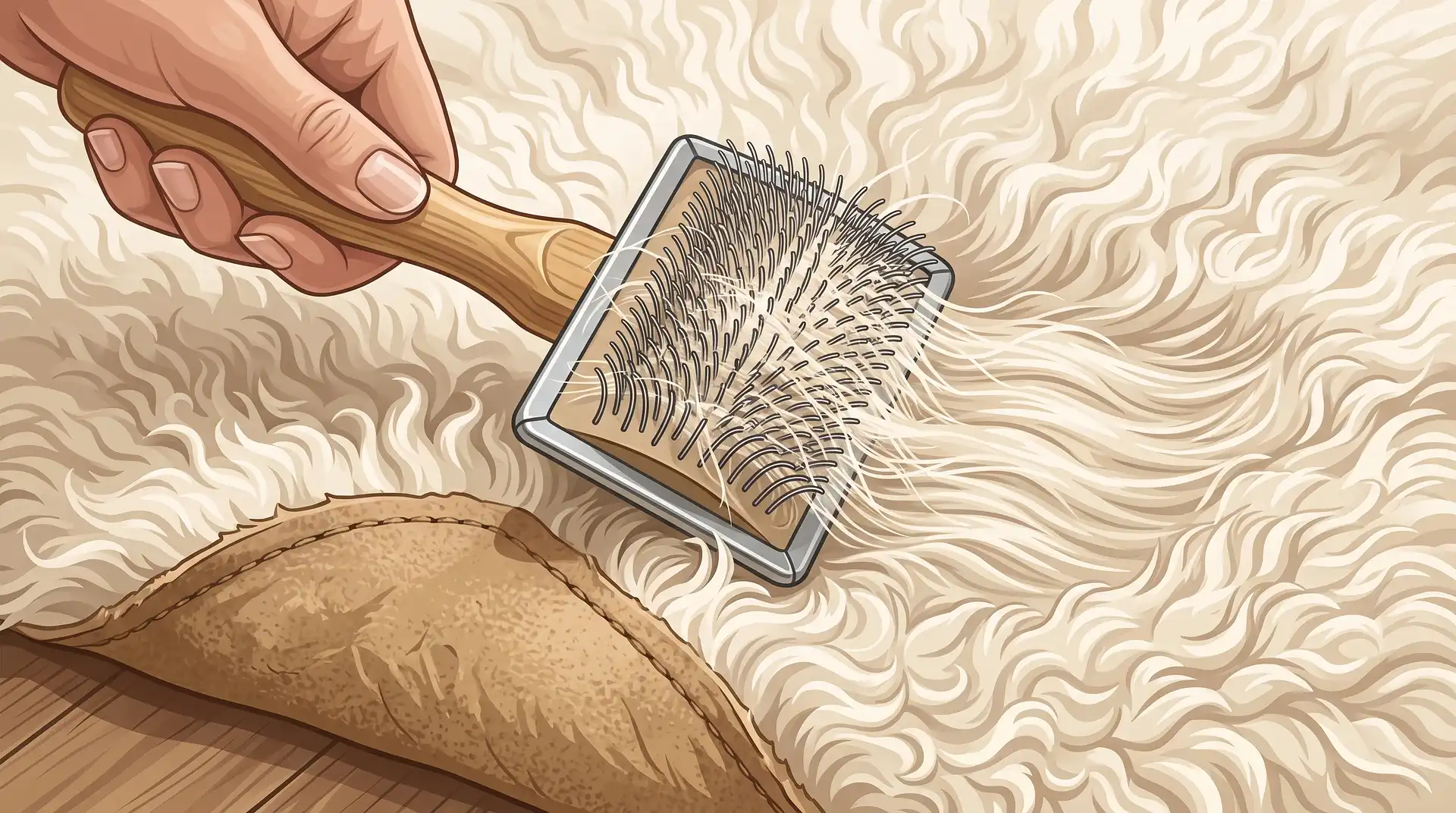
Brush with a wire or slicker brush. A wide-toothed wire brush, or a slicker brush of the kind sold for dogs, lifts and separates the wool fibres, removes surface debris, and restores the fluffy appearance. It is the single most effective routine maintenance tool for a sheepskin rug. Some fibres will come out on the brush — this is normal.
Air it outside occasionally. A few hours on the washing line in fresh air freshens the fibres naturally. Sunlight helps too, but avoid very prolonged direct sun exposure, which can bleach the wool.
Spot cleaning
For a small spill or localised mark on a leather-backed sheepskin, spot cleaning is preferable to a full wash.
Blot the spill immediately with a dry white cloth, working from the outside of the mark inward.
Dampen a cloth with cool water and a very small amount of WoolSafe or non-biological, non-alkaline wool detergent.
Dab at the mark gently in the direction of the fibres. Never scrub.
Rinse by dabbing with a plain cool water cloth.
Blot dry, reshape any disturbed fibres, and allow to air dry away from heat.
For protein stains such as blood or milk: cool water only. Never warm, as heat sets protein permanently into wool fibres, exactly as established in the blood and mattress cleaning guides on this site. Do not use enzyme cleaner on wool, as biological enzymes break down protein fibres and wool is a protein fibre.
Washing a sheepskin rug
For leather-backed, natural-coloured sheepskin rugs only. Check the care label confirms washing is appropriate for your specific rug.
Hand washing (recommended for best results)
Fill a bath with cool water, maximum 30°C. Cooler is safer.
Add a small amount of WoolSafe or non-biological, pH-neutral wool detergent. Do not use biological detergent, fabric conditioner, bleach or alkaline cleaners.
Submerge the rug and gently work the water and detergent through the wool with your hands. Do not wring, twist or scrub.
Drain and refill with clean cool water. Rinse thoroughly, pressing the water gently through the rug rather than wringing. Repeat until the water runs clear.
Gently press out excess water between your hands. Do not wring.
Move immediately to reshaping.
Machine washing (where the care label permits)
Use the wool cycle at maximum 30°C. A short spin at low speed helps remove water. Do not use a full spin cycle, which stresses the hide and the wool. Add a WoolSafe or non-biological wool detergent only.
Remove promptly once the cycle finishes and move immediately to reshaping.
Drying and reshaping: the most important step
This is where sheepskin cleaning most often goes wrong, and it's time-sensitive.
The backing stiffens as it dries. Leather and suede stiffen considerably as moisture leaves them. If the rug dries completely before being worked back to shape, the backing may remain stiff and the overall rug may feel rigid and flat rather than supple and fluffy. The window for reshaping is while the rug is still damp.
While still damp:
Pull the rug gently back to its original shape and size by hand.
Work the leather backing with your hands to keep it supple. Flex and stretch it gently, as you would with a leather jacket that has stiffened.
Brush the wool side with a wire or slicker brush to separate the fibres before they dry matted together.
Drying position:
Dry flat, wool side up, on a clean surface with airflow underneath if possible.
Alternatively, hang over a rail or washing line with the wool facing outward, checking periodically that the shape is maintained.
Never hang by one end, which puts all the weight on a damp, weakened backing.
No tumble dryer.
No radiator, no direct heat of any kind.
No direct sustained sunlight while wet.
Allow plenty of time. A sheepskin rug can take 24 to 48 hours to dry fully depending on size and conditions. The backing takes longer than the wool surface. Check underneath before returning it to use.
Brush again once fully dry. A final brush with the wire or slicker brush restores the full fluffy appearance.
Making it fluffy again
A flat, matted sheepskin is almost always a maintenance problem rather than a damage problem, and it's almost always reversible.
Regular brushing is the primary answer. Use a wide-toothed wire or slicker brush, working through the wool in sections. It takes some effort on a matted rug but produces a clear result.
Airing and shaking helps by allowing the fibres to relax and separate.
A light steam held several centimetres from the wool surface, moving constantly and never lingering, can help loosen matted fibres before brushing. Don't let the steam touch the leather backing directly.
After washing, brushing while damp and again once dry is what restores a washed sheepskin to its best appearance. Skipping the damp brush is the most common cause of a washed rug that dries looking flat and sad rather than restored.
What to avoid
Biological detergent. Contains enzymes that break down protein fibres. Wool is a protein fibre.
Fabric conditioner. Coats the fibres and reduces the natural fluffiness of the wool.
Bleach. Destroys both the wool and the hide.
Alkaline cleaners. Damage wool at the fibre level. The same alkaline sensitivity that applies to wool carpets on this site applies here.
Temperatures above 30°C. Causes shrinkage and backing damage.
Wringing or twisting. Stresses the hide and distorts the shape.
Tumble dryer. Heat and mechanical action damage both the wool and the backing.
Powered brush head vacuum. Pulls out fibres and mats the wool.
Drying near a radiator or in direct sustained sunlight.
Enzyme cleaners on wool. Not safe on protein fibres, contrary to their usefulness on synthetic surfaces.
7. FAQ Section
Can you wash a sheepskin rug at home? It depends on the backing. A leather-backed, natural-coloured sheepskin can be hand or machine washed at home at 30°C maximum on a wool cycle with a non-biological, non-alkaline wool detergent. A suede-backed sheepskin should not be wet washed at home. A dyed sheepskin rug should be professionally dry cleaned.
Can you put a sheepskin rug in the washing machine? Only if the care label confirms it is washable and the backing is leather rather than suede. Use the wool cycle at 30°C maximum, a non-biological wool detergent, and a gentle short spin only. Remove promptly and reshape while still damp.
Why has my sheepskin rug gone stiff after washing? The leather backing stiffens as it dries. The fix is to work the backing back to suppleness while it is still damp, flexing and stretching it gently by hand. If it dried completely before being reshaped, a light damp towel laid on the backing for a few hours can soften it enough to work with.
How do you make a sheepskin rug fluffy again? Brush with a wide-toothed wire or slicker brush, working through the wool in sections. Shake and air the rug outside. After washing, brush while still damp and again once fully dry. Regular brushing as part of routine maintenance prevents matting from developing.
Can you use an enzyme cleaner on a sheepskin rug? No. Biological enzyme cleaners break down protein fibres, and wool is a protein fibre. Use a non-biological, pH-neutral wool detergent only.
How do you dry a sheepskin rug? Dry flat, wool side up, with airflow if possible, away from all heat sources. Alternatively, hang over a rail or line with wool facing outward. No tumble dryer, no radiator, no direct sustained sunlight. Allow 24 to 48 hours for a full dry. Brush while still damp to separate fibres.
How often should you clean a sheepskin rug? Far less often than most people assume. Lanolin in the wool naturally repels dust and dirt, so regular shaking, airing and brushing keeps most sheepskins in excellent condition between washes. A full wash once every year or two is generally sufficient, unless there is a spill or visible soiling.
Can you clean a dyed sheepskin rug at home? Not with wet methods. Dyed sheepskin rugs carry a significant risk of colour instability when wet. Most UK specialist manufacturers recommend professional dry cleaning only for dyed products.
How do you spot clean a sheepskin rug? Blot any spill immediately with a dry white cloth. Dab at the mark with a cloth dampened with cool water and a tiny amount of wool-safe detergent, working in the direction of the fibres. Rinse with a plain cool water cloth. Air dry away from heat.
8. Service Section
Rather not risk it at home?
A large, dyed, suede-backed or particularly valuable sheepskin rug is worth sending to a specialist rather than attempting at home. InstantDry collects rugs across England and Wales, assesses each one before cleaning begins, and returns them wrapped. If a rug is not suitable for our process, we'll say so before we start.
Rugs from £89.
Get your fixed quote in 60 seconds
Or call 07555 856988.