How Long Should a Sofa Last
27 August 2026
Quick answer: Most sofas last between seven and fifteen years, depending on build quality and how they're used. A hardwood-framed sofa from a quality manufacturer, properly maintained, can last twenty or thirty years. A budget sofa with a softwood or engineered board frame will often need replacing within five to eight years regardless of how well it's cared for. The most useful question before replacing any sofa is whether the problem is structural — a broken frame, snapped springs, foam that no longer recovers — or cosmetic and hygiene-based, meaning staining, fading, flattened cushions or general soiling. The first is a replacement problem. The second usually isn't.
Every guide to sofa lifespan you'll find online is written by someone who sells sofas. That's worth knowing before reading any of them, including the statistics below, because the industry has a natural interest in shorter replacement cycles. This guide takes a different starting point: most sofas in decent structural condition that look or smell tired are candidates for cleaning, maintenance or cushion refill rather than replacement. Instant Dry Carpet Cleaning treats sofas across England and Wales and sees the difference regularly between upholstery that genuinely needs replacing and upholstery that needs cleaning.
Lifespan by material type
These ranges are drawn from multiple sources and represent what a well-maintained sofa in typical UK household use can reasonably expect. Build quality within each category varies considerably and has as much influence as the material itself.
Material | Typical lifespan | Key factor |
|---|---|---|
Fabric (polyester, weave, chenille) | 7 to 12 years | Fabric grade and frame quality |
Velvet | 7 to 15 years | Pile resilience, pile direction care, UV protection |
Leather (pigmented) | 15 to 20 years | Conditioning routine, UV and heat avoidance |
Leather (aniline or semi-aniline) | 10 to 20 years | More sensitive finish, needs more careful handling |
Faux leather / PU | 5 to 10 years | Synthetic surface eventually cracks and peels |
Sofa bed | 5 to 10 years | Mechanism adds a failure point beyond the upholstery |
These figures assume a sofa in regular domestic use in a typical UK household. A sofa in a low-traffic room that sees occasional use will comfortably exceed the top end of its range. A sofa used heavily by children and pets daily may not reach the bottom end.
The frame is what actually determines longevity
Upholstery can be replaced. Cushions can be refilled. A broken frame cannot be cost-effectively repaired.
The frame is what separates a sofa that lasts a decade from one that lasts thirty years, and it's the factor most difficult to evaluate in a shop because it's entirely hidden by the upholstery. A few indicators worth knowing.
Hardwood frames — typically beech, ash or birch — are dense, strong and resistant to warping. Kiln-dried hardwood is the traditional construction of quality sofas and is what makes older sofas so often structurally sound when everything else has softened. A genuinely hardwood-framed sofa, properly constructed, will outlast the upholstery that covers it by a significant margin.
Softwood frames — pine, which is softer and lighter — are used in mid-range and some quality sofas. More prone to warping over time but still a reasonable choice in a quality build.
Engineered wood and particleboard — used in budget sofas and is the most common reason a sofa that looked fine at two years has a visibly sagging or creaking frame at five. It's cheaper to produce, heavier than its strength justifies, and doesn't hold screws or staples well over repeated use cycles.
You cannot reliably identify frame construction from appearance. Ask at the point of purchase. A reputable manufacturer will confirm frame materials without hesitation.
The clean-or-replace test
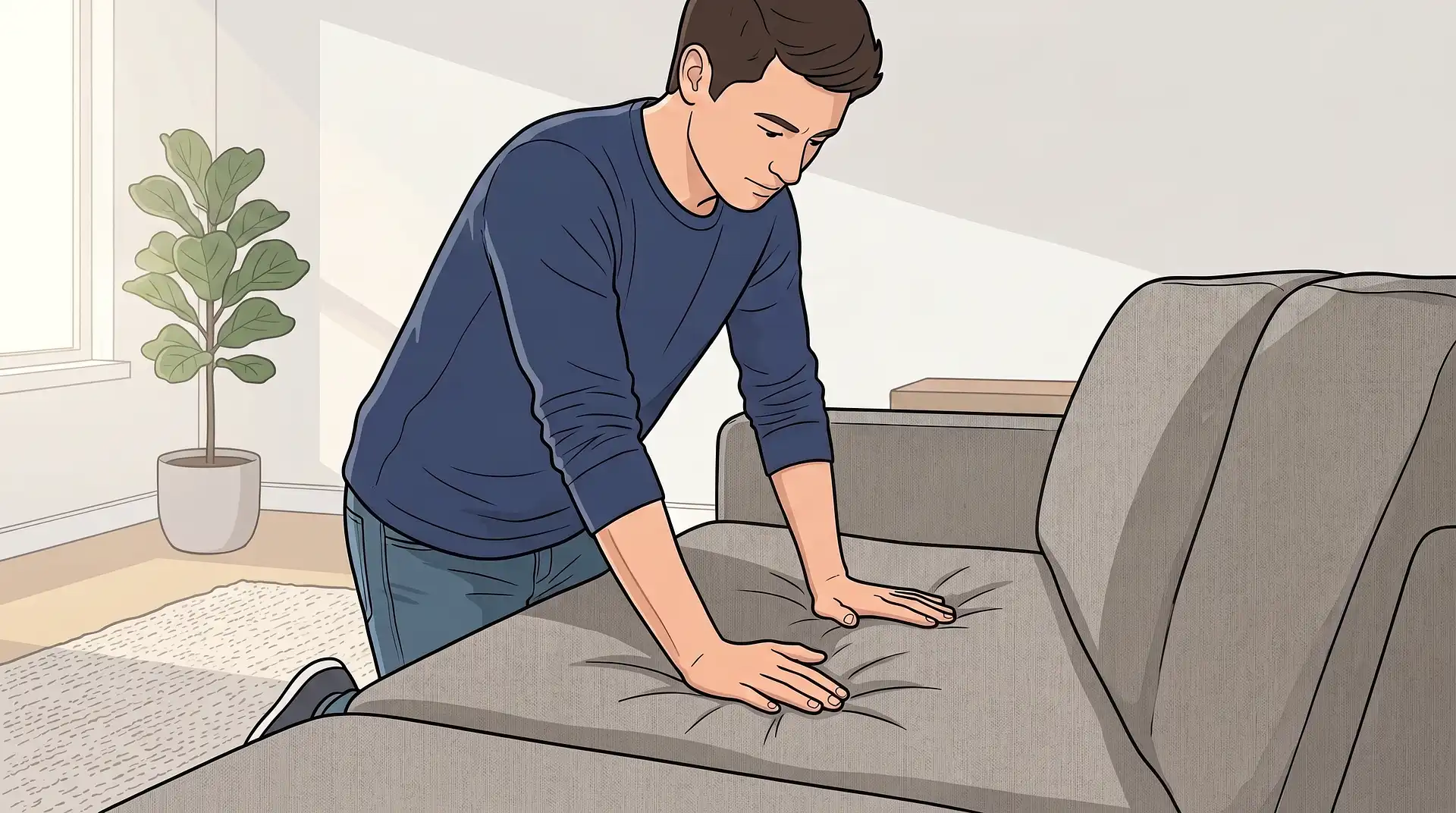
Press down firmly on the seat cushion of each seat and hold for a few seconds. Release and observe.
If the cushion rises back toward its original shape within a few seconds, the foam or fill is still doing its job. The sofa is structurally functional. Any problems with how it looks, smells or feels superficially are maintenance and cleaning problems.
If the cushion stays down, stays flat, or rises only very slowly and incompletely, the foam or fill has lost its recovery. This is the beginning of a structural comfort problem, though the frame itself may still be sound.
Sit in each seat and slide gently forward. Listen and feel. A good frame is completely silent under this movement. Creaking, clicking or movement in the frame that feels like looseness indicates joint failure.
Lift the cushions if possible and press on the seat platform. It should feel solid and supported. Any give, sag or springiness beyond what the base webbing or springing is supposed to provide suggests the base has partially failed.
Most sofas that owners describe as "tired", "uncomfortable" or "not quite right" pass this test with reasonable scores. They feel wrong because the cushion fill is flat, the fabric is dirty or dull, or the upholstery has been compressed by years of use in the same position. These are different problems.
Signs the sofa genuinely needs replacing
Frame creaking, movement or visible lean. A frame that moves under normal use, leans to one side, or creaks significantly has failed joints. Repair is possible on quality frames by a professional but is rarely cost-effective on budget construction.
Broken springs or base. You can feel individual springs through the seat, or the seat base has an obvious dip or hole. This is structural failure.
Foam that doesn't recover at all. Pressed down and doesn't come back. The foam has fully broken down. Seat cushions can often be refilled independently without replacing the sofa, and this is worth investigating before committing to replacement.
Visible structural damage. Visible gaps in the frame at joins, visible wood on arms or bases, or a sofa that leans noticeably even unoccupied.
Age beyond fifteen years with heavy use. At this point the foam, springs and webbing have all had a significant lifespan regardless of how the sofa looks, and comfort is likely diminishing even if nothing has visibly failed.
Signs it needs cleaning or maintenance, not replacing
Flat or soft cushions that still recover. Cushion fill — polyester fibre, feather and down, or a foam and fibre combination — compresses and redistributes over time and can make a sofa feel much older than it is. Independent cushion refill services are available across the UK at a fraction of replacement cost.
Staining and soiling. Visible marks, dark patches on arms and headrests, general dullness and soiling embedded in the fabric are cleaning problems. Professional upholstery extraction reaches deeper into the pile than home cleaning and restores appearance significantly, even on sofas that look significantly tired. The fabric sofa guide on this site covers what's achievable at home as a starting point.
Odour. A sofa that smells of pets, food, body odour or mustiness has a hygiene problem. Professional cleaning with the right products for the fabric type handles most persistent sofa odours. Odour alone is not a reason to replace a structurally sound sofa.
Fading. Fabric that has faded unevenly from sunlight exposure looks worn but isn't structurally compromised. Rotating cushion covers where possible and keeping the sofa away from direct sustained sunlight slows further fading.
Leather that is drying out or showing surface cracking. In the early stages this is a conditioning and maintenance problem. Regular conditioning with a proper leather conditioner, covered in the leather sofa guide, significantly slows the progression and can restore suppleness to mildly dry leather.
What extends sofa life
Regular cleaning. Accumulated dust, skin oils and food debris in upholstery accelerate the breakdown of the fabric fibres and foam over time. Vacuuming weekly and professional cleaning every one to two years addresses what routine vacuuming can't reach.
Keeping it away from direct sunlight and heat sources. UV fading and drying are irreversible. Positioning the sofa away from windows that receive direct afternoon sun, or using blinds during peak hours, extends the life of both fabric and leather significantly.
Rotating and plumping cushions. Distributing wear across the full cushion surface rather than the same central area every day slows compression dramatically.
Treating spills immediately. The longer a spill sits in upholstery, the deeper it penetrates and the harder it becomes to treat fully. The approach covered in the fabric and leather sofa guides applies directly.
Not sitting on the arms. The arm is usually the frame joint under most stress, and regular sitting on it loads that joint in exactly the direction it's not designed to handle.
What shortens it
Pets using it as a bed. Pet dander, moisture, claw damage and the concentrated weight of an animal sleeping in the same spot accelerates both fabric and cushion wear significantly.
Sunlight without any mitigation. Direct sustained UV exposure fades and dries fabric and leather faster than any other environmental factor.
Infrequent cleaning. Embedded soil in upholstery acts as an abrasive on the fabric during use. A dirty sofa wears its fabric faster than a clean one.
Cheap foam cushion fill. Low-density polyurethane foam loses recovery within three to five years. It's the reason budget sofas become uncomfortable before the frame fails. Cushion refill with higher-density foam extends comfort life considerably.
Ignoring early leather conditioning needs. Leather that starts to look dull and dry is signalling oil loss. Conditioning at that stage takes twenty minutes. Conditioning a leather sofa that has already started cracking significantly requires much more product, more time, and has a lower ceiling of improvement.
FAQ Section
How long should a sofa last in the UK? Most sofas last between seven and fifteen years. A quality hardwood-framed sofa with proper maintenance can last twenty or thirty years. Budget sofas with engineered wood frames often need replacing within five to eight years regardless of care. Build quality within a price bracket varies considerably and matters as much as material type.
How long does a leather sofa last? A well-maintained leather sofa with a quality frame typically lasts fifteen to twenty years or longer. The key maintenance factors are regular conditioning to replace natural oils, keeping it away from direct sunlight and heat, and cleaning correctly without harsh products. Faux leather and PU leather have a shorter lifespan of five to ten years, since the synthetic surface eventually cracks and peels.
How do I know if my sofa needs replacing? Press firmly on each seat cushion and release. If it rises back toward its original shape, the structure is sound. Check whether the frame creaks or moves. Listen for spring noise. If the frame is solid and the cushions still recover, the sofa has serviceable life remaining. Most sofas that feel tired are suffering from cushion compression, soiling or fabric wear rather than structural failure.
Do sofa cushions last as long as the sofa? Usually not. Foam cushion fill in budget to mid-range sofas typically loses significant recovery within five to eight years. Independent cushion refill is available from upholstery specialists and extends comfort life considerably. Feather and fibre fill compresses but can be redistributed and topped up more easily than foam.
Does professional cleaning extend sofa life? Yes. Embedded soil and body oils in upholstery fibres act as a mild abrasive during daily use, wearing the fabric over time. Regular professional cleaning removes what routine vacuuming leaves behind, and prevents the accumulation that accelerates both fabric and cushion degradation.
How long does a fabric sofa last compared to leather? Leather typically outlasts fabric by five to eight years in comparable quality brackets, largely because leather is a more durable material and easier to clean before soiling embeds deeply. A quality fabric sofa with a hardwood frame and regular cleaning can still last twelve to fifteen years. A budget leather sofa with a poor frame may not outlast a quality fabric sofa.
When is reupholstery worth considering? When the frame passes the press test — solid, silent, no creaking — and the main issues are fabric condition, staining or faded appearance. Reupholstering a structurally sound sofa can cost significantly less than a comparable quality replacement, and extends the life of a frame that still has years in it. It makes most economic sense on higher-quality sofas where the frame is genuinely worth keeping.
Service Section
Before you replace it, it's worth knowing what's actually wrong
A sofa that looks tired, smells stale, has flat cushions or visible staining may simply need professional cleaning and cushion maintenance rather than replacement. Instant Dry Carpet Cleaning provides professional upholstery cleaning across England and Wales for fabric, leather, velvet and suede sofas, with a free survey and a fixed price before any work begins. If cleaning won't achieve what you're looking for, we'll tell you rather than take the booking.
Get your fixed quote in 60 seconds
Or call 07555 856988.