How Many Pocket Springs Are in a Good Mattress
11 September 2026
Quick Answer
For most people, a spring count of 1000 or more in a king size mattress is a good benchmark for quality, with 600 considered the lowest acceptable count found mainly in budget ranges. Spring count alone does not determine firmness, since the gauge of the springs, the filling, and the overall construction all affect how a mattress feels. A well built mattress with 1000 springs can outperform a poorly built one with 2000, so spring count should be used alongside build quality rather than as the only factor.
What Pocket Springs Actually Are
Pocket springs are individual coils, each sewn into its own fabric pocket, so every spring moves independently rather than being linked to the ones around it. This is what gives a pocket sprung mattress its ability to respond to the shape and weight of a body in one area without disturbing the rest of the surface, which matters both for comfort and for reducing motion transfer between two people sharing a bed.
Why the Advertised Number Can Be Misleading
Spring counts in the UK are conventionally quoted for a king size mattress, roughly 150cm by 200cm, regardless of the actual size being sold. A single or double mattress with the "same" spring count as a king will actually contain proportionately fewer springs, since it has less surface area to fill. Most retailers follow this convention, but not all of them, and a small number quote the exact count for the specific size on sale instead. This means two mattresses listed side by side with different numbers might not be a fair comparison at all unless you check which base size each figure refers to. When comparing mattresses, it is worth checking the product description for how the spring count is measured before assuming a higher number automatically means more springs in the mattress you would actually be buying.
What Counts as a Good Spring Count
Under 600 springs. Considered a low count, typically found in the most basic budget ranges, with larger diameter springs offering less targeted support
600 to 800 springs. An entry level range that can still offer reasonable comfort, often suited to single mattresses or lighter budgets
1000 springs. Generally treated as the benchmark for a solid, well supporting mattress and a sensible minimum to look for if support and durability matter to you
1200 to 1500 springs. A common range for double and king size mattresses aiming for a noticeably more contoured and responsive feel
2000 springs and above. Marketed as premium, though the benefit above 1500 becomes harder to notice in practice and depends heavily on how well the rest of the mattress is built
As a rough size guide, a single mattress typically ranges from 600 to 800 springs, a double from around 800 to 1200, and a king size from around 1200 to 1500, with these figures varying by manufacturer and construction method.
Does More Springs Mean a Firmer Mattress
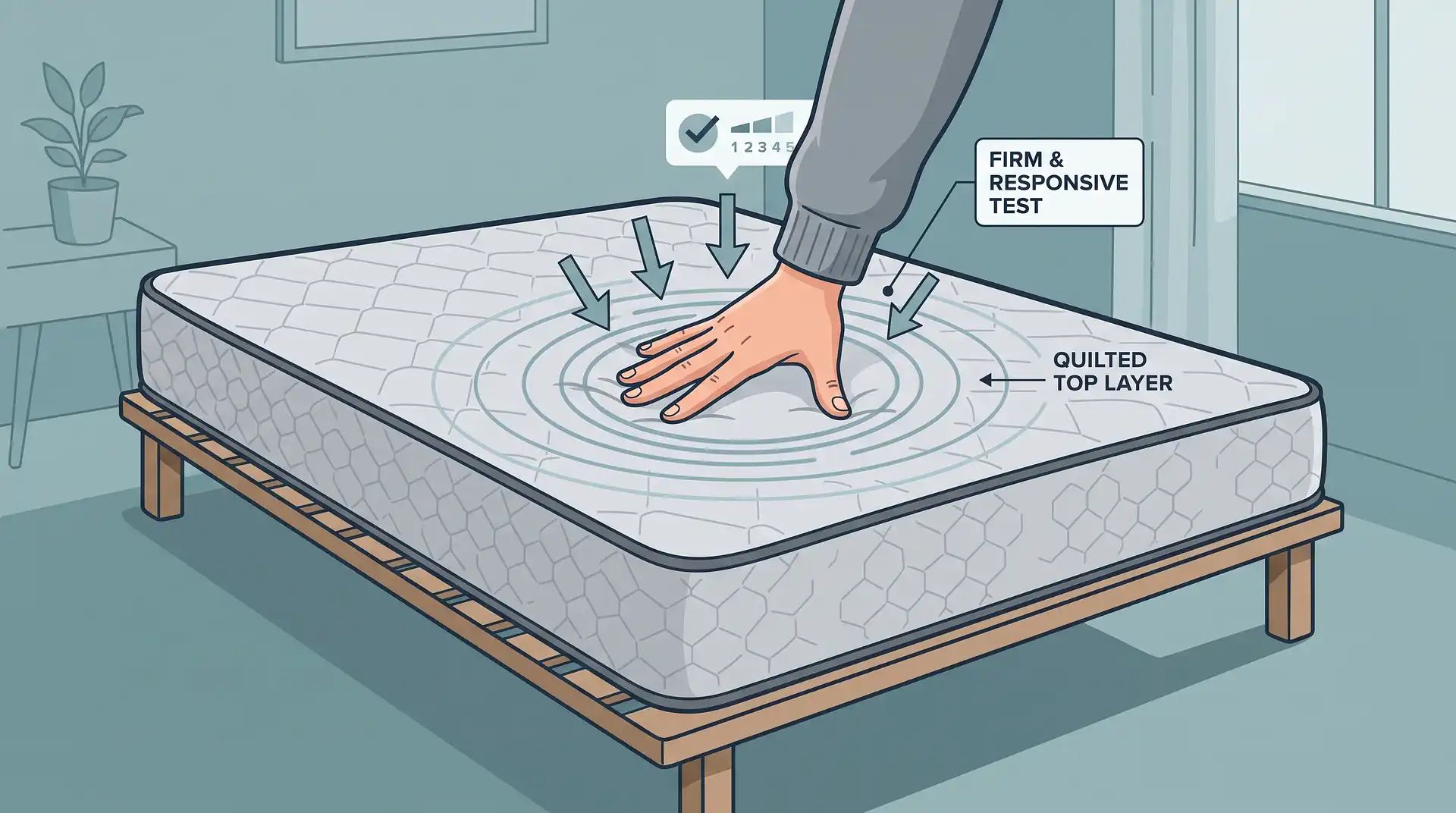
Not necessarily. Firmness is shaped by several factors working together, including the gauge or thickness of the wire used in each spring, the number of turns per coil, and the type and depth of filling layered on top of the spring unit. A mattress with a very high spring count can still feel soft if it is finished with thick, plush filling, while a mattress with a moderate spring count and a firmer, thinner filling layer can feel considerably more supportive. Spring count is better understood as one factor in overall support and durability rather than a direct dial for firmness.
Matching Spring Count to Your Needs
Lighter sleepers or single mattresses. A count in the 600 to 1000 range is often perfectly sufficient, since less body weight is being distributed across the springs
Heavier individuals or those needing extra support. Aiming for 1200 or more helps ensure the springs are not overly compressed, which can affect both comfort and how evenly the mattress wears over time
Side sleepers. Tend to benefit from a higher spring count paired with a softer top layer, since this combination contours more closely around the hips and shoulders
Back and stomach sleepers. Often do well with a slightly firmer feel, which can come from a moderate spring count paired with less plush filling rather than needing the highest count available
Couples sharing a bed. A higher spring count generally improves motion isolation, reducing how much movement on one side is felt on the other
Spring Count Is Only Part of the Story
A high spring count does not guarantee a mattress will stay supportive for years if it is not looked after. Regular rotation, using a mattress protector, and keeping the mattress clean and properly dried after any spill all affect how well the springs and surrounding materials hold up over time, regardless of how many springs were inside it on day one. A mattress that is never rotated or is left damp after a spill can develop sagging and odour problems well before its springs would naturally wear out. If you have just bought a new pocket sprung mattress, the guide on how to clean a mattress covers the basic maintenance that helps protect that investment for longer.
Frequently Asked Questions
Is 1000 pocket springs good for a mattress?
Yes, 1000 is widely treated as the benchmark for a well supporting, good quality pocket sprung mattress in the UK. It is a sensible minimum to look for if durability and support matter to you.
Does a higher spring count always mean a better mattress?
No, spring count is only one part of overall quality. A well constructed mattress with 1000 springs can outperform a poorly built one with 2000, since filling quality and construction matter just as much as the raw number.
How many springs should a double mattress have?
A double mattress typically ranges from around 800 to 1200 springs, though this varies by manufacturer. Checking whether the advertised figure is based on king size or the actual double dimensions is worth doing before comparing two options.
Do more pocket springs make a mattress firmer?
Not directly. Firmness depends more on the gauge of the springs and the type of filling used on top, so a high spring count can still feel soft if the filling layer is thick and plush.
What is considered a low quality spring count?
Under 600 springs is generally seen as a low count, typically found in the most basic budget ranges with larger, less responsive springs offering less targeted support.
Why do two mattresses with the same spring count feel so different?
Spring count is only one factor. The gauge of the springs, the filling materials, the number of coil turns, and the overall build quality all affect how a mattress actually feels and performs, even when two products list the same number.