How Do You Reupholster a Sofa
14 September 2026
Quick Answer
Test the sofa frame for structural soundness before committing to the project. Photograph and label every piece of fabric as you remove it, working in a clear order so you can reverse the process later. Replace any sagging or damaged foam and padding. Cut new fabric using the old pieces as a pattern, adding an inch or two of extra allowance on each panel for stapling. Attach the new fabric in the reverse order to how you removed the old fabric, the last piece you took off should be the first piece you put back on. Finish by reattaching the dust cover, trim, and legs. If you find damp, mould, or an unpleasant smell in the padding once the old fabric is off, treat that properly before covering it with anything new.
Deciding If Your Sofa Is Worth Reupholstering
Before removing a single staple, test the frame properly. Push firmly on the arms and the back, sit and bounce gently on the seat, and listen for creaking or movement that suggests loose joints. A solid wood or metal frame that holds its shape under this kind of pressure is a good candidate for reupholstery. A frame that flexes, creaks heavily, or feels loose at the joints is a sign that reupholstery will not fix the underlying problem, and the time and fabric cost may not be worth it compared to buying new.
What You Will Need
Flathead screwdriver and pliers, for removing staples and fittings
Staple gun and staples
Seam ripper
Sharp fabric scissors
Tape measure
Chalk or a fabric marker
New upholstery fabric
Foam or batting, if the existing padding needs replacing
A sewing machine, optional but useful for cushion covers
A camera or phone to photograph each stage
A rubber mallet, useful for frame reassembly
Step by Step: Reupholstering a Sofa
Study and document the sofa before touching it. Take clear photographs from every angle and note how each fabric panel attaches, in what order, and using what method, staples, tacks, or stitching. This record is what makes reassembly possible later.
Remove the dust cover first. Turn the sofa over and start from the underside, since the dust cover is usually the last thing added originally and therefore the first thing to come off.
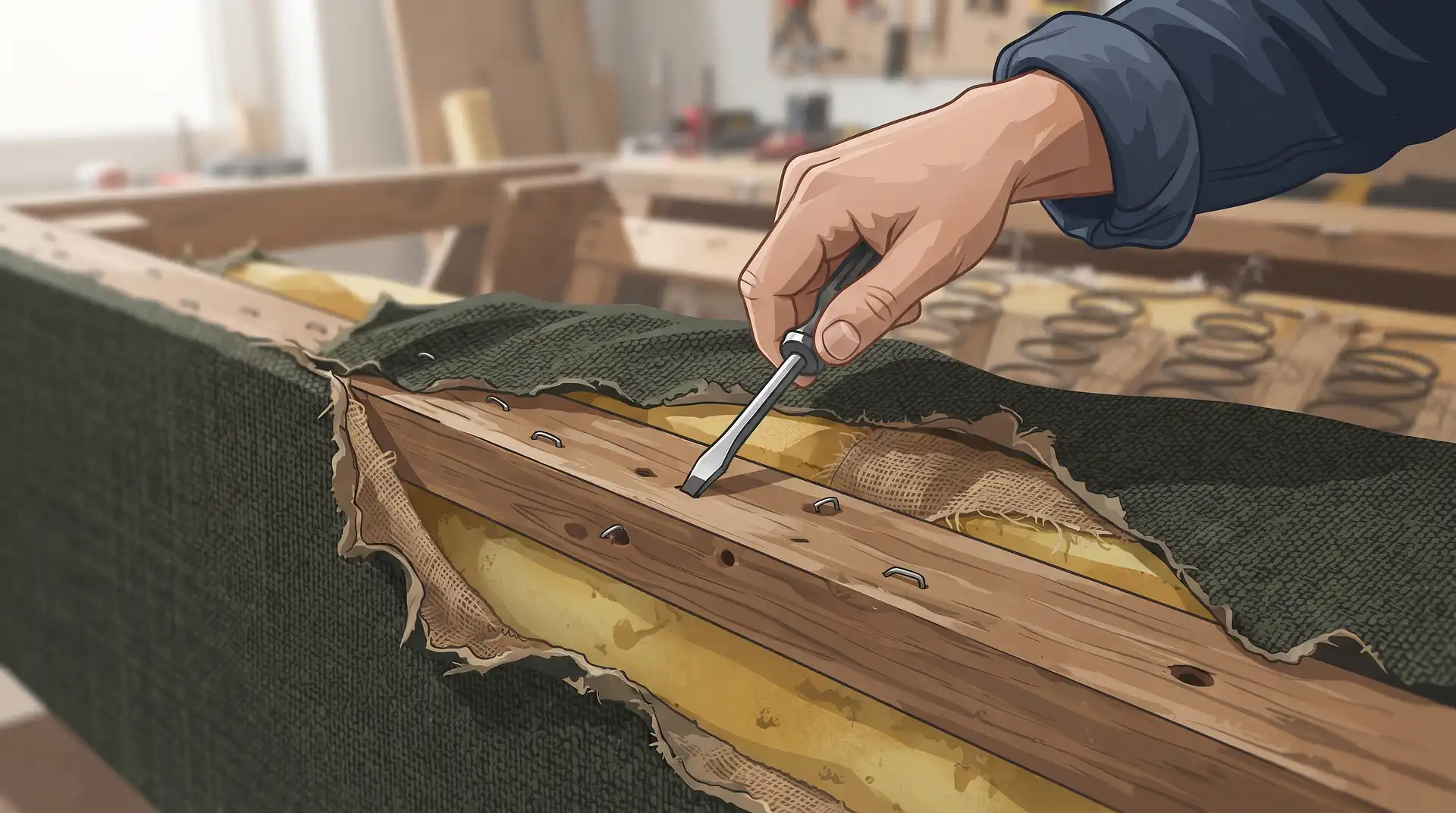
Strip the fabric panels in order. Use the screwdriver and pliers to remove staples and a seam ripper for stitched seams, working through each panel and labelling it clearly as you go. Keep a written note of the order, since you will effectively reverse this sequence when fitting the new fabric.
Inspect the frame and padding as you go. Check for loose joints, cracked timber, and the condition of the springs and webbing underneath. This is also the stage where hidden problems in the padding, covered in more detail below, tend to surface.
Replace damaged or sagging padding. Sagging or crumbling foam should be replaced with fresh foam or batting cut to match the old piece, restoring both comfort and shape before the new fabric goes on.
Cut the new fabric using the old panels as a pattern. Lay each old fabric piece flat on the new fabric and trace around it with chalk or a fabric marker, adding roughly one to two inches of extra allowance on every edge to allow for stapling and pulling the fabric taut.
Attach the new fabric in reverse order. The panel you removed last should be the first one you attach, working back through your notes in the opposite sequence to how you took the old fabric off. Pull the fabric taut as you staple to avoid a loose or wrinkled finish.
Reattach the dust cover. Staple a clean dust cover to the underside of the sofa to hide the raw fabric edges, staples, and internal structure, giving the finished piece a tidy underside.
Add trim and reassemble. Reattach any decorative cording or trim that covers staple lines, then refit the legs and check the sofa from every angle for loose threads, uneven corners, or missed staples.
What to Do If You Find Damp, Mould, or a Smell Underneath
This is the part most reupholstery guides skip almost entirely. Once the outer fabric comes off, it is genuinely common to find padding or frame timber that is damp, shows mould spotting, or carries a musty smell that was not obvious with the fabric intact. This usually comes from a spill or general moisture exposure over the sofa's life that never fully dried out inside the padding, sitting unnoticed for years underneath the covering fabric.
Stapling new fabric directly over affected padding does not solve this problem, it simply seals it inside the finished piece, where it can continue to develop and eventually work its way back through to the surface or cause a persistent odour in the room. If you find damp, mould, or a lingering smell at this stage, the affected padding should ideally be replaced rather than reused, and the frame timber underneath should be allowed to dry out completely and be checked for any lasting damage before new padding and fabric go back on. This is a good reason not to rush straight from stripping to refitting in one sitting, particularly on an older sofa that has clearly seen years of use.
Measuring Fabric More Accurately
Rather than estimating one overall fabric total for the whole sofa, measure each individual panel from the old upholstery separately, including the extra stapling allowance on every edge. Add these individual measurements together rather than guessing a single figure, since sofas rarely use fabric efficiently across every panel and an overall estimate is far more likely to leave you short on an awkward shaped piece like an arm or a curved back cushion.
When to Choose Professional Reupholstery Instead
DIY reupholstery suits a sofa with a genuinely sound frame, a straightforward shape, and a realistic amount of time and patience available for what is a slow, detailed project. It is worth choosing a professional upholsterer instead for complex curved shapes, sofas with tight buttoning or piping detail, or any project where a mistake on expensive fabric would be costly to correct. A professional is also better equipped to properly assess and resolve any damp or structural issues found in the frame, rather than working around them.
If your sofa's fabric is still in reasonable condition and the real issue is a stain, smell, or general staleness rather than wear and damage, it may be worth trying a proper clean before committing to a full reupholstery project. The guide on cleaning a fabric sofa covers what a thorough clean can achieve, and Instant Dry Carpet Cleaning can also assess a sofa that has had a damp or mould issue in the past, whether you are cleaning it as is or preparing it for reupholstery.
Frequently Asked Questions
How do I know if my sofa is worth reupholstering?
Push and gently bounce on the frame to check for creaking or movement at the joints. A solid frame that holds its shape is a good candidate, while a loose or heavily creaking frame usually means reupholstery will not fix the underlying structural problem.
Can I reupholster a sofa without removing the old fabric?
It is possible to cover over existing fabric if the frame is structurally sound, but most experienced upholsterers prefer to strip everything back first, since this also lets you check the condition of the padding and frame underneath before covering it.
What should I do if I find mould under the old sofa fabric?
Affected padding should generally be replaced rather than reused, and the frame timber should be allowed to dry out fully and be checked for lasting damage before new padding and fabric are fitted. Covering mould or damp padding with new fabric only seals the problem inside.
How much fabric do I need to reupholster a sofa?
Measure each individual panel from the old upholstery separately, including an extra one to two inches on every edge for stapling, rather than estimating one overall total, since this gives a far more accurate quantity for an irregularly shaped piece.
Is reupholstering a sofa a good beginner DIY project?
It is possible for a beginner with patience and a willingness to document each step carefully, but it is a slow, detailed project rather than a quick weekend job. Complex shapes with tight buttoning or piping are better suited to a professional upholsterer.
Should I clean my sofa instead of reupholstering it?
If the fabric itself is in reasonable condition and the issue is a stain, smell, or general staleness, a proper clean may resolve the problem without the time and cost of a full reupholstery project.