How to Disinfect a Leather Sofa
20 August 2026
Quick answer: For routine hygiene, thorough cleaning with a proper leather cleaner and mild soap removes the vast majority of surface pathogens without damaging the leather. For post-illness cleaning, a leather-safe antimicrobial product applied after cleaning, followed by conditioning, is the correct approach. Avoid alcohol-based hand sanitiser, standard disinfectant sprays, bleach, ammonia and vinegar as routine disinfectants — most cause cumulative damage to leather, and several are ineffective at the dilutions people use at home. Condition the sofa after any disinfection attempt, since even safe products strip some of the natural oils.
The question of how to disinfect a leather sofa comes up most often after illness in the house, when there's a new baby, when caring for a vulnerable relative, or simply when someone wants to be more rigorous about hygiene. Those are all reasonable concerns, and the answer is more nuanced than most guides suggest.
Cleaning versus disinfecting: the distinction that matters
Most pages covering this topic use the two words interchangeably, and that's why the advice is often contradictory.
Cleaning removes visible dirt, grease, skin oils and biological debris from a surface. It physically reduces the number of pathogens present by removing the material they're living in or on. A thoroughly cleaned surface is significantly less contaminated than an uncleaned one, even before any disinfectant is applied.
Disinfecting uses a chemical agent to kill or deactivate pathogens that remain on a surface. To be effective, a disinfectant needs sufficient concentration, sufficient contact time, and the right chemical action against the specific organism you're targeting.
For most households, thorough cleaning is what's actually needed. A leather sofa wiped down with a proper leather cleaner and mild soap, worked into the surface and rinsed off, removes most surface pathogens mechanically. The remaining risk after proper cleaning is low for most everyday situations.
True disinfection is needed when: there has been confirmed infectious illness in the household (norovirus, influenza, MRSA, or similar), there is a clinically vulnerable person who needs a higher standard of protection, or there is a specific pathogen of concern with known surface survival.
Understanding which situation you're actually in changes the answer significantly.
Three scenarios, three answers
Scenario 1: Routine hygiene maintenance. Regular cleaning with a pH-neutral leather cleaner and mild soap, done every few weeks. This is cleaning, not disinfection, and it's sufficient for the hygiene needs of a healthy household. Condition afterwards. No additional disinfectant needed.
Scenario 2: Post-illness cleaning. After someone in the household has been ill with something transmissible — flu, norovirus, a gastroenteritis bug. Clean first with a leather cleaner to remove surface debris, then apply a leather-safe antimicrobial product, allow the stated contact time, wipe off, and condition. This is as close to disinfection as you can get without damaging the leather.
Scenario 3: Clinical requirement. After MRSA, C. difficile, or a specific pathogen where a verified log reduction in pathogen count is required. This is beyond DIY territory for leather. Products that achieve clinical disinfection at the concentrations required will damage leather. Professional specialist cleaning or temporary cover protection is the realistic answer here.
What damages leather while trying to disinfect it
The search results for this topic are full of contradictions, and this is where they come from.
Alcohol and hand sanitiser. Alcohol is an effective pathogen killer, which is why it's in hand sanitiser. On leather, it strips the natural oils, can lift colour from pigmented and dyed leather, and causes progressive drying and cracking with repeated use. <cite index="14-1">One specialist leather care source describes alcohol as a solvent for leather colour that causes cosmetic damage and faster ageing.</cite> Occasional careful use on pigmented leather, with immediate conditioning, is different from regular use. On aniline and semi-aniline leather, even occasional alcohol use risks visible damage.
Bleach and ammonia-based products. Effective disinfectants. Also genuinely destructive to leather, stripping colour and surface finish irreversibly. There is no safe version of bleach on leather.
Standard disinfectant sprays (Dettol, Lysol and similar). Most UK household disinfectant sprays contain either alcohol, quaternary ammonium compounds, or both. They may be labelled as suitable for hard surfaces, but leather is not a hard surface. They strip oils, can lift colour and affect the surface finish. Not appropriate for routine use on leather.
Vinegar. This is where the biggest contradiction in the competing content sits. Several pages recommend a 50/50 vinegar and water solution as a standard leather disinfectant. <cite index="14-1">At least one specialist source explicitly categorises vinegar among the products that cause pH damage to leather due to its acidity.</cite> This is consistent with the position taken in this site's leather sofa care guide, which advises against vinegar on the same grounds. To add to the problem, vinegar at typical household dilutions is not a reliable disinfectant — it has some antimicrobial properties but it doesn't meet the contact time and concentration requirements for verified pathogen elimination. It's a product that both damages leather and doesn't reliably disinfect it.
Baby wipes. Commonly suggested. Most contain some level of alcohol, fragrance or other compounds. <cite index="2-1">The advice from leather care specialists is to use alcohol-free wipes only</cite> if using wipes at all, and to check the ingredients rather than assuming "gentle" means safe for leather.
What actually works
Thorough cleaning with leather cleaner and mild soap. <cite index="8-1">Soap dissolves the fatty membrane of many viruses and bacteria, making proper cleaning with soap genuinely effective at reducing pathogen load</cite> rather than just moving visible dirt around. This is not glamorous advice, but it is accurate: good cleaning gets most of the way to disinfection for everyday purposes and is safe for leather.
Leather-safe antimicrobial products. A small number of products are specifically formulated to be effective against surface pathogens while remaining safe for leather surfaces. These exist in the professional leather care market, though they're less widely available on the high street. Look for products explicitly labelled as antimicrobial and leather-safe, as opposed to general leather cleaners or general disinfectants. Test on a hidden area first regardless.
Steam cleaning, with significant caution. Steam at sufficient temperature does kill most pathogens, but heat damages leather, and most steam cleaning equipment delivers too much moisture and too much heat for safe use on leather sofas. This is a method for professionals with appropriate equipment and experience, not a DIY recommendation.
Step by step: post-illness deep clean
This is the closest DIY approach to genuine disinfection that's safe for most leather sofas.
Step 1: Ventilate the room
Open windows before starting. You're working with cleaning products and you want the room aired throughout.
Step 2: Identify your leather type
Pigmented leather is the most tolerant. Aniline and semi-aniline are the most delicate. If unsure, the leather identification guidance in our leather sofa guide applies. When in doubt, treat it as aniline and be more cautious throughout.
Step 3: Test on a hidden area
Apply any new product to the underside of a seat base or behind a headrest. Let it dry fully. Check for colour change, haziness or texture change before proceeding.
Step 4: Clean first
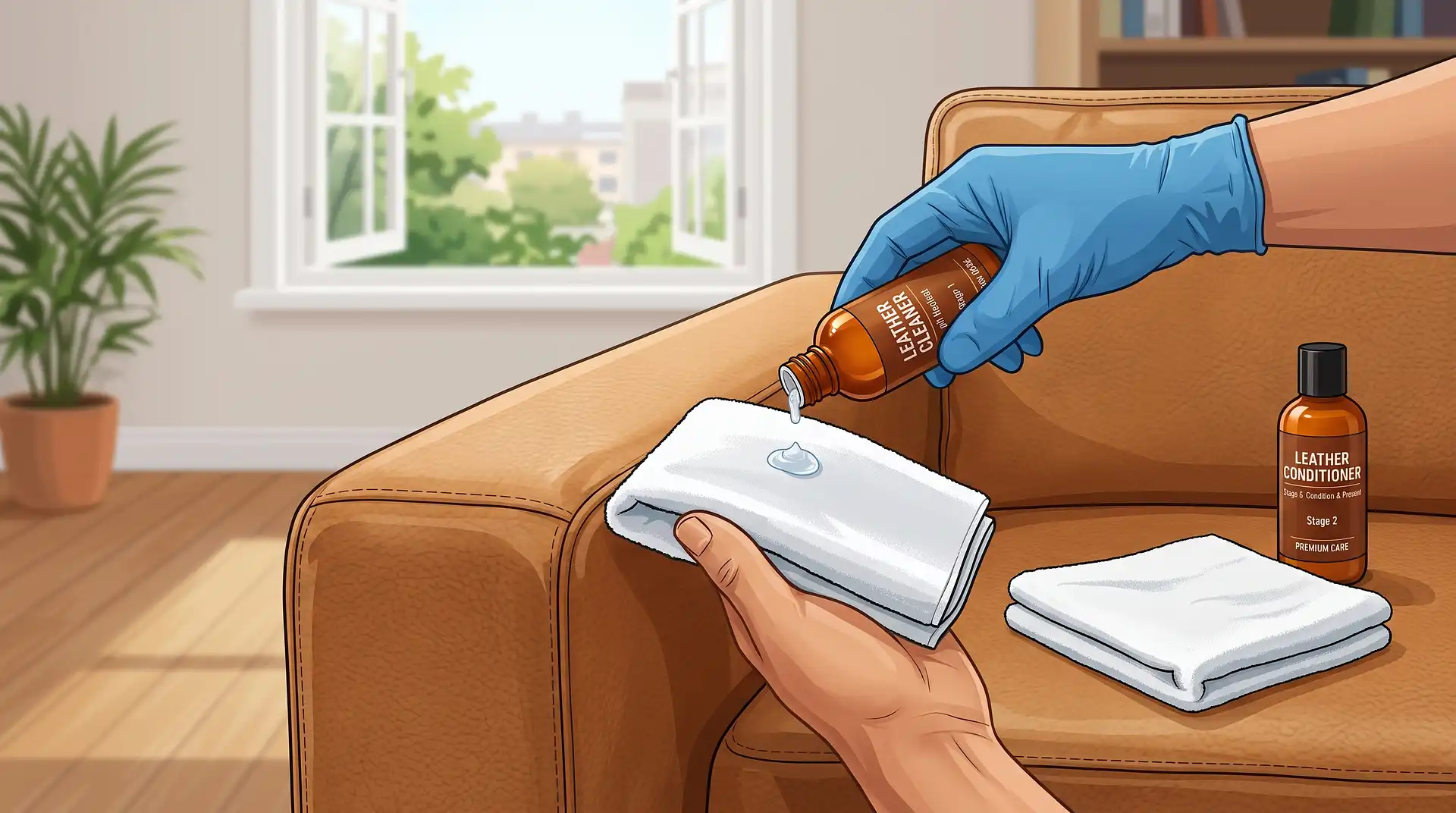
Vacuum with a soft brush attachment to remove surface debris. Then wipe down the entire sofa with a pH-neutral leather cleaner applied to a microfibre cloth, working panel by panel. This removes the oils, skin cells and debris that pathogens live in. Dry each panel with a dry cloth immediately.
Step 5: Apply leather-safe antimicrobial product
Apply to a clean cloth and work across the sofa. Follow the product's stated contact time — this is the period during which the active agent is working, and wiping it off immediately reduces effectiveness. Keep the application light and even.
Step 6: Remove and dry
Wipe off with a clean damp cloth and dry immediately.
Step 7: Condition thoroughly
Any cleaning and disinfection process strips some of the leather's natural oils, even with the gentlest products. Conditioning is not optional after this process. Apply a proper leather conditioner, work it in gently, and buff off any excess.
Step 8: Air the room
Keep windows open for at least half an hour after finishing.
Conditioning: never optional after disinfection
This point needs emphasis because it appears as an afterthought in most guides.
Every disinfection process, even a careful one with a leather-safe product, removes some of the oil that keeps leather supple. Over time, leather that's regularly disinfected without conditioning becomes dry and cracked, and people conclude that the disinfection damaged it, when the actual cause is the missed conditioning step.
Conditioning after every cleaning or disinfection session maintains the leather's suppleness, its resistance to cracking, and the surface integrity that makes future cleaning easier. It also partially rebuilds the barrier that protects against moisture and soil.
If you're disinfecting regularly, such as during a period of illness in the household, condition after every session, not just occasionally.
8. FAQ Section
How do you disinfect a leather sofa without damaging it? Clean thoroughly first with a pH-neutral leather cleaner and mild soap, which removes most surface pathogens mechanically. Then apply a leather-safe antimicrobial product if a higher hygiene standard is needed, following the contact time instructions. Condition afterwards. Avoid alcohol, bleach, ammonia, standard disinfectant sprays and vinegar as routine approaches.
Can you use antibacterial spray on a leather sofa? Most household antibacterial sprays contain alcohol or quaternary ammonium compounds that damage leather over time. Look for a product specifically formulated as both antimicrobial and leather-safe rather than adapting a general-purpose disinfectant.
Does vinegar disinfect leather sofas? No on both counts. Vinegar at household dilutions is not a reliable disinfectant and doesn't meet the concentration or contact time requirements for verified pathogen elimination. It also causes cumulative pH damage to leather with repeated use. It's not the right product for this job.
Is it safe to use alcohol on a leather sofa? Occasional careful use on pigmented leather, followed immediately by conditioning, is unlikely to cause visible damage in the short term. Regular use strips natural oils, can lift colour, and causes progressive drying and cracking. On aniline and semi-aniline leather, even occasional alcohol use risks visible damage.
Can you use baby wipes to disinfect a leather sofa? Standard baby wipes aren't effective disinfectants and many contain alcohol or other compounds that affect leather. If using wipes at all, choose alcohol-free wipes specifically described as safe for leather, and condition afterwards.
How do you clean a leather sofa after illness? Clean first with leather cleaner and mild soap to remove surface debris. Then apply a leather-safe antimicrobial product, following the contact time on the label. Wipe off with a damp cloth, dry immediately, and condition thoroughly.
Do you need to disinfect a leather sofa or just clean it? For most everyday situations, thorough cleaning with proper leather cleaner and soap removes enough surface pathogens for a healthy household's needs. Disinfection in the stricter sense is specifically needed after confirmed infectious illness or for households with clinically vulnerable members.
How often should you clean and disinfect a leather sofa? Clean every few weeks as routine, condition every two to three months. Disinfect specifically after illness or when there is a particular hygiene concern. Regular disinfection without conditioning causes cumulative leather damage.
What should I avoid putting on a leather sofa when trying to disinfect it? Bleach, ammonia-based products, standard disinfectant sprays, alcohol-based hand sanitiser, vinegar at high concentrations, and most general-purpose surface cleaners. All damage leather to varying degrees.
InstantDry offers professional upholstery cleaning across England and Wales, with a free survey, leather type identification, and a fixed price before any work begins.