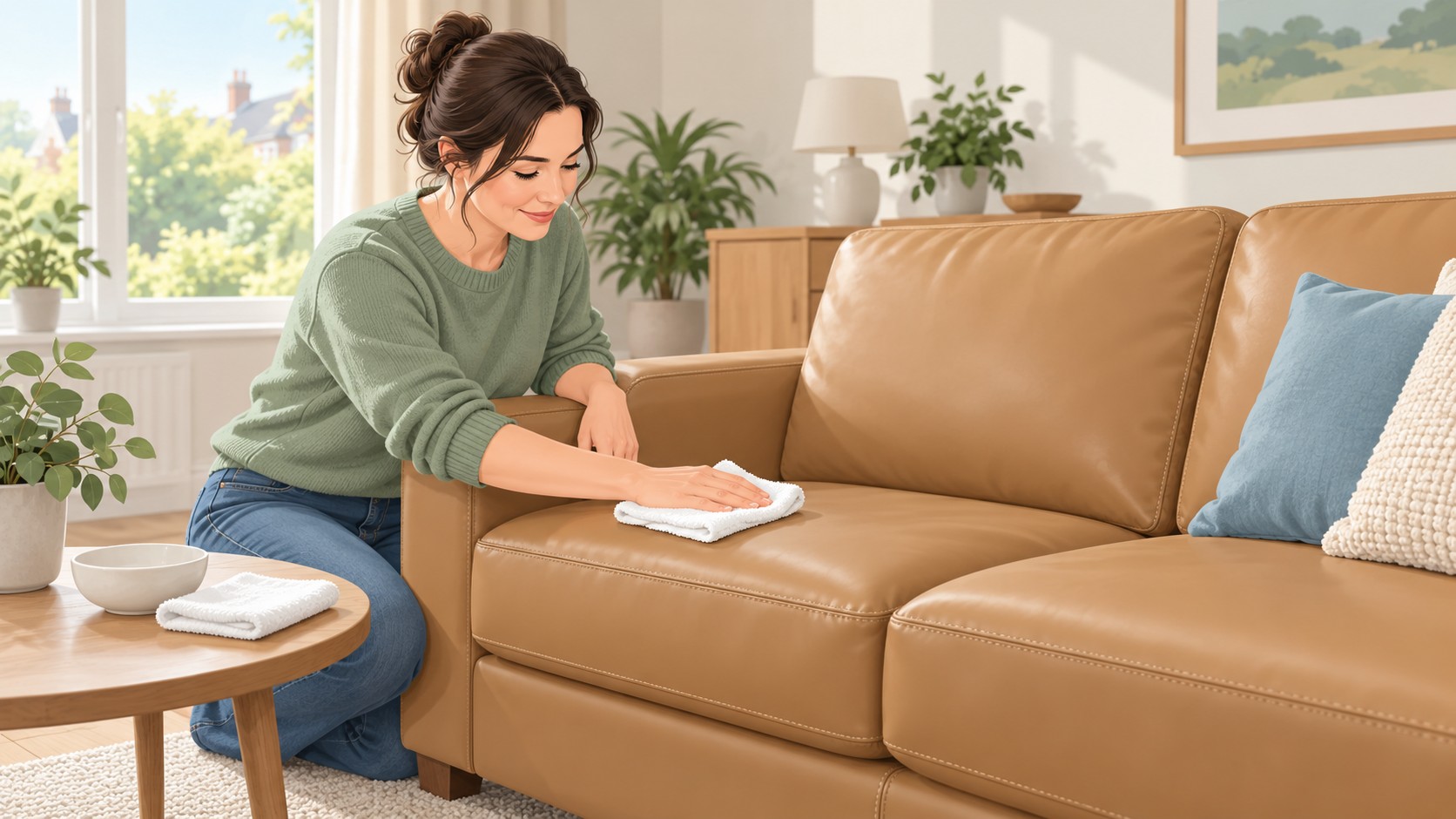
How to Clean a Faux Leather Sofa
10 October 2026
Would rather leave it to a professional? See our professional leather sofa cleaning.
Quick answer: Check the sofa label to confirm that it is artificial leather and follow its care instructions. Vacuum crumbs from seams with a soft attachment, then wipe the surface with a soft cloth that is barely damp. If the maker allows it, use a small amount of mild soap or a cleaner made for PU, vinyl or faux leather. Wipe away residue with a second damp cloth and dry immediately. Avoid soaking, scrubbing, steam, bleach, alcohol, acetone and conditioners intended for genuine leather.
Artificial leather has a coloured synthetic coating over a fabric backing. The coating makes everyday cleaning fairly simple, but once it is scratched, softened or stripped, the damage may be permanent. A gentle surface clean is usually more effective than trying several strong household products.
Check what your sofa is made from
Artificial leather is also sold as faux leather, synthetic leather, imitation leather, leatherette, PU leather or vinyl leather. These names do not always describe exactly the same coating. Polyurethane and PVC surfaces can have different care restrictions, and newer plant-based or mixed materials may need their own products.
Read the label under a cushion or on the frame, then check the instructions for the exact sofa model. Some sofas combine genuine leather on the contact areas with matching artificial leather on the sides or back. Clean each material according to its own instructions.
If the label confirms genuine hide, use our guide on how to clean a leather sofa. Real leather cleaners and conditioners are not automatically suitable for a plastic-coated surface.
Inspect the artificial leather before cleaning
Look across the sofa in good light and separate removable dirt from surface failure. Dust, crumbs, body oils and small food marks can often be cleaned. Peeling, bubbling, cracking, tackiness and colour loss usually indicate wear or deterioration of the coating.
What you see | Likely issue | Suitable response |
|---|---|---|
Loose dust or crumbs | Surface dirt | Vacuum gently before wiping |
Dull or greasy contact areas | Body oil or product residue | Use the maker-approved cleaner sparingly |
Sticky or tacky surface | Residue or coating deterioration | Stop experimenting and arrange an assessment |
Flaking, peeling or cracks | Coating failure | Cleaning will not restore the missing surface |
Pale patch after cleaning | Colour or finish loss | Do not apply more cleaner |
Check seams, piping and cushion edges carefully. A damaged coating can catch on a cloth and peel farther. Photograph existing wear before cleaning so you can assess any change accurately.
What you need
A vacuum with a clean soft-brush or upholstery attachment
Two or three soft white microfibre cloths
A cleaner approved for the exact artificial leather, if required
A small amount of mild soap only when the maker permits it
Clean lukewarm water
A soft dry towel
A soft brush for seams only if the care guide allows one
Use white cloths so their dye cannot transfer and so you can see whether sofa colour is coming away. Avoid rough sponges, scouring pads and melamine cleaning sponges because they can abrade the coating.
How to clean an artificial leather sofa step by step
1. Remove cushions and loose items
Take off loose cushions, throws and seat pads where the design allows it. Check gaps for coins, hair clips and other objects that could scratch the surface while you clean.
2. Vacuum the sofa gently
Use low suction with a clean upholstery attachment. Work across the seats, arms and back, then clean seams and crevices. Keep hard plastic nozzle edges away from the surface.
Do not drag grit across artificial leather with a damp cloth. Dry removal comes first because small particles can scratch a softened or ageing coating.
3. Read and patch-test the cleaner
Follow the sofa maker’s product guidance. Test the proposed cleaner on a hidden area, such as the rear lower edge or underside of a removable cushion. Apply it exactly as planned for the visible area.
Let the test section dry completely. Check for colour on the cloth, dullness, increased shine, stickiness, softening or texture change. Stop if any change appears.
4. Wipe one section at a time
For routine cleaning, start with a soft cloth dampened with clean water and wrung out thoroughly. The cloth should not drip. Wipe gently without pressing hard, working one panel at a time.
If water alone is not enough and the instructions allow mild soap, use only a weak solution. Apply it to the cloth rather than pouring or spraying it onto the sofa. Pay attention to arms and headrests, where skin oils and hair products collect.
5. Clean seams without flooding them
Fold the cloth around a fingertip and wipe along stitching. If a soft brush is permitted, use light strokes to loosen debris while supporting the seam. Do not force water into stitch holes, zips or joins, where it can reach the fabric backing and cushion filling.
6. Remove cleaning residue
Wipe the cleaned section with a second white cloth that is lightly dampened with clean water. This step removes soap or cleaner that could otherwise leave a dull, sticky film. Rinse and wring the cloth regularly.
7. Dry the surface immediately
Use a soft dry towel to remove remaining moisture. Leave cushions separated until seams, edges and hidden contact points are dry. Keep the sofa away from radiators, hairdryers and strong direct heat.
Is your artificial leather sofa heavily marked or difficult to identify?
Ask About Professional Sofa Cleaning
Real or faux leather that needs a deep clean?
How to clean common marks
Food and drink spills
Lift solid food with a spoon or blunt plastic edge. Blot liquid with a dry white cloth, then follow the maker-approved damp-cloth method. Work from the outside towards the centre and dry the area promptly.
Greasy marks and body oils
Do not scrub a shiny armrest or headrest. Use a compatible faux-leather cleaner or the permitted mild-soap solution on a cloth. Several light wipes are safer than one strong application. Remove residue and dry before judging the result.
Ink and dye transfer
Fresh ink, denim dye and hair-colour transfer can bond to the synthetic coating. Blot a fresh mark without rubbing, then use only a stain product approved for the exact material. Alcohol, acetone and solvent wipes may strip or soften the finish.
Stop if the sofa colour transfers or the surface becomes tacky. A set-in dye mark may require colour repair rather than stronger cleaning.
Pet accidents
Wear gloves, lift solids and blot liquid promptly. Use a cleaner only if it is approved for artificial leather and suitable for the type of contamination. Check seams and cushion gaps because liquid trapped below the coating cannot be removed by wiping the visible surface.
Mould or a musty smell
Do not assume the mark is only on the surface. Inspect the cushion filling, fabric backing, frame and wall behind the sofa, then find the moisture source. Wiping visible growth without dealing with dampness may leave the cause untouched.
Can you steam clean artificial leather?
Do not use a steam cleaner unless the sofa manufacturer specifically approves it. Steam adds heat and moisture, both of which may soften the synthetic coating, weaken adhesion or push water through seams.
A sofa described as wipe-clean or water-resistant is not automatically steam-safe. Water resistance refers to normal surface contact, not sustained heat and vapour under pressure.
Should you condition artificial leather?
Do not use conditioner made for genuine leather unless the artificial-leather manufacturer says it is compatible. Real leather absorbs suitable conditioners; PU and vinyl have a synthetic surface that may remain greasy, attract dust or react badly.
If the care guide recommends a protector or conditioner, choose one labelled for the exact material and follow its application rate. Patch-test it and avoid over-application. No conditioner can reverse peeling or replace a missing coating.
What to avoid
Bleach, ammonia, acetone and nail-varnish remover
Alcohol, hand sanitiser and unapproved disinfectant wipes
Baby wipes, makeup wipes and fragranced household sprays
Vinegar or bicarbonate mixtures without manufacturer approval
Scouring pads, stiff brushes and melamine sponges
Furniture polish, oils and genuine-leather conditioner
Steam cleaners, irons, hairdryers and radiator heat
Soaking seams or spraying cleaner directly onto the sofa
Products that appear harmless after one use may gradually dull, dry or soften the coating. Following the sofa’s own instructions is more reliable than choosing a remedy from the colour or appearance alone.
What if the sofa is peeling or sticky?
Cleaning cannot restore a coating that has separated from its fabric backing. Peeling may result from age, wear, heat, body oils, previous products or deterioration of the synthetic layer. Scrubbing loose edges usually makes the affected area larger.
A sticky surface may be heavy residue, but it can also indicate material breakdown. Test a maker-approved clean on a hidden area only. If tackiness remains after the correct residue-removal method, arrange an upholstery or repair assessment.
Small local damage may be suitable for a colour-matched faux-leather repair product, while widespread peeling may require panel replacement, reupholstery or sofa replacement. Check the warranty before attempting a repair.
Safety guide
Read the sofa instructions and cleaning-product label before use.
Never mix cleaning products, even if each one is normally used in the home.
Use ventilation, gloves and eye protection when the product label requires them.
Keep children and pets away from products and damp upholstery.
Store cleaning products in their original labelled containers.
Unplug an electric recliner and follow its manual before cleaning near controls, motors or cables.
Keep the floor around the sofa dry to prevent slips.
Do not use the sofa until the surface, seams and cushion gaps are fully dry.
The Northern Ireland government’s chemical safety guidance for the home explains why product labels matter, why chemicals should not be mixed and how cleaning products should be stored safely.
Frequently asked questions
Can I use washing-up liquid on artificial leather?
Only if the sofa instructions permit mild soap. Use a very small amount in water, apply it with a well-wrung cloth, wipe away the residue and dry immediately. Concentrated washing-up liquid may leave a sticky film.
Can I use baby wipes?
Baby wipes may contain alcohol, fragrance, moisturiser or preservatives that are not tested for your sofa coating. Use the manufacturer-approved cleaning method instead.
Can I use leather cleaner on a faux-leather sofa?
Use it only if the label specifically states that it is suitable for PU, vinyl or your exact artificial leather. A product intended solely for genuine hide may leave residue or affect the coating.
How do I clean a white artificial-leather sofa?
Use the same label-approved low-moisture method with white cloths. Treat colour transfer promptly and avoid bleach. A pale patch caused by finish loss cannot be cleaned back to white.
Why does the sofa feel sticky after cleaning?
Too much soap or an incompatible product may have left residue. Wipe with a barely damp cloth only if the care instructions allow it, then dry. Persistent tackiness can indicate coating deterioration and needs assessment.
How often should artificial leather be cleaned?
Remove dust and deal with spills as needed. Clean contact areas when they look or feel soiled, following the maker’s schedule if one is provided. Frequent strong cleaning can shorten the life of the coating.
What is the best cleaner for a faux leather sofa?
Warm water with a few drops of mild washing-up liquid works for most faux leather. Wipe with a soft cloth, then with a clean damp cloth, and dry. Avoid solvents, bleach and abrasive pads, which crack the coating.
Why is my faux leather sofa peeling?
Faux leather is a plastic coating on fabric, and it breaks down with age, heat, sunlight and harsh cleaners. Peeling cannot be reversed by cleaning; small areas can be covered with a repair kit.
Can you condition faux leather?
Faux leather does not absorb conditioner like real leather. A vinyl or faux leather protectant can help it stay supple, but avoid oily products that leave a sticky film.
Keep the synthetic coating intact
Artificial leather is easiest to maintain when loose dirt is removed first and moisture stays controlled. Confirm the material, patch-test every new product, use gentle pressure and dry each section promptly. Stop when you see peeling, colour transfer or tackiness, because stronger cleaning may turn wear into permanent damage.
Need advice about cleaning your artificial leather sofa?
Related guides: how to repair a leather sofa, how to polish a leather sofa. For a professional finish, see our leather sofa cleaning service or carpet cleaning in Manchester.
Related guides
Need it cleaned properly?
Book our leather cleaning service — from £49 (UK average £75), free in-home survey and pay on completion.