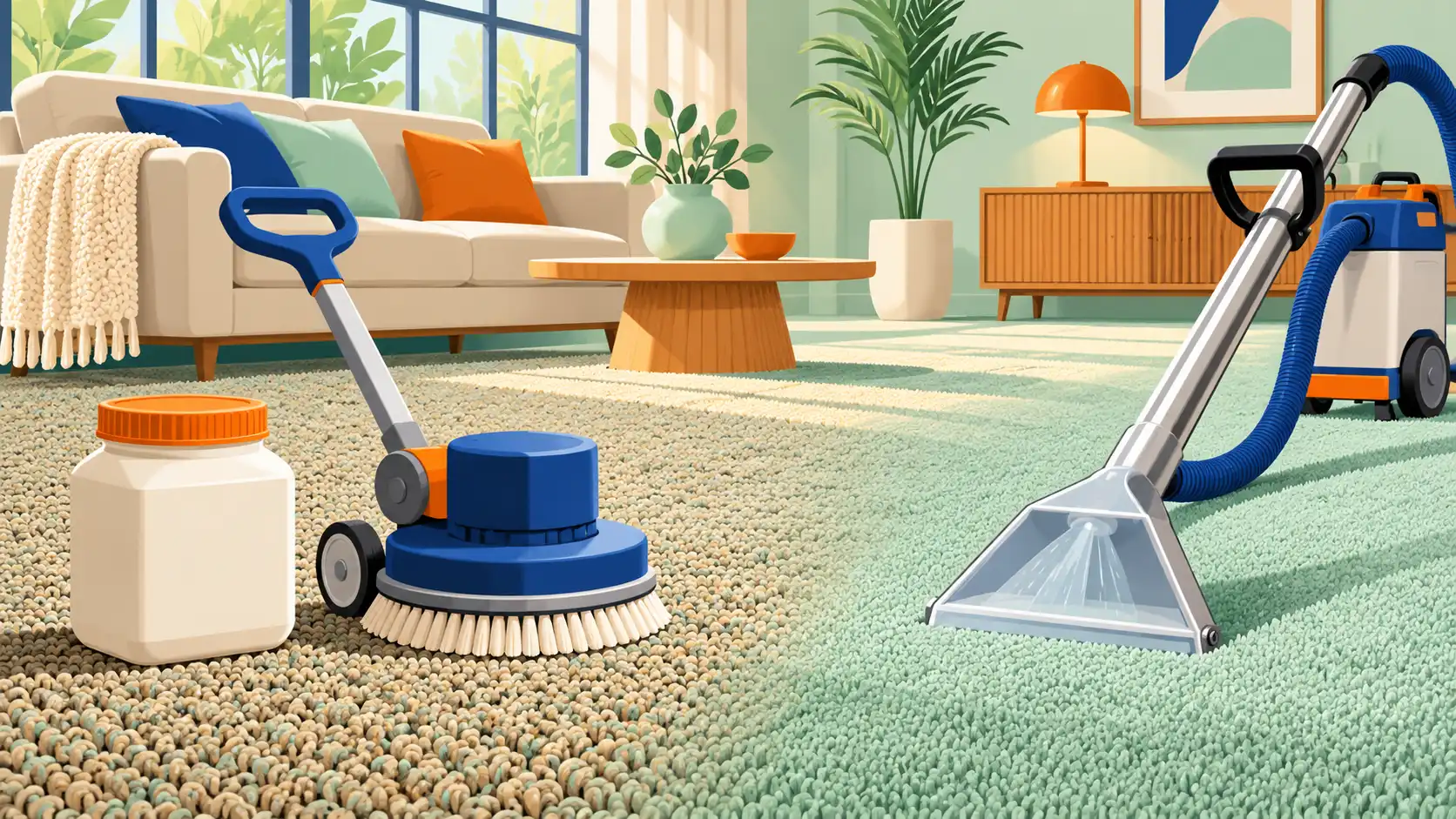
Dry Carpet Cleaning vs Steam Cleaning | InstantDry
11 November 2026
Would rather leave it to a professional? See our carpet cleaning in Manchester.
Quick answer: Dry carpet cleaning uses little moisture and can suit routine maintenance or carpets that should not be wetted heavily. Hot-water extraction uses a cleaning solution and suction to flush and recover soil from deeper in the pile. The better choice depends on fibre, backing, staining, soil and drying needs; “steam” does not mean every carpet is cleaned with pure steam.
“Dry carpet cleaning” covers more than one method, just as “steam cleaning” is often used loosely for hot-water extraction. Compare the actual process and the carpet manufacturer’s care advice before choosing. A method that is quick on one carpet may be unsuitable for another.
What does dry carpet cleaning mean?
Dry or low-moisture cleaning is a family of methods designed to use less water than a conventional extraction clean. Depending on the system, a technician may work an absorbent compound through the pile and vacuum it away, or apply a low-moisture cleaning solution that encapsulates soil as it dries so it can be removed later by vacuuming.
These approaches can be useful for interim maintenance, lightly soiled areas and some settings where quick access matters. Some systems use a counter-rotating brush (often called a CRB machine) to work compound into the pile before it is vacuumed away. A compound clean, bonnet clean and encapsulation clean use different products and equipment, so ask which method is proposed and what it can reasonably remove.
How hot-water extraction works
Hot-water extraction sprays a measured amount of heated cleaning solution into the carpet and then vacuums it back out with loosened soil. People often call this “steam cleaning”, although the process is generally liquid water extraction rather than steam alone. A professional system’s heat, pressure and recovery differ from a domestic rental machine.
Extraction can be a good choice for ground-in soil, traffic lanes and residues that need rinsing from the pile. It also introduces moisture, so fibre, backing, previous cleaning, airflow and the operator’s technique affect drying. Delicate fibres, unstable dyes, glued seams and moisture-sensitive backings need an appropriate inspection and method.
Dry carpet cleaning vs steam cleaning: at a glance
Question | Dry or low-moisture method | Hot-water extraction |
|---|---|---|
How is soil lifted? | Compound absorption or cleaning solution that releases soil as it dries | Heated solution loosens soil, then vacuum recovery removes liquid and suspended soil |
How much water is used? | Usually less, but not always none | More than a low-moisture method; extraction is used to recover it |
When can it suit? | Routine maintenance, lighter soil or reduced downtime when the carpet allows it | More embedded soil or when a rinse-and-recovery approach is appropriate |
What can limit it? | Results depend on the compound, agitation, vacuuming and soil; it may not flush material from the base | Over-wetting, poor recovery, unsuitable fibres or weak drying conditions can cause problems |
How long to dry? | Often shorter, but the method and product instructions still matter | Varies by carpet and conditions; do not assume one fixed time |
Does it remove every stain? | No. Stain type, age and fibre affect results | No. Heat or moisture may affect some dyes and stains, so test and inspect first |
Which method is better for your carpet?
Choose lower moisture when access time is the main concern
A low-moisture clean may fit a carpet that needs a surface refresh and must return to use quickly, provided the fibre and soil suit the method. It can also be worth discussing for locations where prolonged dampness is difficult to manage. Ask if the approach will remove the particular soil you are concerned about, rather than choosing it only because it is called “dry”.
Consider extraction for ground-in soil
Hot-water extraction may be more suitable when soil is embedded in the pile or when a rinse is needed to carry dissolved material away. The machine must recover the solution effectively, and the carpet must be suitable for the added moisture. A professional should inspect fibre and colour stability and explain how drying will be managed.
Do not choose by a blanket claim
“Dry cleans better”, “steam kills everything” and “all carpets dry in an hour” are not useful promises without knowing the carpet and method. Wool, viscose, natural plant fibres, backed carpet tiles and delicate dyes can each need different care. Tell the cleaner about the carpet label, spills, pet accidents and any previous treatments.
For the basic cleaning sequence and fibre checks, read our carpet cleaning guide. If you are deciding whether to use a home washer, see how to use a Vax carpet cleaner and check the machine’s manual.
Is professional carpet cleaning worth it?
It can be useful when a carpet has widespread traffic soil, when repeated DIY attempts have left residue or dampness, or when you are unsure which method is safe for the fibre. A trained technician can inspect the construction, test a discreet area and choose a method for the actual condition. That does not mean every carpet needs a professional clean or that every mark will come out.
InstantDry lists single-bedroom carpet cleaning from £29 and its Living Room Reset package from £89. Rates are guides; the final quote depends on the rooms, condition and agreed work. Its service information describes hot-water extraction, with around 90% of moisture recovered during cleaning and a typical 60-minute drying target. Dense pile, heavy soil, ventilation and spot treatments can extend drying. Check the current carpet cleaning service page and service and package prices for details.
Ask Which Cleaning Method Suits Your Carpet
Safety guide
Follow the carpet maker’s care instructions and the cleaner’s equipment and product directions. Keep people away from hoses and wet floors, and do not walk on damp stairs until they are safe. Keep electrical connections clear of water. The HSE explains how to reduce hazards from wet surfaces in its guidance on slips and trips during cleaning.
Frequently asked questions
Is dry carpet cleaning better than steam cleaning?
Neither is best for every carpet. Low-moisture methods can suit maintenance and short downtime; hot-water extraction can be useful for deeper soil when the fibre and backing can tolerate it.
Hot-water extraction vs steam cleaning: are they the same?
Not exactly. Hot-water extraction sprays heated water and cleaning solution into the pile and extracts it. “Steam cleaning” is a common name for this process, even when the cleaning action is liquid water rather than pure steam.
Does dry carpet cleaning use no water?
Not always. Some methods use an absorbent compound; other low-moisture systems use a small amount of liquid cleaning solution.
How long does carpet take to dry after professional extraction?
It depends on the equipment, carpet, soil, treatment and room airflow. InstantDry gives about 60 minutes as a typical target for its service, but some carpets take longer.
Can steam cleaning damage a carpet?
Heat or moisture can affect certain fibres, dyes, adhesives and backing. The cleaner should identify the material, test where appropriate and choose a suitable process.
How much does professional carpet cleaning cost?
InstantDry currently lists carpet cleaning from £29 per room and a Living Room Reset from £89. These are guide prices; the confirmed quote depends on the scope and carpet condition. Visit the InstantDry Carpet Cleaning homepage for current offers and booking details.
Call 07555 856988 to discuss the carpet type, cleaning method and likely drying window.
Written by: InstantDry Carpet Cleaning Editorial Team
Last updated: 10 November 2026
Related guides
Need it cleaned properly?
Book our carpet cleaning service — from £29 (UK average £45), free in-home survey and pay on completion.