How to Find a Hole in an Inflatable Mattress | Leak Detection Guide
15 September 2026
Quick Answer
Before assuming there is a hole, check that the valve is fully closed and sealed properly, since a loose or faulty valve is a common cause of a mattress that seems to deflate overnight. If the valve checks out, fully inflate the mattress and look and listen for any obvious tears or hissing sounds, paying particular attention to the seams. If nothing is obvious, mix warm water with a little dish soap in a spray bottle, spray sections of the inflated mattress, and watch for bubbles forming where air is escaping. Mark any leak you find with a permanent marker or a piece of tape before patching it, and let the mattress dry completely before deflating and storing it again.
Rule Out the Valve and Other False Alarms First
A surprising number of "leaking" air mattresses do not actually have a hole at all. Check that the valve is pushed in fully and that any cap or seal is closed properly, since a loose valve lets air escape just as effectively as a puncture would. It is also worth remembering that cold air contracts, so a mattress inflated in a warm room and then left overnight in a colder one can genuinely feel flatter by morning without any leak being present at all. A brand new mattress can also feel softer after its first few uses simply because the material is stretching in, which is normal and not a sign of damage. Ruling these out first can save a lot of unnecessary hole hunting.
Clean the Surface Before You Start Testing
A dusty or dirty mattress surface makes it genuinely harder to spot a small hole visually and can interfere with how clearly the soapy water bubble test shows up, since dirt and debris can disrupt where the soap solution actually sits. Wiping the mattress down with a damp cloth before you begin testing gives you a clearer surface to inspect and a better chance of reading the test accurately. This also matters if you go on to patch the hole afterward, since most adhesive patches bond far better to a clean, dry surface than a dusty one.
Step by Step: Finding the Leak
Fully inflate the mattress. Pressure makes even small pinhole leaks easier to detect, since the material is under tension.
Do a visual and listening check first. Move through the mattress in sections in a well lit, quiet room, looking for obvious tears and listening for a faint hissing sound. Pay particular attention to the seams, which are the most common failure point.
Feel for escaping air. Run a slightly dampened hand slowly across the surface, since moisture on your skin makes it easier to feel a small stream of escaping air than dry skin alone.
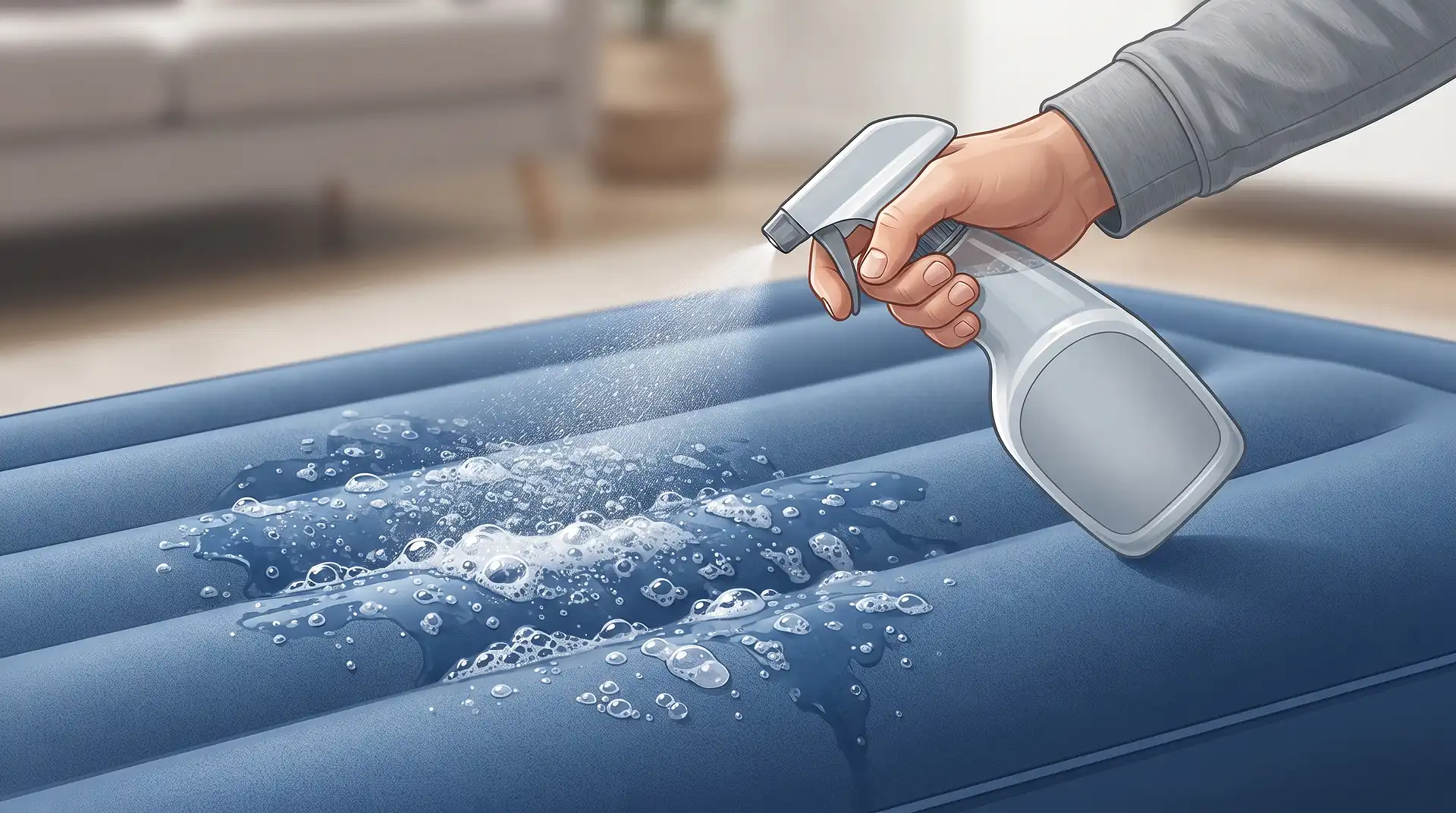
Use the soapy water test for anything not yet found. Mix warm water with a little dish soap in a spray bottle and spray it over sections of the mattress, starting around the valve and seams before moving to the rest of the surface. Watch closely for small bubbles forming, which show exactly where air is escaping.
Try the tissue paper method as an alternative. Hold a piece of tissue paper gently against suspect areas. If there is a leak, the tissue will flutter or move slightly as air passes through it.
Mark the leak clearly. Once found, circle it with a permanent marker or place a small piece of tape over it so you do not lose track of the exact spot once the mattress is deflated for patching.
After Testing, Dry the Mattress Fully Before Storing It
This is the step most guides skip entirely. Once you have used a soapy water spray, a damp sponge, or submerged the mattress to find a leak, the surface is wet, and inflatables are usually folded up and stored in a fairly airtight bag once deflated. Folding and sealing an air mattress away while it is still even slightly damp creates a closed, moist environment with no airflow, which is exactly the kind of condition that allows mould or a musty smell to develop, particularly if the mattress is stored for months at a time between uses.
Leave the mattress fully inflated in a dry, well ventilated room until every part of the surface is completely dry to the touch before deflating it. If you have just patched a hole, allow the adhesive to cure fully first as well, since packing the mattress away too soon can affect how well the patch holds under pressure next time it is used.
When It Is Not Worth Patching
A single small pinhole is usually a straightforward and worthwhile repair. It is generally not worth the time and patch kit cost if the mattress has multiple leaks across different areas, a long tear rather than a pinhole, or damage at the valve itself, since a damaged valve is rarely repairable and often means the mattress needs replacing regardless of how well the surface leak is patched. An air mattress that has been in damp or humid storage for a long period and has developed a musty smell alongside the leak is also worth a closer look before investing more time in it, since a persistent smell can be a sign of a deeper hygiene issue rather than something a patch alone will resolve.
If you use an air mattress regularly for guests and want to keep it in good condition between uses, the general hygiene principles covered in the guide on how to clean a mattress, particularly around drying properly and avoiding trapped moisture, apply just as much to an inflatable mattress as they do to a standard one.
Frequently Asked Questions
Why does my air mattress deflate overnight with no visible hole?
This is often caused by a loose or improperly sealed valve rather than an actual puncture, or simply by the air inside contracting if the room gets colder overnight. Checking the valve first can save time before assuming there is a hole.
What is the best way to find a small leak in an air mattress?
A soapy water solution sprayed over the inflated surface is one of the most reliable methods, since bubbles will form clearly at the exact point where air is escaping. This works particularly well for small pinhole leaks that are hard to spot visually.
Should I clean my air mattress before testing it for leaks?
Yes, a clean, dust free surface makes both visual inspection and the soapy water test easier to read accurately, and it also helps a patch adhere better afterward if you find and need to repair a leak.
How do I stop my air mattress developing a smell in storage?
Make sure the mattress is completely dry before deflating and storing it, particularly after using a wet method like soapy water or submerging it to find a leak. Storing it while still damp inside a sealed bag can lead to mould or a musty smell developing over time.
Is it worth patching an air mattress with multiple leaks?
Generally not. A single small pinhole is usually a quick and worthwhile fix, but multiple leaks, a long tear, or damage at the valve itself often mean the mattress is better replaced than repeatedly patched.
Can I use a candle or lighter to find a leak in an air mattress?
Some guides mention watching how a candle flame or smoke moves near a suspected leak, but this should be approached with real caution given the fire risk, and a soapy water test is a safer and equally effective alternative for most people.