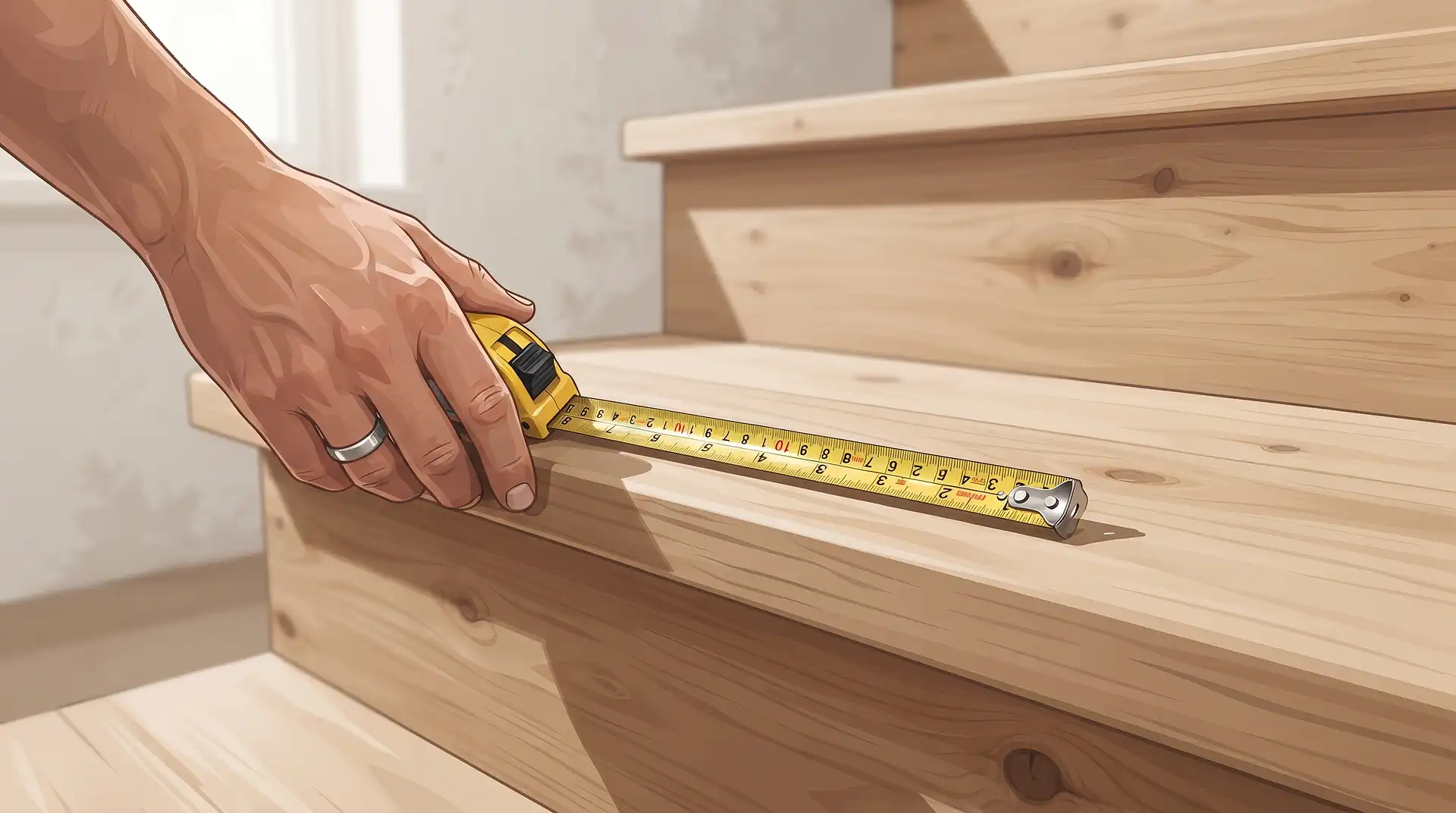
How Do You Measure Stairs for Carpet
21 September 2026
Quick Answer
Measure the depth of the tread and the height of the riser on one step, add them together, then multiply by the total number of steps to get the overall length needed. Measure the width of the stairs separately from edge to edge. Add a trimming allowance, typically around five centimetres to each dimension, though this can vary depending on the fitting method your supplier uses, so it is worth confirming with them directly. Winders and curved steps need to be measured individually at their widest point rather than assuming they match the straight steps. A landing is measured like a normal room, usually including the top step so the carpet runs over the edge cleanly.
What You Will Need
A tape measure, ideally a longer one for measuring the full staircase length in one go where possible
Pen and paper, or a phone to note measurements as you go
A calculator
Masking tape, useful for marking reference points if you are measuring alone
Step by Step: Measuring a Straight Staircase
Count the total number of steps. Note whether your staircase is entirely straight, or whether it includes winders, curved sections, or a half landing partway up, since each of these needs a slightly different approach.
Measure the tread depth. This is the horizontal part you actually step on. Measure from the back of the tread, where it meets the riser above, to the front edge or nosing.
Measure the riser height. This is the vertical part of the step. Measure from the top of one step down to the top of the step below it.
Add the tread and riser measurements together. This gives you the length of carpet needed to cover one full step, from nosing over the tread, down the riser, to the back of the step below.
Multiply by the number of steps. This gives you the total length of carpet needed to cover the entire straight run of stairs.
Measure the width separately. Measure from one edge of the stairs to the other, across the widest point of a typical step.
Add a trimming allowance to both dimensions. Around five centimetres per side is a commonly used figure, though this genuinely varies by fitting method, so confirming the exact figure with whoever is fitting or supplying the carpet avoids over or under ordering.
Measuring Winders and Curved Steps
Winders, the angled or triangular steps often found where a staircase turns a corner, and any curved sections cannot be measured using the same repeated tread and riser figure as a straight run, since their shape and size genuinely differ from step to step. Measure each winder or curved step individually at its widest point for both the tread and riser dimensions, working from the top of the stairs downward, and record each one separately rather than assuming they match. This takes longer than a straight staircase but is the only way to get an accurate figure for an irregular shape.
Measuring a Landing
A landing is measured much like measuring any other room, taking the length and width and accounting for any doorways or alcoves along the way. It is standard practice to include the top step of the staircase within the landing measurement, running the tape over the nosing and down the riser of that first step, so the finished carpet flows over the edge without a visible seam at the top of the stairs.
Understanding the Trimming Allowance Properly
Different suppliers and fitters quote slightly different trimming allowances, and this is not simply inconsistency for its own sake. The right figure depends on the specific fitting method being used, how the carpet will be seamed if at all, and how much room the fitter wants to work with for a precise finish. Rather than treating any single figure you find online as a fixed rule, use a moderate allowance such as five centimetres per dimension as your own working estimate, then confirm the exact figure with your supplier or fitter before finalising an order, since ordering based on the wrong assumption is one of the more common causes of running short partway through a job.
Why Pile Direction Matters on Stairs
Carpet pile has a direction, and on stairs it generally needs to run consistently down the staircase so that the pile lies away from footsteps rather than being pushed the wrong way with every step taken. Getting this wrong does not affect the measurements themselves, but it does affect how even the finished carpet looks and how well it wears over time, since pile running the wrong way tends to flatten and show wear patterns faster in a high traffic area like a staircase. This is worth discussing with your fitter alongside your measurements, particularly if the carpet has any visible pattern or pile texture.
Why Measurement Accuracy Matters More on Stairs Than in a Room
A measuring mistake in a flat room usually just means ordering a little more or less carpet than needed. On a staircase, an inaccurate measurement can lead to carpet that is loose, poorly seated at the nosing, or unevenly fitted, all of which create a genuine trip hazard on a part of the home already more prone to falls than a flat floor. Double checking measurements, particularly on winders and any step that looks even slightly different from the rest, is worth the extra time it takes given what is actually at stake if the fit ends up wrong.
Where Stair Carpet Wears Fastest
Once your stairs are measured and the new carpet is fitted, it is worth knowing that the front edge of each tread, the nosing, takes far more concentrated pressure and wear than the rest of the step, since this is where the ball of the foot lands with almost every step taken. This area tends to show wear, flattening, and soiling noticeably faster than the rest of the staircase, which is worth factoring into how often you vacuum and how soon you consider a proper clean once the carpet has settled in. The general maintenance approach covered in the guide on how to clean a carpet applies to stairs too, though the nosing areas are worth paying closer attention to than the rest of the surface.
When to Get a Professional to Measure Instead
DIY measuring works well for a straightforward straight staircase if you are patient and methodical. It is worth having a professional fitter measure instead for a staircase with multiple winders, a curved run, or an unusual shape, since the margin for error is higher and the safety implications of getting it wrong are more serious than in a standard room. Most carpet suppliers also offer a measuring service as part of the fitting process, which is worth considering if you are at all unsure about an irregular staircase.
If you have just fitted new carpet on your stairs and want it to stay looking sharp at the nosing where wear happens fastest, Instant Dry Carpet Cleaning can advise on a maintenance routine suited to a high traffic staircase.
Frequently Asked Questions
How much extra carpet should I allow for stairs?
A commonly used figure is around five centimetres per dimension for trimming, though this varies by fitting method. Confirming the exact allowance with your supplier or fitter before ordering is the safest way to avoid running short.
Do all the steps on a staircase need to be measured individually?
Straight steps usually share the same tread and riser measurements, so measuring one accurately and multiplying by the number of steps works well. Winders and curved steps differ in size and shape, so these need to be measured individually.
How do I measure a staircase with a half landing?
Measure the half landing like a normal room, including its length and width, then continue measuring the remaining steps above and below it separately using the standard tread and riser method.
Does carpet pile direction matter on stairs?
Yes, pile is generally laid running down the staircase so it is not pushed the wrong way by footsteps. Getting this wrong does not change your measurements but can affect how evenly the carpet wears over time.
Why does carpet on stairs wear out faster than in other rooms?
The front edge of each tread, known as the nosing, takes far more concentrated pressure from footsteps than the rest of the step, so this area tends to show wear and soiling noticeably sooner than the rest of the staircase.
Should I measure my own stairs or get a professional to do it?
A straightforward straight staircase is manageable to measure yourself with care. A staircase with winders, curves, or an unusual shape is safer left to a professional, given the higher risk of a measuring error affecting how securely the carpet sits.