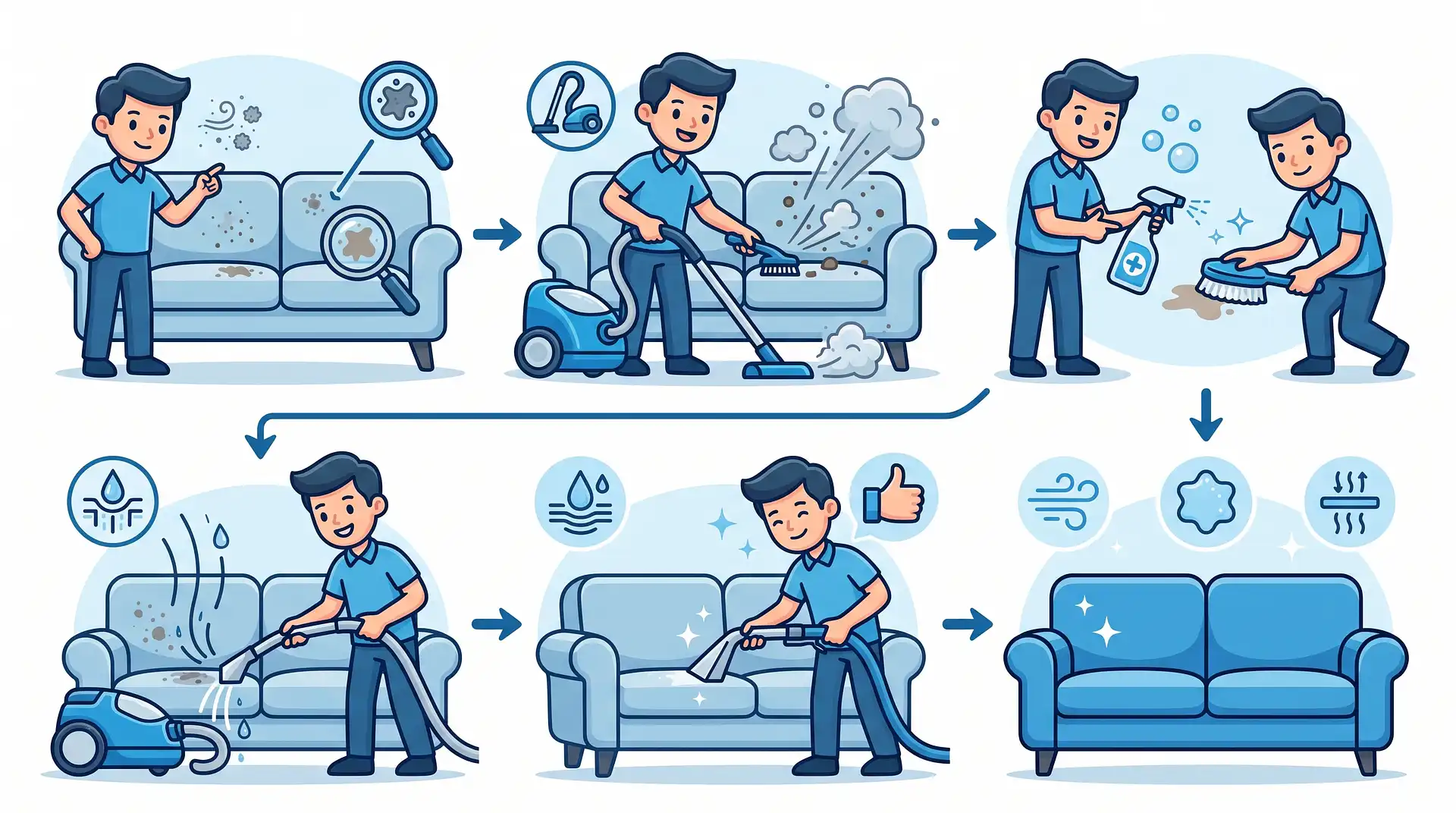
How to Clean a Sofa
12 August 2026
Quick answer: Check the cleaning code on your sofa's label first, W, S, WS or X, since that single letter determines whether water-based cleaning is safe at all. Vacuum thoroughly, including cushions and crevices. For a W or WS code, use a small amount of mild detergent solution, test on a hidden patch, apply sparingly and dry quickly. For an S code, use only a solvent-based cleaner or a dry foam product, never water. For an X code, vacuum only. Leather needs its own approach entirely, never a wet fabric method. Whatever the fabric, avoid soaking the cushions, since moisture trapped inside foam or fibre fill can cause a hidden mildew problem you won't see until it smells.
A sofa gets more daily contact than almost anything else in the house, and it shows. The mistake most people make isn't laziness, it's treating every sofa the same way. A method that's perfectly safe on one fabric can permanently water-mark, shrink or discolour another, and the difference is written on a label most people have never looked at.
This guide starts there, then covers general cleaning, fabric-specific care, and the things that go wrong most often.
Check the label before you do anything else
Somewhere on your sofa, usually under a cushion or on the frame, there's a label with a single letter code. It's easy to ignore and it's the most important piece of information you have before you clean anything.
Code | What it means | Safe to use |
|---|---|---|
W | Water-based cleaning is safe | A mild detergent solution, water-based upholstery shampoo |
S | Solvent only, no water | A proper solvent-based upholstery cleaner or dry cleaning solvent, never water or a water-based product |
WS | Either water-based or solvent-based cleaning is safe | Either method, always test first regardless |
X | No liquid cleaner at all | Vacuum only. Brushing and light steaming from a distance may be acceptable on some fabrics, but check first |
Using a water-based method on an S-coded fabric is one of the most common ways a DIY clean goes wrong. It can leave permanent watermarks, cause shrinkage, or bleed dye through the fabric. If there's no label, or it's too worn to read, treat the sofa as S coded and be cautious, or test a water-based approach on a very small hidden patch first, such as the underside of a cushion or the back of an arm.
One more thing about that label. In the UK, sofas are required to carry a permanent fire safety label under furniture fire safety regulations, and the cleaning code is very often printed on the same tag. Don't cut it off even if it's scratchy or visible, since it's there for a genuine safety reason as well as a practical one.
Before you start: safety and what's inside the cushion
Never mix cleaning products. As with any household cleaning task, don't combine bleach with anything acidic or with ammonia-based products, and stick to one product at a time.
Ventilate the room while you clean and while the sofa dries. This matters more with upholstery than with carpet in one specific way: a sofa cushion is enclosed.
Understand what's under the fabric. A cushion is foam or fibre fill sewn inside a fabric cover, not a flat surface sitting on a solid floor. Water that soaks through the cover has nowhere to properly evaporate from inside a foam block, and a cushion that stays damp inside can develop mould or mildew that you won't see or smell until it's already established. This is very different from a carpet, where moisture in the pile has a path to the surface and the air above it. If you wet a cushion, you need it properly dry, not just dry to the touch on the surface, before it goes back into regular use. On a warm day, drying outside in the sun and open air is genuinely one of the most effective things you can do.
Wear gloves if you're using anything beyond a very mild detergent, and keep children and pets off the sofa until it's fully dry.
Test on a hidden patch first, every time, regardless of the cleaning code. The underside of a cushion or the back of an arm are usually good spots.
The general method, step by step
This applies to a W or WS coded fabric. For S coded and leather, see the fabric-specific sections below.
Step 1: Vacuum thoroughly
Remove cushions if they're removable and vacuum both the cushions and the base of the sofa underneath, using a crevice tool to get into seams and down the sides. This lifts surface dust, crumbs and pet hair before you introduce any moisture, and it matters more than people assume, since wetting loose debris into the fabric makes it harder to remove afterwards, not easier.
Step 2: Deal with any specific stains first
Blot, don't rub, and work from the outer edge of a stain inwards, exactly as you would on carpet. A mild detergent solution, a small amount of clear washing up liquid in warm water, dabbed on with a cloth and then blotted away, handles most fresh marks on a W or WS fabric.
Step 3: Clean the whole surface
Once specific marks are treated, a light overall clean keeps colour and texture even rather than leaving a noticeably cleaner patch where you spot treated. Use a proper upholstery shampoo or a very mild detergent solution, applied sparingly with a cloth or soft brush, working in one direction with the fabric's nap where there is one.
Less is more here. You're aiming to dampen the surface fibres, not saturate the fabric or push moisture down into the cushion.
Step 4: Remove the moisture
Go over the area with a clean, barely damp cloth to lift any remaining detergent, and blot with a dry towel. If you have access to a wet vacuum or an upholstery attachment for a carpet washer, a light pass helps pull moisture back out rather than leaving it to evaporate on its own.
Step 5: Dry thoroughly
Open windows, use a fan, and prop cushions upright or on their side rather than lying flat, so air can reach more of the surface. Avoid direct heat sources like radiators, which can dry the surface fabric quickly while leaving the inside of a cushion still damp, exactly the situation that leads to a hidden mildew problem.
Step 6: Groom and finish
Once completely dry, a soft brush restores the pile on velvet or similar fabrics, and a final vacuum picks up anything left on the surface.
Cleaning by fabric type
S coded fabric
No water. Use a proper solvent-based upholstery cleaner or a dry cleaning solvent product, following the instructions exactly, in a well ventilated room. Test on a hidden patch first. If you're not confident handling a solvent product safely, this is a reasonable one to leave to a professional rather than improvise.
Leather
Leather isn't a fabric and doesn't take a wet cleaning method at all. Wipe with a barely damp, not wet, microfibre cloth for general dust and light marks. For anything more, use a proper pH-neutral leather cleaner, never a household all-purpose cleaner, baby wipes, or anything containing alcohol, since these dry out and strip the finish over time and cause cracking. Condition leather periodically with a proper leather conditioner to keep it supple, particularly in a centrally heated UK home where indoor air can be quite dry over winter. Test any new product on a hidden patch first, such as the underside of a cushion.
Velvet
Blot spills immediately, don't rub, since rubbing crushes and marks the pile. A very light water-based clean is usually fine if the code allows it, applied with minimal moisture. Once dry, brush the entire surface in one direction with a soft brush to restore the pile's even appearance. A handheld steamer held a few centimetres away, moved constantly and never lingering on one spot, can freshen velvet and lift light creasing, but keep it moving and don't let it saturate the fabric.
Suede
Genuinely one of the trickier upholstery fabrics to treat safely at home. A suede brush lifts surface dirt and restores the nap. For marks, a specialist suede cleaner and a light touch are the safer route than anything homemade, since water and standard detergents can leave permanent marks and change the texture. If in doubt, this is a fabric worth having professionally treated rather than experimented on.
Microfibre
Usually W or WS coded and fairly forgiving, but check the label rather than assuming. A soft brush and mild detergent solution generally works well, and microfibre tends to dry faster than heavier fabrics, which helps reduce the trapped-moisture risk in cushions.
Common problems and how to fix them
A musty smell after cleaning. Almost always trapped moisture, either in the fabric or, more often, inside the cushion. Prop cushions to expose more surface area, increase ventilation, and give it more time than you think it needs. If the smell persists after several days of proper drying, the cushion insert may need attention or replacement.
Watermarks or a ring where a stain was treated. Usually from too much moisture applied to too small an area, drying unevenly. Lightly re-dampen the whole surrounding panel with a barely damp cloth to even out the drying line, working outward from the mark, then dry evenly.
Colour looks patchy or lighter where it was cleaned. Can happen when a small area is spot cleaned more vigorously than the rest of the sofa. An overall light clean, as in Step 3 above, helps prevent this by keeping treatment even across the whole surface.
Fabric feels stiff or crunchy once dry. Usually detergent residue left in the fibres. Go over the area again with a barely damp, clean cloth and no detergent to rinse it out, then dry thoroughly.
Mistakes that cause lasting damage
Ignoring the cleaning code. The single most common cause of real damage, particularly water on an S-coded fabric.
Soaking the cushions. Risks trapped moisture and hidden mildew inside the foam or fill.
Scrubbing a stain. Pushes it deeper and can distort the pile or texture.
Using household all-purpose cleaner on leather. Strips the finish and dries the leather out over time.
Direct heat to speed up drying. Can dry the surface while leaving the inside of a cushion still damp.
Removing the fabric care and fire safety label because it's uncomfortable or visible. It carries genuine safety information as well as the cleaning code.
When to call a professional
DIY cleaning is entirely reasonable for regular maintenance and most fresh marks on a fabric you're confident identifying correctly. Consider a professional upholstery clean when:
The sofa is leather, suede, or an S-coded solvent-only fabric you're not confident treating yourself
There's no legible cleaning label and you're unsure what's safe
A stain has already resisted a careful DIY attempt
The sofa hasn't been deep cleaned in a long time and general soiling has built up throughout the fabric and cushions, not just in one spot
You've noticed a musty smell that hasn't resolved with drying and ventilation, which can indicate moisture already sitting inside a cushion
It's a valuable or antique piece where the wrong product could cause irreversible damage
A professional upholstery clean uses controlled extraction that pulls moisture back out far more thoroughly than a home attempt, which matters even more on upholstery than on carpet given how much harder it is for a cushion to dry evenly on its own.
7. FAQ Section
How do you clean a sofa at home? Check the cleaning code on the label first, W, S, WS or X, since it determines what's safe to use. Vacuum thoroughly, treat any stains by blotting rather than rubbing, then apply a light overall clean appropriate to the code, and dry thoroughly with good ventilation before using the sofa again.
What does the W code mean on a sofa? W means the fabric can be safely cleaned with water-based products, such as a mild detergent solution or a water-based upholstery shampoo. Always test on a hidden patch first regardless of the code.
What does the S code mean on a sofa? S means solvent only. Water and water-based cleaning products should not be used, since they can cause watermarks, shrinkage or colour bleeding. Use a proper solvent-based upholstery cleaner instead, in a well ventilated room.
Is it safe to use vinegar on a fabric sofa? Only if the cleaning code allows water-based cleaning, and even then it should be used sparingly and tested on a hidden patch first. Vinegar on a solvent-only, S-coded fabric can cause the same damage as any other water-based product.
How do I get a musty smell out of my sofa? Musty smells usually mean trapped moisture, often inside the cushion rather than just on the surface. Increase ventilation, prop cushions to expose more surface area, and allow more drying time than feels necessary. A smell that persists after several days of proper drying may mean the cushion insert needs professional attention.
How do you clean a leather sofa? Wipe with a barely damp microfibre cloth for general dust and light marks. For anything more, use a proper pH-neutral leather cleaner and condition periodically with a leather conditioner. Avoid household all-purpose cleaners, baby wipes and anything containing alcohol, since these dry out and crack the leather over time.
How often should you clean a sofa? Regular vacuuming every week or two keeps dust and debris from building up. A full clean, whether DIY or professional, is generally worth doing every six to twelve months depending on how much use the sofa gets, more often with children, pets, or heavy daily use.
Can you use a carpet cleaner on a sofa? Some domestic carpet washers include an upholstery attachment designed for this, which can work well on a W or WS coded fabric. Always check both the machine's guidance and the sofa's cleaning code first, and never use one on an S-coded or leather sofa.
Why does my sofa look patchy after cleaning? Usually uneven moisture or detergent distribution, often from spot cleaning one area more vigorously than the rest. A light, even clean across the whole surface, rather than isolated heavy treatment on stains, helps keep colour and texture consistent.
Is it worth getting a sofa professionally cleaned? Worth considering for leather, suede or solvent-only fabrics, for a sofa that hasn't been deep cleaned in a long time, for a persistent smell that hasn't resolved with drying, or for a valuable piece where DIY risk isn't worth taking. Professional extraction removes far more moisture than a home clean typically achieves, which reduces the trapped-moisture risk inside cushions significantly.
Get your fixed quote in 60 seconds
Or call 07555 856988.