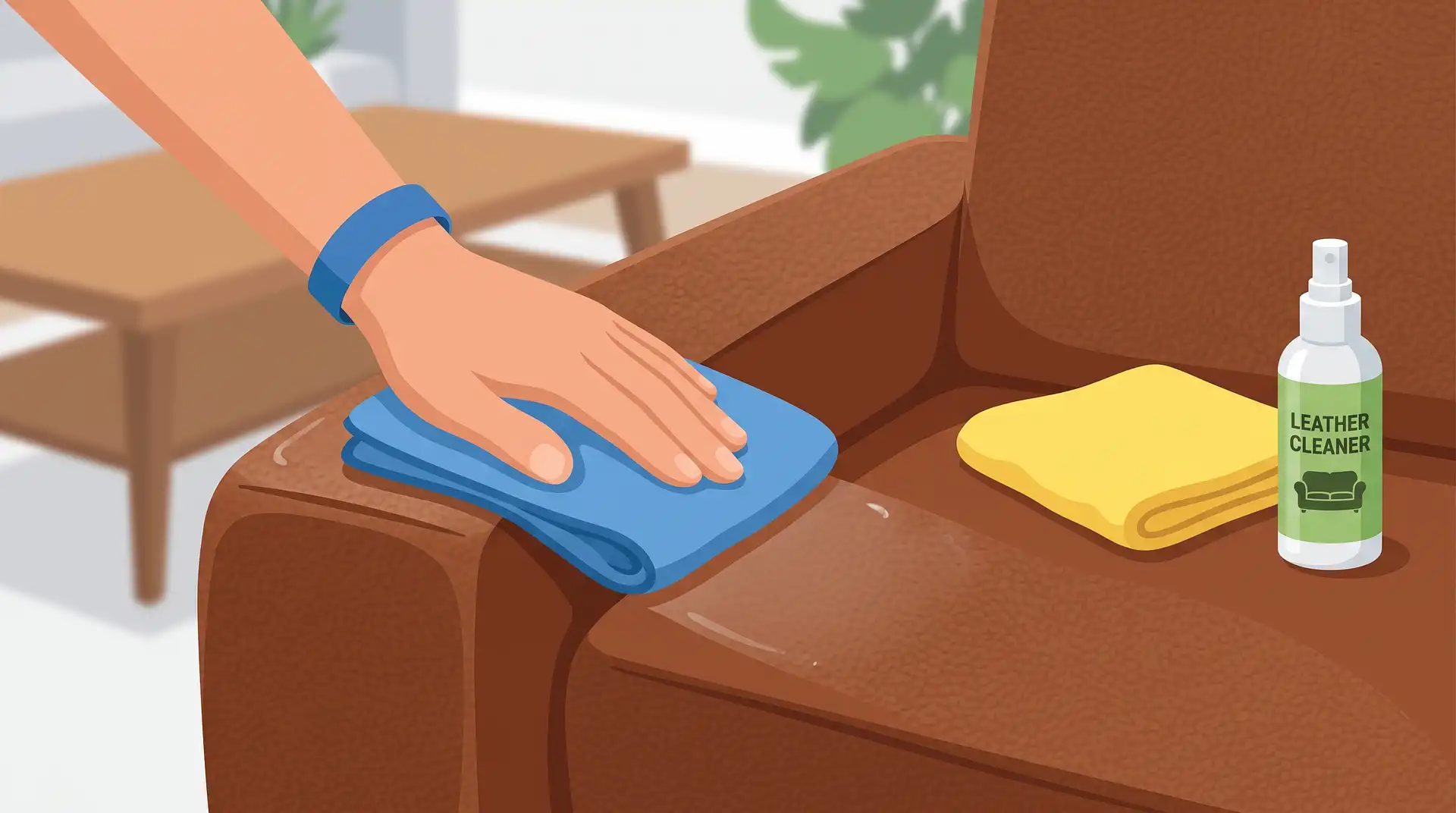
How to Clean a Leather Sofa
12 August 2026
Quick answer: Work out what type of leather you have first, since it changes what's safe. Vacuum with a soft brush attachment to clear dust from seams and buttoning. Wipe with a barely damp microfibre cloth and a small amount of pH-neutral soap, never soaked, and dry immediately with a separate dry cloth. Avoid vinegar, household all-purpose cleaner, baby wipes, alcohol and anything with ammonia or bleach, since these all strip the natural oils in leather and lead to drying and cracking over time. Never use a hairdryer or dry near a radiator. Condition every few months to replace the oils that cleaning and everyday use remove.
Leather ages well when it's treated right and badly when it isn't, and the difference usually comes down to two things: using the wrong product, and letting it dry out. Unlike fabric, leather doesn't really get "dirty" in the same way, it gets soiled on the surface and dehydrated underneath, and the second problem is the one most DIY cleaning routines make worse rather than better.
This guide covers genuine leather. If you're not sure whether your sofa is real leather at all, the next section covers that too, since a lot of what's sold as leather in the UK market is actually a synthetic look-alike that needs different handling.
What type of leather do you actually have?
This matters more for leather than the equivalent question does for fabric, because the wrong method on the wrong leather type causes damage that's often permanent.
Is it even genuine leather? A large share of budget and mid-range sofas described as leather are actually PU (polyurethane) leather, bonded leather, or a synthetic leather-look material. Check the manufacturer's label or product description first. If genuinely uncertain, look at the surface under a bright light, real leather typically shows natural grain variation and small imperfections, where synthetic material tends to have a uniform, repeating texture. Genuine leather also has a distinct smell that synthetics don't replicate well. If you're still not sure, treat it as synthetic and use gentler products, since that's the safer error to make.
For genuine leather, which finish do you have?
Type | Feel and appearance | How it handles cleaning |
|---|---|---|
Aniline | Soft, natural, shows grain and markings, no visible protective coating | Most delicate. Highly porous and prone to staining and water marking. Needs the gentlest products and the least moisture |
Semi-aniline | Similar natural look with a light protective coating | More forgiving than aniline but still needs care and minimal moisture |
Pigmented (protected) | Even colour, slightly more uniform surface, most common on UK sofas | Most durable and easiest to clean, moisture resistant with a proper protective coating |
A simple water drop test on a hidden patch helps confirm which you have. Place a small drop of water on the leather and watch it. If it absorbs quickly and darkens the leather, you're dealing with aniline or semi-aniline, treat it with real caution. If it beads on the surface without soaking in, it's pigmented and more forgiving.
Before you start: what genuinely damages leather
Avoid these regardless of leather type: household all-purpose cleaner, baby wipes, anything containing alcohol, ammonia-based products, bleach, and undiluted washing up liquid. All of these strip the natural oils that keep leather supple, and the damage builds up gradually rather than showing immediately, which is exactly why so much online advice recommending them looks harmless in the short term.
Be cautious with vinegar, despite how often it's recommended. A vinegar and water solution shows up constantly in home cleaning advice for leather, and it isn't dangerous in the way bleach is, but it's acidic, and repeated use can contribute to the same oil-stripping and drying that other harsh products cause. A proper pH-neutral leather cleaner does the same job without that risk, and it's worth using instead rather than reaching for vinegar out of habit.
Never soak leather. A barely damp cloth, wrung out until it's close to dry, is correct. Leather absorbs moisture into the surface far more than people expect, and excess water leads to watermarking, and on aniline leather in particular, permanent darkening.
Never dry leather with a hairdryer or near a radiator. Direct heat dehydrates leather rapidly and causes wrinkling and cracking that doesn't reverse. Let it air dry at normal room temperature.
Use distilled or filtered water if you can. UK tap water is often hard, and mineral deposits left behind as tap water evaporates can leave faint marks on leather over repeated cleans. Not essential for a quick wipe, but worth it for anything more thorough.
Test on a hidden patch first, every time, regardless of the product, since colour and finish vary sofa to sofa even within the same broad leather type.
Routine cleaning, step by step
Do this every week or two to keep dust and everyday soiling from building up.
Step 1: Vacuum
Use a soft brush attachment and go over the whole sofa, paying particular attention to seams, buttoning and crevices where dust and crumbs collect. On a buttoned style such as a Chesterfield, this step matters more than it looks like it should, since the deep tufting traps far more debris than a flat surface does.
Step 2: Wipe with a barely damp cloth
A microfibre cloth, dampened with water only and wrung out until it's close to dry, removes surface dust and light marks. Work in small circular motions from top to bottom.
Step 3: Dry immediately
Use a separate dry cloth to remove any residual moisture straight away, rather than letting it air dry on its own. This is a habit worth building even for a very light wipe, since it's the single biggest factor in keeping leather from drying out over repeated cleaning.
Deep cleaning a leather sofa
Do this every few months, or when routine cleaning isn't enough to lift general soiling.
Step 1: Vacuum thoroughly, as above
Step 2: Test your cleaner on a hidden patch
Whether you're using a proper pH-neutral leather cleaner or a very mild soap solution, test first and let it dry fully before proceeding, checking for any colour change or watermarking.
Step 3: Apply sparingly
Dampen a clean microfibre cloth, not the leather directly, with your cleaner. Work in small circular motions across the whole sofa, section by section, rinsing and re-dampening the cloth as it picks up dirt. Keep the amount of moisture minimal throughout.
Step 4: Wipe with a clean water cloth
A second cloth, dampened with plain water only, removes any cleaning product residue.
Step 5: Dry thoroughly with a dry cloth
Go over the whole sofa again with a dry cloth, and let it finish air drying at room temperature away from direct heat.
Step 6: Condition
Once fully dry, apply a proper leather conditioner. This step is genuinely not optional for leather in the way it's optional for fabric, covered in more detail below.
Conditioning, and why it matters as much as cleaning
Cleaning removes dirt and oils, both the ones you want gone and some of the leather's own natural oils that keep it supple. Conditioning replaces what cleaning takes out, and skipping it is one of the main reasons leather that's technically been "well cared for" still ends up dry and cracked within a few years.
Apply a proper leather conditioner, following the product's instructions, roughly every few months, more often in a centrally heated UK home over winter when indoor air is drier and pulls moisture out of leather faster. Test on a hidden patch first, apply sparingly with a soft cloth, and buff gently afterwards. Over-conditioning can leave leather feeling greasy or attract dust, so more isn't better here, following the product's guidance is.
Stain by stain on leather
General spills. Blot immediately, don't rub, with a dry cloth. Follow with the routine wipe method above if any residue remains.
Grease and food oil. Sprinkle a light layer of bicarbonate of soda or cornstarch directly onto the mark and leave it for several hours, ideally overnight, to absorb the oil. Brush or vacuum off gently rather than wiping, which can spread the grease across a wider area.
Ink. Genuinely one of the hardest leather stains and easy to make worse. Rubbing alcohol on a cotton bud is commonly suggested online, and it can work, but alcohol is aggressive on leather finishes, particularly aniline and semi-aniline, and can dull or strip colour along with the ink. Test on a completely hidden patch first, use the smallest amount possible, and accept that a stubborn or large ink mark on leather is one of the situations most worth handing to a professional rather than persisting with at home.
Water spots or rings. Slightly dampen the whole surrounding area evenly with a barely damp cloth to blend the mark into the surface, then dry evenly. Trying to lift a water mark by adding more water to just that spot usually makes it more visible, not less.
Everyday skin oils on arms and headrests. These darken faster than the rest of the sofa simply from contact. A slightly more frequent wipe in these specific areas, followed by conditioning, keeps the colour more even over time.
What goes wrong and how to fix it
Leather feels dry, stiff or is starting to crack. Almost always a conditioning gap, sometimes combined with harsh products used over time. Start a regular conditioning routine, and stop using anything other than a proper pH-neutral or leather-specific product going forward. Established cracking doesn't reverse with conditioning alone, but it slows further damage and keeps the leather more supple.
A patch looks lighter or darker than the rest. Usually from uneven cleaning, conditioning, or sun exposure over time on one section. Cleaning and conditioning the whole sofa evenly, rather than treating one visible patch repeatedly, helps prevent this.
Watermarking after cleaning. Too much moisture used, particularly on aniline leather. Evenly dampen the surrounding area to blend the mark, dry thoroughly, and use less water next time.
A sticky or tacky feel. Usually product residue, either from over-applying a cleaner or conditioner, or from a lower quality product not designed for leather. Wipe thoroughly with a barely damp, clean cloth to remove the residue, then dry properly.
When to call a professional
Routine leather care is very manageable at home. Consider a professional for:
A stubborn ink stain or anything that's already resisted a careful attempt
Established cracking, significant dryness, or noticeable colour loss
An aniline or semi-aniline leather sofa you're not confident treating, given how much less forgiving these are than pigmented leather
A valuable, antique or designer leather piece where the cost of a mistake outweighs the cost of professional care
Uncertainty about whether your sofa is genuine leather or a synthetic, where the wrong product could cause real damage
7. FAQ Section
How do you clean a leather sofa at home? Vacuum with a soft brush attachment, then wipe with a barely damp microfibre cloth and a small amount of pH-neutral soap or a proper leather cleaner. Dry immediately with a separate dry cloth. Condition every few months to keep the leather supple.
Is vinegar safe to use on a leather sofa? It's commonly recommended online but not ideal. Vinegar is acidic, and repeated use can contribute to the leather drying out and losing its natural oils over time. A proper pH-neutral leather cleaner does the same job without that risk.
How do I know if my sofa is real leather? Check the manufacturer's label first. Genuine leather typically shows natural grain variation and small imperfections, where synthetic leather has a more uniform, repeating texture. If you're unsure, treat it as synthetic and use gentler products, since that's the safer assumption to make.
How often should you condition a leather sofa? Roughly every few months for most households, more often over a UK winter when central heating dries indoor air and pulls moisture out of leather faster. Always test a new conditioner on a hidden patch first.
Why is my leather sofa cracking? Usually a lack of conditioning over time, sometimes combined with harsh cleaning products that strip natural oils, or direct heat exposure from drying near a radiator or with a hairdryer. Starting a regular conditioning routine helps prevent further cracking, though existing cracks won't fully reverse.
How do you get ink off a leather sofa? Carefully, and with caution. Rubbing alcohol on a cotton bud can lift ink but is aggressive on the finish, particularly aniline and semi-aniline leather. Test on a hidden patch first and use minimal product. A large or stubborn ink stain is often better handled by a professional.
How do you clean a white leather sofa? The same method as any pigmented leather, though marks show more visibly, so routine wiping is worth doing more frequently. Avoid coloured cloths, since dye transfer is more noticeable on white leather than on darker colours.
Can you use baby wipes on a leather sofa? Not recommended. Most baby wipes contain ingredients that can dry out leather over repeated use, in the same way household all-purpose cleaners do. A barely damp microfibre cloth and a proper leather cleaner is the safer routine.
How do you clean faux or PU leather? Gently, and without conditioner products designed for genuine leather, which can damage a synthetic finish. A barely damp cloth and mild soap generally works well, and PU leather is usually more moisture tolerant than genuine leather, though it should still never be soaked.
Is it worth getting a leather sofa professionally cleaned? Worth considering for a stubborn stain, visible cracking or dryness, an aniline or semi-aniline sofa you're not confident treating, or a valuable piece where a DIY mistake would be costly. Professional treatment can also restore some suppleness to leather that's already started to dry out, which is harder to achieve with home products alone.
Get your fixed quote in 60 seconds
Or call 07555 856988.